Coloradans asked to be aware of heatstroke during sizzling summer temperatures

In a matter of minutes, a hot car can turn deadly as temperatures sizzle here in Denver. Denver Health is working to educate and prevent that from happening. Injury Prevention Specialist Missy Anderson shared tips with CBS4's Mekialaya White during a live demonstration.
Anderson parked her car along the hospital's roundabout and left it in the sun Tuesday morning, as a device with two probes measured its inside and outside temperatures.
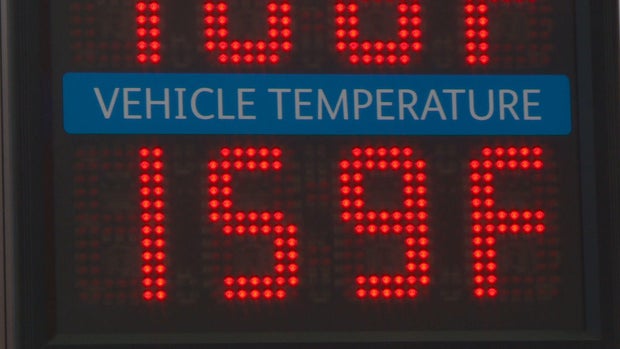
After about 15 minutes, she opened the rear passenger door, with a whoosh of hot air coming out.
"It feels like an oven inside here, like you've opened your oven after cooking," Anderson said. "The outside temp is 106 degrees; the inside temp is 156. We have 50-degree difference."
Anderson seen the implications of heat for decades in her work in the medical field.
"The Denver metro area and Colorado in general has a short 'hot season,' so about mid-June to mid-September we have to be very conscious," said Anderson.
Missy says heatstroke begins as heat exhaustion, then progresses quickly.
"You'll start to feel hot, clammy skin. If you think about being humid and your hands are wet. And thirsty. You'll just want to cool down. Then (during a heatstroke), you'll start to get confused, you might get really tired. It's your body shutting down."
She added, "A child as well as a senior citizen, their body temperature can increase in minutes - 3-5 minutes. In about 7-10 minutes, that person could be unconscious and dead."
Anderson urges, if you do see someone who appears to need help, don't hesitate to act. In fact, she's coined an acronym to help people do just that.
"We literally call it ACT. A: Avoid heatstroke at all costs. C: Create reminders, so if you have to go out, a lot of times what we tell parents is put your purse back there put your diaper bag. Force yourself to get into the back seat of the car. And T: Take action, so if you see someone in a car that has the windows rolled up and the car is off and they don't look like they're conscious, take action, help. The key is get them out of the heat, get them to a cool place."
Anderson has also written about the topic in her online blog.