Coal mine debris in Colorado extinguished after burning for 20 years
The state announced Thursday the completion of a nearly year-long effort to extinguish a burning pile of century-old coal mining debris near Florence.
The pile of rock, dirt and low-quality coal began slowly burning two decades ago, according to the Colorado Division of Reclamation, Mining and Safety (DRMS). The fire ignited by spontaneous combustion.
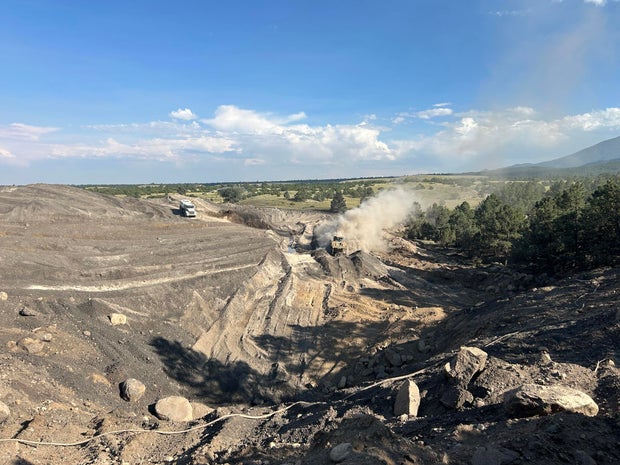
In May 2025, the agency measured temperatures above 300 degrees Fahrenheit inside the roughly 35-foot tall, 150-foot wide, and 300-foot long pile. Temperatures had previously stayed in the 100-200 degree range, according to an DRMS press release.
The spike was deemed concerning enough to address. State crews began turning the mixture less than a month later. Inside the pile, they found coal pockets reaching 1,000 degrees, per DRMS.
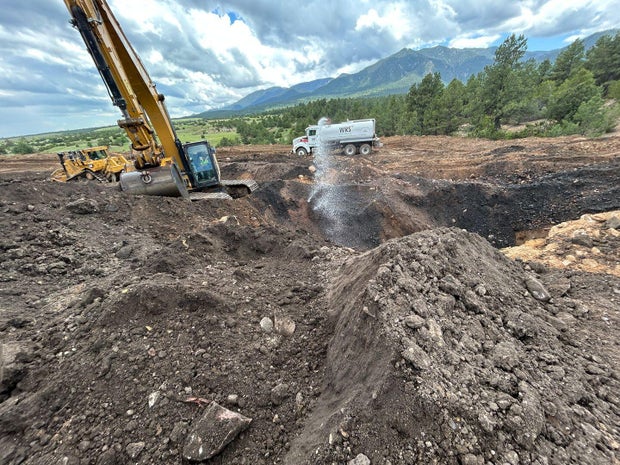
The first phase of the Corley Mine Surface Burn Mitigation Project started with an additional eight acres of "fire barrier" established around the 1.5-acre pile. Once surrounded and isolated from vegetation, the pile was excavated. The refuse pile consisted of coal waste, carbonaceous shale, and coal ash. Approximately 82,000 cubic yards in total, per DRMS.
Crews spread the debris out, sprayed water on it when needed, then rolled in an identical amount of "non-carbonaceous material" like gravel into it. They waited until the remnants of the pile measured less than 90 degrees before covering it with another 164,800 cubic yards of dirt and rock.
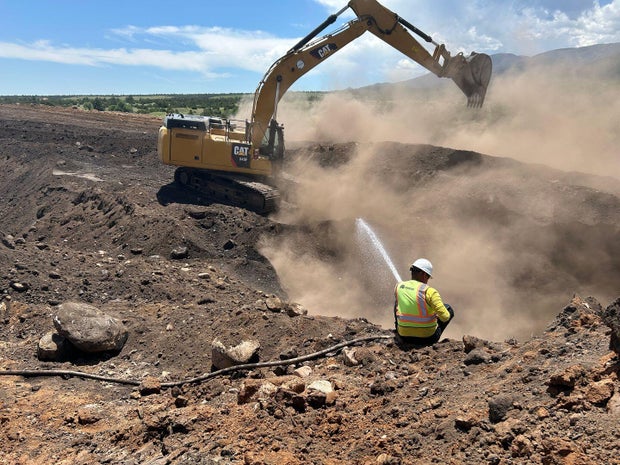
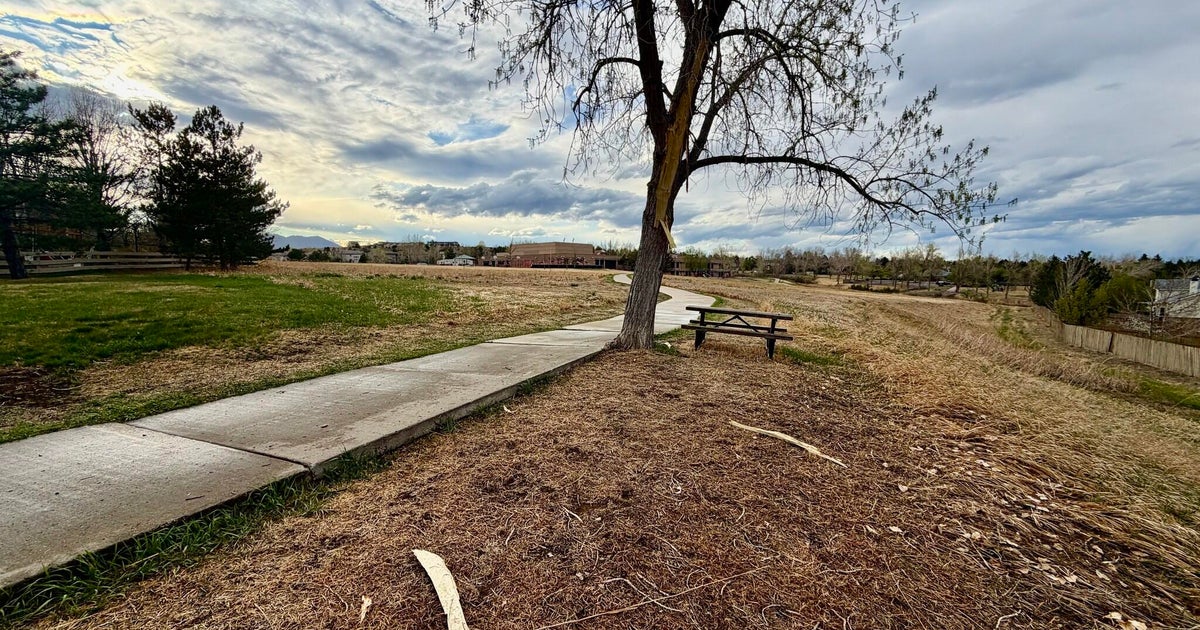
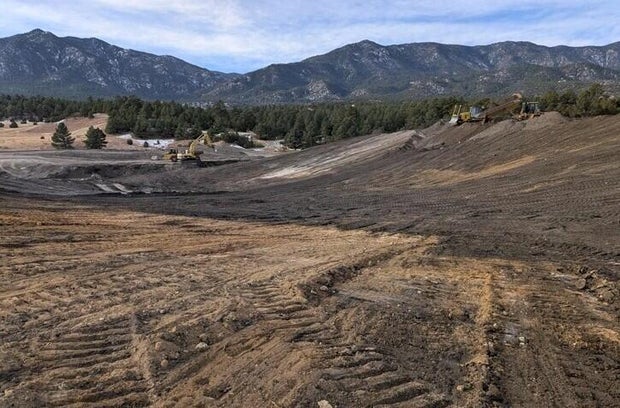
That phase of the project was completed in November, per DRMS. Since then, crews have worked on reclamation, or returning the site to aesthetic state similar to its surroundings. Another 30,000 cubic yards of fill were moved in to improve drainage and reduce erosion, then native seed mixes were planted over the entire 9.5 acres.
The Corley Mine operated between the 1920s and 1990s about nine miles south-southwest of Florence. A total of 15 mines were dug over that time at the site. The old refuse was collected into a single pile in the 1950s and newer operations continued to accumulate waste there, per DRMS.
Old, abandoned coal mines have slowly burned underground in other parts of the state. Two such sites south of Boulder were once considered the possible causes of the wind-driven Marshall Fire in 2021, the state's costliest wildfire. Those sites were later eliminated as the cause, but DRMS dug up the burning remains of those coal mines, treated them, and reburied them.
DRMS crews continue to mitigate another underground coal mine site near Glenwood Springs. A coal seam there has burned since 1910. It was blamed for igniting the Coal Seam Fire which burned more than 10,000 acres and destroyed 28 homes in 2002. Surface measurements there reached 600 and 900 degrees in 2025.