Civil Rights leader Dolores Huerta leaves lasting legacy in Colorado

Dolores Huerta, the labor activist and civil rights leader who co-founded the United Farm Workers of America and spent decades fighting for farmworkers' rights, has died of cancer at 96.
Huerta helped organize farmworkers, championed women's rights and advocated for Latino communities throughout a career spanning more than seven decades.
In Colorado, where Huerta leaves a lasting legacy, friends and community leaders are remembering her lifelong commitment to justice and equality.
Huerta spent her life advocating for people whose voices were often overlooked, particularly farmworkers.
In Colorado, she continued that work in her later years, speaking out against legislation she said would leave agricultural workers without adequate overtime protections.
In a video opposing Senate Bill 121, which passed this year and is scheduled to take effect in 2027, Huerta urged people to understand the demands of farm labor better.
"I invite you to go out into the field and do the work that they do," said Huerta.
The law requires farm employers to pay overtime to certain workers after they exceed 56 hours a week. Huerta opposed that threshold and advocated for overtime pay after 40 hours.
"Please do not betray the farmworkers," she said.
For those who knew Huerta in Colorado, her activism was inseparable from her character: outspoken, determined and unwilling to abandon a cause she believed in.
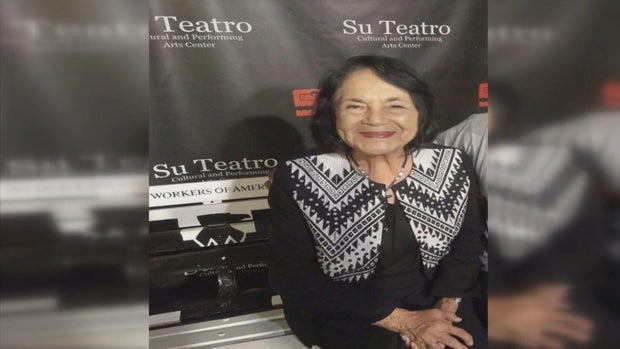
Tony Garcia of Su Teatro remembers hosting Huerta for a film screening about a decade ago. She signed a memento from the event, which Garcia still keeps.
"We were fortunate to have Dolores Huerta here when we screened her film. This is about 10 years ago, and she signed it," said Garcia.
Garcia said Huerta's strength made her an example for others.
"She always stood strong and was a tremendous example for us," he said.
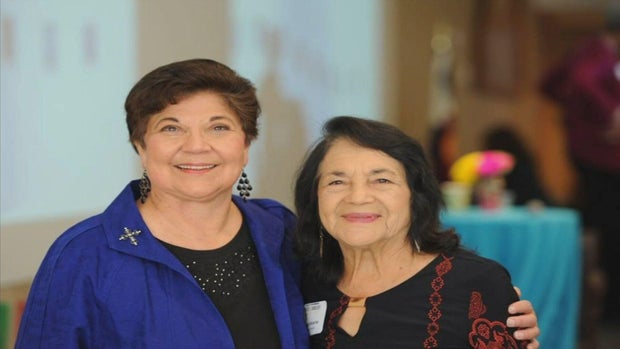
Former Colorado state Sen. Polly Baca, who knew Huerta for decades, remembers a friend whose commitment to social justice never wavered.
"She was feisty. She was absolutely committed 100-percent to the cause," Baca said.
Baca often hosted Huerta at her home during visits to Denver, saying Huerta preferred staying with friends rather than in hotels.
"Dolores did not like to stay in hotels, so she always stayed with me when she could, until she was the age of 90. And then she pretty much had to stay at the hotels."
Baca said Huerta's advocacy was especially important during a time when discrimination against Mexican Americans was widely accepted.
She said organizing marches and demonstrations required persistence, especially when activists faced hostility.
"It took marching. It took being willing to be out there where people were cruel to you. It wasn't easy."
The two women met in the mid-1960s while organizing boycotts and demonstrations in support of striking farmworkers.
Baca said Huerta faced challenges early in life but continued working for others without giving up.
"We lost somebody who struggled in life, you know, early on. But then she worked so hard. She never, ever gave up."
Huerta's legacy is also carried in the movement she helped build and the generations of activists inspired by her work.
Her rallying cry, "Sí, se puede" — "Yes, we can" — became an immediate expression of the belief that collective action can bring change.
Since news of Huerta's death, people across Colorado have contacted our newsroom to share memories and reflect on her influence.
Their stories offer a glimpse of the impact she had on this community and the legacy she leaves behind.
Community leaders also plan to honor Huerta during a Día de los Muertos celebration at La Raza Park on Sunday, Nov. 1.
The tribute will remember a woman who spent more than seven decades organizing, advocating, and fighting for people whose voices too often went unheard.


