Residents in Colorado city of Castle Pines push for voter approval of future annexations

Come November, voters in Castle Pines will be asked to weigh in on ballot questions 300 and 301, two citizen-led initiatives that would give voters a direct say in how the city expands in the future.
One thousand six hundred residents signed their names to get the items on the ballot.
The effort was born out of the controversial Crowsnest annexation petition, which concerned about 800 acres near Parker. Earlier this year, landowners sought to annex the land into Castle Pines and develop it. Despite its proximity to Parker, it was eligible to become part of Castle Pines through "flagpole annexation" because Crowfoot Valley Road connects the land to Castle Pines.
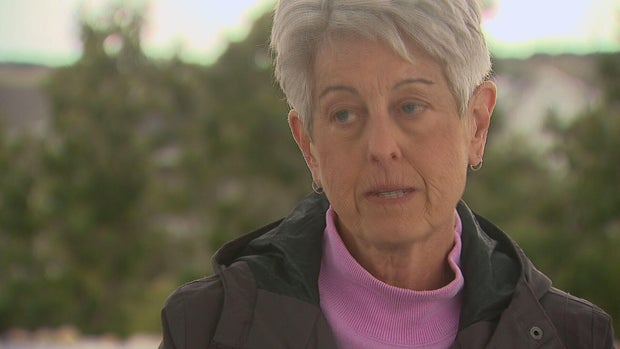
"This is nowhere near where Castle Pines is, and it just doesn't make any sense," resident Sue Zloth told CBS Colorado.
After outcry from neighbors like Zloth, the Crowsnest annexation was withdrawn, while Castle Pines City Council took a step back to create an annexation policy.
That newly adopted policy prioritizes annexations that, among other things, preserve open space, are contiguous with the city, are not exclusively residential and serve long-term goals.
"Honestly, it's not really a policy that would define or would force them to go through what we think is the rigorous process that they should go through," Zloth said. "Several residents, myself included, really lost faith in the city government and in their ability to adequately evaluate future annexation projects."
Zloth felt the policy didn't go far enough and started collecting signatures as part of an organized effort called Protect the Future of Castle Pines.
"We went door to door with our neighbor, stood outside of King Soopers and in local parks," Zloth said.
The group says they ultimately secured 1,600 signatures, enough to get two questions on the ballot. One would require voter approval of land annexations over 20 acres going forward, and the other would do the same for land annexed in the six months before the election.
"This will force the city to go through a rigorous process to evaluate any annexations, and then, when they've done all their due diligence, then the last step would be bring it to the voters," Zloth said. "Our message being transparency and involving voters, that's a message that absolutely resonated with everyone who signed."
Castle Pines City Council passed a resolution opposing the first measure, and reaffirming current processes and safeguards.
Summarizing the resolution, a city spokesperson told CBS Colorado, "The City Council finds that the public interest is better protected by a comprehensive evaluation of the actual fiscal, infrastructure, environmental, land-use, public-benefit, and community impacts of an annexation than by an additional mandatory election requirement triggered by acreage and the ownership, development, transaction, and aggregation provisions contained in the ballot measure."
The spokesperson goes on to say, "The City Council supports retaining its legislative authority to consider annexations individually and to approve, condition, negotiate, or deny annexation proposals based on their circumstances and consistency with the City's Comprehensive Plan, Three-Mile Plan, Annexation Policy, and other adopted policies. The City Council further finds that imposing voter-approval requirements on Castle Pines that do not apply to surrounding municipalities could impair the City's ability to manage its future boundaries, secure public benefits, protect the community's economic vitality, and ensure that development occurring near existing residents is subject to Castle Pines' standards and meets the community's expectations."
Castle Pines Mayor Tracy Engerman said in a statement to CBS Colorado: "City Council's concern about the ballot measure is not whether growth or annexation is inherently good or bad, but how those decisions should be made in the future. We believe annexation proposals should be considered individually, with a thorough review of their fiscal, infrastructure, transportation, and community impacts, along with meaningful opportunities for public input. The City's recently adopted Annexation Policy establishes that framework while preserving Council's ability to approve, deny, or seek changes to a proposal based on its specific circumstances. A simple "yes" or "no" public vote limits City Council's ability to negotiate terms that could best benefit the Castle Pines community if a future annexation application comes forward."
"What's wrong with transparency and involving voters?" Zloth said.
Zloth says the effort is about thoughtful growth for Castle Pines.
"Growth is inevitable when you live in a place like this," Zloth said. "It's all about transparency and smart development and smart annexation. What makes sense for the citizens of Castle Pines for any future development around our city?"


