The legacy of Colorado's earliest inhabitants dates back thousands of years
Colorado may be celebrating its 150th birthday as a state, but its history goes back much further than that. How far back? That's a good question.
"That's why there's a question mark on where our timeline begins behind me," says park ranger Amala Posey-Monk, program manager for visitor services at Canyons of the Ancients National Monument in southwestern Colorado.
The timeline adorns the wall of their visitor center and shows how the population migrated over the centuries. Posey-Monk says it's common to find artifacts hundreds of years apart at any given site.
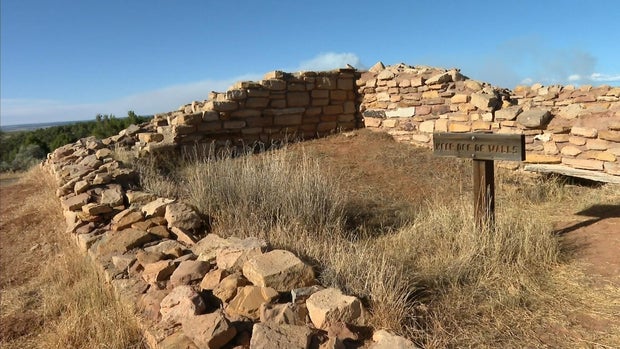
"Once a good house, always a good house. People tend to live in similar areas over time. We can find older artifacts from Paleoindian out here on this landscape, and in the same alcove they lived in over 10,000 years ago; maybe they were moving in the 1300s before they left this area."
It's easy to think these sites were abandoned and their occupants simply vanished. That is not the case.
"They've been moving across this landscape for hundreds and thousands of years," explains Posey-Monk. "There are 26 tribes, pueblos, and nations that are connected to this region. Working with the tribes directly is where you really get a chance to learn where people came from and, most importantly, they're still here."
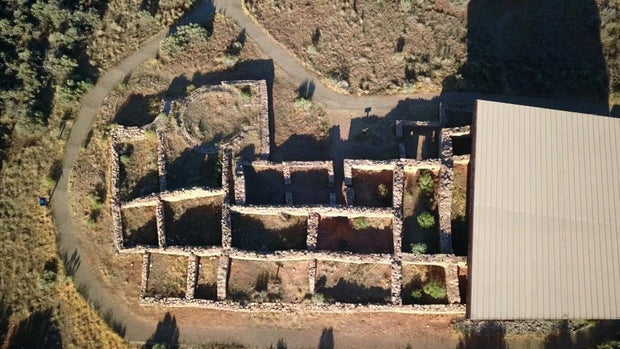
The visitor center sits atop a hill which holds five pueblos and nine kivas. It is the first Indigenous site to be documented by non-natives in Colorado. The Dominguez Escalante Expedition came to this site in 1776, led by members of the Santa Clara Pueblo. They were looking for a route from Santa Fe to the West Coast. The sites on this hill are just the tip of the iceberg compared to what is known to exist in the national monument.
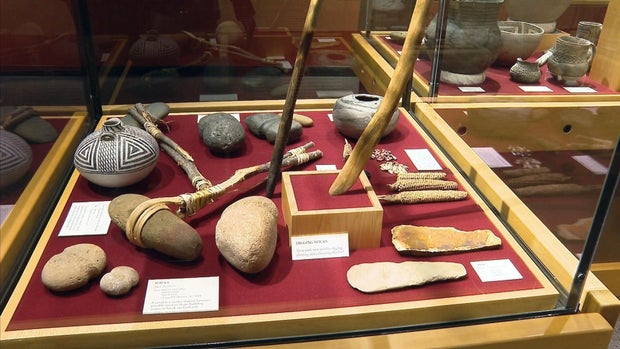
"We believe there are over 30,000 sites on the landscape." Park staff says only 13 of those sites are publicized and documented for visitors.
"Each of those sites represents a different type of architecture and even time period, so you can learn about the people through time, so you can learn about how they migrated across this landscape and came back."
The unpublicized sites lie hidden in the brush, fading back into the ground. That's intentional, according to Posey-Monk.
"We try to let the rest of them go back into the earth because that's what the tribes have asked. They want them to remain undisturbed because their ancestors are still here and things are meant to be in the ground."
Input from those tribes has shaped how the history of the region is presented to the public. Posey-Monk explains, "We don't know all the things that occurred and we're not meant to. It wasn't our culture. But they know their own culture. They know their own history."
Members of the tribes connected to the monument embrace the chance to tell their story their way.
"It's because it's ours," says Cassandra Atencio, an elder with the Southern Ute tribe. "It isn't where somebody else lived. It's where we, our people lived."
Atencio believes it's important to share that history with Western visitors, but says it's even more important to make sure the Native American youth understand it.
"Those are footprints that manifest and stay within their minds to help them know who they are. They're from this land. It's important to stay connected and know who they are and where they come from."
Atencio says the landscape grounds her and helps keep her connected to those who came before, "What you're seeing and touching is so much older than you. And to see something tangible and to be able to visit makes it important to all of us, especially us as tribal people."


