Aurora homeowners rebel against mandatory country club dues, say they're being "held hostage"

Some homeowners in Aurora's Blackstone community say they're being held captive by a country club — required to pay hundreds of dollars a month for a membership they say they don't want, can't opt out of and believe offers diminishing value.
"I would call it taxation without representation," said Shawn Martin, who says he is considering putting a stop to paying his mandatory dues.
The monthly fees at Blackstone Country Club have more than doubled for some residents since they purchased their homes. Homeowners interviewed by CBS Colorado said their dues, which were just over $100 a month when they bought their properties, have climbed to about $245 a month.
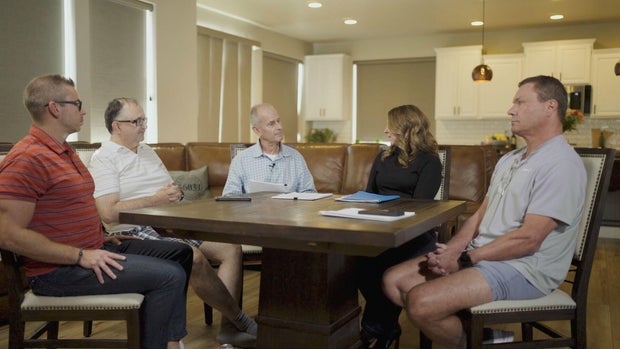
Now, a group of residents is pushing back. Some have stopped paying; others are considering doing the same, and residents say about 250 homeowners have signed a petition opposing the mandatory social memberships.
Their fight raises questions about the rights of homeowners, the power of private club owners and whether a financial obligation attached to a property should remain enforceable for as long as someone owns that home.
"I stopped paying a few months ago," homeowner Josh Reddell told CBS Colorado.
Asked whether residents feel held hostage by the arrangement, Martin answered emphatically, "Absolutely."
Blackstone Country Club, in southeast Aurora, features a golf course, swimming pool, fitness facilities, dining and other amenities. About 900 homeowners in the surrounding community are subject to covenants requiring them to maintain a social membership at the privately operated club for as long as they own their homes. Blackstone is operated by a company called Invited Clubs.
The membership provides access to lifestyle amenities, including swimming, fitness, racquet sports, dining and social events, but does not include full golf privileges. Golf memberships are available separately. And residents have to pay extra to attend social events and parties.
The requirement is spelled out in the community's recorded protective covenants. Invited Clubs, the company that operates Blackstone, also identifies a Resident Lifestyle Social membership as required for homeowners within the community.
For residents who bought their homes years ago, the arrangement has become increasingly expensive. The covenants do not establish a fixed dollar cap on monthly dues, leaving homeowners concerned about how high the charges could climb.
"And the amount of money they could charge us 600 a month and nothing we can do- just pay 600 a month," homeowner Heather Garber said.
Garber has stopped paying her dues, risking potential legal action by Invited Clubs.
Reddell has also stopped paying. He said the cost has climbed without a corresponding improvement in amenities and services. He also contends that some promised capital improvements never materialized.
"I'm not going to get bullied. I don't have time for bullies, and I'm not going to get bullied into paying for something I don't use and I don't think offers any value," Reddell said.
The homeowners argue that mandatory dues — roughly $3,000 a year at current rates — make their properties more expensive to own and could make them harder to sell. They also say the arrangement leaves residents with little leverage to demand better service because the club receives payments regardless of whether homeowners are satisfied.
"The club has no incentive to improve their services because they have indentured people who will continue to pay no matter what they do," homeowner Dmitri Pales said.
Mandatory membership with limited homeowner control
The homeowners' frustration centers on what they describe as an imbalance: They are required to pay for a membership but have no ownership stake in the club and little say in how it is run.
The club's position is that the membership requirement is part of the community's governing covenants. Residents who buy homes there assume an obligation that is tied to the property, rather than a conventional membership they can simply cancel.
That distinction is central to the dispute. Homeowners say they should be able to decide whether the club's amenities are worth the cost. The club's defenders argue that mandatory memberships help sustain private clubs that are part of a community's design and identity.
Invited Clubs disputes the suggestion that opposition to the dues is widespread. In a written statement, the company said it suspects the pushback is being driven by "a very small, but vocal number of residents."
The company also said more than one-third of Blackstone households have voluntarily upgraded beyond the required social membership to add programs and benefits.
But the residents interviewed by CBS Colorado pointed out that, even with their monthly social membership dues, they still have to pay extra if they want to attend events or parties at the club, such as the Haunted Hayride, Wine Expo, Santa Brunch and annual Fourth of July party. Their social memberships do not cover costs for special events they said.
The residents also expressed dissatisfaction with the club's "Employee Holiday Fund," which is a holiday bonus distributed among club employees. In a letter to members, they were told, "Your participation in this tradition is entirely voluntary." But the letter also said, "To simplify the process, we have included a suggested contribution of $50 on each member's account."
Residents who did not want to contribute to the holiday bonuses had to send an email or fill out a form to opt out.
Invited says it has invested more than $3 million
The homeowners' complaints about the value of their memberships are also disputed by Invited Clubs.
The company said dues have increased over the years because of labor costs and inflation. It said it regularly monitors the market and believes its social membership is "an incredible value" compared with memberships at clubs offering similar amenities.
Invited also said it has invested more than $3 million in recent years in improvements at Blackstone, including upgrades to the fitness facility, pickleball courts, pool and splash pad.
Invited further argued that Blackstone Country Club benefits the neighborhood beyond the amenities available to members. The company said the club preserves open space, supports drainage infrastructure and contributes to the character and identity of the community. It also contends that the club enhances the desirability and value of nearby homes.
The homeowners, however, say they should not be required to subsidize a private business simply because they live nearby — especially when they believe they are not receiving sufficient value for their money.
A fight reaches the Colorado Capitol
The dispute became part of a broader policy debate in 2026, when Colorado lawmakers considered House Bill 26-1316, known as the Private Membership Club Covenants bill.
As introduced, the legislation would have prohibited new covenants requiring residential property owners to acquire and pay for private club memberships beginning Jan. 1, 2027. It also proposed financial and operational disclosure requirements for clubs collecting dues under existing covenants.
During a committee hearing, an opponent warned that allowing homeowners to opt out could undermine the financial model of private clubs.
"The homeowners, if allowed to opt out, can unravel the financial model these clubs are built upon," said Rachel Carter of the National Golf Course Owners Association .
Whitey O'Malley, president of the National Golf Course Owners Association and owner of Saddleback Golf Club in Firestone, Colorado, argued that buyers are made aware of the obligation when purchasing a home.
"When someone purchases that obligation is not hidden ... attached to the property," O'Malley said during legislative testimony.
Real estate and golf industry representatives also argued that private clubs can be important assets to their surrounding communities.
"They exist because golf course owners have invested tens of millions of dollars to create the crown jewel of the community," said Jay Karen, CEO of the National Golf Course Owners Association.
The legislation failed to advance.
"It's a matter of choice"
Back in Blackstone, residents opposed to the mandatory dues say the issue comes down to whether they should have control over how they spend their money.
"It's a matter of choice. You should have the ability to have a choice. Its not a communist state. You should have the ability to make a decision with what you do with your money," Reddell said.
Martin said homeowners who object to the arrangement face a difficult choice. "You're basically stuck — move or don't pay, and expose yourself to getting sued by them — very scary for a lot of people," Martin said.
He said he is considering stopping his payments as well.
The dispute remains unresolved. For homeowners who no longer want the membership, the central question is whether they can change an obligation written into their property covenants — even if they have little say over the private business receiving their payments.


