Aurora advances permanent water restrictions, as reservoirs fall to nearly half of normal levels

As Colorado grapples with one of the driest years on record, Aurora leaders are advancing a series of permanent water conservation measures. It includes seasonal irrigation bans, restrictions on new lawns, and a prohibition on certain water-intensive cooling systems.
"Our reservoirs in Aurora are at 43% of capacity," said Kirby Shedlowski, manager of public relations for Aurora Water. "The 10-year average for this time of year is about 83%."
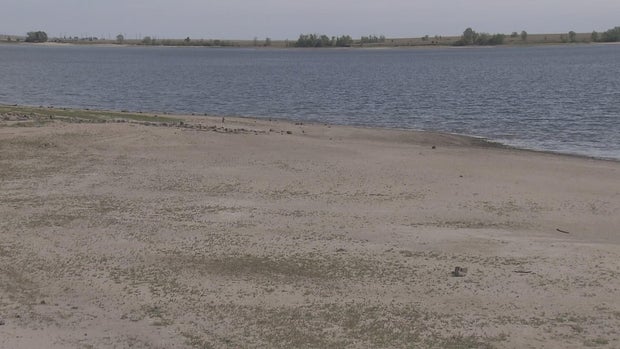
Shedlowski said Aurora customers have successfully reduced outdoor water use by 20% under existing Stage 1 drought restrictions. Still, she said the city continues to draw from reservoir storage as drought conditions persist.
"Think of this like your bank account, and continually drawing from your savings," Shedlowski told CBS Colorado. "How do you rebuild your emergency savings while you're still trying to pay your bills and live your life, and you still have that one source of income coming in, right? It takes time."
On Monday, Aurora City Council unanimously approved the first reading of ordinances that would ban most outdoor spray irrigation from Oct. 1 through April 30. The proposal also prohibits ornamental water features in new developments and eliminates the use of water-intensive cool-season grasses, such as Kentucky bluegrass, in new landscaping projects. Leaders say the goal is to move beyond short-term emergency measures and make lasting changes that reduce water demand.
"We're trying to be very responsible and making sure, 'How do we sustain our water into the future for future generations?'" said council member Françoise Bergan, who co-sponsored the ordinance.
One of the most significant changes would affect future landscaping. New developments would no longer be allowed to install cool-season turf grasses. Instead, developers would be required to use more drought-tolerant warm-season grasses. Aurora Water said varieties such as Tahoma 31 can use 60% to 70% less water than traditional bluegrass lawns. The ordinances would also ban new ornamental water features, including decorative fountains and ponds.
Another measure targets evaporative cooling systems in new commercial and industrial developments, including data centers.
"Evaporative cooling for a large or extremely large data center can get up into the millions of gallons of use per day," said Marshall Brown of Aurora Water, who spoke before council members during Monday's meeting.
The proposed irrigation restrictions would prohibit most spray watering between October and April, although some heavily-used turf areas, including sports fields, could qualify for exceptions. Officials say warmer temperatures have prompted residents to begin watering earlier in the spring, increasing pressure on the city's water supply.
"As the climate gets warmer, people do turn them on a little bit sooner, and so this would just be a restriction on how early they could turn them on," Shedlowski said.
The proposed restrictions have also renewed questions about growth in Aurora at a time when water supplies are strained. Bergan said city leaders have already begun scaling back future expansion.
"We have instituted some changes even with our growth," Bergan said. "We have a growth boundary that we recently reduced ... We will likely be doing another change in our comprehensive boundary."
Officials say the measures are intended to help Aurora adapt to both immediate drought conditions and long-term water challenges.
"Just because summer's ending doesn't mean we just stop thinking about how we use water," Shedlowski said.
The ordinances are scheduled to return to the Aurora City Council for a final vote later in September.


