A to Z with CBS Colorado's Alex Lehnert: B for Boreal Toad at the Denver Zoo
In this week's edition of CBS Colorado's A-to-Z with Alex Lehnert series, we spotlight the letter B for the Boreal Toads at the Denver Zoo Conservation Alliance. They may be small, but they have a big story.
"These are our boreal toads," said Kelsey Reynolds, animal care specialist at the Denver Zoo, as she pointed out the trio. "Alamosa, Eureka, and Blueberry. The only way we can tell them apart is by scanning their individual transponders."
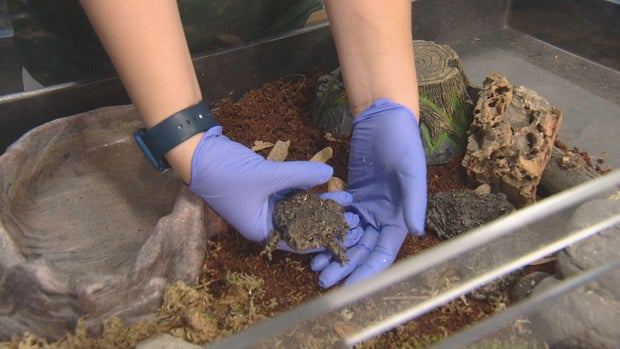
And while they may look like your average toad, these amphibians are anything but ordinary.
Reynolds says Boreal toads in Colorado are critically endangered, with estimates that there may be fewer than 1,000 individuals left in the wild.
That's where conservation efforts come in.
Each spring, these toads are part of a carefully managed breeding program. Once the tadpoles are ready, they're released back into the mountain wetlands to help rebuild the population.
In the wild, boreal toads survive harsh winters by essentially hibernating.
"They cool down their whole system, and they pretty much lie and wait for it to warm again, and then in the springtime, they come out to breed," Reynolds says.
To mimic that process, conservation teams place the toads in temperature-controlled environments, gradually cooling them in refrigerators during the winter, then slowly warming them back up in the spring.
These little toads are also considered key indicators of ecosystem health. Because they absorb so much from their surroundings through their skin, they're often the first to be affected when something in a wetland goes wrong. So, when boreal toads struggle, it can signal larger environmental issues.
Reynolds says the zoo's conservation programs are seeing success, with survival rates reaching as high as 99% through the early life stages before release.