Five attempts, 17 years: History Colorado exhibit explores the rocky road to statehood
It took five attempts and nearly 17 years for Colorado to become a state.
As CBS Colorado marks the state's 150th year, a CBS crew visited History Colorado, which chronicles that turbulent journey in its exhibit, "The 38th Star."
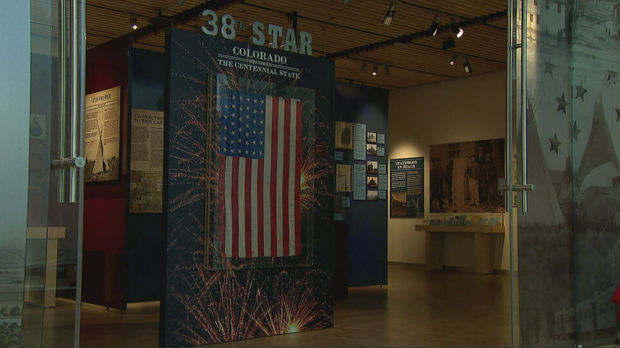
The exhibit tells the stories of Colorado's founding -- and the people whose voices shaped, or were silenced by, statehood.
"It was such a complex process because there were so many different groups of people, communities and municipalities that had ideas about what kind of state, what kind of place Colorado should be," said Katherine Mercier, Exhibition Developer and Historian at History Colorado.
The land that makes up the state was once home to people from 51 Native nations. The exhibit highlights three -- the Cheyenne, Arapaho and Ute.
"We really wanted to bring out the different ways that these Indigenous communities were and still are connected to Colorado," Mercier said.
Also present on the land in the 1800s were the descendants of Spanish settlers.
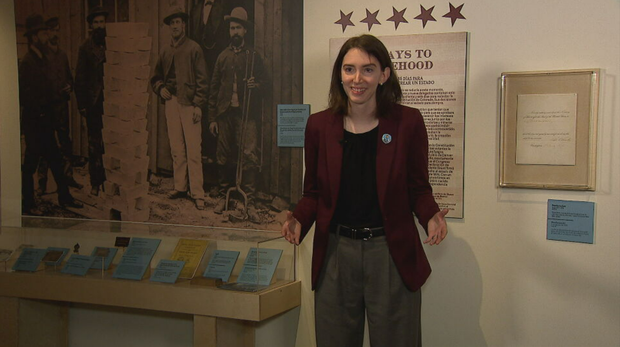
"We have these people who are living on the land that would become southern Colorado. They have deep cultural ties to the land," she said.
Yet Latino communities often felt excluded. Territorial legislation was not translated into Spanish, making it difficult to meaningfully engage in civic life.
"How can you be expected to follow laws that you can't read in your language?" Mercier said.
Economic tensions also stalled statehood. The Gold Rush of 1858 and 1859 brought more than 100,000 prospectors, creating urgent pressure for organized government.
"When you think about 100,000 miners flooding this land, what do they need? There's no laws, there's no system of government," Mercier said.
But miners balked at the taxes statehood would bring -- and opposed it.
"The idea of giving up the little bit of money that you had scrounged out of the ground was just impossible for these miners," she said.
The exhibit also illuminates a lesser-known chapter involving Black Coloradans. Since 1861, territorial law had allowed any person over 18 to vote, giving Black men the right to vote in Colorado Territory. But in 1865, a proposed state constitution added the word "white" to voting eligibility, stripping Black men of those rights. Prominent Black businessmen and community leaders organized a response, circulating a petition that collected 137 signatures from Black men opposed to the measure.
Members of Congress opposed moving Colorado statehood forward until Black men were given the right to vote. The effort helped spur the Territorial Suffrage Act, which passed in 1867 and granted voting rights to all U.S. men in the territories regardless of race.
On display is the original Fort Wise Treaty, signed by President Abraham Lincoln in 1861, which removed the Cheyenne and Arapaho from much of Colorado Territory. The Sand Creek Massacre accelerated that displacement.
"If you look at the map of Colorado today, there are no Cheyenne and Arapaho reservations located inside the boundaries of the state," Mercier said.
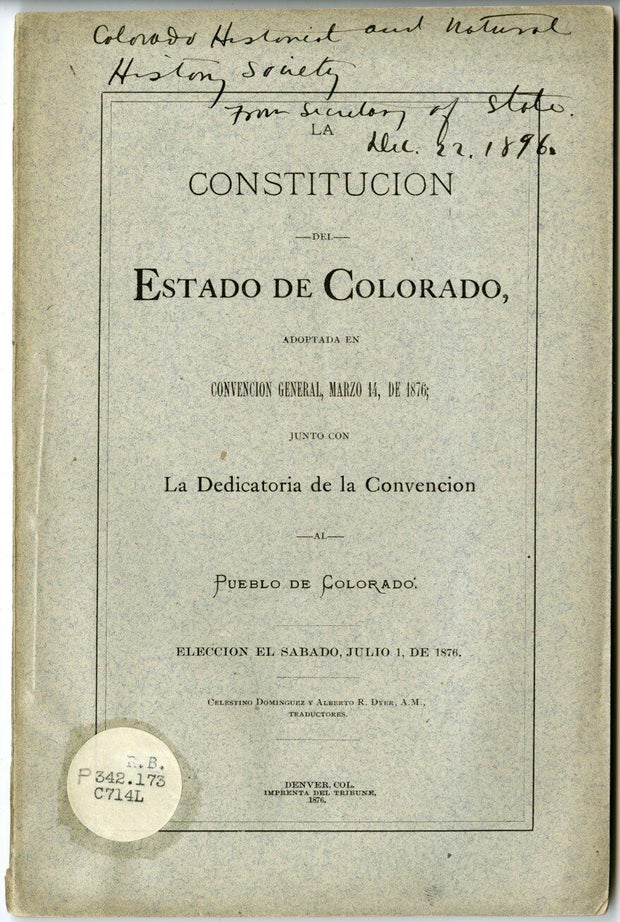
In July 1876, people in the territory finally agreed on a state constitution -- written in English, Spanish and German. On Aug. 1, with President Ulysses Grant's signature, Colorado became the 38th state.
"That is the proclamation that made Colorado the Centennial State," Mercier said, pointing at the original document on display.
To learn more about the 38th Star exhibit visit a special section of historycolorado.org.
Stay with CBS Colorado as the state turns 150. Throughout the year, we'll honor the past, celebrate the present and imagine what comes next.