Pre-fame Bob Dylan's Chicago: An aspiring teenage musician hanging out at a University of Chicago dorm
When you think of Bob Dylan, you probably think of Minnesota, or Greenwich Village in New York City, or upstate Woodstock — the actual town, not the 1969 festival at which Dylan didn't play.
But Chicago? And of all places, the University of Chicago, better known for groundbreaking research, Nobel Prize winners and the first self-sustaining nuclear chain reaction? You may never have heard about it, but yes, before Dylan made port in Manhattan and blazed his trail to fame, he did indeed spend about a month on and around a campus where, contrary to the self-effacing saying, fun most definitely was not coming to die.
Dylan, who turned 85 on Sunday, May 24, had other notable experiences in Chicago later, too — and he'll actually be back for a concert this summer. But Dylan's visit to the UChicago campus and Hyde Park as a 19-year-old remains the most notable, if not exactly one of the most talked-about, stories in his biography.
Dylan was far from a star on campus
Dylan was never enrolled as a student at UChicago. When he visited in December 1960, he had dropped out of college at the University of Minnesota several months earlier and embarked on a zigzagging journey that would ultimately take him to New York City, experts note. He also was not yet consistently calling himself Bob Dylan — experts say the 19-year-old typically still introduced himself as Bobby Zimmerman at the time.
The University of Chicago campus was known at the time as a hotbed of passionate musicians who went to great lengths to discover and learn folk songs.
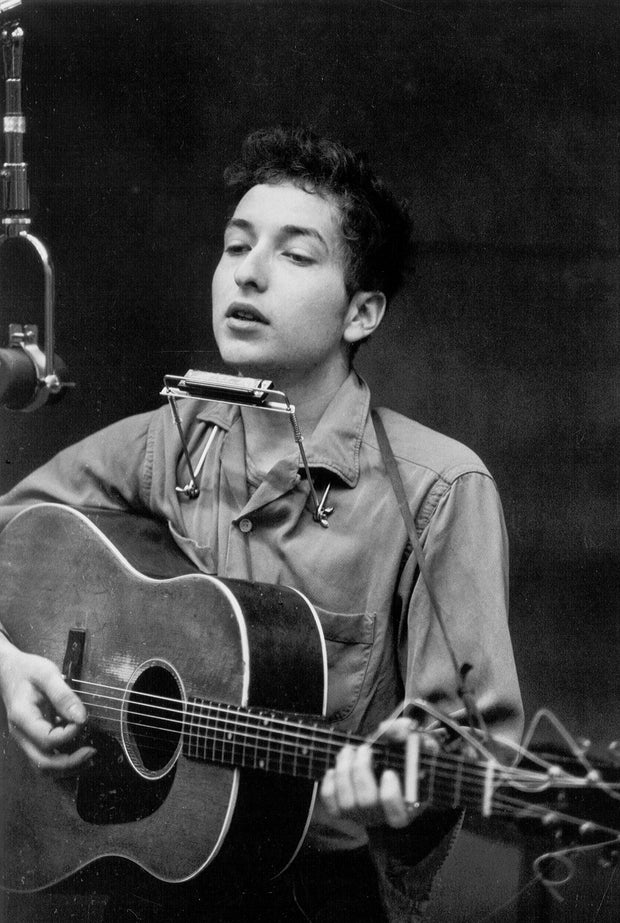
"It would have been natural for Bob Dylan to be in Hyde Park at that time, because at that time, there really wasn't a lot of places you could go to where you would find a lot of like-minded people who were really rediscovering this music recorded, you know, at the time, decades earlier," said Mark Guarino, author of the 2023 book "Country and Midwestern: Chicago in the History of Country Music and the Folk Revival." "It wasn't commercial music. It wasn't music on the radio. It was music you only heard by records or through somebody standing in front of you with a guitar and singing those songs."
Citing biographer Clinton Heylin, Guarino notes in his book that Dylan came to Chicago at the invitation of folksinger Kevin Krown, who was a student at the U of C at the time, but did not go on to graduate. They had met in Denver that past summer.
This was more than a month before Dylan went to the Greystone Park Psychiatric Hospital in Morris Plains, New Jersey, to visit Woody Guthrie, who by then had been suffering for years from Huntington's disease. But experts note that while in Chicago, Dylan was already all-in on Guthrie.
"[Dylan] really was so obsessed, as anybody — sometimes when you're young, you get so obsessed — that he wanted to dress like [Guthrie], he wanted to sound like him, he wanted to sing his songs, he wanted to live this sort of imaginary life like him, and he made up stories that he later falsely told people, later though, of his background," said Guarino. "So he really wanted to embody the idea of Woody Guthrie from the 1930s, you know, and so that's what made him a little unusual."
Dylan found a community of musicians on campus hanging out at a sprawling dormitory complex known for most of its existence as Woodward Court, but initially just called the New Dorms. The dorm complex was located at 5824 S. Woodlawn Ave., across from Frank Lloyd Wright's Robie House, from its opening in 1958 until it was torn down in 2002 to make way for a new building for the university's Booth School of Business.
Woodward Court was built as a women's dorm, but soon went co-ed. It was designed by celebrity architect Eero Saarinen and was known for its futuristic lobby with what one alum called "Epcot-futuro" stairs to the dining hall. It was also known, as described in a University of Chicago Magazine account, for "bleak basement corridors and sweaty cinder-block walls, small and frigid (or parching) rooms, and vertically ricocheting acoustics."
The U-shaped dorm complex originally crammed in 500 undergraduate and graduate students, but in the mid-1960s had been scaled down to house 330 undergrads, split between the Wallace, Rickert, and Flint House communities, UChicago Magazine reported. The house names survive at the Max Palevsky Residential Commons, which were built to replace Woodward, along with a fourth house also called Woodward.
In the 1970s, reports from UChicago say, Woodward was known as the "Pharmaceutical Society," and not because of an abundance of biotech majors. But in December 1960, when it was only a couple of years old, what was then still the New Dorms was the center of action for young musicians. The building had just the architecture for physics student and blues master Elvin Bishop, taking advantage of those vertically ricocheting acoustics while playing his old dobro, as described in Guarino's book. The dorm also became a destination for "twist parties," which began as record hops but became dance parties with live electric bands.
In other words, the New Dorms would have been where Dylan wanted to be. Guarino said Krown was pushing Dylan to play shows, and eyewitnesses quoted in Guarino's book remember one on the steps of the dorm lobby, drawing 15 or 20 people for a program of Woody Guthrie covers.
There is a reason, experts said, that this show has not gone down in history as a seminal moment in the development of an icon.
"He's pretty green with all this stuff, and I would be surprised if everyone was like, 'Ooh, you've got to hear this hotshot who's over staying in the dorm, because I haven't heard anyone really rave about how he sounded in 1960," said UChicago music professor Steven Rings, author of the 2025 book "What Did You Hear? The Music of Bob Dylan."
Guarino said it was likely that the Woody Guthrie affectation, in addition to coming off as sort of weird, might not have been pleasant listening for young people used to a more polished vocal style.
"He was trying to sound like Woody Guthrie, and he was trying to sound like somebody much older than he was, so he had this affectation to his voice, and you really do hear it on the first record. And if you think about at the time … again, the music was not commercial, folk music was not commercial, and he's trying to sound like somebody from the Dust Bowl," Guarino said. "And so for students who grew up listening to Elvis Presley and more pop crooners on the radio, this guy must have sounded completely awful to them, and yet generally, people who were just kind of casual music listeners."
Few would bat an eye today at a singer with raw, rootsy, and even scratchy vocal style, Guarino noted, citing Jesse Welles as a contemporary example.
"But back then, no," Guarino said. "That was completely strange, and so people, pretty much all accounts, were like, 'Wow, this guy, who is this guy?' He dressed kind of like a hobo, he had a little hat on, and he sounded like none of their other peers."
In his book, Guarino quotes Bishop, a blues guitarist who went on to play with the Paul Butterfield Blues Band, as being dismissive of the 19-year-old pre-fame Dylan in just such a fashion.
"Little chipmunk-faced guy with a flat hat and a pea coat on," Bishop, who will be a headliner at this year's Chicago Blues Festival, said in Guarino's book. "'Oh, this poor bastard seems to be a nice guy but is never going to make it. Listen to that voice.' His harmonica playing was useless, too."
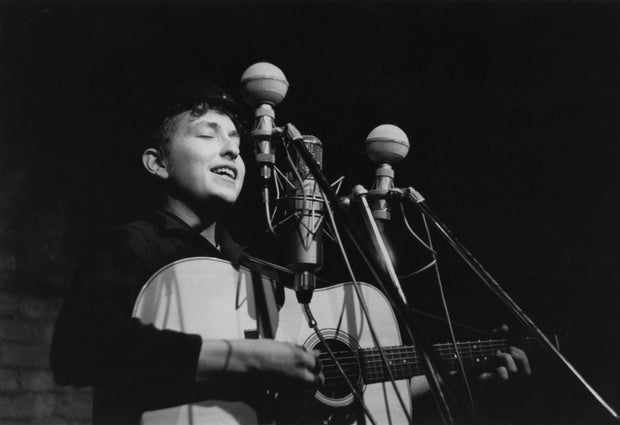
When Dylan wasn't staying in the dorms, he had to find alternatives — one of which was a closet in a college student's apartment. Then-UChicago undergrad Paul Levy told Guarino that he put up Dylan for three days in a "deep, door-less closet" that was the only suitable space in his ground-floor apartment on 53rd Street.
Dylan also hung out at the Fret Shop, which sold and repaired guitars and other instruments and also offered lessons, as well as just being a space to hang out for aspiring musicians. Mike Bloomfield — a blues guitarist and Glencoe native who went on to play with the Paul Butterfield Blues Band and the Electric Flag, and later helped drive Dylan's transition to electric arrangements — was also a Fret Shop regular, though his encounter with Dylan came later.
"People were not, especially middle-class or upper-middle-class people. It wasn't a normal thing to have guitars around the house. And so that was just starting to enter the home, guitars and things like that," Guarino said. "And so, if you were a young person and you heard this music on a record, it wasn't easy for you to, there probably was not a guitar shop in your town, and so that's why this place, the Fret Shop, became such a desirable place for young people to flock to and hang out during the day, because that's where that's where they would find people like them."
Then-UChicago student Kit Kollenberg, girlfriend of U of C Folk Festival founder Mike Fleischer at the time, said in Guarino's book that Dylan hung out at the Fret Shop so often during his stay in Hyde Park that she figured he worked there. She said he was "just another kid hanging out at the guitar shop," who would surprise everyone by putting out an album a year later and becoming monumentally famous.
At the time, the Fret Shop was located at 1551 E. 57th St., east of the overhead railroad tracks that then carried Illinois Central trains (today the Metra Electric and South Shore Line trains), and only a short walk through the park from the Museum of Science and Industry. An archived Hyde Park Herald report notes that the Fret Shop occupied a storefront in what had once been a concession stand for the 1893 World's Columbian Exposition, part of a community art colony.
After those buildings were demolished, the Fret Shop moved to the first incarnation of the Harper Court shopping center at 53rd Street and Harper Avenue. It is referenced in newspapers there as late as 1980, but has not been around anytime recently, and there's no report of Dylan having visited again.
Experts do, however, believe that Dylan came back to Chicago and Hyde Park very soon after decamping for New York early in 1961.
A return to Chicago for the first U of C Folk Festival
Longstanding rumor has it that while Dylan was on the UChicago campus in December 1960, he auditioned to perform at the University of Chicago Folk Festival and failed to make the cut. Neither Rings nor Guarino knows for sure if that story is accurate or apocryphal.
But while Rings initially didn't think it would have made sense for Dylan to turn around and come back to Chicago for the first U of C Folk Fest in early February 1961 after just arriving in New York, he now says it is likely that Dylan did just that.
The narrative of Dylan's journey is that after moving on from Chicago he headed north and a little west to Madison, Wisconsin, before his journey to New York. In Madison, he met two other musicians who did make the roster for the U of C Folk Festival.
"Dylan would have met these two guys, Marshall Brickman and Eric Weissberg, in Madison, and they went out to New York when Dylan did," Rings said. "I'm not certain if they were all in the car together, but they arrive at the same time — maybe they were — and they would have talked about the University of Chicago Folk Festival, because they did play at it, and so they went back, and so now it's entirely plausible that Dylan caught a ride with them."
Brickman and Weissberg were "hotshot bluegrass players" at the time, Rings said. They performed as Marshall Brickman & Co. at that first Folk Festival, organized by the University of Chicago Folklore Society.
Guarino said there are many eyewitnesses who spotted Dylan at festival, too. Rings noted that there is a photo out there of Dylan at what appears to be Ida Noyes Hall — the student center building where, then as now during the Folk Festival, music workshops were held during the day ahead of performances at Mandel Hall at the Reynolds Club a few blocks away.
Headliners for that first U of C Folk Fest included the New Lost City Ramblers, an old-time string band that included Pete Seeger's younger half-brother Mike; Appalachian banjo players and singers Frank Proffitt and Roscoe Holcomb; folk musician and Old Town School of Folk Music cofounder Frank Hamilton; Chicago blues icon Willie Dixon; and folk and blues virtuoso Elizabeth Cotten.
Also on the roster were bluegrass duo the Stanley Brothers, and there are accounts in "Country and Midwestern" of people who saw Dylan jamming with the duo.
In an account published by the University of Chicago Magazine in 2012, Folklore Society member Mike Michaels said he joined in the jam, and invited Dylan to appear on his radio show on UChicago station WUCB, a predecessor to today's WHPK — where they played Woody Guthrie songs and other material together. Guarino said there are no surviving recordings of this occasion.
We don't know what kind of impression all the acts at the 1961 U of C Folk Festival might have made on Dylan, who, of course, has never confirmed that he attended the festival. But Rings wishes we could find out.
"I would love to know what he thought of Elizabeth Cotten … this amazing guitar player, plays left-handed with the strings upside-down," Rings said.
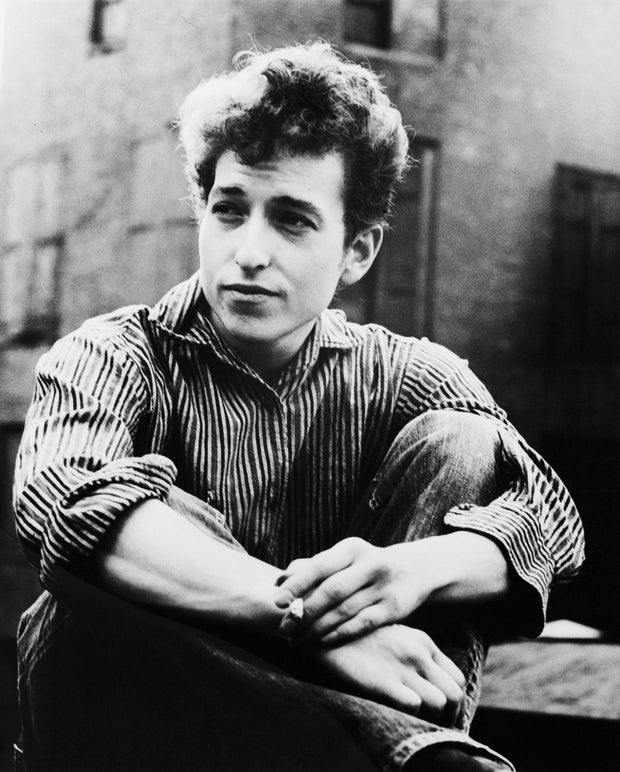
Meanwhile, back in New York about eight months later, critic Robert Shelton issued a flattering review of Dylan's performance at Gerde's Folk City in Greenwich Village, calling him "a cross between a choir boy and a beatnik" who was "one of the most distinctive stylists to play in a Manhattan cabaret in months." The review was credited with helping Dylan's career take off — much to the surprise of people like Brickman and Weissberg.
"Dylan was not a hotshot, was never a hotshot, and when Dylan got his big break in late in September 1961 from this Robert Shelton review, Weissberg and Brickman were among those who were like, 'What now? That guy? That kid? Like, what about us?'" Rings said.
Did Dylan run away to Chicago as a boy years earlier? (No.)
Scour the record for old Dylan interviews and you might be led to believe that he had a formative experience in Chicago many years before showing up in Hyde Park in his late teens.
The second paragraph of an interview with Dylan for the September 1962 issue of Seventeen magazine claims that Dylan ran away to Chicago when he was 10 years old. Dylan was quoted as saying that he saw a man playing guitar on the street and "went up to him and began accompanying him on the spoons. I used to play the spoons when I was little."
The musician is not identified in this quote, but Chicago blues musician Big Joe Williams had his own story about meeting Dylan, which appeared in Shelton's book, "No Direction Home: The Life and Music of Bob Dylan." Williams claimed that Dylan was no older than 6 at the time.
"Well, I was just working on the streets of Chicago then, the way I had done since 1927. Somehow or other, he knew songs I had made on records, like 'Baby, Please Don't Go' and 'Highway Forty-Nine.' He met me on the North Side, around State and Grand, and we just walked down to State and Thirty-Fifth Street. I was working, singing, all the way along," Williams was quoted in the book. "If we came up to some cabaret where he couldn't get in because he was too young, I would just leave him outside on the curbstone. It must have taken us about three hours to make that trip. Bob was asking me all sorts of questions. He said that he was going to do this sort of thing one of these days, and I said that he would, because he had a lot of talent."
Do those stories sound fishy? They should, because neither is true.
Big Joe Williams really was a mentor for Dylan, and they recorded together. But this was in New York when Dylan was building his career in the early 60s, not when Dylan was a little boy. Shelton speculated in his book that Dylan likely actually first met Williams on his December 1960 Chicago visit.
As a young man, Dylan was known for making up tall tales about his background. Guarino's book notes that on his early visits to Chicago, Dylan told people that he was from New Mexico and came from a family of ranchers — Michaels said in the UChicago Magazine article, "I had no reason not to believe him."
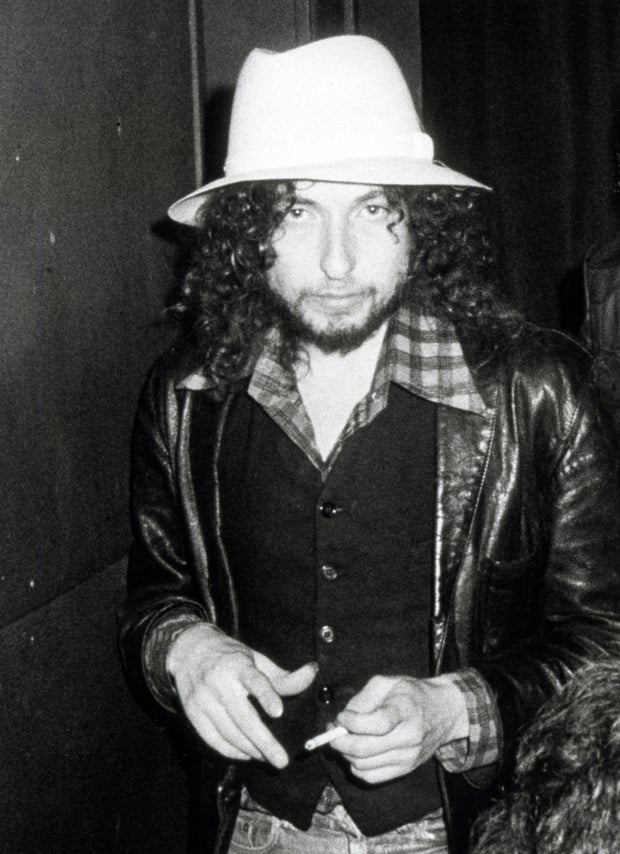
Dylan also told colorful stories about working for a traveling carnival, or possibly more than one, from the ages of 13 to 19. In various interviews, he claimed he ran rides and learned songs at the carnival and claimed that it featured a freak show.
None of this is true either. Dylan was born in Duluth, Minnesota, and grew up in Hibbing in a middle-class family. Rings noted that as a boy, Dylan left home to attend Herzl Camp, a Jewish summer camp, in Wisconsin. He did not run away from home as a youngster, he did not work for a carnival, and his father, Abe Zimmerman, did not live in New Mexico and was not a rancher — he and his family ran a furniture and appliance store in Minnesota.
Fans are well aware that Dylan is still known for pulling a fast one on his fans from time to time. In 2019, the Martin Scorsese movie "Rolling Thunder Revue: A Bob Dylan Story" featured real concert tour film from the mid-1970s jumbled together with made-up stories and characters whom Dylan talks about as if they were real. For instance, did Sharon Stone really join the tour at the age of 19 and have a fling with Dylan, as she herself claims in an interview for the film? No, that story is no less made-up than the one from Dylan about playing the spoons on the streets of Chicago when he was 10.
Meanwhile, why would Big Joe Williams make up his own frankly ridiculous tall tale about running into an unaccompanied and implausibly precocious 6-year-old Dylan, and then walking more than four miles through downtown Chicago onto the South Side with him? Rings had an idea.
"Eventually, everyone, especially people who were like annoyed by this little twerp early on, eventually when he becomes huge, they want to say, 'Oh, actually, you know, I was there,'" Rings said.
Dylan's other Chicago connections
Dylan may not have had occasion to hang out in Hyde Park or any other part of Chicago once he became famous. But Chicago factored into his life's narrative on a few more notable occasions.
On April 25, 1963, Dylan played a show at a folk music club called The Bear, located at 22 E. Ontario St. in what we'd now call River North. In "Country and Midwestern," Guarino notes that by the time Dylan played at The Bear, his debut album had been out for more than a year, but had not been a success, while "The Freewheelin' Bob Dylan" was due out the following month.
Guarino writes that Dylan performed at The Bear before a crowd largely composed of guitar students before the Old Town School of Folk Music, and debuted many new songs that would appear on his soon-to-be-released album.
It was also at The Bear where he connected with guitarist Mike Bloomfield, Guarino writes. Bloomfield went on to join Dylan for the recording of his "Highway 61 Revisited" album and was the lead guitarist when Dylan famously, or infamously, went electric at the Newport Folk Festival in 1965.
There is no building that carries the address of 22 E. Ontario St. anymore. The former site of The Bear, right across the street from the Medinah Temple building where Bally's Chicago casino is now located, is occupied by a parking garage.
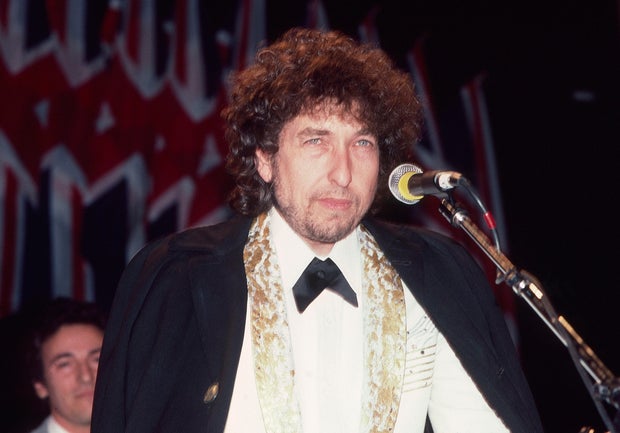
A day later, on April 26, 1963, according to most sources, Dylan sat for a WFMT radio interview with the legendary Studs Terkel — who had also been emcee of that first U of C Folk Festival. Dylan played "A Hard Rain's A-Gonna Fall," while explaining that the song was not about "atomic rain." He also played several other songs, ending with "Blowin' in the Wind," while talking with Terkel about his lyrics, influences such as Woody Guthrie and Big Joe Williams, and denying that he is a "topical songwriter."
"I think, Bob Dylan, we have just the touch of you now, and I hope this is chapter one involving your visits to Chicago," Terkel says at one point in the interview.
Meanwhile, Guarino notes, native Chicagoan Albert Grossman — who cofounded Chicago's famous Gate of Horn folk club in 1956 and was also the man behind The Bear — became most famous as Dylan's manager beginning in 1962.
"He met and brought [Dylan] to Chicago and managed him really through all the really kind of pivotal years," Guarino said of Grossman.
Years later, Dylan launched his 1974 tour with The Band — his first North American tour in eight years — at the Chicago Stadium.
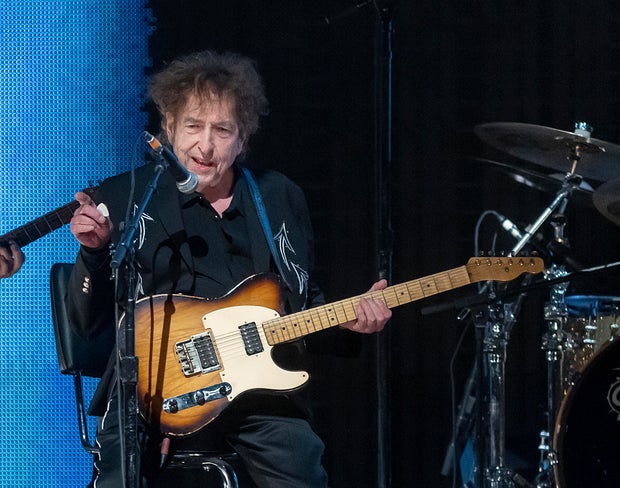
Guarino also notes that Dylan was an admirer of all manner of Chicago musicians, from key 1960s-era folk revival figure Bob Gibson to a variety of Chicago blues artists.
On the evening of Wednesday, July 8, Dylan will be back in Chicago again. He will bring his "Rough and Rowdy Ways" tour to the Huntington Bank Pavilion at Northerly Island, with special guests Lucinda Williams and the John Doe Folk Trio.
Guarino said he's hoping to attend.