Mayor Brandon Johnson continues push to keep Bears in Chicago after Illinois lawmakers punt on stadium deal

Mayor Brandon Johnson on Wednesday said he remains confident about Chicago being the best spot for a future Bears stadium, despite the team's repeated public assertions that the city is off the table.
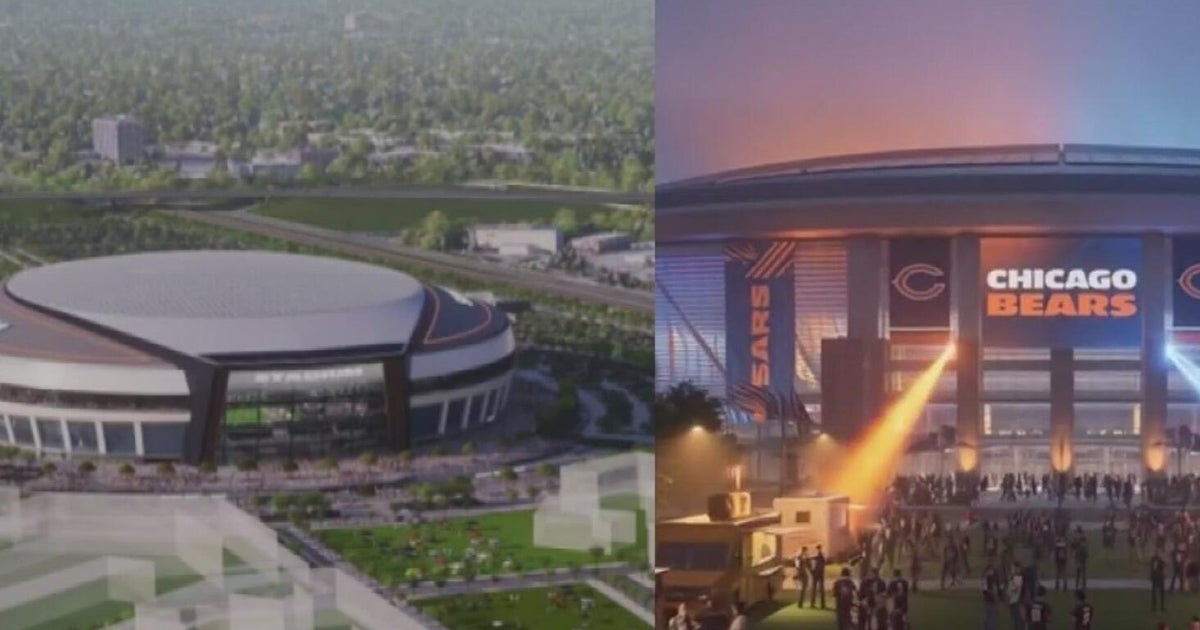
The Bears have publicly said they've exhausted opportunities to have their future stadium stay in Chicago, and their focus is on northwest suburban Arlington Heights and Hammond, Indiana.
But the mayor said the Illinois General Assembly's failure to pass legislation supporting a Bears stadium project during their spring session is a chance to revisit his proposal for the team to stay in Chicago.
"The best place for a fan to enjoy our Chicago Bears, it's downtown," Johnson said during a radio appearance on 104.3 The Score.
The mayor said his plan to keep the Bears in Chicago continues to be the best option.
"We are the only city that has put forth a viable plan for a publicly owned stadium that the people of Chicago could continue to enjoy, and the people of the city would own the stadium," he said.
Johnson has continued to push for the city's 2024 plan of relying on the Illinois Sports Facilities Authority and its 2% hotel tax to help fund a new Bears stadium on the lakefront, along with the team paying for a portion of the construction cost.
"I'm saying that, as fans, as elected leaders, this is an opportunity for us to come together to ensure that our Bears remain in Chicago," Johnson said.
Johnson cast doubt over Arlington Heights and Hammond, claiming his plan better protects taxpayers and keeps the team on the lakefront.
"The two other locations that have been discussed, there's no traffic study, there's no environmental study," he said.
Johnson said he and the Bears were negotiating what he called a "term sheet" for a potential new stadium on the lakefront earlier this year, but acknowledged they haven't had any contact since April.
"Up until April, we were working out a term sheet, because that's what you do in negotiations," he said.
However, since April, the Bears have said Chicago is no longer a viable option.
Former alderman and retired University of Illinois Chicago political science professor Dick Simpson said a state lawmakers' lack of action on a Bears stadium deal has left an opening, but the issue remains an uphill climb for Johnson.
"The fact that the legislature wasn't able to come to an agreement was a bad sign about keeping the Bears here," he said. "It's still pretty unlikely. The Bears and the state have, each the time the issue has come up, said that Chicago is dead as a possibility."
Katie Krall, a sports finance professor at Northwestern University, said while the Bears stadium saga can seem drawn out, the stakes are high, and have been seen in other stadium deals across sports.
"There are instances of teams leaving cities that they've been in before; that exodus and that relocation leaves scars," she said. "I would say that the back and forth or the absence of a clear, easy solution isn't surprising. If anything, it's a reflection of the amount of time and intentionality that you have to have with an issue of this scale and this impact."
Johnson said he aims to continue communication with the Bears, state lawmakers, and the governor.