Trump waives Jones Act for 60 days in effort to ease energy prices
President Trump on Wednesday issued a 60-day waiver of the Jones Act, a move aimed at lowering energy prices by letting foreign ships move fuel between U.S. ports.
The 100-year-old law requires goods shipped between American ports to be carried on ships that are U.S.-built, -flagged and -crewed, and also limits the number of tankers domestic shippers can use.
"President Trump's decision to issue a 60-day Jones Act waiver is just another step to mitigate the short-term disruptions to the oil market as the U.S. military continues meeting the objectives of Operation Epic Fury," White House press secretary Karoline Leavitt said in a post on social media. "This action will allow vital resources like oil, natural gas, fertilizer and coal to flow freely to U.S. ports for sixty days, and the Administration remains committed to continuing to strengthen our critical supply chains."
The waiver comes as global oil and U.S. gas prices have surged due to the Iran war, and the Trump administration comes under pressure to take steps to tame rising energy costs.
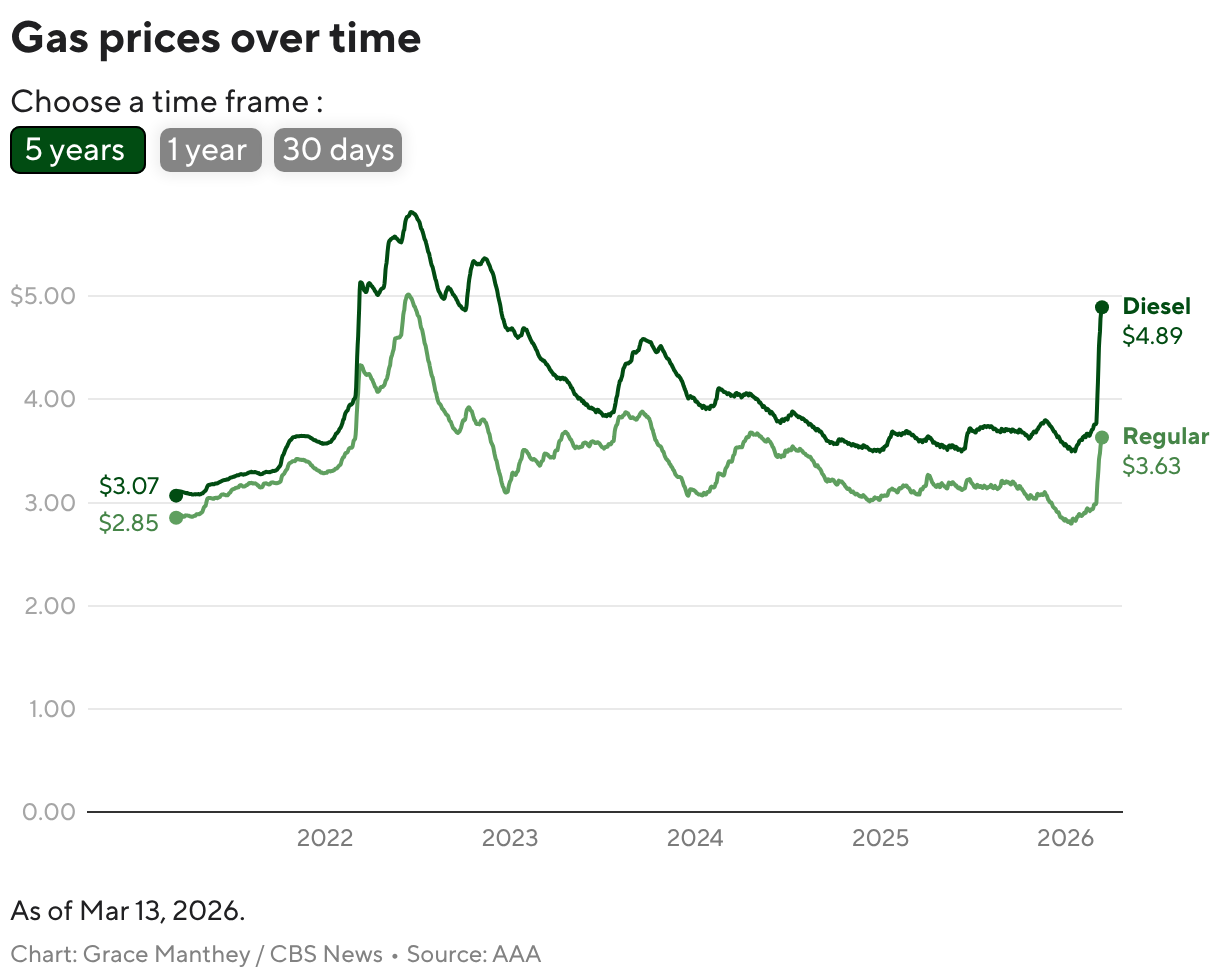
On Wednesday, the average national gas price in the U.S. rose to $3.84 a gallon, up from $2.92 a month ago, according to AAA. Diesel prices have jumped even more, topping $5 gallon this week, which is the highest level since December 2022.
The Trump administration can temporarily lift the Jones Act in the name of national security. But experts are skeptical that a waiver will deliver meaningful cost savings.
A recent analysis from the Center for American Progress, a nonpartisan policy institute, estimates that waiving the law would reduce gas prices by three cents per gallon.
In another move to curb energy prices, the U.S. on Wednesday also eased sanctions on Venezuela to allow U.S. companies to do business with the country's state-owned oil and gas company. The U.S. Treasury Department is authorizing Petróleos de Venezuela S.A to sell Venezuelan oil to U.S. companies and on global markets.