Heat wave looms for Chicago area with heat index pushing into triple digits



The Chicago area is facing a dangerous heat wave next week, with humidity pushing temperatures into the triple digits and excessive heat warnings likely.
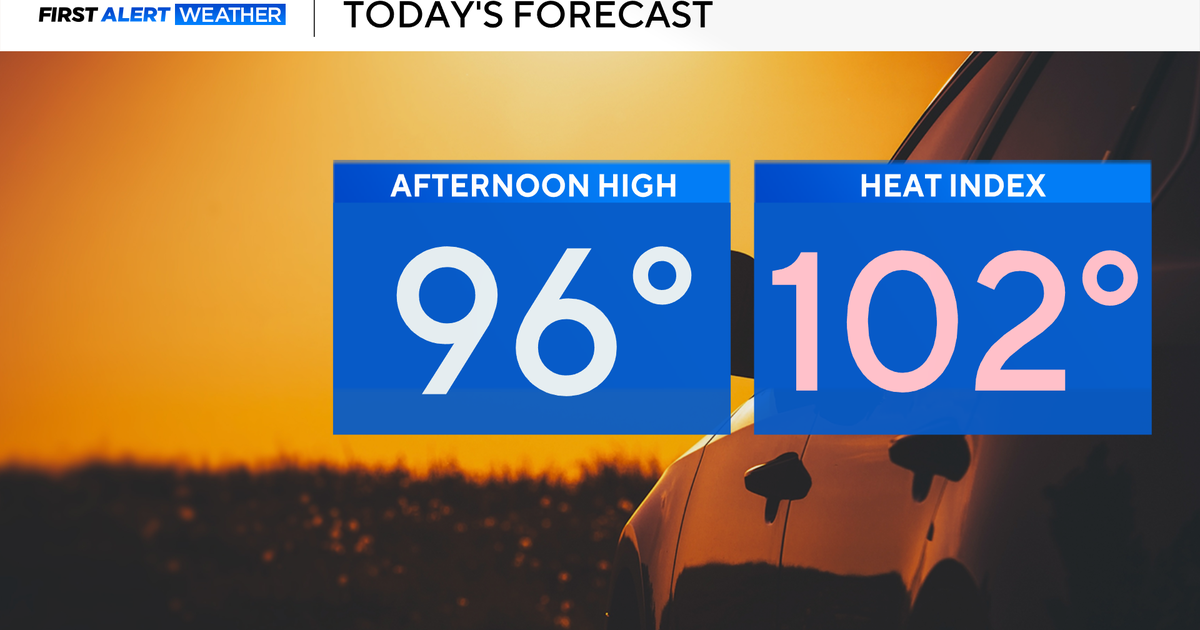
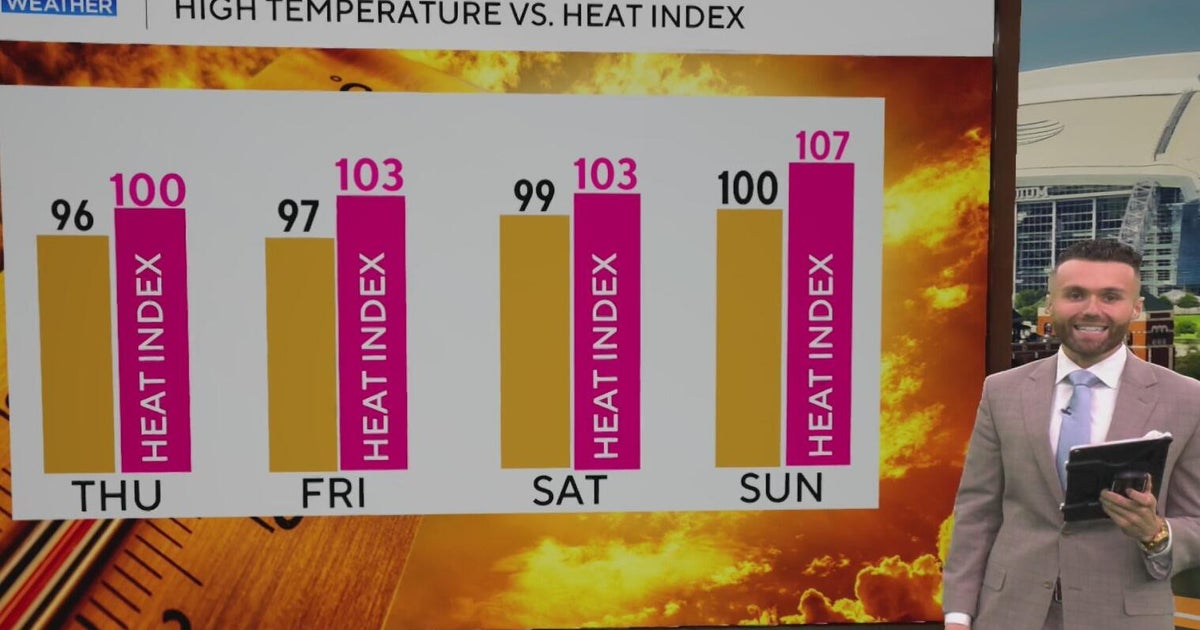
Dangerous heat and humidity will begin to build into the area starting Monday and likely continuing all week. Air temperatures are expected to be in the mid- to upper-90s for five or more days, with humidity making it feel like anywhere from 100 to 110 degrees each day.
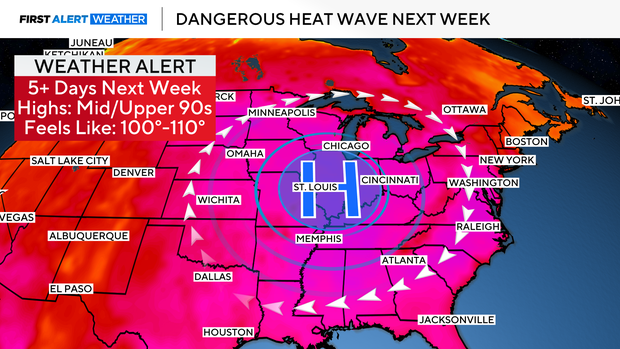
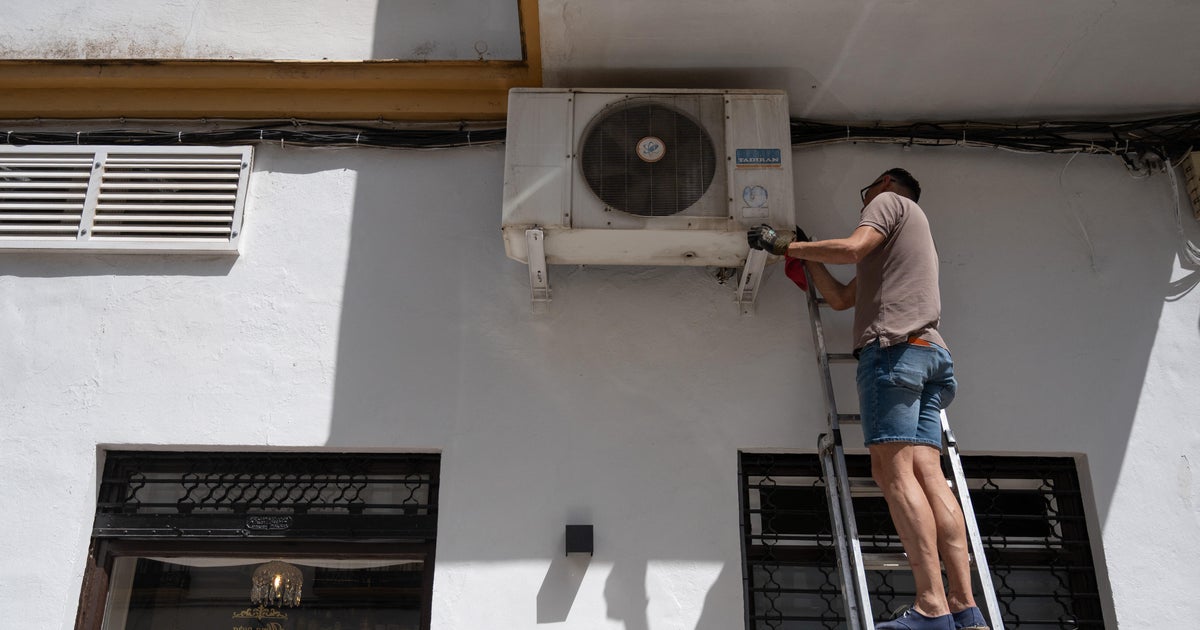
The high heat index creates a much higher risk of heat-related illnesses, especially for children, the elderly, people with chronic illness or health issues, especially respiratory issues, and people without reliable air conditioning.
Next week could bring Chicago's first stretch of five or more consecutive days at or above 95 degrees in 12 years.
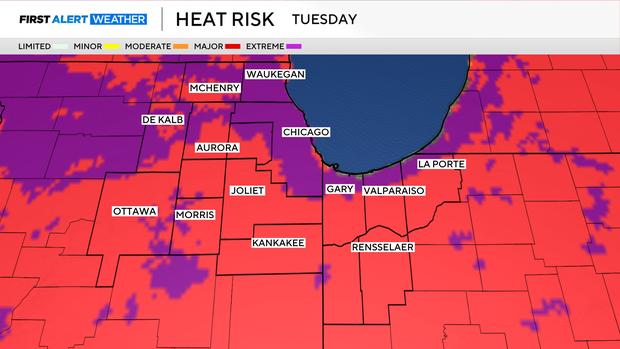
To stay safe, you should limit strenuous outdoor activity during the hottest part of the day, and find ways to stay cool before the heat settles in on Monday. If you can, check on your vulnerable neighbors during the heat wave to make sure they're staying safe.
If you need to request a wellbeing check during the heatwave, call 311. If you or someone you know is experiencing a heat-related illness, you should call 911.
Find cooling centers in Chicago and Cook County
Chicago's cooling center locations are typically open from 9 a.m. to 5 p.m. Monday through Friday:
- Englewood Center (1140 W. 79th St.)
- Garfield Center (10 S. Kedzie, open 24 hours)
- King Center (4314 S. Cottage Grove Avenue)
- North Area Center (845 W. Wilson Ave.)
- South Chicago Center (8650 S. Commercial Ave.)
Garfield Center is open 24 hours, seven days a week.
Chicago's Office of Emergency Management and Communications also maintains a map of all cooling centers and public facilities in the city that can be used during a heat wave if you don't have reliable air conditioning. The map is interactive and lists all facilities, their locations and their hours.
Cook County has dozens of cooing centers that are open and available during the summer, and also often extends their hours heat events.
Two locations are open 24 hours a day at all times: the Evanston cooing center at 1703 Orrington Avenue and the Hazel Crest Department of Fire and Rescue at 3000 W. 170th Place.
Several other cooling centers are open 24/7 during heat waves:
- Orland Park Police Department at 15100 S. Ravinia Avenue
- Bettenhausen Rec Center in Tinley Park at 8125 W. 171st Street
- Tinley Park Police Department at 7850 W. 183rd Street
- Tinley Park Public Safety Building at 17355 S. 68th Court
Chicago's public swimming pools are also open for the season and can be used to cool down during the heat wave, but remember to stay hydrated and know that the hottest part of the day is still dangerous even if you're in water.
Know the treatments and symptoms of heatstroke and heat exhaustion
The greatest health risks during a heat wave are heat exhaustion and heatstroke.
It is easy to become overheated and dehydrated during excessively hot weather; it is essential you drink water and drinks with electrolytes to stayed hydrated and stay safe during heat waves.
Heat exhaustion is milder than heat stroke, and can develop over days instead of minutes or hours. Heat exhaustion symptoms include headache, nausea, dizziness, weakness, irritability, thirst, heavy sweating, high body temperature and decreased urine output.
To treat heat exhaustion, move into a cool indoor space or shade immediately, drink liquids, remove unnecessary clothing including socks and shoes, use cold water or a cold compress on the head, face and neck to cool down, and frequently sip cold water. The CDC also encourages calling 911 or taking the person to an urgent care clinic or the emergency room for treatment.
Symptoms of heatstroke include confusion, altered mental status, slurred speech, hot and dry skin or profuse sweating, very high body temperature, loss of consciousness, and very high body temperature. If treatment is delayed, it can quickly become fatal, the CDC warns.
If you are with someone experiencing heatstroke, call 911 immediately and stay with that person until paramedics arrive. Move the person into a shaded, cool area, remove their outer clothing and work to cool them down as quickly as possible, preferably with cold water or an ice bath. You can also get the skin wet, place cold, wet cloths on the skin or soak their clothing with cold water. You should also fan them to get air circulating around them which will help water and sweat evaporate and also help cool them down.
If you can, place cold, wet cloths or ice on their head, neck, in their armpits and on their groin to help cool them down faster.
Protect your pets from extreme heat
Heat waves can also be dangerous and even fatal for family pets. Dogs may need booties to protect their paws from hot pavement; Best Friends Animal Society recommends holding your hand to the pavement for 7 seconds before a walk. If you can't do so comfortably, it's too hot for your dog to be walked without paw protection.
If you don't have paw protection, walk your dog somewhere without pavement where they can be in the grass, which stays cooler.
Never, ever leave your pet unattended in a hot car and know that pets also get dehydrated quickly, so have plenty of fresh cool water on hand.