Historic downtown Chicago building, Jackson Park bridge make Preservation Chicago 7 most endangered list

On this 188th birthday of the City of Chicago, Preservation Chicago issued its list of what it has deemed the seven most endangered buildings and structures for 2025.
The nonprofit organization has been putting out the list of what it calls imminently threatened historic buildings and community assets since 2002, in hopes of saving them from demolition.
Delaware Building
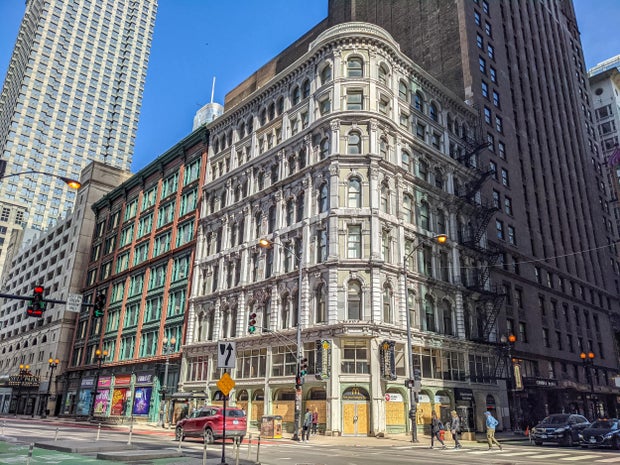
First on this year's list is the Delaware Building, which has stood for more than 150 years at the northeast corner of Randolph and Dearborn streets. Preservation Chicago noted that the building, originally known as the Bryant Block, is one of only a few buildings still standing from the early downtown reconstruction period in the wake of the Great Chicago Fire of 1871.
The Delaware Building was constructed between 1872 and 1874, and remodeled and expanded in 1889, according to Preservation Chicago. It was designed by the firm Wheelock & Wheelock — led by architectural luminary Otis Leonard Wheelock.
The Delaware Building was there standing right next door when a fire blasted through the Iroquois Theater at 24-28 W. Randolph St. and killed 602 people. The Delaware is also more than half a century older than the stately Nederlander Theatre building that has stood next door since 1926.
Preservation Chicago noted that the Delaware Building has a variety of striking architectural features — including alternating square- and round-arch lintels that feature inset keystones and Corinthian capitals, and alternating Doric and Ionic pilasters that rise to the upper floors.
But for several years now, most of the ground floor has been vacant. Preservation Chicago noted that McDonald's Corporation holds a 99-year lease on the lower two floors of the Delaware Building, on which about 50 years remain. But the McDonald's that used to be in that space, which featured a distinctive sign outside modeled after a theater marquee, has been vacant since the start of the COVID-19 pandemic.
Paul Young Jewelers also occupies part of the ground floor.
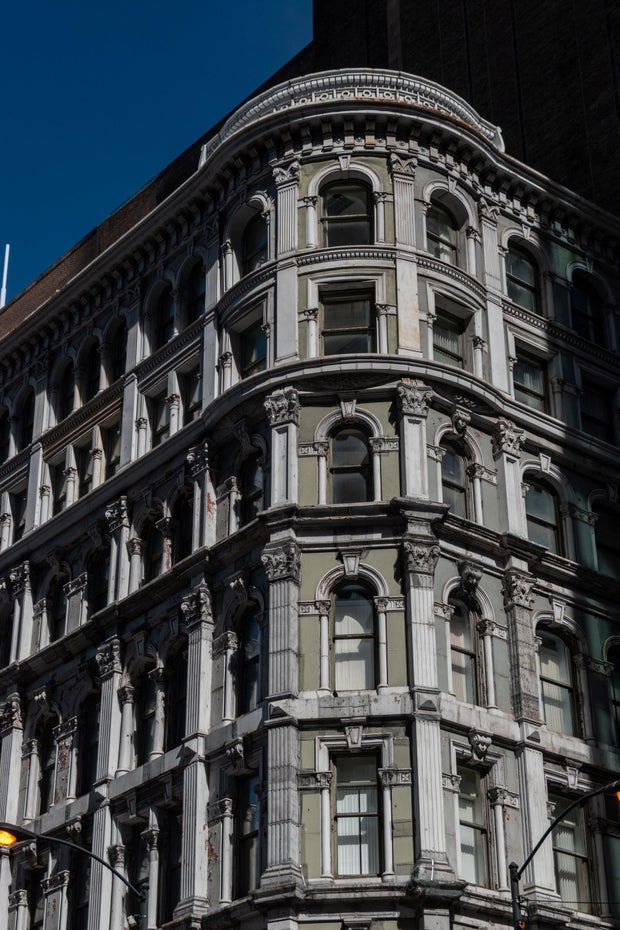
Preservation Chicago noted that the owners of the Delaware Building have considered turning the upper floors into residences or even selling the whole building, but any remodel would require a second means of egress through the vacant space that McDonald's controls, Preservation Chicago said.
"Although the restaurant has closed, leaving the building vacant for nearly four years without plans to reopen the location, the parent company has yet to agree to turning over or releasing the space," Preservation Chicago wrote. "Currently, the lower levels of the building are requiring maintenance and looking forlorn."
Preservation Chicago said it is "vital" that the lower-floor space be released by McDonald's for a new use, while the upper floors could accommodate a small hotel, residences, or continued space for offices.
Clarence Darrow Memorial Bridge
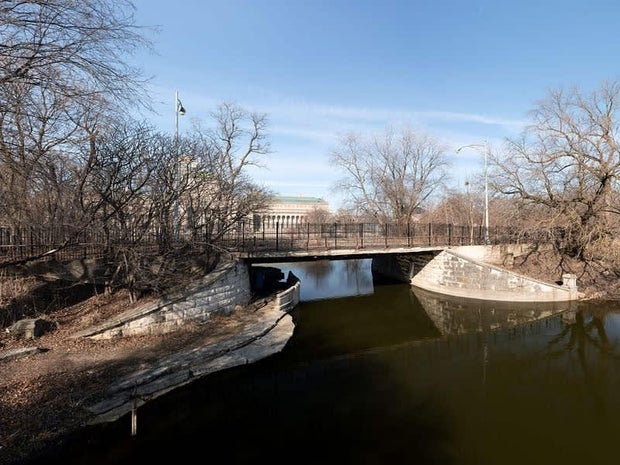
Second on the list is the Clarence Darrow Memorial Bridge, which spans the Jackson Park Lagoon and has done so since 1880. The bridge has been closed to pedestrians for more than a decade.
Preservation Chicago noted that the bridge is one of only a few remaining elements of the original Jackson Park. The park itself was designed by landscape architects Frederick Law Olmsted and Calvert Vaux — who also designed Central Park in New York City.
In 1880, the famed architectural firm of Daniel H. Burnham and John W. Root designed the bridge that spanned the south end of its artificial body of water, Columbia Basin, which was constructed a year earlier. The bridge, first called the Columbia Drive Bridge, was planned so a horse carriage could cross Columbia Basin, according to Preservation Chicago.
A decade after that, Olmsted, Burnham, Root, and architect Charles B. Atwood planned the layout for the World's Columbian Exposition, which was centered in Jackson Park. Much of the park was completely redesigned to accommodate the Beaux Arts structures for the 1893 fair, but the bridge remained unchanged, Preservation Chicago said.
The Clarence Darrow Memorial Bridge acquired its current name in 1957 in honor of legendary trial attorney and Illinois state Rep. Clarence Darrow. It was long known for its views across the Columbia Basin toward the Griffin Museum of Science and Industry, which was originally built as the Palace of Fine Arts for the 1893 World's Fair and became the Museum of Science Industry 40 years later — and some 53 years after the bridge was completed.
The bridge also connects a parking lot on the east bank of Columbia Basin and the Garden of the Phoenix and Wooded Island — which are more easily accessed on the west side of the park, Preservation Chicago said.
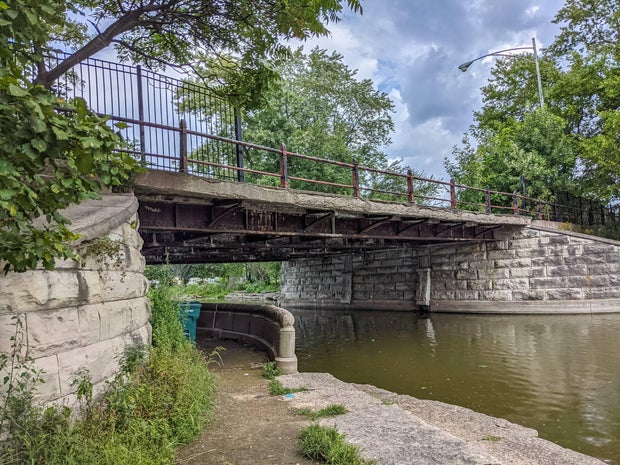
But no one has been able to walk or stand on the bridge since 2013, when the Chicago Department of Transportation put up a permanent fence to block it, Preservation Chicago said. The banks of the bridge are now overgrown with weeds, the pavement is cracked, and the railing that Burnham and Root designed is oxidizing, Preservation Chicago said.
In 2017, CDOT devised a plan for the bridge to provide pedestrian and emergency vehicle access to the Obama Presidential Center, now under construction nearby, Preservation Chicago said. This was originally to be completed by the end of last year, but it did not work out.
Preservation Chicago warned that the bridge may end up being demolished if it is allowed to keep deteriorating. The Clarence Darrow Bridge Preservation Coalition, formed last year, has advocated for the retention of the surviving historic elements of the bridge while suggesting the replacement of others, the group said.
J.J. Walser House
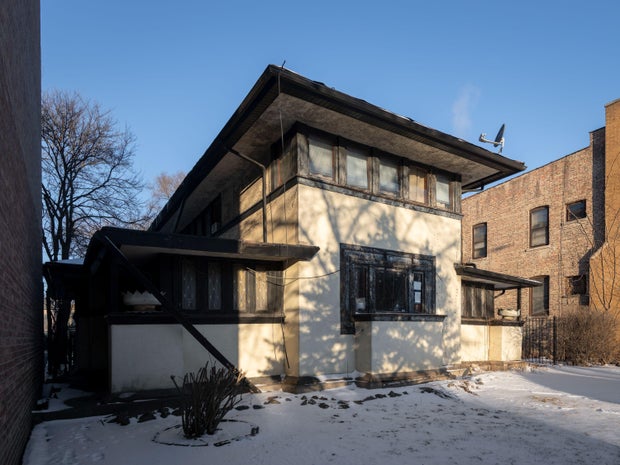
A Frank Lloyd Wright house in the South Austin neighborhood is third on the Preservation Chicago list. The Joseph Jacob Walser Jr. House is located at 42 N. Central Ave.
The house is one of only five standing Prairie School structures designed by Frank Lloyd Wright within the city — a list that also includes the Frederick C. Robie House in Hyde Park and the Emil Bach House in Rogers Park. The Walser House is also the only single-family Frank Lloyd Wright House on the West Side, Preservation Chicago said.
J.J. Walser and his wife, Grace, bought the property in 1903 and commissioned Wright for the house, Preservation Chicago noted. The Walser house is not as well-known as some Wright structures such as the Robie or the Wright home and studio not far away in Oak Park, but Preservation Chicago noted that it still incorporates the aesthetic beauty of the Prairie Style.
The Walsers sold the house in 1910, and it was sold 11 different times over the next 60 years, Preservation Chicago said. Various owners remodeled the house over the years, building a rear addition and remodeling the kitchen and bathrooms — among other changes, Preservation Chicago reported.
The house was sold to its most recent owners, the Teague Family, in 1970. Anne Teague died in 2019, and the house has been vacant for six years — with the elements having caused it to deteriorate, Preservation Chicago said. The house is also in foreclosure and was ethe subject of a reverse mortgage, which is causing difficulty in finding a buyer, the group said.
The house is a city landmark and cannot be intentionally demolished, but its rapid deterioration could be bad news for its future, Preservation Chicago said. The group is working with Landmarks Illinois, the Frank Lloyd Wright Building Conservancy, and Austin Coming Together to try to have the foreclosure process expedited and find a new owner to restore and stabilize the house.
Olivet Baptist Church
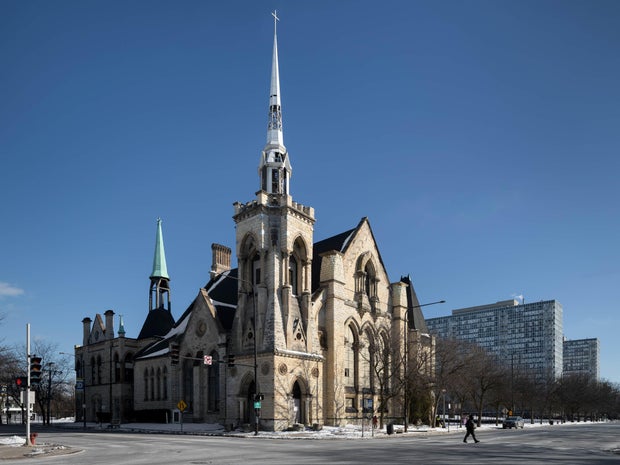
Coming in fourth is the Olivet Baptist Church, at 3101 S. Dr. Martin Luther King Jr. Dr. in Bronzeville. Built for the First Baptist Church of Chicago in 1876, Olivet is the oldest existing African American Baptist Church building — and the second oldest Black church congregation in the city, Preservation Chicago noted.
The church was designed by architect William Wilcox, and has a Joliet limestone façade and a steepled square corner tower that rises 160 feet, Preservation Chicago noted.
The church fought to maintain peace during the Chicago Race Riots of 1919, and served as a community center in throughout the Great Migration of African Americans from the South, Preservation Chicago said.
Olivet Baptist Church, which has roots dating back to 1850, bought the building in 1918, Preservation Chicago said. The church thrived for many years, becoming the world's largest African American congregation and the world's largest Protestant church for a time, the group said. It featured a 2,500-seat auditorium and lecture room on the first floor, and a club and rooms for a Sunday school on the upper floors, the group said.
But the church has been in losing membership since its pastor, the Rev. Joseph H. Jackson, died in 1990, Preservation Chicago said. While services are still held in one section of the church, other sections are "effectively closed due to deferred maintenance," Preservation Chicago said.
The group said the church masonry is overgrown with weeds, and the roof and many windows seem to be in fair to poor shape.
Currently, Olivet Baptist Church is not a Chicago historic landmark, and Preservation Chicago wants to see that change. Preservation Chicago said a restoration using either public or private funds could allow the church to reopen its grand sanctuary fully.
Central Manufacturing District Clock Tower
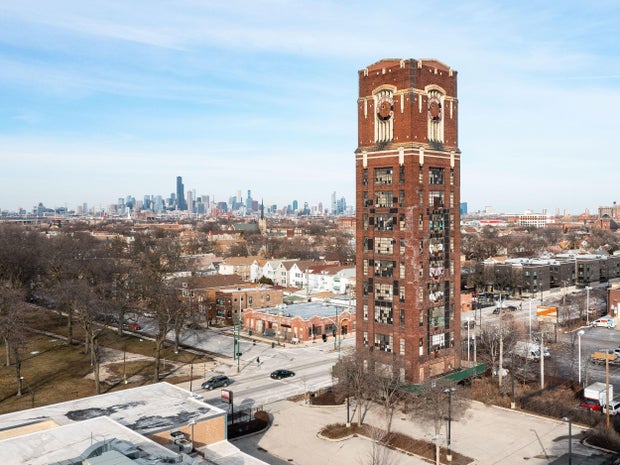
Also on the list is the Central Manufacturing District Clock Tower, at 2000 W. Pershing Rd. in the McKinley Park neighborhood. The 11-story brick and terra cotta tower stands sentry over the Central Manufacturing District — which was the first planned industrial district in the country, Preservation Chicago said.
The first buildings in the CMD were built in 1902, and construction along Pershing Road began in 1917, Preservation Chicago said. Within 10 years, more than 200 businesses were operating in the district, the group said.
The Clock Tower was also built in 1917 and features four clock faces with the "Central Manufacturing District" seal, the group said. It was designed to conceal a water tower for fire prevention on the site, and was built such that the water tower was surrounded by office spaces and concealed by striking architecture, Preservation Chicago said.
But like many buildings in the CMD Pershing Road Development, the Clock Tower is vacant and has been for decades, Preservation Chicago said. It has deteriorated dramatically and has only seen minimum stabilization efforts, and netting and scaffolding have been in place for years to prevent falling bricks or terra cotta from hitting people, the group said.
The entire CMD Pershing Road Development was on the Preservation Chicago 7 Most Endangered list in 2020, and at one point later, the whole district — including the Clock Tower and three nearby buildings — was listed for sale for $12 million as a "multifamily redevelopment opportunity." No sale has happened, Preservation Chicago said.
Preservation Chicago noted that the Clock Tower is a certified historic structure, and called for a qualified rehabilitation or adaptive reuse project. Further, while the Clock Tower is Orange-rated and subject to a 90-day demolition delay ordinance, Preservation Chicago would like to see it landmarked.
Western Boulevard Industrial Buildings
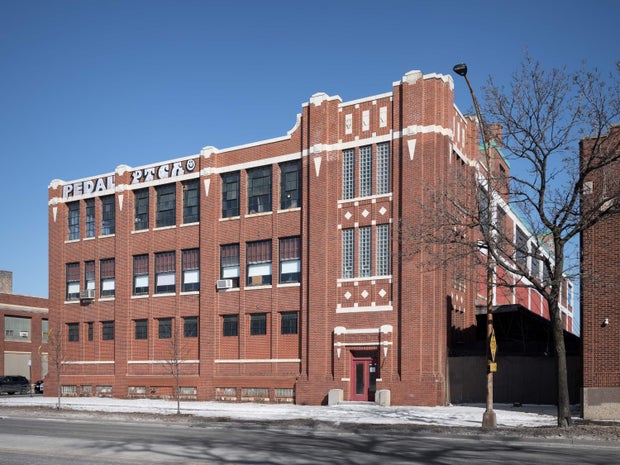
Eight different industrial buildings on Western Boulevard in Back of the Yards also made the list. Between 31st Boulevard north of the Sanitary and Ship Canal and Gage Park at 55th Street/Garfield Boulevard, Western Boulevard runs parallel to Western Avenue with a park in between.
On the east side of Western Boulevard between 43rd and 45th streets, Preservation Chicago drew attention to eight early 20th-century factories and warehouses that face the boulevard to the west and old Wabash, St. Louis and Pacific Railroad to the east. There are few such industrial corridors left along the Chicago Park Boulevard System Historic District, which was established in 2018, Preservation Chicago said.
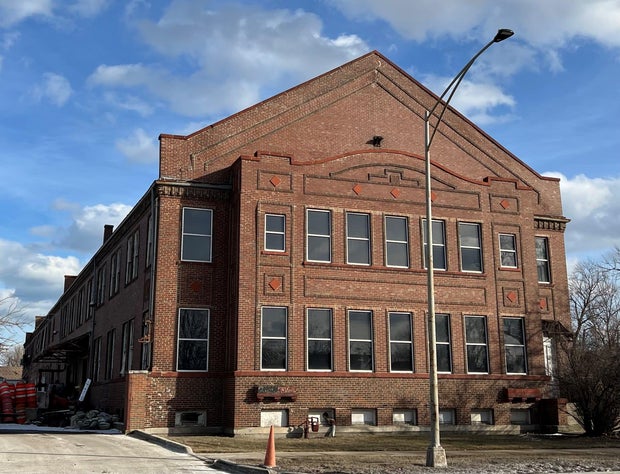
The buildings include:
- 4235 S. Western Blvd., built in the 1910s for the United Autographic Register Co., currently used by MK Cabinet Supply.
- 4301 S. Western Blvd., built in 1920 for Inland Steel Products Company, currently used by Illinois Fibre Specialty Company.
- 4311 S. Western Blvd., built in 1921 as a plumbing supply warehouse for Whitney & Ford, currently housing several tenants including Chase Mechanical, Designs for Dignity, and Windy City Booths.
- 4335 S. Western Blvd., built in 1919 for Union Petroleum Co., now the Kisnella Landscaping Building.
- 4401 S. Western Blvd., built in 1914 as a warehouse for Wilson & Co. meatpacking and later used by the Coffee Corporation of America, now used by Wheatland Tube and Cold Parts.
- 4425 S. Western Blvd., built in the 1910s for pipefitting and plumbing company the Grinnell Corporation, now used by Wheatland Tube and American Plumbing.
- 4435 S. Western Blvd., built in the 1910s for the James A. Brady Foundry Co., now used by Wheatland Tube.
- 4501 S. Western Blvd., built for wood polish and wax company O-Cedar Corporation, later used by Russell Electric Company.
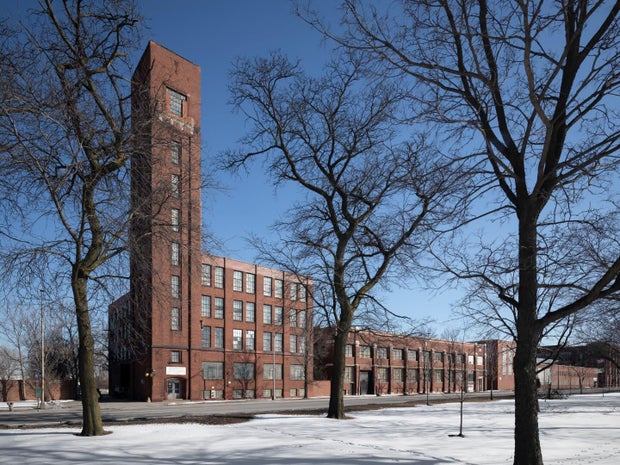
Preservation Chicago noted that many of the buildings suffer from deferred maintenance and require repairs, and some are partially unoccupied or up for lease or sale. The group called on the existing owners of the buildings to continue to promote their occupation and continued use for industrial purposes.
St. Martin's Church
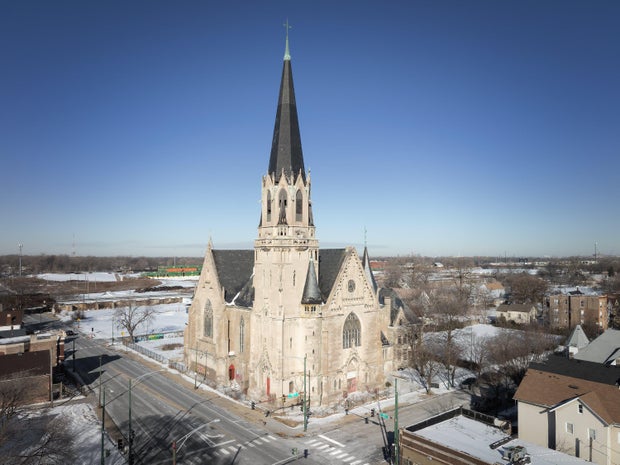
St. Martin's Church, at 5848 S. Princeton Ave. in the Englewood neighborhood, is the last building on the list. The building, originally constructed in 1895 as St. Martin de Tours Church, is cited by Preservation Chicago as "an outstanding example of the city's architectural heritage."
St. Martin was constructed for the German Catholic community in the area in 1886, and featured a statute of St. Martin the Beggar at the top of its 228-foot steeple. The church expanded in the ensuing years, with a school and a booming congregation that comprised multiple races and ethnicities, according to Preservation Chicago.
In 1961, many Englewood residents were displaced by the construction of the Dan Ryan Expressway — including St. Martin parishioners, Preservation Chicago said. The church remained operational and offered services such as a food pantry and a senior lunch program until the Chicago Archdiocese closed it in 1989, Preservation Chicago said.
The building was shuttered for 10 years after that, and when the Chicago Embassy Church bought it in 1998, it was described as "some sorry stuff," Preservation Chicago said. The congregation found it had no electricity or heat and had piles of garbage in place of the pews, the group said.
Chicago Embassy Church took out loans to repair the building, but moved out in 2017 — since which time the building has been vacant again, Preservation Chicago said. Eleven years before that, the statue of St. Martin blew off the steeple in a windstorm, Preservation Chicago said.
St. Martin is now in poor shape — with damaged windows, graffiti on its façade, and a damaged roof, Preservation Chicago reported. But the group said it could still suit a new religious congregation, or some type of adaptive reuse.