Chicago City Council committee advances deal to delay phaseout of tipped minimum wage

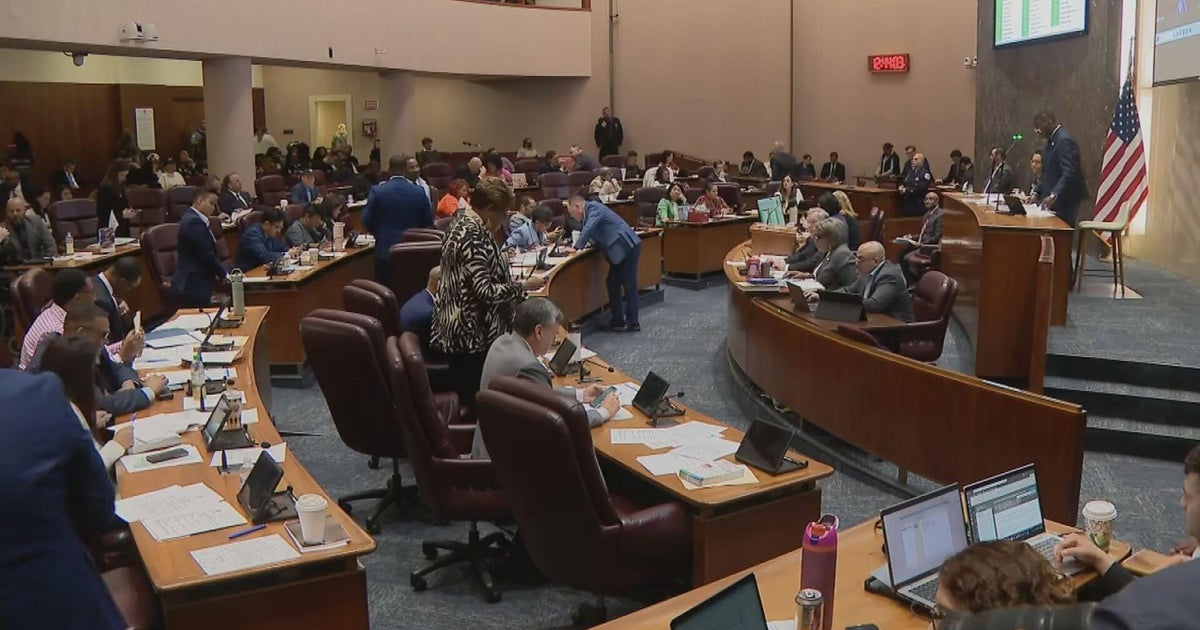
A month after Mayor Brandon Johnson vetoed an attempt to halt any future scheduled pay hikes for tipped workers in Chicago, the City Council advanced a compromise to instead pause those raises for two years.
The City Council Workforce Development Committee unanimously approved an ordinance that would also give small businesses even more time to bring up their employees to the full minimum wage.
A spokesperson for the mayor's office said Johnson supports the compromise, while stressing he remains committed to eventually ending the subminimum wage for tipped workers.
Tipped workers in Chicago currently make 76% of the full minimum wage, or $12.62 an hour.
Originally, tipped workers were scheduled to see their minimum pay go up to 84% of the full minimum wage on July 1, 2026. Under the compromise brokered by Ald. Walter "Red" Burnett (27th), that scheduled pay raise will be pushed back to July 1, 2028.
Tipped workers will then get annual raises in their pay until they reach the full minimum wage on July 1, 2030.
Small businesses – defined as those with up to 21 employees – would get even more time to pay their tipped workers the full minimum wage. Tipped workers at those small businesses would not get their next city-mandated pay raise until July 1, 2030, and would not reach the full minimum wage until July 1, 2033.
In March, the City Council passed an ordinance to freeze minimum wage hikes for tipped workers at the current rate of $12.62 an hour and end all future city-mandated pay hikes. Those who supported the freeze said the wage increases were negatively impacting the hospitality industry.
But Mayor Johnson vetoed the effort to halt the phaseout of the subminimum wage for tipped workers, defending one of his biggest legislative accomplishments, saying he would "not allow our progress to be put on pause."
The Chicago City Council failed to override that veto.
Burnett thanked his colleagues on the City Council for spending the past month coming up with a compromise that both Johnson and his critics could agree to.
"This is a really broad coalition of folks who are trying to come to a solution to make sure that we're supporting both the industry in total, and really workers; making sure that workers get their fair share, and making sure that they have a job, and making sure that this industry which is so vital to Chicago continues to be one of our strong points," Burnett said.
Illinois Restaurant Association president Sam Toia said, while he still opposes ending the lower minimum wage for tipped workers, he supports the compromise to give restaurant owners more time to adjust to the change.
"This substitute ordinance is not the ideal outcome for our industry, but is more workable and less harmful than following the current phase-out," Toia said. "Operators need time to adjust so they can keep their doors open and their staff employed."
Ald. Jessie Fuentes (26th), who sponsored the original plan to end the tipped minimum wage by 2028, said she remains committed to eventually paying tipped workers the full minimum wage, but supports efforts to help the restaurant industry, which is also facing rising costs from inflation and President Trump's tariffs.
"In a moment where we are having the largest affordability crisis that we have seen in a generation, people deserve to know that they can still afford the roof over their head," Fuentes said.
With Johnson's support, passage of the compromise ordinance now appears all but guaranteed when it comes up for a vote by the full City Council on May 20.
"Mayor Johnson remains committed to raising wages for working families as a major component of his affordability agenda, as well as supporting the thousands of Chicago small businesses committed to delivering fair wages and fair prices for their employees and customers," a Johnson spokesperson said in an email.