Chicago judge hears testimony from ICE, Border Patrol on body cams, use of force in Operation Midway Blitz

A federal judge in Chicago is questioning top officials from U.S. Customs and Immigration and Customs Border Protection over federal agents' use of force in Operation Midway Blitz.
On Friday, the judge reinforced her order for all federal agents in the Chicago area to wear body cameras, telling the Department of Homeland Security, "This was not a suggestion. It wasn't a hint. It wasn't a topic of discussion or conversation. It was an order. So, I will enter it today and then I will expect it will be followed."
U.S. District Court Judge Sara Ellis wants answers on how immigration enforcement is being carried out and why body cameras still aren't being used.
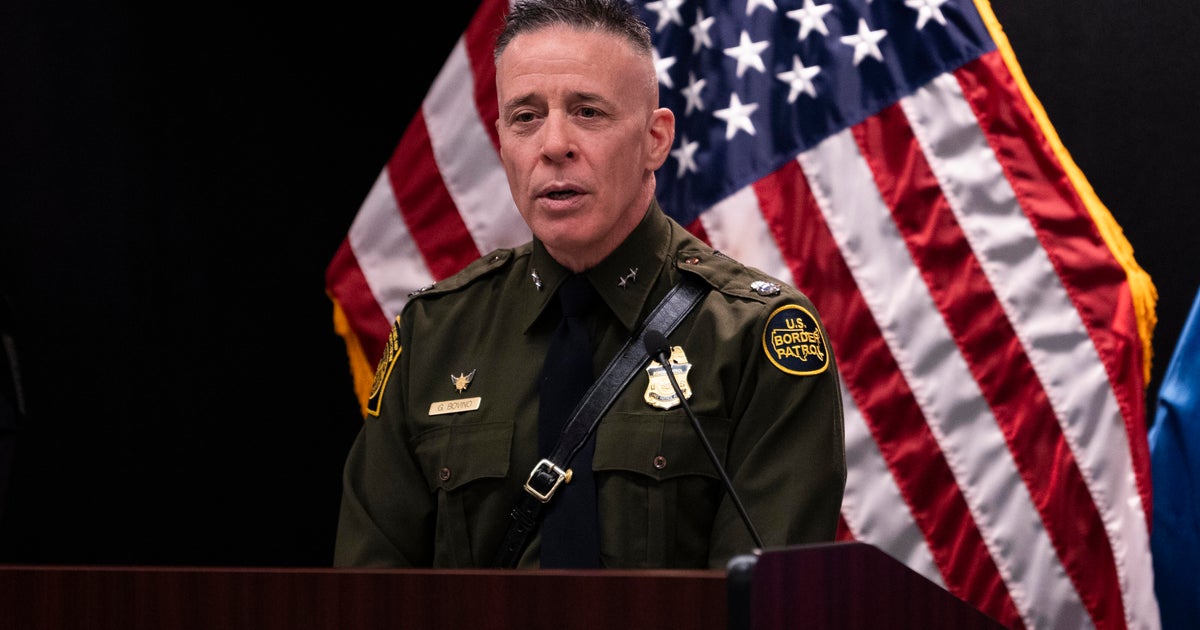
The second-in-command for CBP told U.S. District Court Judge Sara Ellis that as of Monday, all CBP agents in Chicago for Operation Midway Blitz have been equipped with and trained on body cameras. He said there are currently 232 CBP agents in the area, but a couple dozen will be leaving Tuesday with a remaining 201 CBP agents working on Operation Midway Blitz. He confirmed all of them have cameras.
ICE Deputy Field Office Director Shawn Beyers testified that there are approximately 300 ICE agents assigned to cover the six states in Chicago's region, with about 85 total in the Chicago area.
At the center of the hearing are scenes like what we saw in the city's East Side neighborhood last week: federal agents in riot gear dispersing crowds with chemical agents in residential neighborhoods. Agents were also seen throwing tear gas out of a car window on a busy Logan Square street near an elementary school.
In both cases, not just civilians but also Chicago police officers were exposed to the chemical agents without proper protective gear.
Judge Ellis previously ordered agents to stop dispersing peaceful crowds and banned the use of tear gas on people who aren't a threat. Now she's pressing ICE and Border Patrol over their noncompliance on her body camera order.
Friday, she reprimanded the federal government for ignoring the order and DHS pushed back, calling reports of a camera mandate false.
Legal experts like Kent College of Law Professor Richard Kling say the judge's frustration is about accountability.
"She was not satisfied that ICE was following her order," he said. "She wanted TV like the rest of us and apparently realized that ICE was going to do what ICE wanted to do."
Representatives from ICE and Border Patrol will have to explain their use of force and why they've failed to implement body cameras in court.
Monday is also a key deadline in the case over the deployment of the National Guard in Illinois. The federal government is asking the U.S. Supreme Court to weigh in on Judge April Perry's order blocking the deployment, which a federal appeals court affirmed last week. The state has until 4 p.m. CT/5 p.m. ET to respond and submit its arguments.