Chicago area woman gives birth to daughter after surgery to remove tumor that disrupted pregnancy

June is World Infertility Awareness Month, and Northwestern Medicine on Monday shared the story of a woman who is celebrating the birth of her second child after a tumor disrupted her fertility.
Lisa Fasone, 32, of McHenry, Illinois, had her first child in 2022, and she knew she wanted a second, Northwestern Medicine said.
But after the birth of her first daughter, Fasone experienced postpartum hormonal issues, with symptoms including night sweats, ongoing lactation, no menstrual cycle, and failure to conceive.
Bloodwork found that Fasone was experiencing elevated levels of prolactin, the hormone secreted by the pituitary gland that stimulates lactation and influences fertility. She took medication to reduce prolactin, but after a while, her symptoms stopped responding, Northwestern Medicine said.
Bloodwork kept showing elevated prolactin, and by the winter of 2023, her systems symptoms had not normalized.
Fasone underwent an MRI, which was inconclusive. But then, Dr. Vijay Eranki, an endocrinologist at Northwestern Medicine Huntley Hospital, suspected that Fasone might have a pituitary tumor that the imaging was not picking up, Northwestern Medicine said.
"The medication isn't well studied for pregnancy," Fasone, who works as a urology physician assistant in the Chicago area, said in a news release. "I just didn't feel comfortable trying to have a baby without good data to suggest it was safe. If you get pregnant, you must stop the medication right away because there's no data to suggest it's safe and if you stop taking the medication, there's a chance the tumor could get worse. I was not comfortable accepting that risk."
A new MRI found a tumor called a prolactinoma on Fasone's pituitary gland, and the tumor was causing her to make too much prolactin. Prolactinomas are not life-threatening, but they can make it difficult to become pregnant, Northwestern Medicine said.
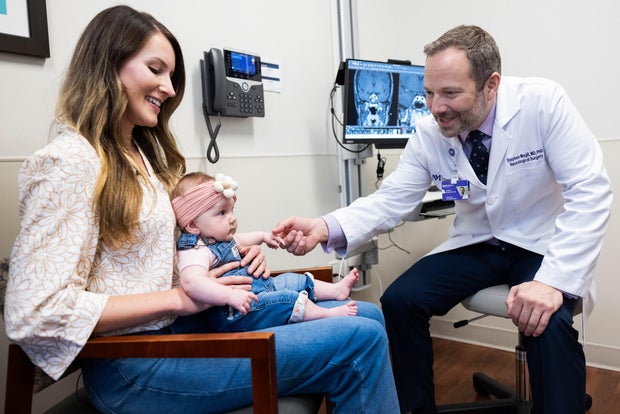
Fasone decided to undergo surgery, and doctors referred her to Northwestern Medicine neurosurgeon Dr. Stephen McGill.
"While removing a tumor on the pituitary gland is a common operation, removing one for a prolactinoma, like Lisa's case, is less common," Dr. Magill said in the release. "We knew she really wanted to have another baby. We carefully counseled Lisa on the risks and benefits of the procedure, what the surgery would entail and what the expected outcome would be. We were hopeful her hormone levels would return to normal, and she would be able to have a child safely without having to be on medical therapy."
On April 14, 2025, Fasone had the surgery to remove the tumor. She got her menstrual cycle back not long afterward, and her daughter, Natalie, was born Feb. 11 of this year.
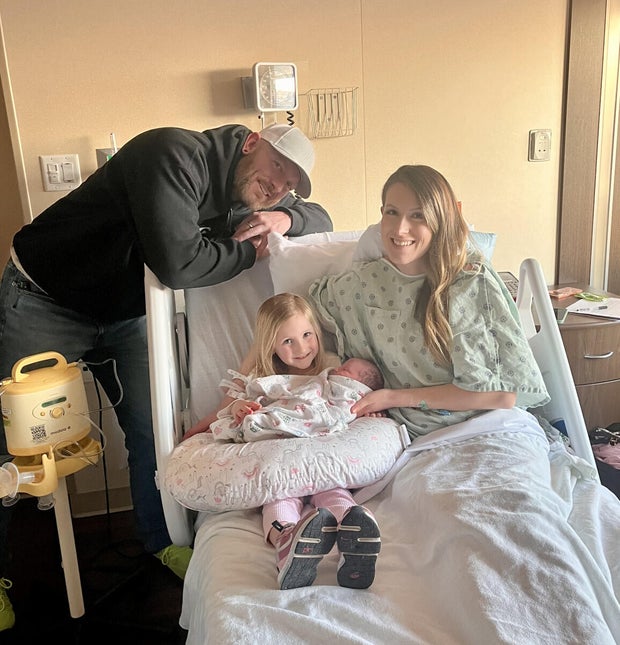
Fasone will keep receiving images every eight to 12 months to ensure the tumor has not recurred.
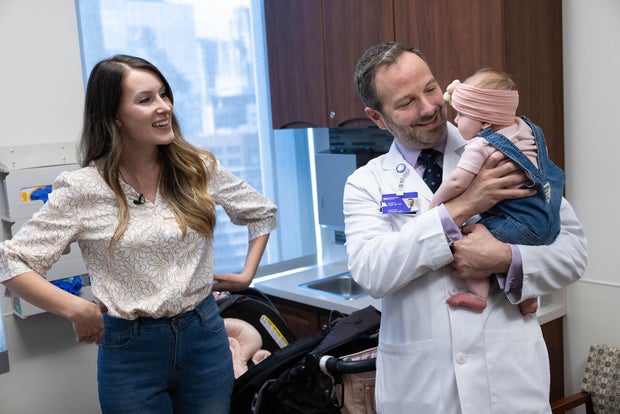
"Dr. Magill really gave me my life back," Fasone said in the release. "I was able to get off the medication, my body returned to normal, and I was able to complete my family. I recently introduced Dr. Magill to my daughter, and that was such an emotional moment – one I certainly won't forget."