Rare tick-borne virus left New Hampshire man critically ill, "nonverbal"

Friends and family of a New Hampshire man are urging people to take precautions against ticks after a rare tick-borne virus left him critically ill and in the hospital for more than a month.
John Reagan, 66, an avid outdoorsman from New Hampshire, remains hospitalized in Boston after contracting Powassan virus, according to his longtime friend and Tom Wright.
"It's crushing a lot of people. It's sad," Wright said.
Condition deteriorated rapidly
Wright said Reagan's condition deteriorated rapidly after he was bitten by a tick, he believes, while he was walking his dog on Pembroke/Concord, New Hampshire line.
"When he first went into the emergency room, he was sitting up and talking to me, and I was there with his wife," Wright said. "And the next day, we went to see him, and he was like nonverbal, and his muscles wouldn't move right."
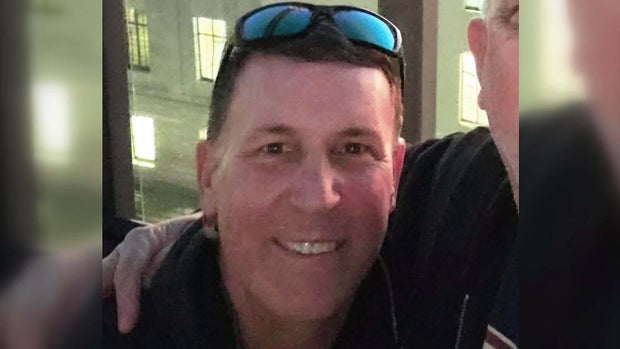
After additional testing, doctors identified the cause.
"They did more tests on him, and they finally end up coming back with the Powassan virus," Wright said. "Most of the people I've talked to have never even heard the word before."
What is Powassan virus?
Powassan virus is a rare but increasingly detected tick-borne disease. According to the Centers for Disease Control and Prevention, seven cases have been reported in 2026, with most found in the Northeast.
"Unlike Lyme disease, where the tick has to be attached for generally, we say at least 36 hours, here you only need a tick to be attached to you for 15 minutes and you can become infected," explained Dr. Rakhi Kohli, an infectious disease physician at Tufts Medical Center.
Kohli said some infections can lead to severe neurological complications.
"Not everyone who gets Powassan is going to get this deadly neurologic illness or encephalitis," said Kohli. "Persons with Powassan infection, many of them may have a self-limited febrile illness, but the ones that we tend to diagnose and see in the hospital are those with more severe disease."
Kohli said cases are typically found in the Great Lakes Region and Northeast.
"There is no vaccine, unfortunately. There is no treatment, so the main focus is supportive care," she added.
Friends of Reagan have been raising money to help support his family and cover medical expenses while also trying to educate others about the dangers of the rare tick-borne illnesses.
There was encouraging news on Wednesday. Reagan's friends said that for the first time in weeks he opened his eyes and is now breathing on his own.


