Why Gillette Stadium turf had to be replaced days before Patriots preseason opener

As the New England Patriots prepare for their first preseason game later this week, crews at Gillette Stadium are once again replacing the playing surface.
WBZ SkyEye video captured rolls of turf inside the stadium's tunnels Monday as crews worked to replace the field for the second time since the World Cup. The latest artificial turf was removed after it failed to pass an independent laboratory test required by the NFL.
ESPN Patriots reporter Mike Reiss tells WBZ the Patriots installed an artificial turf field to replace the natural grass installed for the World Cup, and initial testing by both the NFL and Major League Soccer showed positive results.
"They were told this is good to go, but they also need to clear an independent laboratory test which is sort of a co-op with the NFL and the NFL Players Association, and that was where the field was deemed non-compliant," Reiss said.
The Patriots have not released an official statement about the turf issue, but the team tells WBZ on background artificial turf fields typically consist of three layers: a base, usually made of concrete, asphalt or stone dust; a pad or e-layer separating the turf from the ground; and then the artificial grass itself.
On the bottom of Gillette Stadium, the base is stone dust, a more forgiving surface. A vendor told the team the pad on top of stone could make the field "too springy" to play on. So, the decision was made to not include the added layer.
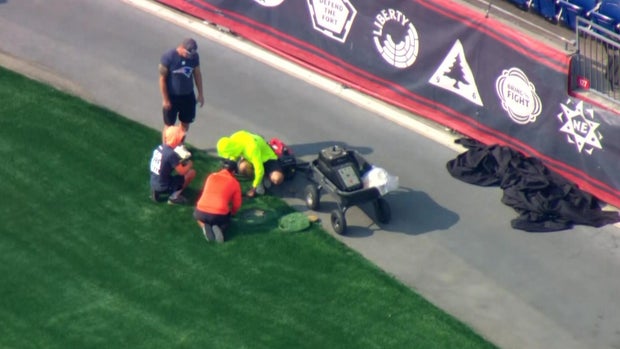
"The Patriots felt like their choice of field and that stone dust was going to pass. But because the independent laboratory test did it over the e-layer, it was an inconsistent duplication, I suppose, of what they were testing," Reiss explained.
With the second turf replacement nearly complete, Reiss said the Patriots are confident the new field will be ready and approved before Thursday night's preseason opener against the Indianapolis Colts.
"I believe the reason they feel it's going to pass is that the field they're installing is the latest version of what they had last year, which passed," Reiss added.
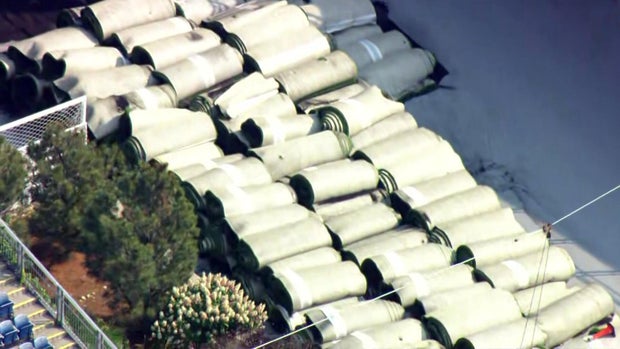
The latest replacement also raises the question of why Gillette Stadium does not simply retain the natural grass used during the World Cup, favored by FIFA and other advocates.
Reiss said longtime Patriots fans may remember what happened when the stadium used natural grass nearly two decades ago.
"Longtime Patriots fans would remember 2006. They had the natural grass. It was hard to upkeep. And the field became a mud pit in a late-season game against the Jets. The hated Jets, the Patriots lose the game," Reiss said. "And Bill Belichick, who was the head coach at the time, said, 'never again,' as I understand it. And that's when they went to the artificial surface that's been there ever since. And I think it's just with the event load that they have, it's hard to maintain a natural grass field."