"Ridiculously expensive": Massachusetts computer repair shop seeing uptick in business as costs rise

While gas and energy prices are driving the latest uptick in inflation, they are followed close behind by computers, software and accessories.
According to the September 2026 Consumer Price Index, prices for computers, software and accessories have risen more than 28% over the past year, making the category one of the leading drivers of inflation, behind gasoline and energy.
Martin Wang, a software developer who began repairing broken computers more than a decade ago, says his popular Brookline, Massachusetts, repair shop has seen an uptick in business as customers look for alternatives to buying new devices.
Wang says the rising costs are particularly noticeable when it comes to computer components, including memory and hard drives.
"The RAMs, and the hard drive, ridiculously expensive. The price jumped like not double, triple, triple or four times higher than the original price in the last year," Wang said, showing a 1 TB solid-state hard drive purchased for $400, the same one he said would have cost him a little more than $100 last year.
Price increases are affecting both his business and customers, particularly students who may be shopping for new computers.
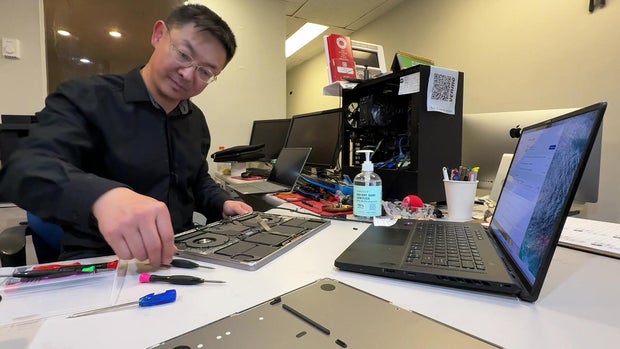
"It increases the cost for us to buy all the parts. And for the clients, most of them students, they might have to choose lower configuration, or they have to postpone their purchase plan," Wang said.
Wang believes growing consumer demand, lack of supply, the expansion of artificial intelligence, tariffs and shipping are all contributing to higher prices.
He says graphics cards, which are commonly used in gaming computers and AI applications, have become particularly expensive.
"Those are video cards. Because AI uses a lot of the good video cards, those cards for gamers became ridiculous expensive," Wang added.
The higher costs have also changed how he operates his business. Instead of keeping a large inventory of computer parts on hand, Wang says he is stocking fewer components and purchasing them on an as-needed basis.
Despite advances in technology that have historically helped make computers and their components more affordable, Wang says he sees little indication that prices will come down anytime soon from the recent upswing.
"There's Moore's Law in computers and all the parts are supposed to be cheaper and cheaper, but recently the parts became ridiculously expensive, and we even cannot see when it might come down. That is really bad news," Wang said.


