Boston nurses strike, lockout to end Monday morning after days of picketing: "We never wanted to be out here"

The largest nurses strike and work stoppage in Massachusetts history is set to conclude Monday morning after days of picketing outside Brigham and Women's Hospital in Boston.
According to a Massachusetts Nurses Association statement, nurses will gather before 6:59 a.m. Monday for a brief rally before dropping their picket signs and walking to the hospital's main entrance. "Nurses scheduled to work will return inside to care for patients, while other nurses and supporters will remain outside in solidarity," the union said.
Lockout after one-day strike
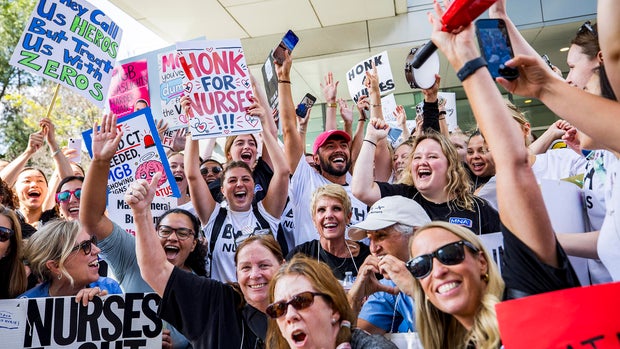
The picketing continued Sunday outside the hospital, days after a lockout extended the initial one-day strike.
"It's absolutely overwhelming," nurse Kristen Robishaw said of the turnout through the weekend. "I know I speak for everybody — nobody has ever been prouder to be a nurse than they are this week," she added.
The chants and demonstrations continued along Francis Street even after Mass General Brigham sent a cease-and-desist letter, claiming the "disruption is affecting residents, the and the hospital's healing environment and creating challenges for patients and care teams."
"Our concern is not the picketing itself, but conduct that interferes with patient care," MGB's statement continued.
Leaders of the Massachusetts Nurses Association pushed back on the claim they were impacting patient access.
"That's our legal federal right to do this. They could stop this in a second. They could say, 'All right, let's come back in and talk about it, and you guys come back to work right now.' Nope, they didn't do that. They want to pay the scabs," said nurse Jim McCarthy, Vice Chair of the BWH MNA Bargaining Committee.
More than 1,300 temporary nurses on five-day contracts were brought in by the hospital last week to backfill shifts. Hospital leaders say high-quality patient care has continued throughout the work stoppage.
Nurses eager to return to work
Many of the more than 4,000 nurses, midwives and home health care workers who have been on strike disagree, voicing concern there is a level of care inherently absent.
"All of us are working to make this whole place run and you cannot extract us and put in some temporary people and think it's going to thrive," said midwife Mandy Davis.
"They need to understand that they are really putting people at risk and it's not OK," Davis added.
While workers continue calling for better wages and lower insurance costs, many said they are eager to return to caring for patients.
"Everybody can't wait to get back to work. We never wanted to be out here to begin with," added Robishaw.
Despite stalled negotiations, nurses and union leaders say they remain committed to continuing their efforts.
"This just shows the depth of commitment we have to our patients and our profession that we're out here protecting both, and it's been great. Unfortunately, MGB has been silent. They haven't called us back for negotiations as of yet. We haven't heard anything, but we don't care. We'll keep doing this until we have to," McCarthy said Sunday afternoon.
MGB says Department of Public Health surveyors will be on site Monday to monitor the transition between agency nurses and returning Brigham nurses.


