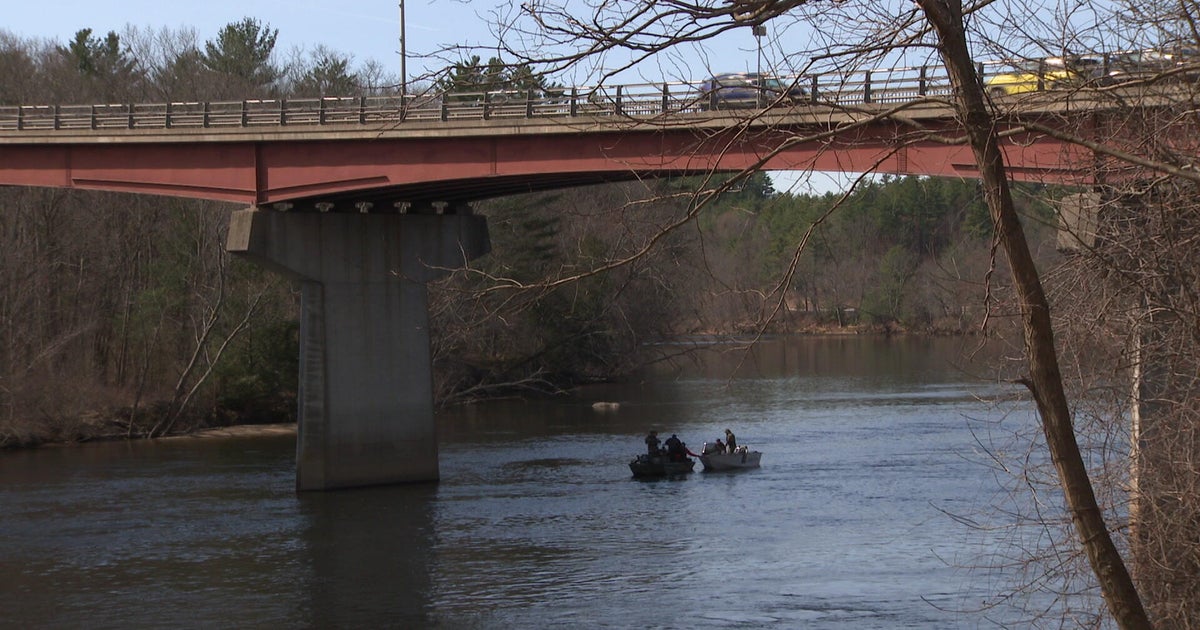
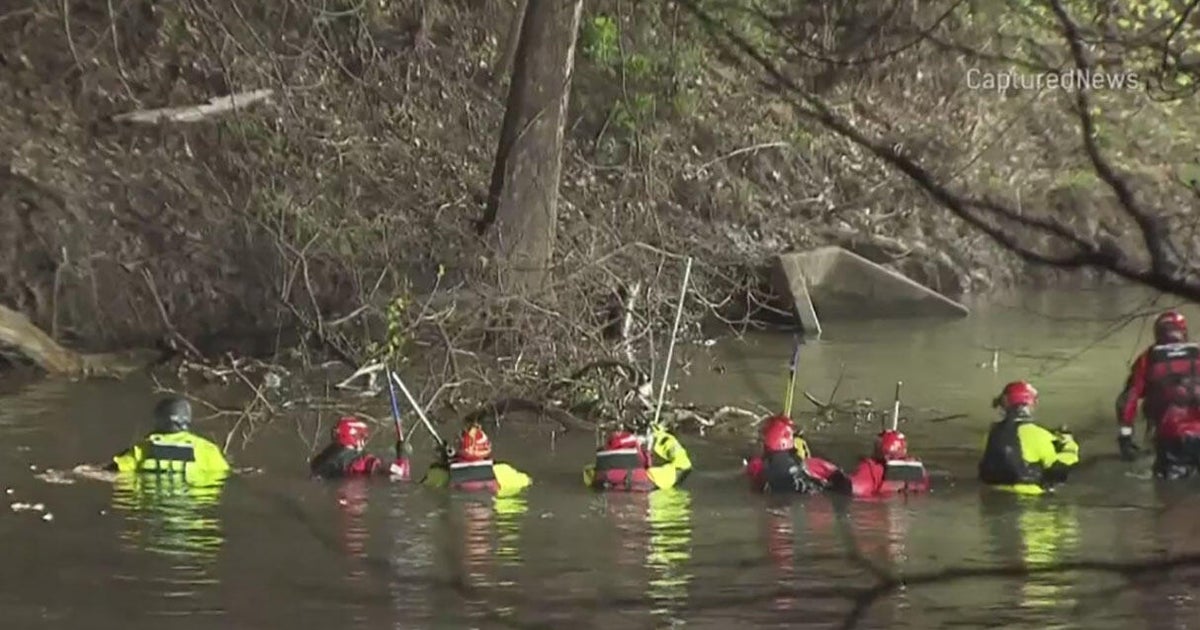
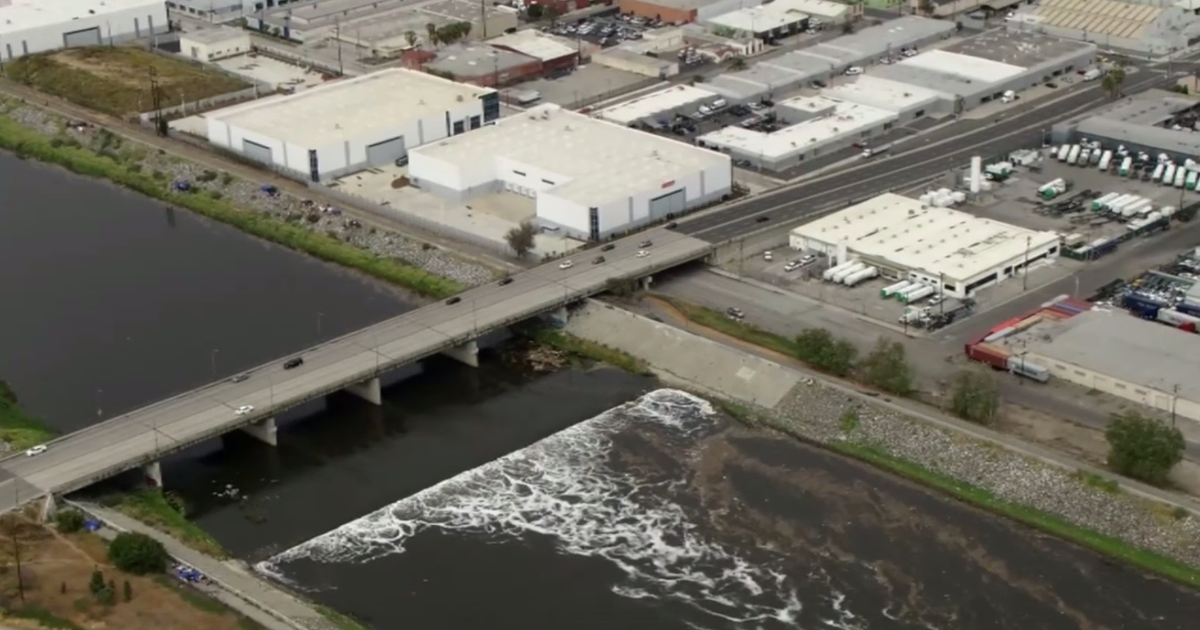
Recovery teams continue search for missing swimmer at Beaver Dam in Baltimore County

Recovery teams will continue to search on Tuesday for a swimmer who went missing at Beaver Dam in Baltimore County.
Officers responded around 6 p.m. on Sunday, Aug. 17, to the 10,000 block of Beaver Dam Road in Cockeysville, where a person had reportedly disappeared in the water and was unaccounted for, according to police.
The Baltimore County Fire Department (BCFD) reported that a swimmer, identified as a 36-year-old man, was seen struggling in the water and subsequently went under.
Rescue efforts
Dive operations were suspended on Sunday night and resumed on Monday morning, with assistance from handheld sonar, recovery dogs, divers, and an underwater robot from the Howard County Department of Fire and Rescue, BCFD stated. Crews suspended the search around 4 p.m.
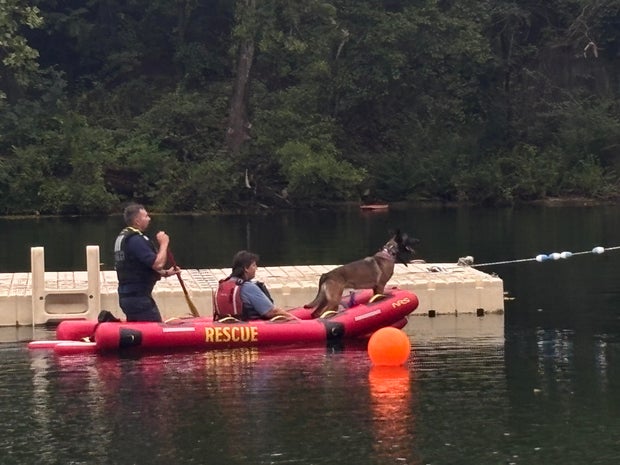
The recovery efforts will continue on Tuesday, officials said.
"I looked around and I saw four separate lifeguards on their way to him, and I was like, 'OK, he's getting saved,'" said Josh Bradds, who witnessed the search efforts. "You could even hear the people sigh when she pulled up. "You thought he was going to get saved, and he never came up."
Witnessing the drowning
Josh Bradds told WJZ he visited the Beaver Dam Swimming Club with his family on Sunday, when a rescue operation, and later a recovery mission, ensued
"I was on a platform getting ready to dive, and then I heard a bunch of commotion, everybody looking around," Bradds said. "So, I look out on the water and I see two guys splashing around."
Bradds said he saw one man struggling in the water. He thought about jumping in to help before seeing lifeguards come to the rescue.
A fire spokesperson said a lifeguard also saw the man struggling in the water, tried rescuing him, but couldn't find him in the water.
"It's weird. You really don't know how to feel. It feels fake," Bradds said. "Everybody out there is never going to forget this day. Like we just saw that man disappear."
Deep and dangerous waters
The Beaver Dam Swimming Club has seen multiple drownings at its quarry over the last 20 years, with the most recent in 2014.
Some have taken their concerns to social media, citing other drownings in the deep quarry and how dangerous it is to swim there.
WJZ reached out to the swim club for comment and has not heard back.
Meanwhile, Bradds stresses the importance of staying safe in deep waters.
"Put that vest on," he said. "I mean, it's going to change the way I think about that place."
Tips for swimming safety
According to the American Red Cross, here are some tips for water safety:
- Do not swim alone
- Make sure there are lifeguards present
- Know your physical limitations
- Wear a life vest or floatation device if you can't swim
- Understand how to adjust to different water environments.
- Take swimming lessons and learn to swim.
- If you swim in rivers, streams, lakes, and oceans, be aware of hazards, such as fast-moving currents, waves, and rapids.
Strong rip currents along the East Coast
With Hurricane Erin moving out in the Atlantic, waves and rip currents along the East Coast could be rough.
Ocean City Beach Patrol says the ocean conditions are becoming rough along the Maryland coast.
Maryland beach officials say there are warning signs that tell beach-goers to stay out of the water when there are no lifeguards.
It's also important to note that when the ocean is rough and there are no lifeguards around, swimmers should be mindful of how far they go.
"So what we do at that point is, we'll do swimming restrictions," said Butch Arbin, the captain of the Ocean City, Maryland Beach Patrol. "Like, let's say knee-deep, waist-deep. Because you know, it gives us more time to get to the person if they start being pulled out as opposed to having someone in chest-deep water and then they get pulled out."
According to the National Oceanic and Atmospheric Administration (NOAA), identifying rip currents is not easy to initially spot.
Swimmers should pay attention to where the waves aren't breaking, so flat spots in the line of breaking waves, according to NOAA, and then where there's foam or sediment in the water being transported away from the beach offshore.
Also, according to NOAA, if there are waves two to three feet high or greater, there could be strong rip currents. Rip currents also often happen during low tide.
Rip currents are especially common near jetties and piers.
What should you do if caught in a rip current?
If you are caught in a strong rip current, Maryland beach officials say you should get someone's attention by waving your arms and screaming.
You should also try and swim and move in parallel to the beach, and don't swim against the current. You should also never swim alone.
"So, trying to back in against it, which most people do, because as soon as you start feeling yourself going away from the beach, your instinct says let's go in, and it's like being on a treadmill," Arbin said. "They're using their energy to swim, but they're not getting anywhere."
Another thing Arbin stresses is not to panic.
"We have a saying for RIP, R-I-P," Arbin said. "R- relax. Don't panic. They don't pull you under, and they don't take you to England. They only take you out to the sandbar. The "I" – I need help. Let somebody know you need help. Wave your arms; the guards are already watching them. And "P," parallel. Swim parallel to the beach."
According to NOAA, you should stay at least 100 feet away from piers and jetties.