How will tariffs impact the Port of Baltimore? Maryland lawmakers press for answers.
A group of Maryland lawmakers is pushing for answers about how the Trump administration's retaliatory tariffs will impact the Port of Baltimore.
The group includes Reps. Kweisi Mfume and Johnny Olszewski and Sens. Chris Van Hollen and Angela Alsobrooks among others.
In a letter to Secretary of Commerce Howard Lutnick, the group raised concerns about how the tariffs will affect major ports, industries, workers, and consumers.
"We are especially concerned about the latest announcement on tariffs considering the economic consequences for the American consumer. These tariffs effectively serve as a sales tax on consumers, placing the burden of revenue raising on American families," the group said.
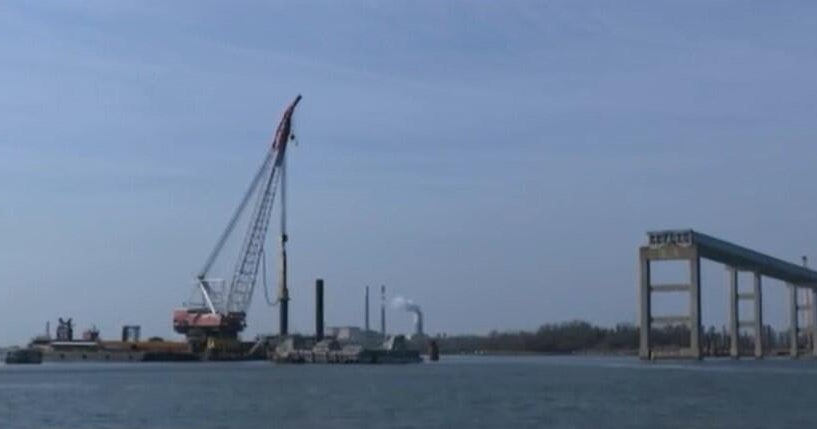
Maryland data shows that the Port of Baltimore is one of the busiest port facilities in the U.S. The port brings in billions of dollars worth of goods like car parts and produce.
"While White House trade adviser Peter Navarro stated recently that these tariffs are expected to raise about $600 billion a year in revenue, economists have clarified that the impact to consumers on spending will significantly reduce these revenue estimates. Instead, experts indicate these tariffs will raise prices for already-struggling consumers, trigger layoffs in industries with customers who rely on imports, and plunge our nation into a recession," the lawmakers added.
The Port of Baltimore generates an estimated $3.3 billion in income and supports more than 154,500 direct and indirect jobs, according to data from the state of Maryland. The port also generates more than $395 million in taxes and $2.6 billion in business income.
Trump announces "Liberation Day" tariffs
On April 2, President Trump announced reciprocal tariffs on about 90 countries starting at 10%.
"Reciprocal. That means they do it to us, and we do it to them," Mr. Trump said.
According to the president, the "Liberation Day" tariffs are necessary to erase a trade deficit between the U.S. and other nations. The tariffs should also increase American manufacturing, Mr. Trump said.
Some nations are facing higher tariffs than others; for example, Vietnam is facing a 46% tariff, Switzerland is facing a 31% tariff, and India is facing a 27% tariff.
The president said the monetary levies that each nation charges for U.S. imports helped determine the tariff rates, CBS News reported.
On Wednesday, the U.S. increased the tariff on China to 104% after the nation retaliated to the initial 34% tariff with its own 34% fee on imported American products.
The president also enacted a 25% tariff on imported auto parts and a 10% tariff on all automobiles.
How will tariffs impact the Port of Baltimore?
In their letter sent on April 7, lawmakers requested that Secretary Lutnick answer the following questions within 14 days:
- What mechanism is the Department of Commerce utilizing to assess the feasibility and effectiveness of the tariffs issued under the Executive Order?
- What efforts will the Department of Commerce take to track how these tariffs impact everyday costs for the American consumer, and national and local economies?
- What are the long-term implications of these tariffs on our nation's major ports, and on our national supply chains?
- How, specifically, do you expect the announced tariffs will impact automobile and light vehicle imports, coal exports, and agricultural equipment imports and exports?
- Will the Administration waive tariffs on certain goods or sectors, or provide aid to impacted small businesses, impacted workers (i.e. farmers, dockworkers, etc.), and industries, in response to significant negative economic outcomes in the United States?