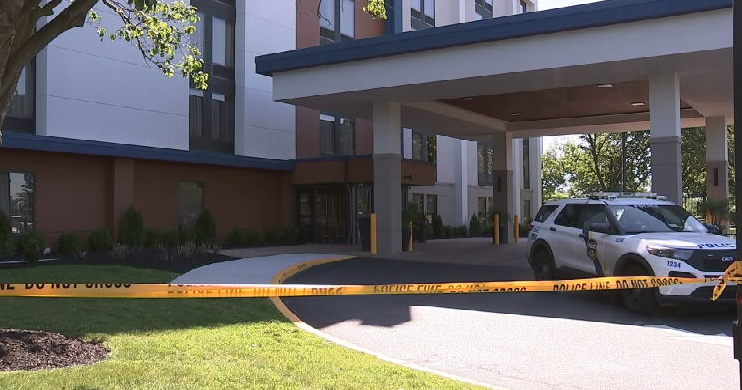
Deadly Canton shooting raises questions about Maryland law and use of force for self defense

The deadly shooting of an alleged burglar by a store owner in Baltimore's Canton neighborhood has raised questions about when you can legally use lethal force if you believe you are in danger.
The answer depends on where you are.
In Maryland, the standards are different if you are in your home or in public.
At home, the law gives you more leeway to use deadly force if you have a "reasonable" fear that your life is in danger.
Canton shooting
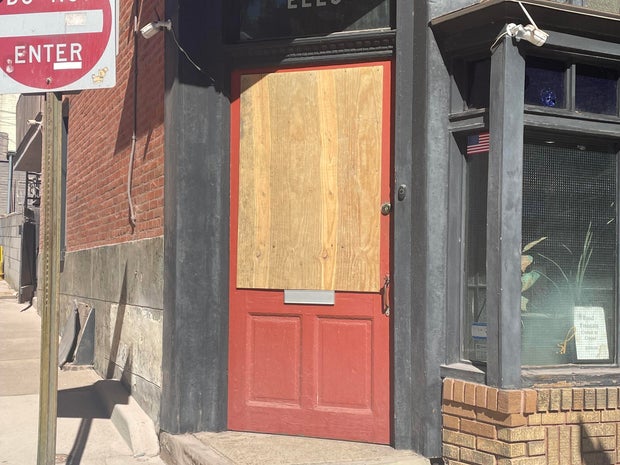
The owner of the Canton jewelry store said he was startled after a burglar bashed in his glass front door with a brick and made his way inside, so he shot him after firing a warning round and shouting at him to "freeze."
That was his account of what happened through a friend.
The incident unfolded shortly after 2 a.m. Thursday. As of Friday evening, police had yet to identify the 39-year-old man who died.
Baltimore police and the state's attorney's office have declined interview requests.
Castle doctrine
WJZ Investigates looked into Maryland law—and when lethal force is and is not considered justified self-defense.
There are several nuances to the law.
We asked lawyer Warren Alperstein, who is not affiliated with the case, to weigh in.
"If it's determined it was in his home, then he does not have to first prove that he retreated before he used the deadly force," Alperstein said.
It is called the Castle Doctrine, but the force must still be "reasonable" to the threat.
In the Canton case, the store owner lived in the same building as his business.
Alperstein said investigators will look closely at any videos and what, if anything, was said between the alleged burglar and the store owner.
"How many jurors, goes the argument, would act or do something differently when you're in fear—not only of your life, but your family's life," Alperstein said. "What should a reasonable person have done not knowing if this person is going to kill them or seriously injure them?"
Self-defense cases in Maryland
Six years ago in Howard County, a man who investigators said was intoxicated entered the wrong home through a locked door.
The homeowner shot and killed him, and the state's attorney ruled it was justified.
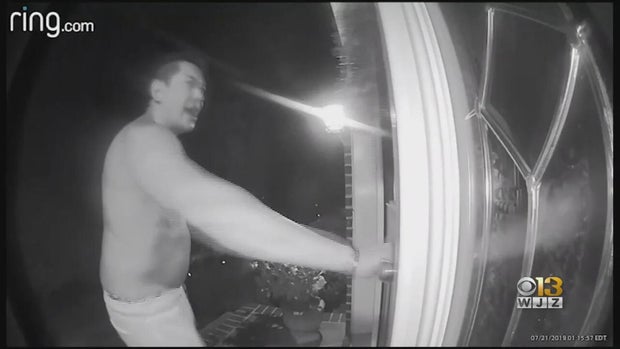
In 2023, Baltimore County police said a man shot and killed someone trying to break into his home in Essex.
Baltimore County police did not file charges in a Dundalk case that same year, where a homeowner shot two men breaking into his shed.
Authorities did not file charges in a 2021 incident in Montgomery County where a homeowner shot and killed an intruder.
It has been almost 25 years since two men shot and killed a man breaking into their warehouse in East Baltimore.
Prosecutors at the time alleged they were armed and waiting after a series of burglaries here.
A judge eventually acquitted both of them.
In 2019, at a liquor store in Canton, an employee shot and killed an armed robber. The state's attorney determined that the case was justified self-defense, and no charges were filed.
Maryland's "Duty to Retreat" law
If you are in public, the standard changes, and you have what is called a "duty to retreat"—to get away from the situation—and can only use deadly force as a last resort. The force should be proportional to the perceived threat.
"If you're in an alley up against a brick wall at a dead end and there's no way to get out and you're in a public place—but there's no way to escape—there's no way to retreat—that would be an exception to the requirement," Alperstein said.
Maryland law surrounding the use of force is stricter than the Stand Your Ground statutes in states including Florida.
Still, in any case like this, the person using lethal force ultimately puts their fate in the hands of prosecutors—or in the hands of a judge or jury if charged.
"There are very much viable defenses for someone in the business owner's—the jewelry store owner's—shoes right now," Alperstein said.