Revised design for Baltimore's Key bridge could reduce environmental impact

The Maryland Transportation Authority (MDTA) said it's making a few changes to the proposed design of Baltimore's new Francis Scott Key Bridge, which will hopefully limit some of the environmental impact.
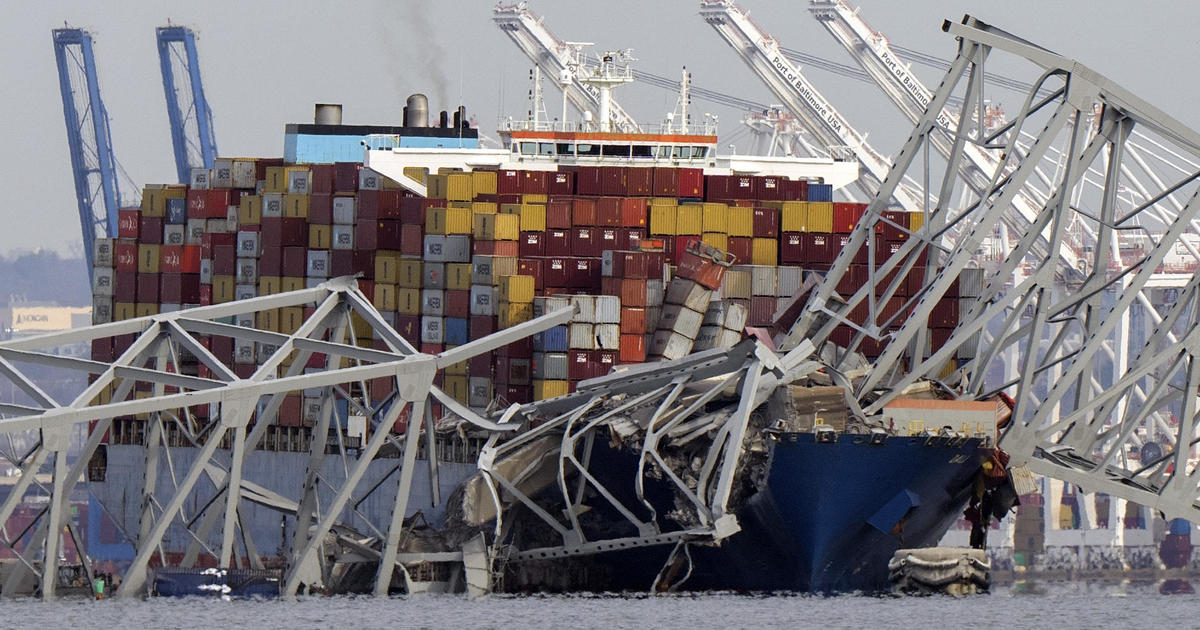
The Key Bridge was struck by the cargo ship Dali on March 26, 2024, after the ship lost power. The collapse sent seven workers into the Patapsco River, killing six of them. Another worker was on a portion of the bridge that did not collapse.
Rebuilding the Key Bridge
MDTA is proposing moving the new bridge approximately 260 feet southeast of the current bridge site. Moving the footprint of the new construction will allow the new bridge to be built while demolition of the former bridge continues.
"We saw this as a win-win to get to the key construction elements as quickly as we can, while also minimizing the overall impacts of the project," said Jason Stolicny, deputy director at MDTA. "By moving the bridge, the removal of the existing bridge is no longer one of the critical elements. We can build the new bridge while we demolish the old bridge."
The MDTA had to formally request a change to its approved permit, which requires the Maryland Department of the Environment (MDE) to sign off on the new proposal.
The state's Board of Public Works will give the final approval before the new plan is put in place.
The rebuilt Key Bridge could be completed by the fall of 2028, with a price tag of more than $1 billion. However, MDTA said it is updating the cost and schedule for the rebuild, and changes will be announced in the fall.
Limiting the environmental impact
The cable stay design of the new bridge will allow the federal shipping channel to expand from 700 feet to about 1,000 feet wide. The base of the bridge will also be raised to 230 feet, which is a 45-foot increase to accommodate ship traffic.
MDTA says it also limits the environmental impact.
The remaining piers of the former bridge are wedged below the mud line. Dredging these slabs of concrete up could cause a "disruption" in the bay, which MDTA is trying to avoid.
Other changes to the roadway could impact non-tidal wetlands, as the proposed bridge slightly changes the course of I-695 close to the waterway.
Neighbors give feedback on Key Bridge rebuild
Neighbors in Edgemere heard about the adjustments at a public hearing on Wednesday. A public hearing is standard in a permit process.
One neighbor called the Key Bridge a lifeline, saying it serves as the main connector between Baltimore and Anne Arundel Counties.
Right now, some feel disconnected from other areas of the state.
"You don't realize how much you missed the bridge until it isn't there. Now we see with the boat the other day that exploded, just how important how much it can affect trade," said Frank Neighoff, president of the Greater North Point Association. "It's nice to see how they realigned it to make it faster, rather than having to take up the old piers that are buried so deeply."
Others at the meeting were concerned about the impact on the water quality in the Patapsco River and the Chesapeake Bay.
"We just want to make sure that the water continues to improve. We're concerned anytime there's dredging or remediation that toxins could be coming back up. [It] doesn't sound like that's going to be an issue with this one," said Tim Fazenbaker, a Baltimore County Republican Central Committee representative.
What's next?
Crews have started the demolition process of what's remaining of the collapsed Key Bridge.
The demolition efforts are expected to take at least nine months with the use of heavy machinery, the state warned.
Crews have been removing slabs of concrete piece by piece, six feet at a time, on the remaining structure.
The next steps for the project include testing the new support structures next month. The new design uses "piles" to support a floating pier, which is built to absorb impact.
"We're going to drive [steel piles] them into the Patapsco. We're going to place some testing equipment on them that exerts a lot of force, and then that tells us a lot of key information about the geotechnical conditions below ground… They should be able to redirect or absorb an impact without compromising the bridge structure," Stolicny said.
MDE is encouraging neighbors to submit their thoughts and concerns online through Sept. 6.