Maryland redistricting commission to recommend new congressional maps

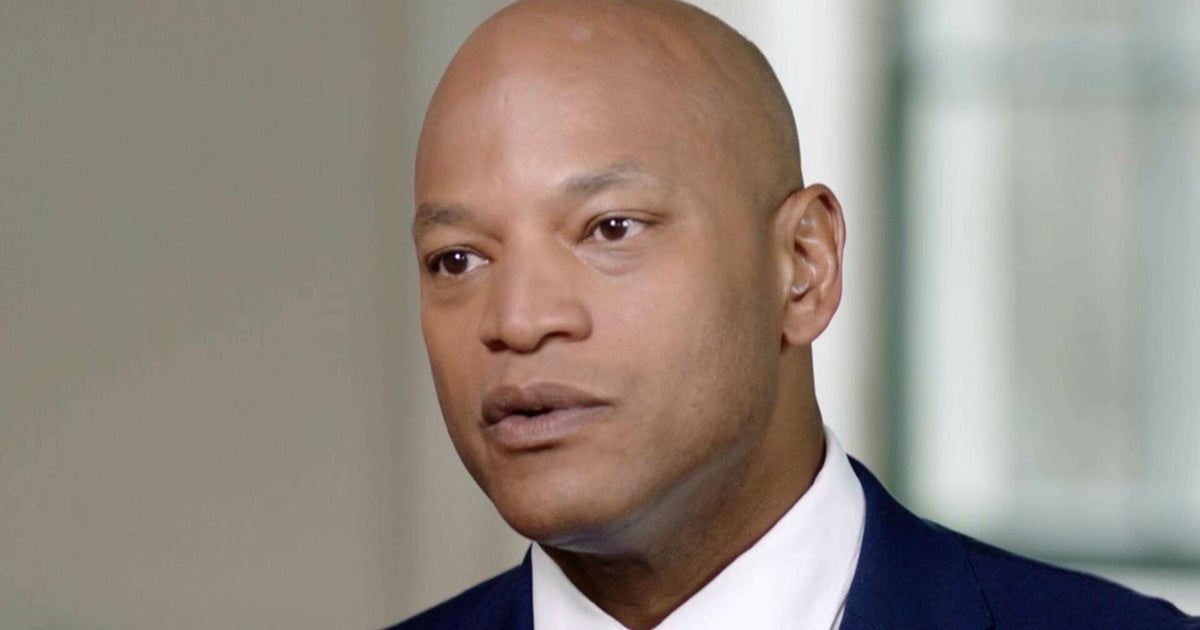
Maryland Gov. Wes Moore's Redistricting Advisory Commission will recommend new congressional maps, members decided during a private meeting Thursday night.
In a statement, Commission Chair Sen. Angela Alsobrooks said the group will "continue our work to recommend a congressional map to the Governor and the General Assembly."
The decision comes almost a month after Moore assembled the group to make recommendations about mid-cycle redistricting. The commission was directed to hold public hearings and receive feedback before making recommendations to the governor and Maryland General Assembly.
The commission is now asking Marylanders to submit map ideas for consideration. Proposals can be sent to grac@maryland.gov.
"After Christmas, we will make the submitted maps available publicly and hold two additional public meetings to gather feedback on the options before us. This process will remain open, transparent, and focused on ensuring Maryland's districts reflect our communities and comply with the law," Alsobrooks said in a statement.
Maryland previously redrew its congressional maps in 2022, after the 2020 census. The latest redistricting effort for U.S. states comes as Republicans seek to maintain their slim majority in Congress in the 2026 elections.
"At a moment when other states are moving aggressively to redraw maps-and with some already signaling they want the Supreme Court to weaken or effectively nullify key protections in the Voting Rights Act-Maryland cannot afford to sit on the sidelines," Alsobrooks said.
The redistricting commission is made up of five members: Chair Sen. Alsobrooks, Senate President Bill Ferguson, the Speaker of the House, Cumberland Mayor Raymond Morriss, and former Attorney General Brian Frosh.
Gov. Moore defends redistricting commission
The day after the commission's decision went public, Gov. Moore called the commission one of the most transparent redistricting bodies nationwide.
"This commission is a bipartisan group of leaders who have heard from people all across the state and will continue hearing from people all across the state," Moore said.
Reporters asked the governor on Friday if he's following any direction from national Democratic leaders. He responded, "Party bosses don't determine how I move."
"Party bosses and national people will not determine how Maryland moves; this is a Maryland process," he said.
Gov. Moore also maintained that state residents want the redistricting to happen, and said the process will consider thoughts from Marylanders of all political leanings.
State leaders react
Senate President Bill Ferguson shared his opposition to the decision in a statement Thursday, saying, "Pushing forward a pre-ordained recommendation outside the public eye is irresponsible and lacks transparency."
"… We did not engage in a thoughtful, informed conversation that would have included, at the very least, testimony from the Office of the Attorney General, or our State and local boards of elections," Ferguson said.
According to Ferguson, testimony showed that Marylanders oppose mid-cycle redistricting.
"Our State's residents have been clear in front of this commission and through polling. The overwhelming majority do not want a new congressional map. They want their government focused on fostering growth, affordability, and real protections against this lawless federal Administration," Ferguson said.
House Minority Leader Jason Buckel agreed with Ferguson, saying in a statement, "There has been limited and rushed public input, and at least 50% of it is against any redistricting."
Marylanders react to redistricting effort
In a recent poll from the University of Maryland, Baltimore County (UMBC), nearly 41% of Maryland residents who participated said the district lines are drawn unfairly. Another 28% said the districts were already drawn fairly.
Nearly 33% said the current congressional districts favor Democrats, and 8% said they favor Republicans.
Nearly 81% of participants said they think purposefully redrawing congressional district lines to favor one party over another is a major problem for American democracy.