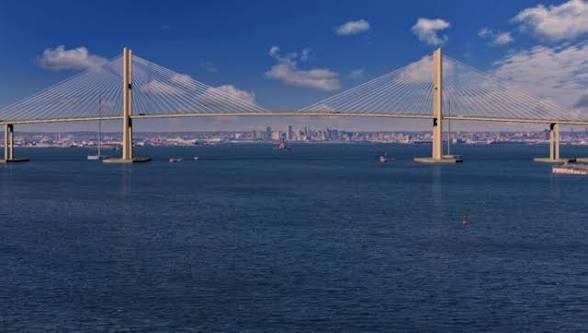
Coast Guard warns bigger ships pose risks to aging bridges in wake of Baltimore's Key Bridge collapse

A new U.S. Coast Guard report found that ports across the country remain vulnerable to a tragedy like the 2024 Key Bridge collapse in Baltimore.
The report says the risk is largely due to the growing size of vessels and bridge protection systems that have not kept pace with them.
Robust pier protection systems have also added to the cost of replacing the Key Bridge in Baltimore.
Coast Guard findings and recommendations
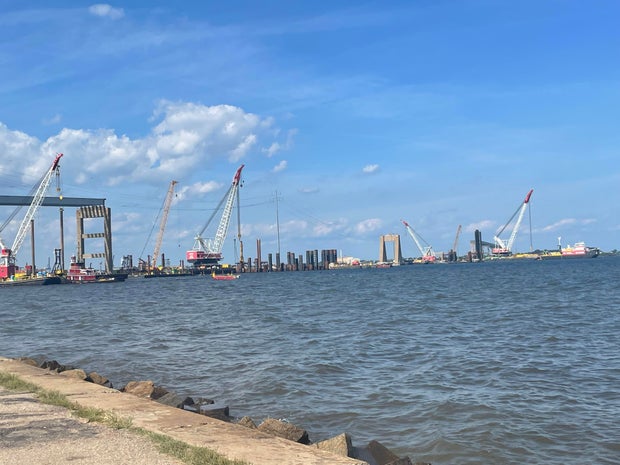
The U.S. Coast Guard's Board of Inquiry began its investigation shortly after the deadly 2024 collapse of Baltimore's Francis Scott Key Bridge.
The Board of Inquiry says there are current weaknesses in evaluating the risks larger ships pose—and the vulnerabilities extend far beyond Baltimore.
The report states the Key Bridge collapse "[illustrates] the degree to which existing critical infrastructure within any number of U.S. ports may be vulnerable to previously unanticipated failure."
It finds a ship striking a bridge is the most feared worst-case scenario at 8 of the 11 ports evaluated nationwide.
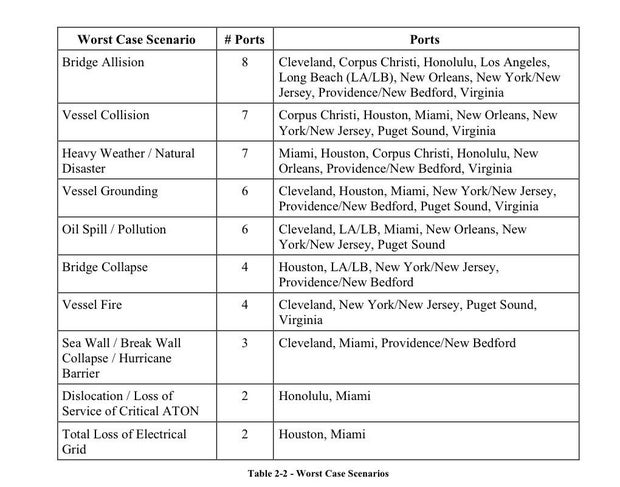
Investigators personally visited ports from California to Virginia.
The Coast Guard report calls for more disaster simulator use for pilots and captains, increasing the capability and availability of tugboats for higher-risk vessels, and improving pier support at older bridges.
The report also notes increasing congestion near ports because of more recreational vessels on the water and calls for better communication between commercial and recreational vessels.
The head of the Coast Guard's Board of Inquiry, Rear Admiral Wayne Arguin, said in a statement, "The tragic Key Bridge incident underscores the urgent need to strengthen our approach to port safety and risk management."
You can read the full report here.
NTSB previously sounds alarm
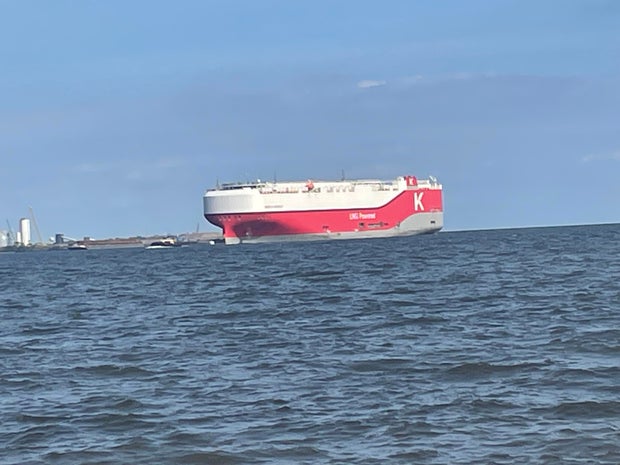
Last year, the National Transportation Safety Board said the collapse of the Key Bridge was preventable and called on states across the country to evaluate the vulnerability of bridges near major ports—as ships have grown larger and pose a risk many structures were not designed to handle.
"We need action. Public safety depends on it," NTSB chair Jennifer Homendy said in March 2025.
Johns Hopkins study
Johns Hopkins University researchers recently used U.S. Coast Guard data to determine the Key Bridge, had it not collapsed, would have been among the top 10 most vulnerable bridges in the country.
"We have for a long time underestimated the risk to existing bridges around the United States, and what we saw with the Key Bridge was not an aberration," Michael Shields, an associate professor of civil and systems engineering at Johns Hopkins University, told WJZ last year. "It was consistent with historical precedent. And it's something that we need to be aware of, that we need to take corrective measures for, and we need our protections in place, so we don't see this type of event again. "
Construction site tour
Two weeks ago, WJZ Investigates toured the construction progress on the new Key Bridge, a project where costs have ballooned to more than $4 million.
The current timeline calls for it to open by the end of 2030.
"The work that is being carried out now is critical. It's on the critical path to delivering this bridge and being able to open it to traffic," said Jim Harkness, the Maryland Transportation Authority's chief engineer.
The Maryland Transportation Authority says the rising price tag is due, in part, to the size and cost of pier protection, the extent of which was not factored into the original estimate.
The protective fenders on the new bridge will be larger than a football field.
"The towers needed to accommodate both the length and 230-foot height of the bridge deck add a significantly higher cost than initial assumptions," the Maryland Transportation Authority wrote in a blog post detailing cost projections.