Safety protections for Baltimore's Key Bridge replacement drive up cost estimates, MDTA says
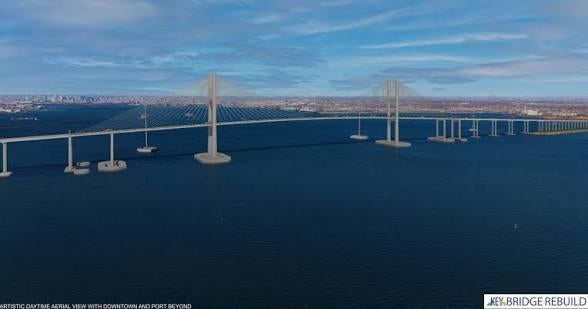
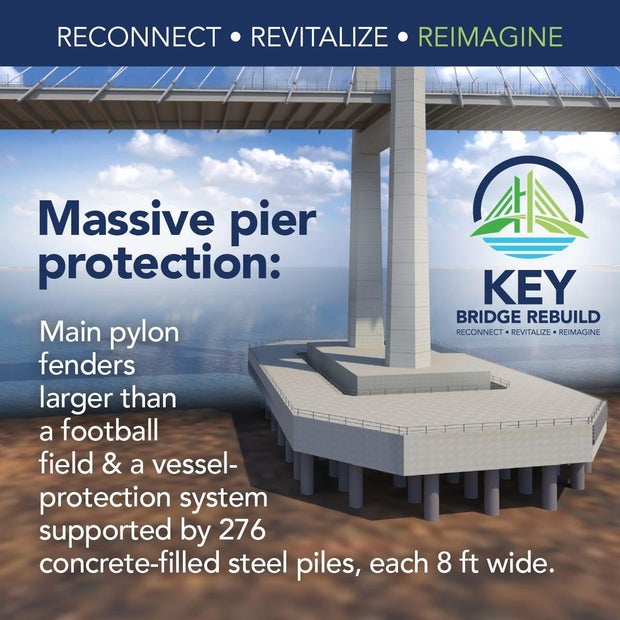
Maryland Transportation Authority (MDTA) officials explained that the rise in cost estimates for the replacement Francis Scott Key Bridge is due in part to larger pylons and safety fenders required to protect them.
The MDTA's board got a thorough briefing on the state of the project on Tuesday.
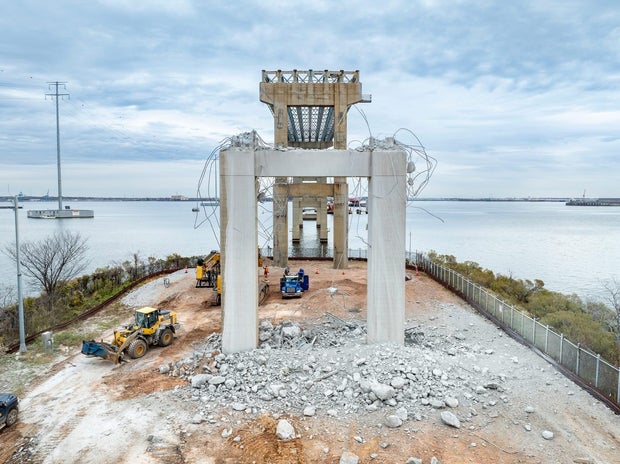
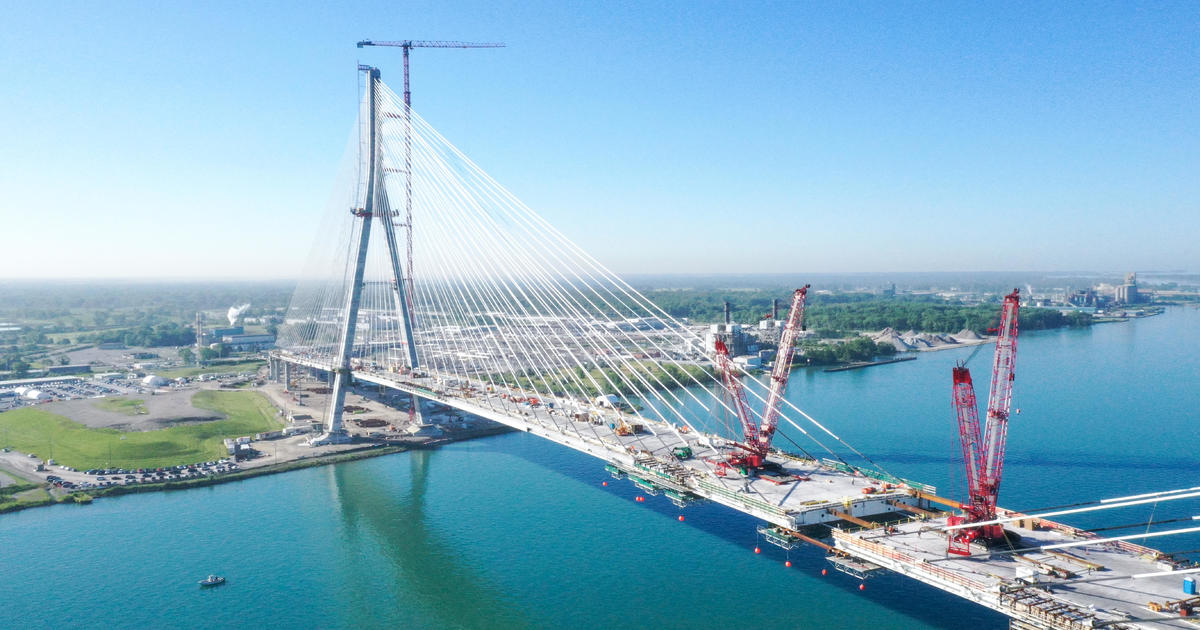
Those pylons will eventually rise more than 600 feet above the water and may take two years to complete.
"It will be the longest cable-stayed span within the United States," Brian Wolfe, the MDTA's Director of Project Development, said of the massive project.
The fenders are larger than a football field.
James Harkness, the MDTA's chief engineer, told the board, "Those changes in scale of these bridge elements had an effect on both cost and schedule for all of those safety-driven changes."
Cost and time estimates
Last week, Maryland officials revealed the replacement bridge will cost between $4.3 and $5.2 billion — a sharp rise from the initial estimate of $1.7 to $1.9 billion.
"Everything that has gone into the design, meeting those larger dimensions, that's all gone into the costs of where we are today," Harkness said.
The MDTA also pushed back the timeline for completion from late 2028 to late 2030.
At the board meeting on Tuesday, officials said it will take a year to construct the foundation alone.
Meanwhile, many drivers are taking the tunnels and putting more stress on that infrastructure.
Push for unity
Politicians on both sides of the aisle stressed the need to work together, with the Trump administration already expressing concerns about the project's price tag.
"The biggest threat to this project, as I see, is the politicization of it," said Anne Arundel County Executive Steuart Pittman, a Democrat.
Pittman also talked about funding before the MDTA's board on Tuesday.
"The federal government has said, Congress has said, 100% of the costs they will bear, and some folks are looking for reasons not to do that," Pittman told the board.
Delegate Bob Long, a Baltimore County Republican, stressed, "Traffic has just been horrendous as you well realize. Time is of the essence with this bridge."
He expressed concerns about the price and timeline.
"I agree with the county executive. I don't want this to be politicized," Long said. "I want us to work together and make sure this can be done in a timely manner."
Community concerns
In Turner Station, a historic neighborhood in the shadow of the former bridge, Courtney Speed has a family business that dates to the 1940s.
She lamented the damage done by more trucks on local roads and the loss of connection for her community.
Speed called the extra two years to complete the bridge "horrible news" and expressed the frustration of many in her neighborhood at the detours required without the bridge.
"This has caused much more gas and much more time," Speed said.

Final cost may vary
The costs and timeline are not set in stone.
Contracts with final estimates are not expected to be signed until June. MDTA officials said they would first get firmer cost estimates through March.
Then, they will adjust with the contractor from March into April.
The first binding price proposal would be presented in early April.
The state would then negotiate with the contractor.
By May, they would work to get final legal approvals and federal approval, with the hope of a final contract by the end of May that would be formally signed in June.
Harkness said that "would then allow for the opening-to-traffic date in late 2030."
He hopes to lock in "real-time pricing" during this early phase.
Harkness said the transportation authority has extensively reviewed costs with the help of outside contractors and found $200 million in savings. He stressed they are not wasting time or money on superfluous items.
"Boiled down, this is the minimum as to what is required for the design standards," Harkness told the MDTA's board.
Board members praised the planning and groundwork done on the project.
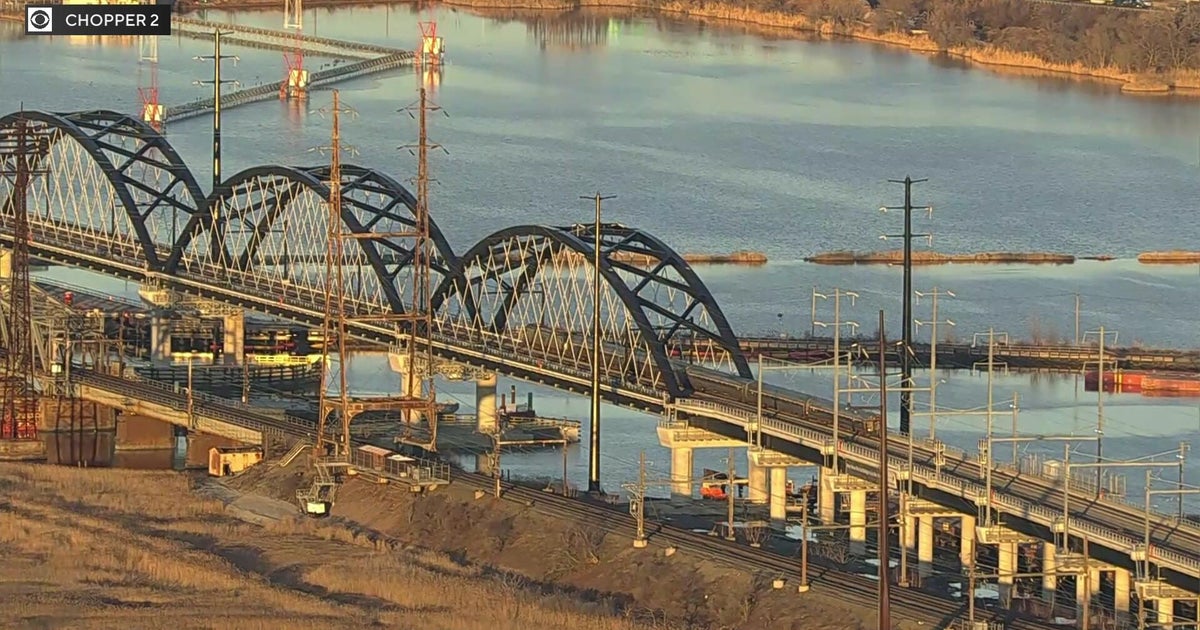
A loose cable on the Dali cargo ship caused a power outage that led to the Key Bridge collapse in March 2024, according to the National Transportation Safety Board, which released new findings related to the investigation at an exhaustive hearing in Washington, D.C., last week.
Maryland is still in a legal battle to recoup damages.
Complex process
MDTA officials said it will take two years to pour the main concrete pylons, which is a complex and exacting process.
"It's a mass concrete operation," Wolfe said. "We have to be careful how the concrete cures over time. It requires a cooling system to be installed. It generates a lot of heat as it cures, and we have to control that, or we end up with cracking problems, instability problems with the concrete."
Two large cranes will eventually be set up in the Patapsco River to assist in the construction.
Lawmakers ended with a push for a united front of support for one of the biggest construction projects in Maryland history.
"If we are united, we will get 100% of our federal funding. If we are divided, things will slow down, and they will slow down a lot," County Executive Pittman said.