10,000 tons of concrete slabs from Baltimore's collapsed Key Bridge removed from river
Thousands of tons of concrete that made up the bridge deck of the collapsed Francis Scott Key Bridge has been removed from the water and is now stockpiled at the site waiting to be recycled.
The slabs of concrete in total weigh about 10,000 tons, which is the weight of about 2,000 adult elephants, according to a social media post from Key Bridge Rebuild.
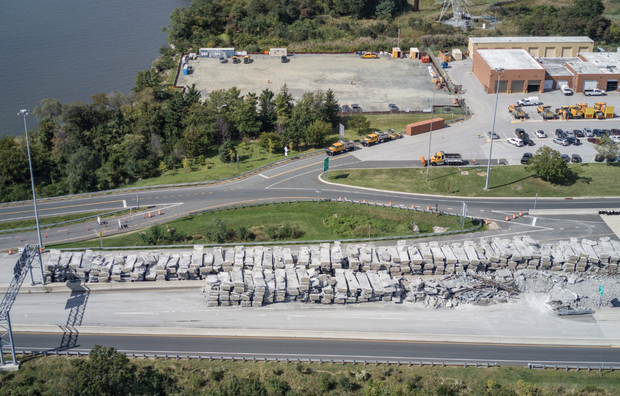
"Seeing them up close really shows the scale of the work happening as part of the rebuild," the post continued.
Some of the concrete will be used a part of the on-going rebuild project for the new Key Bridge, which is expected to be completed in the fall of 2028 and is budgeted to cost approximately $2 billion.
In December 2024, Maryland lawmakers said that the federal government would cover the full cost of the rebuild.
U.S. Senators Chris Van Hollen and Ben Cardin said the funding for the Key Bridge rebuild was wrapped into last year's federal spending bill.
What caused the Key Bridge to collapse?
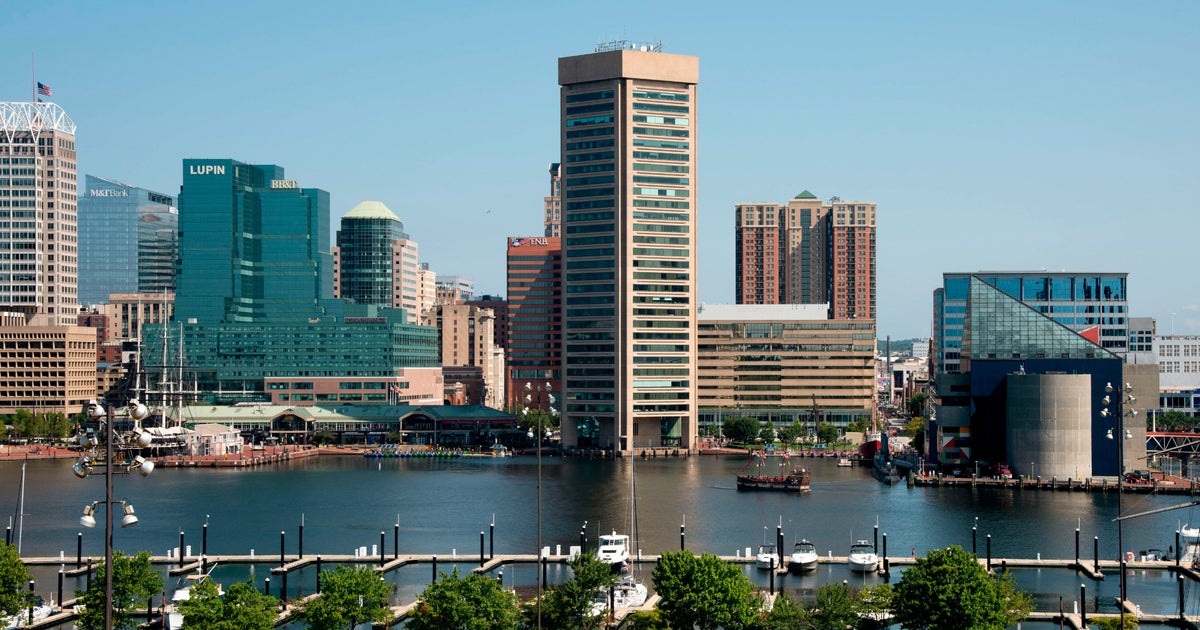
The iconic Key Bridge collapsed into the Patapsco River on March 26, 2024, after it was struck by the Dali, a 948-foot cargo ship that was trying to depart from the Port of Baltimore.
The collapse killed six construction workers and closed the Port of Baltimore for nearly three months. The closure prompted shipping delays and a host of concerns from businesses across the region.
The crash also opened the door for billions of dollars in lawsuits.
The Dali lost power several times before ultimately colliding with the bridge, according to a report by the National Transportation Safety Board (NTSB).
In March 2025, the NTSB blamed the Maryland Transportation Authority (MDTA) for failing to conduct a vulnerability assessment. The NTSB said the assessment would have helped identify structural risks on the bridge before the collision.
"The Key Bridge, like other bridges in America, was approved and permitted by the federal government and in compliance with those permits," MDTA said in response to the report.
First test piles installed
Earlier this month, the first test pile was installed in the Patapsco River, as construction crews continue progress into rebuilding the Key Bridge. The test piles will determine the load-bearing capacity and confirm the overall design's integrity and feasibility. The piles will support a floating pier, which is built to absorb impact.
According to the MDTA, the test piles are eight feet in diameter and more than 200 feet long. Twelve of them will be driven into the riverbed over the coming months.
"We're going to place some testing equipment on them that exerts a lot of force, and then that tells us a lot of key information about the geotechnical conditions below ground," Jason Stolicny, the deputy director at MDTA, said last month. "They should be able to redirect or absorb an impact without compromising the bridge structure."
Some of those test piles may be reused in the permanent bridge.
What's next?
Crews are continuing the demolition process of what's remaining of the collapsed Key Bridge.
The demolition efforts are expected to take at least nine months with the use of heavy machinery, the state warned.
Crews have been removing slabs of concrete piece by piece, six feet at a time, on the remaining structure.
The cable stay design of the new bridge will allow the federal shipping channel to expand from 700 feet to about 1,000 feet wide. The base of the bridge will also be raised to 230 feet, which is a 45-foot increase to accommodate ship traffic.