Georgia leads nation in deadly police chases: "A public safety crisis hiding in plain sight"

In April 2025, 19-year-old Cooper Schoenke was killed in Atlanta's Little Five Points neighborhood after a state patrol chase ended in a fiery crash. The pursuit began over a traffic violation.
That death was one of at least 43 bystanders or passengers killed during Georgia police pursuits between 2019 and 2021, according to data from the Georgia State Patrol.
When blue lights flash across Georgia's highways, the danger doesn't end with the suspect.
A growing body of data shows that high-speed police chases are killing hundreds of people, many of them Black, and fueling calls for reform of state pursuit policies.
From 2019 to 2023, the Georgia State Patrol (GSP) engaged in more than 6,700 pursuits, according to agency data obtained by the Atlanta Journal-Constitution. Over half of those chases ended in crashes. At least 63 people were killed and nearly 1,900 were injured, and experts say the state's tactics are among the most aggressive in the country.
"Georgia State Patrol has one of the loosest pursuit policies in the country," said Dr. Thaddeus Johnson, associate professor of criminal justice and criminology at Georgia State University. "Officers can pursue at their own discretion without supervisor approval. That's a huge problem because it allows adrenaline to replace accountability."
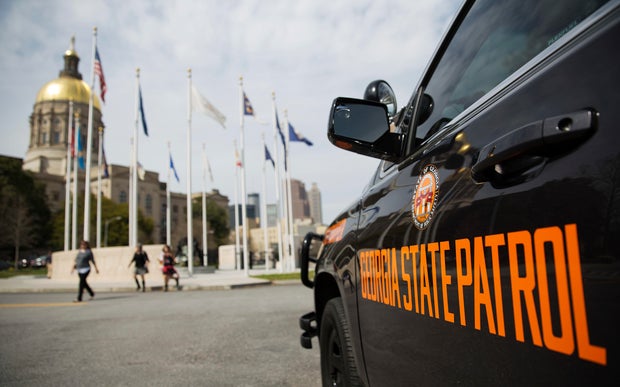
Concerns over disproportional pursuits on Georgia's roads
The data shows another alarming trend: Black Georgians are disproportionately impacted by fatal police pursuits.
A USA Today investigation found Black Americans are killed in police chases at three times the rate of the overall population, a pattern mirrored in Georgia's own pursuit records. Johnson says that's a symptom of systemic over-policing.
"Policing is concentrated in Black, brown, and poor communities," he said. "That means more stops, more chases, and more chances for something to go wrong. It's not about bad apples; it's about structural exposure."
He added that fear and trauma amplify the risk.
"Even trained officers experience tunnel vision and panic during pursuits," he said. "Now imagine a scared driver who's lived their whole life afraid of police — fight, flight, or freeze. Those split-second reactions can turn deadly."
The chase becomes the threat
Georgia's pursuit policies give troopers wide discretion — allowing chases for minor infractions such as suspended licenses, broken taillights, or speeding. Critics say that the lack of oversight has turned enforcement into a public hazard.
Georgia has one of the highest fatal pursuit rates per capita in the U.S. In that same four-year span, troopers used PIT maneuvers, a "precision immobilization technique" that forces a fleeing car to spin out, more than 2,000 times, leading to 19 deaths.
Johnson believes the PIT tactic, when used at high speeds, should be reclassified as deadly force.
"If spinning a car at 70 miles per hour can kill someone, it's no different than pulling a trigger," he said. "It should follow the same rules and accountability."
Johnson, a former police officer himself, said that without clear limits like requiring supervisor authorization or restricting pursuits to violent crimes, officers are put in "bad positions with no guardrails."
"How we define safety" put in a national spotlight
The issue reached national attention after John Oliver devoted an episode of "Last Week Tonight" to high-speed pursuits, revealing that over 3,000 people have died nationwide in just six years. Many were unrelated to the original crime.
Oliver called Georgia a "case study in unchecked pursuit culture."
Atlanta has already tried to set limits. After multiple bystander deaths, the City Council restricted chases within city limits to violent felonies, required supervisor approval, and banned PIT maneuvers in dense neighborhoods. But GSP troopers — who frequently cross city lines — aren't bound by those restrictions.
Johnson says that's why reform must come from the state legislature, not just city hall.
"We need a uniform standard across Georgia," he said. "Supervisory approval, pursuit thresholds, transparency, and mutual aid agreements between departments. Right now, you've got nine agencies chasing the same suspect through Atlanta, all with different rules."
Johnson said every fatal pursuit should trigger the same scrutiny as an airplane crash — a systemic investigation, not just an officer review.
"When someone dies over a suspended license, that's not public safety — that's system failure," he said. "We have to ask, what went wrong? What policy failed? Because every one of these deaths is preventable."
He added that unchecked policies hurt officers as well.
"These officers carry that trauma," he said. "They go right back to answering calls after killing someone in a chase. Fatigue, overtime, and stress all make decision-making worse. It's a cycle that hurts everyone."