Georgia officers accused of misusing license plate reader technology to track people for personal reasons

Automatic license plate readers have become one of law enforcement's most effective crime-fighting tools, helping investigators recover stolen vehicles, locate missing children and identify suspects within a matter of minutes.
But across Georgia, the technology is making headlines for a different reason.
A growing number of police officers and sheriff's deputies are accused of using license plate reader databases to track people in their personal lives rather than as part of criminal investigations.
The cameras themselves are not accused of any wrongdoing. Mounted along roadways and intersections, they capture license plate information that investigators can search to determine where a vehicle has traveled.
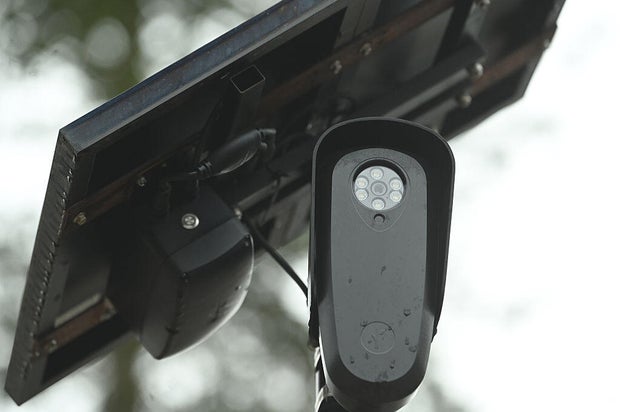
The problem, critics say, arises when someone with government access uses that information to monitor a current or former romantic partner, family member or acquaintance.
In just the past few weeks, authorities have announced cases involving three Cherokee County sheriff's deputies, five Albany police officers and three Richmond County officers accused of misusing Georgia's license plate reader databases.
Other recent Georgia cases include a Gwinnett County police officer, a Coffee County deputy, an employee with the Echols County Sheriff's Office and the former Braselton police chief, all accused of improperly accessing or using license plate reader information.
Civil liberties advocates say the cases point to a broader concern over who has access to the powerful surveillance technology and how it is monitored.
"Seeing that there are officers misusing this technology for personal reasons really just kind of indicates a larger problem in general of the fact that we have no idea what this technology is being used for and who really has access to it," said Sarah Hunt-Blackwell, senior policy counsel with the ACLU of Georgia.
Law enforcement agencies maintain that automatic license plate readers remain an essential investigative tool. Officials credit the technology with helping recover missing children, stolen vehicles and victims of human trafficking.
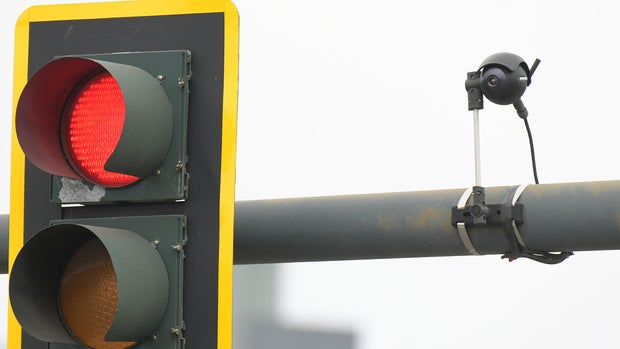
One of the nation's largest license plate reader companies, Flock Safety, is headquartered in Atlanta. Its technology is used by numerous law enforcement agencies across Georgia.
Ironically, many of the recent misuse cases were uncovered by the very system designed to hold users accountable.
Every search performed through the database is recorded in an audit log, allowing agencies to determine who searched a license plate, when the search occurred and the reason entered for accessing the information.
In Cherokee County, officials say an internal audit uncovered the alleged misuse that led to the arrests of three deputies.
"We found misuse and we addressed it head on," the Cherokee County Sheriff's Office said in a statement to CBS Atlanta. "We are moving forward and will ensure our deputies are trained on the proper use of ALPRs and make clear there will be consequences for any misuse."
Privacy advocates say that's only part of the solution.
The ACLU of Georgia is urging the Atlanta City Council to adopt an ordinance requiring greater transparency and stricter oversight of automatic license plate reader technology. According to the organization, similar laws have already been adopted in 26 cities, including Nashville, St. Louis, Detroit and San Francisco.
"The ordinance that we're working on has actually been passed in 26 other cities across the country," Hunt-Blackwell said. "Atlanta would be the first city in the Southeast to actually have this ordinance on the books."
Until additional safeguards are adopted, privacy advocates argue the public has little insight into who can access the databases, how often they are searched and what ultimately happens to the vast amount of location data they collect.
The cameras themselves are hardly a secret.
A privacy advocacy group maintains an online crowdsourced map known as DeFlock, which shows the locations of thousands of license plate reader cameras nationwide. In metro Atlanta alone, the map identifies more than 4,000 cameras, illustrating just how extensive the network has become.
CBS News Atlanta reached out to Flock Safety for comment but did not receive a response by the time of publication.


