Watch CBS News

What we know about Trump's Air Force One switch

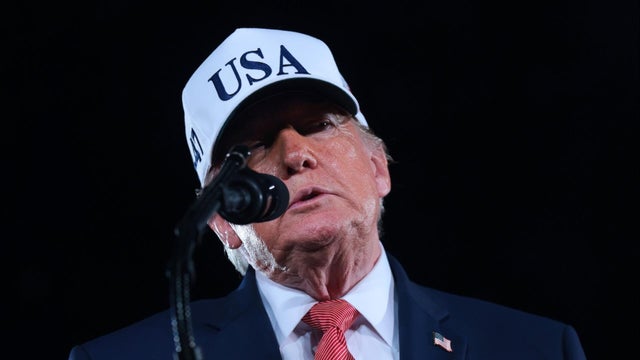
CBS News has learned that the Secret Service advised President Trump not to take the Qatari-donated Air Force One to leave the NATO summit in Turkey. CBS News' Nicole Sganga and Samantha Vinograd join with the latest.
Jul 9 (06:06)

TRANSCRIPT FOR: “WHAT WE KNOW ABOUT TRUMP'S DECISION TO SWITCH AIR FORCE ONE PLANES”

MAJOR GARRETT:
00:00:00

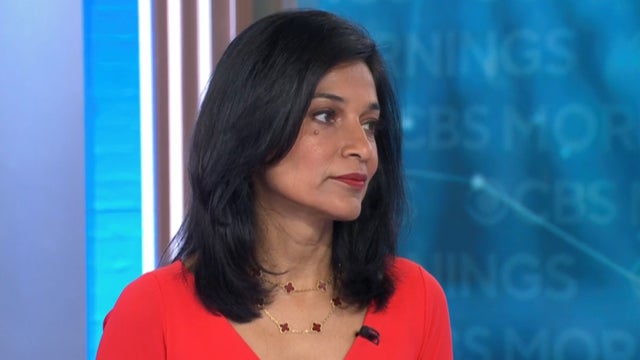
Joining me now here at the Family Table, CBS News Homeland Security Correspondent Nicole Sganga for more on her new reporting about security concerns about the Qatari jet that was given over to President Trump and converted into the brand-new Air Force One. Also with us, CBS News National Security Contributor Sam Vinograd, who may weigh in on that, but we'll certainly lean on her, as we frequently do, about the latest activity with the Iran war. But, Nicole, let's start with you. What do we know? Major, let's talk about what we know and what we don't know. What we know is--

MAJOR GARRETT:
00:00:28

What people are not saying. Yes. The Secret Service advised President Trump to leave Turkey on the older Air Force Oneinstead of this new Qatari-donated plane, often referred to as the bridge plane, that he had flown into Ankara. We know that the older Air Force Onehas long-established secure communications, sophisticated defensive systems, what is called diversion technology, established to misdirect incoming missiles. We know the decision was also tied to ensuring that the president could manage the Iranian conflict from the air, if needed, that the old Air Force Onehas, in essence, a secure airborne command center, much like a Situation Room in the air. We also know that this decision would not have been made without sign-off from the White House Military Office, the likes of Brigadier General Garrett Hoffman as well as his military aide. Now, what we don't know is exactly what the newer Qatari-donated Boeing 747-8 has in terms of capabilities and does not have. And part of the reason we're not hearing exactly what it does not have is, of course, many of the officials and sources we're speaking to have concerns about national security as well as the president's own protective security, but it does raise several important questions moving forward, like, will the president keep that new Qatari-donated Air Force Oneon future travel? Is he going to only use it in lower-risk environments? And is this sort of a one-time precaution during the Iranian conflict, or does it point to broader concerns about perhaps how the construction and equipment of this new Air Force Onewas hurried along over the past year? Lest we forget, it usually takes 6 to 10 years to build an Air Force Onestyle military plane. This one was outfitted in, I believe, just a year. Right, and the president said the quiet part out loud yesterday. He's the number-one target from Iran, and then this switch occurred, which at least indicates that there was something of concern, and this older plane was better equipped. That seems to be a rational conclusion. And what we seem to be hearing from sources is, well, it wasn't one specific, credible threat. The president has faced a series of credible threats in the past from Iran and other foreign adversaries and that we are now in new territory amid this ongoing war and, by the way, a deteriorating ceasefire.

MAJOR GARRETT:
00:02:57

Sam, you've been on Air Force One. You have been part of these conversations with a US president. Your thoughts? Let's put this in the never have I ever category. Never have I ever heard that a US president flew on an Air Force One plane-- there are multiple, by the way-- on an Air Force Oneplane and then security officials said, actually, it's not that secure. Let's put you on an old one. So never have I ever heard that before, and I really hope I don't again because Boeing refers to the Air Force One fleet as a flying Oval Office. Not only does the Air Force One fleet have ongoing connectivity, it has these advanced security protocols. It has 4,000 square feet of interior space. It is basically not just a flying Oval Office, a flying White House. And it is also self-sufficient, and this is really important. The actual Air Force One fleet can refuel in air. They don't need-- even if they have to make an emergency stop, they don't need help from partnering governments. They're self-sufficient. And now we have a situation where we have a plane that was donated from a foreign government, was used by foreign officials, had been on foreign soil. And, ostensibly, the White House cut corners to try to get this operational on, frankly, an unrealistic timeline. And as a security official, I take a step back and say, why would you want to rush something as important as not just the president's safety but over a hundred other people that are flying with the president that are really critical to our national security? Now, the president flew back on that Qatari-donated Air Force Onefrom England, but that is clearly a much safer, lower-profile, lower-risk situation. Sam, in about less than two minutes we have, talk about what we have seen in the headlines today with the Iran conflict and strikes back and forth. What we've seen is a resumption of this tit-for-tat reciprocal trading of fire. We've seen the United States hit--

MAJOR GARRETT:
00:04:45

But at an elevated level? Certainly at an elevated level across a broader range of targets, a faster pace. And the United States has conducted those strikes throughout various parts of Iran, really concentrating, to a large degree, on the coastal areas but then moving inland. And Iran has, like it has in the past, escalated attacks against Bahrain and Kuwait where CBS reporting and other outlets have reported the US had started moving folks back in, both in terms of military personnel and diplomats. I've spoken to oil companies that have also kind of resurged their personnel on the ground because we thought the ceasefire was in effect. So we've seen this resumption between the two countries as well as really an escalation in targeting while, importantly, our traditional mediators, Qatar as well as other countries like Turkey and Saudi Arabia, are trying to say to both sides, let's take a beat. Let's try to negotiate. They're trying really hard to do that. They're trying really hard, but at this point, the question is, where is their credibility and confidence by either party that anyone's committed to the ceasefire? Certainly, Iran was striking commercial vessels in the Strait of Hormuz, and even before that, the actual control of the Strait of Hormuz was not what President Trump laid out verbally. It was really Iran trying to call the shots literally and figuratively. Sam Vinograd, Nicole Sganga, thank you so very, very much.

Videos
View CBS News In
CBS News App Open
Chrome Safari Continue