Watch CBS News

Drone strike hits UAE nuclear power plant

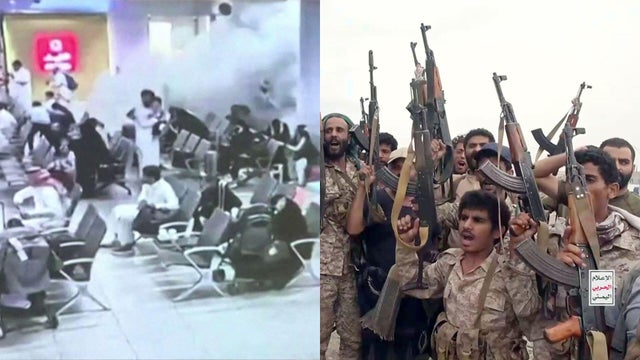
The United Arab Emirates on Tuesday alleged that Iran-backed Shiite militias in Iraq attacked one of its nuclear power plants. CBS News national security analyst Aaron MacLean joins with more.
May 19 (05:11)

TRANSCRIPT FOR: “UAE CLAIMS IRAN-BACKED SHIITE MILITIAS IN IRAQ ATTACKED NUCLEAR POWER PLANT”

REPORTER:
00:00:28

[INAUDIBLE] Yeah. It was all done. The boats, the ships are all loaded. They're loaded to the brim. And we were all set to start. CBS Newsnational security analyst Aaron MacLean joins me now. He also hosts the most excellent School of Warpodcast. Aaron, we'll get to the Strait of Hormuz, which we've talked about before. But there's an interesting thing that happened today that I want you to dig into for my audience's benefit. The United Arab Emirates alleged that one of its nuclear plants was attacked by Shiite militias backed by Iran in Iraq, not Iran. Walk my audience through that. So Iran maintains a network of proxies throughout the region. Before October the 7th, 2023, this network was extremely robust and essentially constituted a kind of Iranian empire, if you like, through Iraq, Syria, down here into Lebanon, where you see Hezbollah. And there's an extraordinary concentration of these Shia militias still active in Iraq. And during hostilities in March and into April, you actually saw these militias firing on American and Israeli targets throughout the region. What seems to have happened are drones took off from here in Iraq, traveled either over the Persian Gulf-- it could also have been through the interior of Saudi-- and hit this power plant right here on the coast of the UAE. It's a nuclear power plant. You don't want to hit those things with drones. And one of the drones exploded. Right. No real damage or injuries. But this is a nervy sort of situation, is it not? And is this kind of an underappreciated front or component of this hostile environment? It's certainly not gotten as much attention as the direct violence between Israel and the United States on the one hand and Iran on the other. But that kind of exchange happened throughout March and April. It's still clearly simmering now, which raises the question, what is the direct Iranian role in directing these proxies? Did it order this attack? Did it merely give its tacit approval? Or can it not control these guys? We don't know for sure. I suspect the truth is somewhere in the middle. All right. Let's go back to the Strait of Hormuz. Our colleague, James LaPorta, reported today that there's a new US Navy assessment of how many mines might actually be in the strait. That's right. So we are looking at mines here, essentially, in these international channels that run through the center of the strait, separate, of course, from the Iranian channel up here in the north and the Omani channel here in the south that Americans would like traffic to move through until we aborted so-called Project Freedom a couple of weeks ago. These mines are a serious threat to shipping. You don't want to hit one of these things, whether or not it sinks your supertanker or not. Again, like landing a drone at a nuclear power plant, it's a bad day. It's the kind of thing you want to avoid, and it's a very serious matter. And I read today, Aaron, that compared to last week, traffic through the strait has doubled, but it's still a fraction of what it was before hostilities began February 28. A tiny fraction. And that's why, Major, I think if we see hostilities start again here in the next few days-- the president really has two broad options. One is a narrow campaign, a restarting of Project Freedom that focuses on reopening the Strait of Hormuz, maintaining the US Naval blockade of Iranian ports while setting the conditions to guide traffic through the strait. But the problem with that is, as happened with Project Freedom, once you start that operation, Iran is likely going to escalate, the way it escalated the last time Iran was striking targets throughout the United Arab Emirates. And once that happens, you have to decide whether or not to hit what's firing at you in Iran. So I actually think the second possibility is more likely. The president goes back to his rhetoric from early April of going after bridges and power plants and hits the Iranian economy hard simultaneously with an operation in the strait. Because-- is it your sense, Aaron, that there are very few legitimate military targets in the interior of Iran that were not taken out in the early phases of this war? Well, a fair amount of reporting indicates that even though they were hit pretty hard, there are missile sites in particular that are left. There are nuclear sites that still were not addressed. That is to say that the nuclear dust, as the president likes to say, is buried there. So there still are military targets. And we don't know what the president would do. And, of course, we don't know if the president will do it. He keeps going back and forth between-- One day, two days, five days. We don't even know what the deadline is. I don't know if you've ever been at a bar late at night, Major-- Never. --and there's somebody belligerent, suggesting they want to get into a fight. But they keep saying to their friends, hold me back. Hold me back. That's kind of what the president did with Oman and Saudi Arabia and the UAE a couple days ago. Hold me back. And he's done it a number of times, all the way back to the original ceasefire, where he said it was Pakistan that asked him not to continue attacking Iran. Aaron, I've only read about such things. I have no personal experience whatsoever. Aaron MacLean, as always, thank you so much.

Videos
View CBS News In
CBS News App Open
Chrome Safari Continue