Watch CBS News

Possible U.S. military options in Venezuela

Sources tell CBS News that senior military officials presented President Trump with options for potential military operations in Venezuela. CBS News' Eleanor Watson and Sam Vinograd have the details.
Nov 14, 2025 (07:03)

TRANSCRIPT FOR: “EXAMINING MILITARY OPTIONS TRUMP COULD TAKE AGAINST VENEZUELA”

MAJOR GARRETT:
00:01:44

Eleanor, as you know, the United Nations has raised questions about the legality of this. This has disturbed our British and French allies to the extent that they're less comfortable than they historically have been in sharing intelligence information over questions about the legality of these actions. I know it's murky and hard to tell. But what do we know, if anything, about the legal justifications the Defense Department or Department of War have put together for the president on this? Well, the Defense Secretary has been asked multiple times, including by me, what is the legal authority of these strikes. And he says that the Defense Department has complete and total authority. There is a notification the Trump administration sent to Congress earlier this year that said the administration is in an armed conflict with the drug cartels because of how many Americans die each year through overdoses of fentanyl and cocaine. That is a shift in what we've traditionally seen when dealing with alleged drug smugglers, where they've been treated as criminals and not combatants. The Trump administration has presented arguments behind the scenes to Congress, but has not fully publicly presented an argument. And that has allies, as you said, in Europe and in Latin America, as well as members of Congress, concerned about the justification. The Secretary of Defense this week formally named this operation Operation Southern Spear in a tweet with just maybe four lines. There have been no public Pentagon press briefings on this, no backgrounders, and no real information about who is being targeted in each strike.

MAJOR GARRETT:
00:03:21

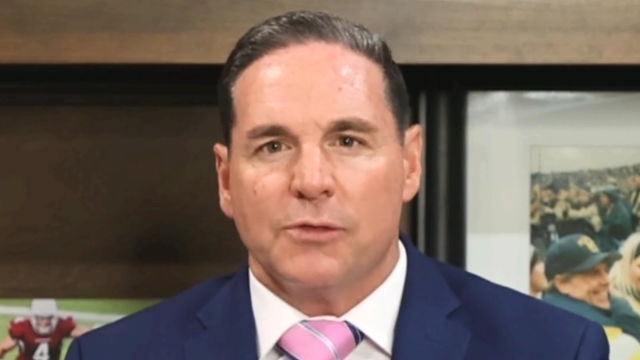
Eleanor Watson, thank you very much for all of that information and context. CBS News national security contributor Sam Vinograd joins me now. Sam, it's always great to have you here-- used to be considered criminals, now combatants. That's a big leap. It has lots of implications. Has implications from a legal perspective. But to take it one step further, Major, we've now gone from the administration thinking about and implementing military strikes against narcoterrorists, which they are legally considering to be combatants, much like terrorists on the battlefield in Afghanistan or Iraq, to actually receiving reporting that the president is reviewing military options to strike within Venezuela-- so not just in international waters, actual strikes within the territorial boundaries of another sovereign nation. That unto itself is also a big escalation. Despite the fact that the president hasn't yet said he's implementing those military options, it's a big leap. Let my audience know about the complexity of dealing with Venezuela militarily. Sure. So if you look at Venezuela's military, they have over 120,000 active duty military. I say that, though, with one caveat. Venezuela's military has certainly atrophied. They got a lot of military equipment from the Russians, for example, including air defense systems and other assets. But because of declining oil revenues, because of sanctions based upon Chávez and Maduro's actions, the level at which their military has been maintained and trained is questionable, Major. But this would not be a cakewalk. Venezuela is a very large territory, twice the size of California, about 30 million people or so-- about 8 million have fled, but still about 30 million people-- large territory, geographically rugged, a lot of urban centers. This wouldn't just be one and done. If there was a land invasion or even airstrikes, it would be a very complex operation. Sam, you have been a part of internal government conversations about options and legalities. Based on what you've seen from this administration, how rigorous or not rigorous has this legal process been about justifying killing people in international waters because their boats are suspected to carry narcotics? Well, to be clear, it is prudent planning for any president to review all options and then to have counsel honestly and analytically tell the president what is legal and what is not. What I fear, Major, is that the president is identifying a tool and telling his lawyers a way to figure out how to explain it--

MAJOR GARRETT:
00:05:48

And how to use it? --and how to use it versus having an actual discussion on the legality of a particular matter. And that's concerning. And historically, has it been the case for any United States government to look at a solitary boat several thousand nautical miles from the United States, which these boats have been, as a proximate threat to the security of the country? Well, we have had instances in which there have been drone strikes against terrorists, not boats carrying drugs, but against terrorists very far away, and have argued that they pose an immediate danger to the United States. The issue here is we've taken a jump from actual armed terrorists to suspected narcotraffickers. We see no evidence of what these boats are actually carrying. As you and I were discussing, boats coming from Venezuela are typically not carrying fentanyl. Fentanyl is not manufactured in Venezuela.

MAJOR GARRETT:
00:06:41

They are a transshipment point for cocaine, not fentanyl. Indeed, which is also bad. Yes. So while we have used military assets to kill terrorists very far away from the United States based upon a threat assessment, we haven't actually really seen the evidence here that these boats do pose a approximate threat based upon what they're carrying.

MAJOR GARRETT:
00:06:59

Sam Vinograd, always super helpful. Thank you so very much. Thanks.

Videos
View CBS News In
CBS News App Open
Chrome Safari Continue