Watch CBS News

Full interview: Sen. John Fetterman

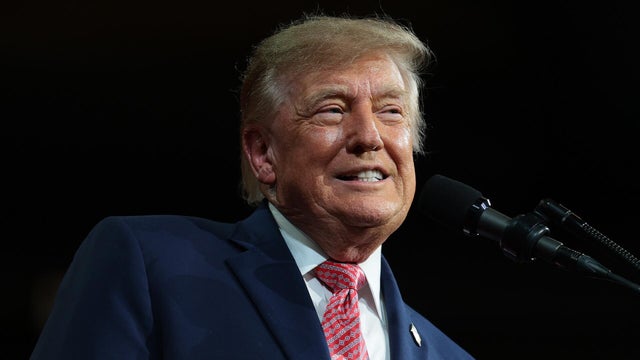
Sen. John Fetterman of Pennsylvania tells Major Garrett why he supports the U.S.-Israeli war with Iran and President Trump's objectives, and weighs in on the fight to fund the Department of Homeland Security, the SAVE America Act and more. Fetterman also opens up about his battle with depression, which he wrote about in his memoir "Unfettered," and how his children "broke [him] out of that despair."

Mar 11 (43:48)

TRANSCRIPT FOR: “FULL INTERVIEW: JOHN FETTERMAN ON HIS SUPPORT FOR IRAN WAR, BEING AT ODDS WITH DEMOCRATS AND MORE”

MAJOR GARRETT:
00:00:00

You support President Trump's decision to launch this war with Iran? How do you think it's going? Well, I think-- first, I think it makes me the only Democrat in the Senate that supports that, perhaps maybe even in the entire Congress. But yes, that's true. And I think overall, what's accomplished is remarkable. And I would like to remind everybody listening that every single Democratic presidential candidate and every single Democrat that I'm aware of demands that make sure that Iran could never acquire a nuclear weapon. And it's very clear that was their ambition, and also developing a missile technology to make it possible to deliver those kinds of weapons to Israel, for sure, and perhaps, even eventually, our country. And everything's tried. Multiple presidents through their administrations have tried this, negotiation, treaties, all other kinds of techniques to work through our other allies in the region and cajole them, no incentives. So it made that fact necessary, I think. Kamala Harris, while she was running for president, she identified Iran as her top concern, internationally, her top concern. And so when someone does that, it happens to be a very polarizing figure in the Democratic party to produce that outcome that we all would want. Now that's why I think it's reasonable to support that. Now, I'm also aware of how punishing it is as a Democrat to agree with him on anything. Certainly-- The president. Yeah, the president. And so I think, whether that's country over party, or the kinds of world's security where we're at and remind people as well that what's happened since that started, it's been a dramatic, dramatic impact on the Iranians' ability to essentially even respond at this point. So you think it's going well, the war. Yes, absolutely. I mean, I'm not sure it's the right word I would choose for war. But I do think it's very effective. And I do think it's moving towards the kinds of appropriate outcome. As we're speaking today, the president told Axios, there's practically nothing left to target in Iran. And the war will end, direct quote, "soon." Does that sound good to you? I mean, I'm sure there are some things. But it's also undeniable that Iran really never had the kind of capabilities to respond. Since it started, it's been 10 days, 10 days.

MAJOR GARRETT:
00:03:00

12 days. 12 days, 12 days. I think if they really have a shot to shoot, they probably would have done it by now. And now they're essentially, they had to resort to targeting other kinds-- other nations in the region and to try to disrupt some of the oil trade. And that's happening. But overall, they've been unable to inflict any significant damage on American assets or in Israel at this. Let me talk to you about the standoff over DHS funding, Department of Homeland Security. Nicole Sganga, one of my colleagues, reported that since the shutdown began of DHS funding, 300 TSA officers have quit. There are lots of longer lines at airports. Actually, I didn't know that. I didn't know 300-- 300 have quit just since the shutdown began. That's going to make it harder to refill those. It takes four to six months. Long lines are getting longer. How does this end? Yeah, well, I travel and I fly through the airport virtually every week of the year. And just last week-- actually, this was filmed. I asked every agent that I encountered, hey, do you like getting paid to work? You know, shockingly, they all agreed. Yeah, that's great to do that. And I said, well, I'm the one Democrat, again, again, to be the one guy to refuse to do that. How can you be a Democrat that says, let's make some reform on ICE. We all agree. Minneapolis was a disaster that should never have ever happened. In fact, later today, this is being filmed, I'm going to have an opportunity to sit down with Senator Mullin, who's going to be the next director of DHS. Markwayne Mullin from Oklahoma. Yeah, exactly, my friend and someone that I respect. And I do believe that he could be the kind of person that I could work with. Now just to remind, America signed up for secure our border, focus and deport all the criminals, and no more tragedies like in Minneapolis, and to make those kinds of appropriate reforms. So I'm not sure why that's more difficult to be a Democrat, because I feel, to me, that it's more-- it doesn't feel unreasonable to say that not punish people like TSA agents and Coast Guard and other people that were not involved in any of it. But you know votes have to be found. How are votes going to be found to get this spending approved? Yeah, oh, for the war? If there's-- No, for DHS funding, to end this. Oh, of course. Yeah, I've been the only one to-- Right, but how do you get your Democratic colleagues to change? I don't know. I can't speak for them. But we can all agree that it would have no impact on ICE or the kinds of reforms that we all agree. It just, I mean, it's illogical to punish innocent people that were not involved on the tragedy of Minneapolis that triggered it. So that's made it impossible to allow two things to be true to coexist. What is your feeling about the president's emphasis, hard emphasis on the so-called Save America Act? Well, there's a couple truths embedded in this conversation, too. I don't support, in its current-- its current state, to vote Save America. And the president is constantly critical on mail-in voting. And that's ridiculous. It's safe. Some of the best examples in the country are from red states like Ohio and Florida, of course. And now I have a unique perspective on that too, is in 2019, as I was Lieutenant Governor, the Republicans in Pennsylvania pushed for mail-in voting. They forced us to give up the straight party line-- that was one of two states in the country at that time-- because that's what they wanted. And then immediately, the president decided that's wrong. Then now they had to walk back and explain why, unanimously-- every single Republican voted for that in 2019. So that's why I can't ever vote for that because I could never agree something that's just not true. Now there's also another truth that I believe 83% of Americans think that it's reasonable to show ID to vote. And many, many states already do those things. Exactly. And I cite what happened in the Wisconsin election last year. And they elected a very liberal justice for the Supreme Court. But they also, nearly 2 to 1, voted to put that in the Constitution, show basic ID to vote. The world didn't spin off the axis. And I think we agree they're going to have a safe there. So if the Republicans would ever just make it showing basic state ID to vote, hey, I'm not going to tell 83% of Americans that they're wrong or that they are Jim Crow people, that. And also, the reason why the SAVE Act will never pass, because the filibuster. But including myself, we all voted-- I mean, ran in '22 to get rid of the filibuster, deliver it. But now we find ourselves, as Democrats, we love the filibuster. We cling to that. So that's a part of there. So if someone-- I tried to buy a wine at-- if anyone familiar with Sheetz. And they're like, no. I'm like, they even knew who I was. And they're like, well, no ID. I didn't have any ID. So I walked away, empty pockets. Showing ID, the vast majority of Americans, everyone should have one. I think many people should realize that that's basic, basic to participate in so many parts of American society. And now most states, including mine, has free state ID. And if they do make it mandatory, then every state should also mandate to have free basic-- That meet the requirement of voting. Exactly, exactly. At the direction of the president, this version in the Senate also has some transgender amendments. Are those problematic to you? Well, for me, I've always been a Democrat that refuses to pick on or signal out that community. I was the first person elected in Pennsylvania back in 2013. If you remember, it was illegal. Same-sex marriage was illegal. And the governor at that time threatened to arrest me if I performed or solemnized a same-sex marriage. And I did that. And I'm like, hey, they know where I live. And I believe in that kind of equality. And that entire community, now, I refuse to target that or pick on that. It's difficult enough for transgenders kids. So I think this is the wrong venue to discuss it nationally, make it global, and further kinds of drag them into this kinds of thing. So I think it's a very personal choice for parents and their children about it. And I think it's increasingly going to become a more local or maybe state kinds of decisions. Does it feel to you that the president's jamming those two issues into this legislation in order to amplify the politics? Well, yeah, of course. They're trying to make it more like a statement. So as a Democrat, I'm making a statement. But I think it's pretty reasonable and something we could agree. Now, if he wants something that has a chance of passing, or he could make a more cogent argument, make it just a basic straight, show basic fundamental state ID, or can you explain why voting by mail is corrupt or problematic? Well, then you're actually criticizing many of your own states and many of your own constituents that use that. And the way you were reelected. Yeah, well, exactly. And also, you damage your own credibility when you have no problem with the election if you win. But the only time you have a problem, where it's like, if you didn't. He had no problem with it in 2016. I don't recall him ever being upset. And certainly, everybody-- he never had a problem with the outcome in '24. So that's where we are. I want to talk about the book now. OK. Unfettered. I've read the whole book. But the first page, it just rocks you when you read the first words. And I'm going to read this for my audience. This is to anyone with depression, but especially, to someone who is considering taking your own life. Depression lies to you. It will try to convince you that taking your life is the solution. Yeah, that's been my experience. You went through that. Oh, absolutely. I never thought that people, myself, I thought, well, if you're depressed, maybe, well, you're just in the dumps. Or you're just kind of sad. But it actually is a very specific affliction. And now, if you are unable to arrest that, you begin to have that conversation with yourself. And then you convince yourself that the solution is to just take your life. I had two friends take their lives. And they both had young children at that time. And for me, my own kids, that was my emergency brakes to-- I can't ever be the example. And my friends that they did succumb to it, that didn't made them weak or a failure. I was just lucky. So that's why that's my message to anyone. And I know many, many, many people suffer depression. And now look at our veteran community. 17 or 18 veterans take their lives every day. It's epidemic. In our nation, over 50,000 people take their lives. So that's an important conversation that's appropriate to have. And I know it's definitely not a political winner to talk about suicide. But ironically, it got the worst. And that conversation started to accelerate after I won. That's what makes it so counterintuitive. That's not what broke me out of it. What broke me out of it was my own kids. And everyone needs that kind of an emergency break. And if you refuse to take that path, that guarantees you'll eventually get back in your path for recovery, whatever that is. I'm not an expert. But I keep it simple to say, stay in that game. And that's the message to anybody. And I've encountered people, they've reached out to me or even stopped me in person, in public. Thank you. Thank you, to talk about it. Hey, I was there. And after either the book or your example, talking about it being in Walter Reed, I got help. Or that reminds me how important it is. And I grieve. I grieve for any of the family members that have been hit by that as well, too. You're very raw in this book about what you went through. Yeah. Was there any part of you that hesitated to be that raw and vulnerable about it? No, it's like, that's a responsibility. If you're going to pick up something like this, I think you deserve-- the people deserve to just to realize-- I don't not sure if people really realizes how ugly and horrific it is to be in that conversation with yourself. I mean, you just, you want to erase yourself. And I did feel that and how dangerous that is. And all of the research of people that survived from a serious attempt to take their lives, 100%, they all agree. Thank God, I'm OK. Everyone agreed what they've done after they crossed the rail on the bridge or they're able to recover. Thank God. Thank God. And that's the truth. And that's why, don't find out. Maybe you survive it. Maybe you don't. But you just stay in this game, because you will hurt the people that you love. And that's not the solution. I just want to read from page 169. I went through-- this as you speaking, obviously. I went through the unimaginable pain that comes from a disease of the mind, irrationality masquerading as rationality, the brittle bones and visible scars of a wasted life, suicidal, paranoid, not eating, not sleeping, not speaking, not functioning, resigned, ashamed, despairing, despairing everywhere I was, every emotion turning me inside out. Up was down. And down was up. I dreaded the light coming up in the morning. I stayed in bed as long as I could, then moved to the couch, where I spent hours staring out the window, looking for something, anything. I could no longer see. My only balm was the darkness. Yeah, that sums it up now. Now, right now, quite literally, three years ago where we sit, I was sitting in Walter Reed, exactly. And I dread daylight. At least at night, I could be in bed. And I could just-- I could just hide. And I wouldn't have to be confronted, either by Giselle, my wife, or my kids. They don't want them to see me like this. I didn't have to even pretend to be like, oh, yeah, I'm great. I'm OK. Whatever. Everyone has heard the expression, you can't get out of bed. Well, I didn't agree that. I'm like, well, not really. But it is true. Anyone that suffers from true depression, you can't get out of bed. And I stopped to eat. I stopped to drink. And I dropped down to my lowest weight ever. And I dread, dread any interaction. And it was minimal. And the shame comes from the kids could know that there's a problem. And that forced me to lie to him and say, well, dad's OK. Dad's OK. And how scary that must be to children to see their father. And aren't we enough? Why aren't we enough? Dad, daddy, you won. You won. They just couldn't understand that, and how horrible it is. And yeah, that's why I've talked about it, because I know so many people have that. And every time you come across, in the media, stories of people that took their life-- just recently, like that actor, Robert Carradine took his life. For other people, that tells me that they all had that conversation. And their mind convinced them that the solution is to take yourself out and--

MAJOR GARRETT:
00:19:30

And that's the lie. Yeah, that's the lie. That's the lie. Yeah. Depression tells you. Yeah, exactly. I mean, look at the people that took their lives. There was the young man that played for the Dallas Cowboys last year. Yeah, they have every reason to stick around. See how loved these people were. And they decide that, hey, it's better if I'm gone. That's the lie. And how toxic it is you could convince yourself to do the most awful thing you can do to yourself. In the book, you describe being in remission from depression. Well, you remember-- That sounds like a cancer. It will. It is. It's a cancer that, if you don't address it, it will consume you. And it will turn you into a person that you just really don't recognize anymore. And then there's a responsibility to the people in your life that you love to stay in that game. So ever since then, ever since that moment, I have nothing but just grateful, grateful, profound gratitude to be free of that. And I can't ever see myself ever returning to that dark place and ever allow myself to have that conversation or entertain it. Do you find joy that you didn't used to find in simple things? Oh, I used to really make that, whether it's the very most basic ones, like your morning coffee, or more very important things like time with the families, or music, or taking long walks, that was always been my therapy and my exercise. I stopped doing all of those things. Anyone in your life is-- you might think they're depressed, witness what they used to love. If they stop engaging in, then that's a huge, huge red flag. And that absolutely means that this person is starting to count down to the wrong path. What's better, being a Senator or a mayor of Braddock? Well, they're very different. They're very different. But some of my most gratifying ones came from being mayor. That gave me the opportunity to confront gun violence, gun violence. And I did. And in a community that was wracked by that kinds of violence, we were able to go 5 and 1/2 years without that. And that lives they live in my arm here. That started, I can't believe now it's been 20 years.

MAJOR GARRETT:
00:22:27

Those are tattoos of dates of homicides. The dates when people were killed. And that started 20 years ago. So now here in the Senate, it's a much different kinds of job. And it's a bigger stage. And that's why I want to use that stage to be of value and having that conversation about self-harm, because last year, our country, they reached the 50,000, I believe, Americans took their lives. That's an epidemic. And if that conversation has save at least the life, and it has, so then it's been worthwhile. I had a father reach out to me. And they had a young son. And I drove to and I met with the-- he was 15 years old at the time. And the young man already attempted to take his life twice. And how heartbreaking. I have a son the same age. I can't imagine if my own boy was going to do those things. And the same message to him was the same message to anyone listening, is stay in that game. And just promise yourself to do, that guarantees that they'll put you on the path of recovery. Yours will be different than mine or different than anyone else. It's unique. But it's almost guarantee. You write in the book about the care you received. It was substantial. Do you ever think about that and wonder if those who are not well positioned, who don't have access to that care, how they have to struggle through? Well, what also, Walter Reed-- what it actually did provide was an opportunity to isolate myself away of the people that I was constantly disappointing them. And it just got me to get a loan on that. Ironically, in that moment that changed everything, it was a young-- it was a young psychiatrist in training. And my kids wanted to visit. And I pushed back against her. And I said, no, they don't want to see me like this. They don't want to see me that. And then I believe, it seems like she must have stepped out of her-- out of her role and said, every kid needs their daddy. And it just hit me. And suddenly, it was just, really? And then I agreed. And then it was then that visit. And they arrived. And oh, my gosh. I assumed that the kids didn't want me back. I think that the kids just kind of wanted me away. But that was just the opposite, that they wanted their dad back. And that's the thing that kind of spontaneously fixed that and broke me out of the skid out of that despair. How much-- have you ever found a moment when you actually celebrated your Senate victory, you personally were happy about it? Because as you write in the book, the depression set in right after you won, which was surprising to you and your family. Have you since then actually celebrated that victory? No, no, it's just a part of the gratitude. I'm grateful to the people of Pennsylvania that decided to have me be one of their voices in the Senate. And another thing that has changed my life to being so that close to ending my life, I've lost any taste or interest in engaging a lot of the political negativity and the poisonous kinds of and calling people names or using those kinds of language or to attack other people. We have to find a better way forward. And that puts me on the path that I'm on right now. I try to be a voice coming from a place of gratitude, but want to be reasonable or to have values that I think, I hope that Pennsylvania elected me to. Now, at times, that put me at odds with my base. And that's unfortunate. I certainly don't take any pleasure of being at odds with part of my own base. But I think if there's a moral clarity or something that I believe is true, I think what's the right thing to do is to follow them. And that finds us talking about the things that we started. And now here we are. There's a difference between having just bad political instincts versus knowing what it's going to cost you if you agree. And the ultimate third rail of a Democrat is to agree with something that Trump supports or is idea. I mean, I witnessed that. Is there something self-defeating for the Democrats about that, that reflexive opposition to President Trump? I don't know. I mean, two women that were close to being our next president identified Iran as significant major risks to American security and global security, and now someone that virtually every Democrat despise was successful in doing it just in less than a week, largely, why can't you just say, I don't have to agree on everything. But that's a good thing. And I think I can support it and acknowledge the truth in this situation. And now that puts me back in that-- it's a tough, tough position. On the issue of immigration, I want to go back to the first Trump administration. A lot of Democrats were hostile to that. Do you think that embedded hostility blinded many national Democrats to immigration and the power of that issue and where it put them in 2024 on that particular issue? Oh, 1,000%. Actually, in 2023, after I kind of got back on my foot-- on my feet, it's like, my goodness. If you look at the numbers of the people showing up at our border, it continued to spike, spike, spike. And when almost 300,000 encountered at the border, I put that in terms of Pennsylvania. That's the size of Pittsburgh showing up at our border once a month. How can our nation absorb them. How can-- if you care about the migrants as I do, how could you possibly give 300,000 migrants a month their American dream? And as a very pro-immigration Democrat, as I am, and I strongly remain, including that's where my family came from, we have to have two things must be true. You secure our border and manage our immigration and find a pathway forward, especially just like protecting dreamers, as my wife was. And one of the things we talked about when I had dinner with the president in early '25, he was invited. But I got a lot of blowback. How dare you? How dare you? But that's one thing. And that's why you wanted to have that conversation. Maybe we can-- path to protect our dreamers. Can't we just agree, secure our border? And every criminal that's amidst us that doesn't need to be here or should be here, deport them. That shouldn't be controversial. And definitely, a lot of people realize that our party failed our border and absolutely was part of the blowback that allowed Trump to win. But from your vantage point, his administration has gone too far on interior. Absolutely, yeah, there's no upside to just go out as roving squads and going after people. No one wants that. Don't target innocent otherwise migrants for that. And when I'm about to meet with the next head of it, I will vote for that person, even though now, Democrat, the base, wants to vote no, no, no on everything. But I will because I believe he'll be the kind of reasonable person to refocus on what the true mission for ICE should be, to secure our border and make sure all the criminals that are amidst them from that population, to deport them, not just turn the kinds of tragedy like what happened in Minneapolis. Roving raids, stopping people because of the way they look or the way their accent sounds. People clearly who are US citizens have been caught up in this. Absolutely. Immigration is the best of America. But the behavior that you've witnessed on the streets of Minneapolis were the worst part of that. We have to honor the roots of America and immigration. But we also have to remind people that it's not a war. It's a process to make sure our border is secure cure and to remove it in a way that minimizes the kind of impact in the communities. And now that hurt important industries like agriculture and working in the hotels. And that's also undeniable. Migrants are vital to our economy. And why would you want to target over those people that makes sure that our nation is to meet our obligations, especially like feeding everyone? Let me go back to the book, because you write in the book about how hard your depression was on your family. Awful. How's your family doing now? And how has it been to have the conversations about that difficult time, not just for you, but for them? Oh, they're so great now, honestly. My son is starting to look at his colleges. And in a couple of days, when we're filming, he's going to take his last SAT. And now it's surreal to me that my son now is going to be starting college. And I can't believe I would have missed out all of it if I just decided to take my life. And every time I spend time with them, I can't believe I even entertain that awful thought. And that's why I try to tell people, like, please don't do that. Please, I'm begging to. Over the summer, I was driving out of Braddock. And I came up on a young person that was standing on the rail. And it seemed like he was getting ready to--

MAJOR GARRETT:
00:33:43

Bridge. A bridge to jump. And I pulled over. And I wasn't sure-- I didn't want to scare him or spook him. But I got out. And I was like, please, no, no, no. You don't have to do this. Please, please, please, I'm begging you. And then he turned around and looked at me. And at that moment, I was like, please, I hope he doesn't use that to jump. And then he stepped down. And I said, man, you don't have to do this. I promise you. And then he just turned around and walked back into town. And how awful-- that poor young man decided to walk out of town and find a place to jump off a bridge. And I could have been there. I've had that conversation. I don't know what's happened to him now. I hope he's still in the game, because if he is, that means he could be on the path to get better. And your family's OK. Fantastic. Honestly, fantastic. And now I'm proud that I won't be the kinds of example that why people-- like, I followed Eric Dane. Eric Dane, as someone in the 50s, just like him, mortality. I've had mortality, near-death experience after the stroke. And one of the things that he described, that his father-- when he was seven years old, his father took his life. He shot himself in their bathroom, and how that's impacted. And now, almost 50 years since that, he still describes how that's turned that into the person that he is at that time. And now, like, that's why I'm grateful that I wasn't the kinds of example that my children won't be 50 years later trying to explain or understand why their dad left. How much longer do you want to stay in Washington, in the Senate? Oh, as long as Pennsylvania wants me to be their voice.

MAJOR GARRETT:
00:35:53

So you could do this for quite a while? Oh, yeah. I mean, but you when shoulder-- when mortality taps you on your shoulder, I mean, so for me, what's most important is-- I guess my question is, you're not sick of it. You want to stay in what you're doing, and the Senate works for you. No, no, like, I'm always grateful to be there. And I'm proud to be that voice for Pennsylvania. But what's most important to me, though, is to be honest and to be true on the kinds of moral clarity. And unfortunately, that's been putting me more at odd of parts of the base. And for any Democrat that's listening, that's disappointed, I would remind them, look at my record. I vote somewhere in the 92%, 93% the Dem line. I can't explain why I'm very popular with Republicans, because I haven't voted for the big things like Big Beautiful Bill. Or I won't vote for Save America. The way it's currently set up. And I'm not sure how that's possible. And a state like Pennsylvania that elected Trump, that means if a Democrat that votes 92%, 93% the Dem line, that's problematic. Maybe the problem should be it's more with where the place where our party is. And the people that have the safe seats, hey, if I represent a blue state, it's easy to just say, Trump bad, Trump bad, Trump bad. Or now it's become F Trump, F Trump, F Trump. That's now become that. So that's what's required to be a Democrat now. And I think it's more important to be honest to the true values and remind people that there is another side. And that doesn't mean that they might be the other side, that they're always wrong, or they're evil, or they're trying to destroy our country, or that they're fascists or Nazis, the kinds of way I refuse to engage. In the book, you write about having to track social media a lot, and that sometimes that maybe not accelerated your depression, but didn't help your mental outlook. Are you as quote unquote, "addicted to social media" as you write about in the book now? Do you consume it less? Do you try to keep less of it coming your way? The dumbest thing I've ever done, after the election, I did like a postmortem. And I just called it up. And holy shit, not what they said, but just the volume of it, the volume. Where does this come from? The volume of it, it was staggering to me. And now that also convinced me that everyone must hate me. Why would you-- I've never done anything to you personally. Why would you say these things? About you, about your wife, about your kids? It was vicious stuff. Yeah, It is. It is constant. I would remind everyone, do you think your life's better by jumping online and just dropping that stuff? You know, get a life. Go touch some grass. Put your phone down if you just want to go after someone, Democrat or Republicans. And also remember, there's a real person on the other end, and especially, the impact that it has on teenagers. I can't imagine, I've witnessed that for with my own kids. When I was a kid, perhaps you too were the same, if you wanted to see bad, nasty things, you have to just go into the bathroom. Now you have a phone that will bring it to you.

MAJOR GARRETT:
00:39:51

Follows you wherever you go. Yeah, exactly. And now that algorithm will actually make sure that you have a constant-- so that's also part of the conversation that's necessary of how toxic and destructive social media can be on young minds. That has never been part of my experience growing up. You mentioned three people in the book I just want to name check with you. How would you describe your relationship with Governor Josh Shapiro? Well, the issue, as the book describes, was it began, began. And was exclusively about some young people, some people about not letting innocent people dying in prison. And that was a disagreement.

MAJOR GARRETT:
00:40:39

Working on the parole board. Yeah. Yes, we were on that together. We were very good friends. I've had fundraisers in his home-- excuse me, in my home. And then there was that conflict. And that's where it started. And that's where it exclusively, that's what it's been a part. It's OK other than that. No, no, nothing about that. I mean, politically, I think we agree on virtually on many of things. How do you evaluate Mehmet Oz today as compared to the campaign? Oh, well, Doctor Oz, I have a great-- I was at an event. And he was there. And I came up there to be like, hey, Doctor Oz. I didn't come over there to gloat or anything. I just wanted to be like, hey, everything's OK. Man, I just wanted to-- because the last time we were together was on that debate. What a disaster that was, of course. And at first, he was a little, hmm. I didn't know. And then Dave McCormick, our new Senator, came up. We were all together. And then it was like, hey, we all lighten up. And we were taking selfies together. And so-- Is he doing a good job in the administration, Doctor Oz? I think it's entirely appropriate. I mean, it's what we were discovering. There was a lot of fraud in Medicaid. And let's root that out. That's the same thing about immigration. Root out all of the criminals and deport them. And now I'm very supportive of Medicaid, obviously. But now root out all of the kinds of fraud. Who doesn't want to waste American taxpayer money on fraud for that? So it seems like that, what he's zeroing in on. And as long as he continues, yes, absolutely. And Senator McCormick, how is your relationship with Dave McCormick? Oh, I think he's a great guy. And yes, he's a different party. And some people think it's a problematic for me to be friends. And then that's on them, not on me or him. And so we are going to work together. And we're going to fight for wins for Pennsylvania and our nation. What we can agree on, agree on, we're going to work together. And the things that we don't, we're going to respectfully disagree. And we're not going to call each other names. We're not going to add to this toxic environment and poisonous, poisonous environment that's only getting worse. We're 14 months into the Trump administration. And it's already pinned the needle on how vicious and-- I don't know. It's just, imagine, let's stack six more months, another six months. I mean, the only direction it's heading is worse, worse, and more intense. Senator Fetterman, it's been a pleasure. Thank you. No, no, hey, thank you for having this conversation. Appreciate it. Thank you very much. Thank you.

View CBS News In
CBS News App Open
Chrome Safari Continue