Watch CBS News

Ex-RNC Chair Whatley on Charlie Kirk's impact

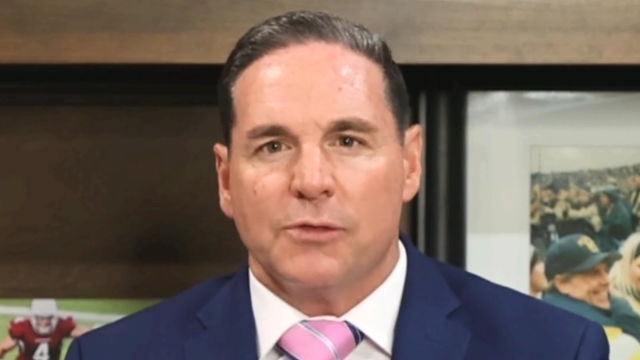
Political activist Charlie Kirk has died after being shot at an event in Utah on Wednesday. Michael Whatley, former chair of the Republican National Committee, joins "The Takeout" to remember Kirk.
Sep 10, 2025 (07:40)

TRANSCRIPT FOR: “FORMER RNC CHAIR MICHAEL WHATLEY ON CHARLIE KIRK'S POLITICAL IMPACT”

MAJOR GARRETT:
00:00:00

Michael Whatley joins me now, formerly served as the chairman of the Republican National Committee and is running to represent the state of North Carolina in the United States Senate. We'll get to that in a second. Michael, Mr. Chairman, thank you for coming in. Well, thank you, Major. I just saw you on the SpecialReport. You knew Charlie very well. He was a dynamic force in American politics. This has to be a heartbreaking moment for you. It is. It is an absolute tragedy. And I think as big as his role was in politics, and there's going to be a lot of discussion about that. And I think, frankly, there should be. But his passion for politics paled in comparison to his passion for America and especially his family. To have a beautiful wife and two beautiful kids, that was everything to him. And you knew it every time you had a conversation with him.

MAJOR GARRETT:
00:00:54

I want to underscore the dynamic that was present there at Utah Valley University, because it's very similar to other things that Charlie Kirk has done. And Charlie goes to all sorts of campuses. And he sits in full public view, welcomes questions from critics and tries to answer them and enjoys-- enjoyed, forgive me, the give and take, the back and forth of it. And that created a kind of energy around these events, which was clearly evident before it started. Lots of people were there, very happy and excited to see it. That's something that was not typical in Republican Party politics even five or 10 years ago. No, it absolutely wasn't. And the passion that he brought to every conversation, you could tell. This is a guy who woke up every single day and he was a happy warrior. And he was ready to go out there and help change this conversation. I've got two sons, twin boys. Both of them were very active in Turning Point at NC State and in Clemson. And I think that when you think about the outreach that Charlie brought to the conservative movement is absolutely fundamental. But I don't think he brought it because of he wanted Republicans to win or because he wanted Democrats to lose. I think he brought it because he wanted America better, and he wanted it better for his family and his kids. Is there a Trump second term without Turning Point USA? No. I mean, he was a very influential part of all of the campaign that we put together. I mean, he was involved-- I mean, he started this thing when he was 18 years old. I mean, just absolutely stunning. The number of events that I participated in, that the president participated in, other members of the cabinet have been involved with, not just in '24, but over the course of really since '16. He has been a very important part of our coalition, of the Trump movement. And I think really it's bigger than Trump. I think it is an America First movement. And Charlie was a huge factor. There's going to be a tremendous hole in that movement, in our community going forward. I mentioned at the opening of the show that our country is struggling with a reality, in which there is not only very intense political rhetoric, but there has been violence and victims on both sides of the aisle. Maurice DuBois, my colleague, asked you, how did we get here? That's an impossible question to answer. Equally impossible is, how do we get out of it? Do you have anything to say about that? Well, look, I think that right now in America, we need to be focused on keeping our families and our communities safe. At the end of the day, that is the biggest fundamental piece of what the government needs to be focused on. Certainly, as a father of three, that's what I am focused on every single day. And I think that when we talk about the escalating conversation in politics, there have been dozens and dozens and dozens of calls saying we need to lower the temperature in politics. I think that that's real, right. That every time that we see allegations or we see charges that are going out there, that this person is a Nazi, or that this person hates America, or that this person needs to be stopped at any cost, then that is something that is problematic. When we see President Trump get shot and then a number of weeks later, we see a second assassination attempt, that is not right in American politics. And what we saw with Charlie today, I think just kind of compounds that conversation that we do need to step back and understand, what is it that we're fighting for? What is it that we're so passionate about? And reflect truly on, where are we going? You President Trump made it very clear after he survived being shot that he felt like he had survived for a reason. And I think that that's very important. And I really do think that we all need to reflect on what it is that we're trying to accomplish here through these political means, and that violence is not acceptable. It is not at all. And that's your political opponent is not your enemy. Correct. You fundamentally believe that? I do absolutely believe that. I think that when we talk about in any political campaign, what are people ultimately running for? Politics is about helping people. Politics is about lifting up communities. Politics is about making sure that families-- And that the American experiment, as we've come to know it, continues. Absolutely. It continues. Not runs off the rails in some sort of torrent of violence and bloodshed. Yes. Do you feel, as a candidate for the United States Senate, different about your personal safety this afternoon as we speak, than you did when you woke up this morning? No. And one of the things about being the RNC chair is that when I was elected by the RNC to be the chair, that that changed my life. And so I have had to have security systems put into my home that were advanced, and I had to have security details when I was the RNC chair, and that I had to move around with staff and always pay attention to these things. As a candidate right now, I'm going to have events in all 100 counties of North Carolina. I'm going to be out and I'm going to be meeting with people. And you always want to be very careful about that. I think that it is-- anybody in this space has to be very mindful from a security perspective because you don't know necessarily what to expect in any given situation. Right. But on the same part of that ledger, as a candidate, you have to meet the people you do. You have to see them where they are, as the phrase goes. And that might be at a shopping center, it might be at a school, it might be outside a factory, it might be at a farm. But you have to see them exactly where they are. And you can't bring a phalanx of security personnel to get in their face and do all that sort of stuff. How do you balance that? Well, I think that we have to trust in the goodness of the people of North Carolina in my particular race. And I think hopefully, across the country. But it is a real crushing story that we're dealing with here today.

MAJOR GARRETT:
00:07:18

It is. And I think I want to make sure that we continue to go back to the fact that this man was a husband and this man was a father. Ultimately, that has been what's taken away from us today. Michael Whatley, it's a hard day. I appreciate you being here. Thank you, Major.

MAJOR GARRETT:
00:07:38

And be safe. Yes, sir.

Videos
View CBS News In
CBS News App Open
Chrome Safari Continue