Watch CBS News

FIRE President Greg Lukianoff on free speech and Kimmel suspension

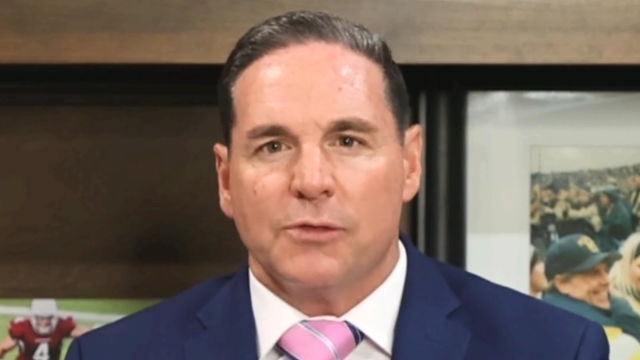
Before the announcement of Jimmy Kimmel's show returning tomorrow night, Major Garrett held an interview with Greg Lukianoff, president of Foundation for Individual Rights and Expression. Lukianoff spoke about the state of free speech following Charlie Kirk's assassination, the FCC's reaction to Kimmel's suspension and cancel culture on college campuses.

Sep 23, 2025 (23:17)

TRANSCRIPT FOR: “FIRE PRESIDENT GREG LUKIANOFF ON FREE SPEECH AND KIMMEL SUSPENSION”

MAJOR GARRETT:
00:00:00

The president and CEO of the Foundation for Individual Rights and Expression, Greg Lukianoff, joins me now. Greg, it's great to have you. Thanks for having me. It's a busy time for you. [CHUCKLES] Give me a free speech index for the United States today. Oof. OK. Now, first of all, the murder of Charlie Kirk was, of course, a savage blow for freedom of speech. It was a terrible thing. And it was definitely intimidating to those of us who speak on campuses all the time. But what the administration has done since that is to take advantage of the tragedy to go after political enemies. And I would say that the last week coming out of the administration, they've sort of rediscovered, more or less, every weapon that the left would use on campus to go after speech and are now trying to use it, things like hate speech, for example. Pam Bondi discovered--

MAJOR GARRETT:
00:00:53

The attorney general? Yes. She said hate speech is prosecutable. Yes, hate speech was prosecutable. She tried to-- False. Absolutely false. Yeah, the First Amendment-- there is no exception for hate speech under the First Amendment, nor should there be. We have something called the bedrock principle in First Amendment law, which is essentially the idea that you can't ban something just because it's offensive. That's too subjective, that it's too broad. And that--

MAJOR GARRETT:
00:01:21

Too subject to government abuse. Too subject to government abuse, exactly. But as she tried to walk it back-- and by the way, she walked it back very badly. She still said things that were protected speech-- Donald Trump leaned in to this idea that hate speech is unprotected, even mentioning this to a reporter, that you could potentially be prosecuted under hate speech. So we've seen all of these mechanisms that people, including Charlie Kirk, actually criticized, that the government should not be the arbiter of what is true. So a criticism of misinformation, for example. But the argument that they're leaning into with Jimmy Kimmel is that, essentially, he'd said something untrue about the shooter in that case. What does the Jimmy Kimmel action from the FCC, its suggestion and then ABC's action, tell you about where we are? Well, it goes back further than that. OK. So since the very beginning of the Trump administration, he's gone after basically things that he perceives to be, and I think correctly, several centers of liberal power. So essentially, it's been he's been going after law firms which do a lot of pro bono for the left. And that's actually, I feel like, the least appreciated thing that's happening. Telling lawyers that they're going to get in trouble for opposing the government is scary. And saying that they can't go into federal buildings, which, of course, include courts--

MAJOR GARRETT:
00:02:41

Or they lose their security clearance. Or they lose their security clearance, just crazy. Then, of course, there's the going after higher education. And I'm in front of the line being critical of a lot of things going on in higher education, particularly regarding free speech and academic freedom. But the Trump administration's behavior to Harvard, for example, was essentially demanding federalizing Harvard itself. So that was-- there, they were really exceeding the powers that they have. But when it comes to the media, that's probably been the most concentrated attack. And the Trump administration has shown willingness to dangle mergers over a company's head. You might know a little bit about that.

MAJOR GARRETT:
00:03:22

I'm aware of that. You might know just a little bit about that. I read something, a blog or two, about that. It may feel pretty abstract, I'm sure. So they've been willing to dangle mergers over people's heads.

MAJOR GARRETT:
00:03:34

Yep. And they made it very clear that they're going to be-- they're willing to file lawsuits against media companies. They filed a lawsuit against The Wall StreetJournal for saying that maybe Donald Trump sent a lewd birthday drawing to Jeffrey-- to Jeffrey Epstein?

MAJOR GARRETT:
00:03:52

Yes. And, of course, that ended up being true. They verified the signature and everything, but lawsuit nonetheless. And so by the time you actually get to the point that you have Brendan Carr, who has been--

MAJOR GARRETT:
00:04:07

FCC chair. FCC chair, who has been a disaster for free speech since he's taken over, saying that he would potentially seek out punishment for Jimmy Kimmel for what he said, the threats were already well established. But it was only hours after Brendan Carr said this on The Benny JohnsonShow, when clearly he'd already been saying this to all sorts of people, that they dumped Jimmy Kimmel pretty much permanently. Yeah, we'll see. That's indefinitely. So there's a little bit of static coming from this. I'm going to turn this off because we need to. Yeah. There we go. There we go. Just going to say, that's--

CREW:
00:04:43

Top one. Top one. There we go. See? That's how it works. That's how it works, folks. We're very interactive here on TheTakeout. [CHUCKLES] We worry not about these things. So is the right falling prey to the same temptations that you would argue the left fell prey to during COVID, or George Floyd? I would say that they're--

MAJOR GARRETT:
00:05:04

Or going even further? They're playing from the same playbook, and that essentially-- I know that at least to a degree, there are people on the right who have always been saying that we need to use these tactics that the left has used on campuses against the left. So I know that there are some people who are thinking of this as a cynical strategy. But we've always at FIRE, at my organization, always said that, no, you don't legitimize these weapons against freedom of speech. It doesn't work out that people just decide, oh, I guess we'll abandon them now. It just turns out to whoever has power at the time gets to use this weapon against their enemies. And pretty soon, you're not a free country. In the free speech space, has it been your organization's experience that it's human nature to be a hypocrite? Yeah, unfortunately. I mean--

MAJOR GARRETT:
00:05:50

Just boil it all down. Yeah, one of the ways-- and I'm accepting of that. If I was upset every time someone who claims to be good on free speech disappoints me, I would have lost my mind a quarter century ago. So I expect it. It's disappointing sometimes just the same. But do you think I was expecting the Trump administration to be as good on free speech as they are proclaiming they would be? No, I never thought that for a second. Is it worse than I expected it to be under the Trump administration? Yes. And I particularly didn't see the law firm thing coming. Does the Pentagon requirement that those who cover it sign a pledge fall into your space? Yes, absolutely. That is very concerning.

MAJOR GARRETT:
00:06:31

Why? Because the Pentagon Papers, for example-- it's well established in law that if a journalist-- a journalist acquires something through legal means, they have the right to publish it. But saying that anybody who actually covers the Pentagon would lose-- would be banished if they actually engaged in that is a genuine threat to the First Amendment. Therefore, chilling to free speech-- And the freedom of the press. --and everything around it. Exactly, yeah. So there is a phrase that your organization is associated with, which is "the free speech crisis on American campuses."

GREG:
00:07:06

Yeah. What is that? So I'd say--

MAJOR GARRETT:
00:07:09

How did it manifest? I was always hesitant to call it a crisis. Because from what I started at FIRE way back in 2001, it was already pretty bad on campus. It was surprisingly easy to get in trouble for what you said on a campus, at least from what I was expecting. And my background is all First Amendment. So I came informed with a long knowledge of history, the history of censorship in the United States. But it really accelerated around 2014, 2015. And I'm the co-author of a book called Coddling of theAmerican Mindwith my friend Jon Haidt. And the whole book is trying to figure out, what was so different about the students who were hitting campus around 2014, 2015, and why did this explode so much? So we wrote an article about this back in 2015 saying that, you know, honestly, the changes that we're seeing in the students coming in are going to be a huge threat not just to freedom of speech and academic freedom, but also to the mental health of young people. And it's probably going to promote a massive right-wing backlash at some point. And unfortunately, a lot of those things have come true. So was the change factor the students coming in or the professors they were encountering? The change was actually a meeting of two bad trends together. It's the administrative class on campus that already kind of saw it as its duty to police offensive speech on campus. And that was the first half of my career. I'd say from 2001 to around 2013, the main people we were butting heads up against were usually mid-level administrators who wanted to police speech of both professors and students.

MAJOR GARRETT:
00:08:44

And by police speech, you mean discourage guest speakers, discourage in-class dialogue? GREG LUKIANOFF No, actually punish students-- OK. --for speech, and I mean, in truly ridiculous examples. I mean, an early one from my career was a student was found reading a book called Notre Dame versus theKlan. It was about the defeat of the Klan when they marched on Notre Dame in the 1920s. It joyously celebrates the defeat of the Klan by Notre Dame students.

MAJOR GARRETT:
00:09:14

The Klan was incredibly powerful in Indiana-- Absolutely. --at that time. And they also hated Catholics. So they marched on Notre Dame, and they got beaten in a street fight. But because this book had pictures of the actual rally on the cover, this student was found guilty of racial harassment without so much as a hearing because it made two employees uncomfortable. He never even got a chance to explain that it was anti-Klan. And people always point out that, well, what if it was like some genuinely offensive book? And I'm like, no. Even if it was MeinKampf, it would still be protected.

MAJOR GARRETT:
00:09:47

Right. It's just more ridiculousness that they went after a book that was actually, by the way, very anti-racist. I grew up with-- I was born in 1962, so 12 years before you were, if I know the math correctly-- GREG LUKIANOFF Yeah, good math. --with the metaphor of the marketplace of ideas. I have spoken about the marketplace of ideas. I have used that metaphor many, many times to think about what free speech is. And it's a useful construct, has been for me. I read your long piece on this saying, not only is-- it's wrong or it is dangerously misguided in suggesting what actual free speech is about. Yeah. Walk me through that. Well, actually, I like the marketplace of ideas metaphor for higher education. Because I think what higher education is supposed to be, at least in the research part, is a battle of ideas and try to figure out what's true. But for the larger society, my argument is that the marketplace of ideas metaphor is just very incomplete. My view on it, which I call the pure informational theory of freedom of speech, which sounds a little fancy, or lab in the looking glass if I'm being extra silly, is essentially that if the project of human knowledge is to know the world as it is, you need to know what people really think, that essentially, the humanist subject, that we are the-- knowing the humanity as it actually is is just key. So you're absolutely kidding yourself if you think you're safer for knowing less about what people really think. So I want people to think almost more like scientists or anthropologists about freedom of speech. That yes, your fellow American may be filled with misconceptions and even ignorance and even bigotry, but it's important to know that. And when you get the counterargument that a permission structure for bigotry, for cruelty, for racism, for homophobia is in itself a societal harm, you say? I say that essentially, if you're talking about something that is a pattern of behavior that's discriminatory, you're talking about racial or sexual harassment. But it can't merely be saying something offensive. It has to be a pattern of discriminatory behavior that's directed at an individual, for example. But the idea that you can ban things that are merely offensive, it's not going to fix anything. And it's still important to know things. But even more importantly, the problem we've fallen into is that we think sometimes that if we give power, the government, more power, that will sometimes-- that will protect the powerless. And historically, we don't have lots of reasons to think that. Power tends to do what's in power's own interest, which is why FIRE defends freedom of speech all across the spectrum as a principle. Because you don't want power making those decisions. As much as you may be tempted that if it's my side in power, that they'll do the right thing with it, you're usually mistaken on that. And you certainly aren't thinking through what's going to happen when the other guy has it. Do you care about workplace freedom of speech? I do care about workplace freedom of speech, but it is more limited.

MAJOR GARRETT:
00:12:51

Do you think we've overcorrected? I think we've overcorrected to a degree, yes. I think that in 2020, you saw a lot of people losing their jobs for saying things that would be firmly protected for a citizen or under the First Amendment. And I do think we went too far. And I thought this was poorly thought out as well. Like, do we really want to live in a country where you can have an opinion or a job, but not both? And I'm saying this on the right as well right now as they're going after people-- That's why I want to bring it up. Yeah, as they're going after people for saying insensitive things about Charlie Kirk's murder. Sure, condemn it. But again, do we really want to be in a situation just like in 2020? It started to seem like the boss-- Pressurized the employers to saying, you got to get rid of that person. Yeah, exactly. They've got to lose their job for having an opinion. Exactly. You believe that's a dangerous, slippery slope. I think it is. It's First Amendment protected to try to cancel someone, but that doesn't make it commendable. And this is something that I talk about in Canceling of the American Mind, my book with Rikki Schlott. And how has the American mind been canceled? Well, I think probably most dangerous thing that came out of cancel culture is that when regular people see scholars getting in trouble for being on the wrong side of any hot button political issue, regardless of whether or not they're right, they stop trusting expertise. And that leads to a situation in which we don't know what authorities to trust. And that's really dangerous for a democratic society. So right now, to use an extra fancy term, we're in a state of epistemic anarchy, where nobody knows who are the authorities they can actually trust. And we're suffering from that right now. So part of the dialogue that pushes back against your organization, and to a certain extent, Charlie Kirk, from academia was you've created a class of provocateurs who come in, ask provocative questions, record us in class, make us look worse than we either intend to, or it's our worst moment and we're being either pulverized, or our careers are being short circuited, because we had an interaction that wasn't perfect and did not necessarily represent an effort to shut down free speech. We just weren't at our best. But you weaponized that against us. Sure. Respond. And for that accusation, I just have to laugh. [CHUCKLES] Because it's like, we're the ones defending those professors. I've been defending those professors getting in trouble from the right since my first day at FIRE. So a lot of times, when people will be like, well, what about what happened to this professor, I'm like, did you read the whole article? Because we're quoted in paragraph three defending that professor. So, I mean, right now we're in a lawsuit with the Trump administration. We're actually suing Marco Rubio because he has the power to kick out any non-citizen for almost any reason related to speech. And we think that's too much power for a Marco Rubio to have, for example. And when it comes to Charlie Kirk, the idea that he was a provocateur who had no place on campus, I will say, and I'll just be honest, I've been quite critical of Charlie Kirk over the years. I don't like his professor watchlist. I think the listing of left-wing professors-- now, to be clear, you have the right to criticize all of these professors, absolutely First Amendment-protected. But when you make it so that you can easily contact their employers and you imply that you want to get these people fired, then I have a cancel culture issue with that. And I think that's fair. But since his murder, I've been watching a lot more, and I think a lot of Americans are, a lot more of how we actually engage with students on some of these issues.

MAJOR GARRETT:
00:16:30

Mm-hmm. And it was much more thoughtful, much more patient than I was expecting. So I think that, in so many ways, when you try to silence someone, particularly when you use violence, it has a terrible tendency to backfire horribly. Do you think we have warped our understanding of free speech and its viability, its value, by constantly-- as often happens on this program, people will come here and tell me social media is a terrible thing. It's an accelerator. GREG LUKIANOFF Yeah. It's an amplifier. It's this great fountain of anger and vitriol. And that's part of our problem. Yeah. How do you come down on social media and free speech, and where the two have met? Well, I mean, I'm very pro communications technologies. But all communications technologies come with downsides. So I remember when people were criticizing me and Jon Haidt for being critical of social media and for cell phones in Coddling the American mind,saying, basically, these jokers would have been critical of the printing press, too. And I'm always like, you mean the technology that doomed Europe to about 150 years of religious war? It's like, it had some downsides, people. Consequences are real, yeah. And so I do think social media has downsides. I've got no issue whatsoever with people taking cell phones out of schools. I think that there's no-- I don't think there's any serious First Amendment issue with it. And I think that when we were in school, the idea that you could have a fax machine, a TV, or radio on your desk, of course, they would say-- that's nonsense. That's going to distract you all day long. So why should we allow it when it just fits-- that all fits in the palm of your hand, and more, by the way? So I'm very pro that movement. But I do think that just like with the printing press, having millions of additional voices addressing problems will have a long-- long-term positive effect after the completely chaotic, disruptive period starts to-- people start to adapt to the technology more.

MAJOR GARRETT:
00:18:32

Draw me a bright line-- violent speech, protected speech. Oh, wow. OK, so this is something that I address a lot on campus. And I've mentioned every book I've written lately, so why not this one? I wrote a book called The War on Wordsthat just came out with the great Nadine Strossen. And she's the former president of the ACLU. And I'm a huge fan of hers. And I feel very honored to get to write with her. And the very first thing we address is this elision, this attempt to confuse the idea of speech and violence. Now, on campus, this became sort of a rhetorical flourish that people started taking very seriously, that essentially, that-- let's say, Milo Yiannopoulos, someone who is deserving of the term "provocateur," for sure, that essentially, he was engaged in such offensive speech that essentially his words were violence, and to respond to them with violence is an act of self-defense. This is one of the reasons why there was a massive riot at Berkeley back in 2017, in which I think more than half a million dollars of damage was done. There was one dude who I actually believe was very nearly killed during that. But the response of the students was to say-- to make this speech as violent, his speech is violence argument. And I had to write something again with Haidt just saying, no, this isn't a new idea. The idea that there's no meaningful distinction between speech and violence is one of the oldest ideas in civilization. The invention, the advancement was to actually say, at the dawn of democratic-- of large-scale democratic societies, that there is a bright line distinction between speech and action. And that is something that we abandoned at our peril. Because as soon as you create a situation in which you're saying that your words are violence and my violence is speech, or my violence is self-defense, that is a downward spiral for a society into greater violence. So I really do try to urge people. It's like, no. Yes, you may say it's a social construct. You may say it's an invention. And guess what? It's one of the best inventions in human history for peace, for prosperity, for advancement, and for simply understanding each other. How about burning the American flag? Burning the American flag is protected speech. And the-- Straight up. Straight up, no question. Would I burn an American flag? No, I'm a constitutional lawyer. And I think ultimately, constitutional lawyers are pretty patriotic, whether we know-- whether we always know that or not. But at the same time, do you have a right to burn an American flag? You bet you do. You have a right really to burn any flag. Of course, as long as you're in an area where you're allowed to burn anything, you can burn something symbolically. And the fact that the Trump administration is going after flag burning is placing the symbol above the substance of what makes us a great country. And the fact that we actually are brave enough in our convictions, convinced enough of the rightness of our Bill of Rights to say, listen, I'm going to even let you burn a flag. As repellent as that is to me, I believe in your freedom of speech, even to offend me. And that's OK-- that, to me, is beautiful. I think saying that instead, I'm going to arrest you for offending my sensibilities, is foolishness. Bright line-- protected speech, pornographic, erotic speech. So the bright line is a little complicated there.

MAJOR GARRETT:
00:21:49

Yeah. Because one of the distinctions is what kids can have access to. Correct. So there's a case called New York v. Ginsbergfrom 1968, which basically said that, to use an old-fashioned term, that you can be required to put the nudie mags on the back shelf, essentially. Right. And that's actually one of the things that came out of the Supreme Court recently, saying that age verification for porn sites can actually be allowed in some cases. Now, what I'm worried about is that that principle is now going to basically make it so that to use the internet at all, it's going to essentially be age-gated. Because now that that's happened, everybody's figuring out a way that's like, well, social media is just like porn, or the internet is just like porn, or this website is just like this. So we're going to need age verification for everything. And from a privacy standpoint and a privacy related to freedom of speech standpoint, that scares me to death. So what I'm arguing for is like, listen, the Supreme Court has decided that you can have some age gating for adult websites. And I frankly saw that coming. I felt like that was almost predetermined once you have this makeup of the Supreme Court. But the most important thing is that we limit that to porn, because you don't want to live in a world in which you have to show an ID just to log on. The President and CEO of the Foundation for Individual Rights and Expression, Greg Lukianoff, thank you. Thank you.

MAJOR GARRETT:
00:23:14

It's been a pleasure. That was fun.

MAJOR GARRETT:
00:23:15

Thank you.

View CBS News In
CBS News App Open
Chrome Safari Continue