Watch CBS News

DOGE overstating savings from contract cuts

While the Department of Government Efficiency was largely created to reduce federal spending, multiple reports show DOGE is vastly overstating how much money it has saved. Jessie Blaeser, senior data journalist for Politico, joins "The Takeout" to explain.
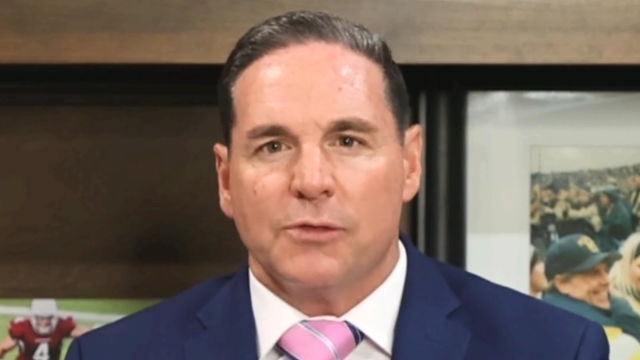
Aug 14, 2025 (05:18)

TRANSCRIPT FOR: “DOGE IS OVERSTATING SAVINGS FROM CONTRACT CUTS, ANALYSES SHOW”

JESSIE BLAESER:
00:01:52

Exactly. Yes. No, 100%. I'm glad you brought that up. As one of the experts that I spoke with for this story put it in a metaphor, the way DOGE calculates savings is inherently flawed, and that's something that experts have called out from the moment that DOGE started posting receipts on this page. But, essentially, the way they calculate it and the way they say they calculate it on their website is they take a contract ceiling, which is something that the government determines that, at most, for any given contract, this is the most amount we will ever spend for this particular award. But that ceiling isn't at all related to how much the government has actually committed to pay out. That would be the money that, if you take out a credit card, you have your $20,000 credit-card limit, but let's say you just spend $1,000. That's the money that matters when it comes to savings. And yet DOGE, for their baseline, is using the equivalent of that credit-card limit to say, OK, we had a $20,000 award, and we canceled it, and we had only spent $1,000 on that award. We've just saved $19,000. And that's the way that that math works, which is why the discrepancy is as large as it is. Now, clearly DOGE has induced some people to retire early, leave their federal workforce, has cut back things, has saved some money. It's not as if it hasn't saved any money, and taxpayers have this sort of curiosity about that in general. Also it's been suggested by the president, well, there might be a dividend check to based on how much savings occurs. So how much they actually do, in reality, save matters.

JESSIE BLAESER:
00:03:19

Yeah, totally. And there's lots of different things kind of coming into play there in terms of how much they are totally saving. This particular analysis was only looking at a slice of what DOGE's actions are, but we only have transparency into so much that they've done. So we took the biggest chunk that we could, which was looking at contracts. But you're right that, in reality, there have been employment cutbacks. They've cut regulations, and there's savings associated, at least according to DOGE, with each of those actions. According to their website, as of today, they say they have saved $202 billion across the entire federal government. For perspective, out of the claims savings that we looked at for this story, that was only $33 billion of the 202 that they're claiming. So, of course, the savings that we looked at are far from what they have said that it is, but there's plenty of other actions to look into. But I think when it comes to looking at taxpayers and how much they're actually receiving back, even the savings that we found from DOGE's activity just from canceling contracts amounted to only $1.4 billion compared to the $33 billion that they've claimed, which is less than 5%. So again, a long way off, but that $1.4 billion from canceling contracts, that money doesn't automatically go back into the pockets of taxpayers. It doesn't reduce the deficit. All it does is it goes back to agencies to use differently. They're required to spend that money as it's been appropriated by Congress. They can't just not spend it without a formal intervention from Congress, via rescissions or something similar. So that money doesn't save taxpayers anything, even though that's how DOGE frames it. It just can be used differently by the agency. So when it comes to savings and how much that actually impacts a taxpayer, it really depends on what you are defining as savings, what you're defining as spending. And, at least for contracts, canceling those does not necessarily make a direct impact on the taxpayer at all, at least not without additional effort from Congress or from the president.

MAJOR GARRETT:
00:05:10

Jessie, stay on this story. I know you will. And when you have more reporting, we'll come back and talk to you. I appreciate it very much. That sounds great. Thank you so much.

View CBS News In
CBS News App Open
Chrome Safari Continue