ED O'KEEFE:
00:08:28
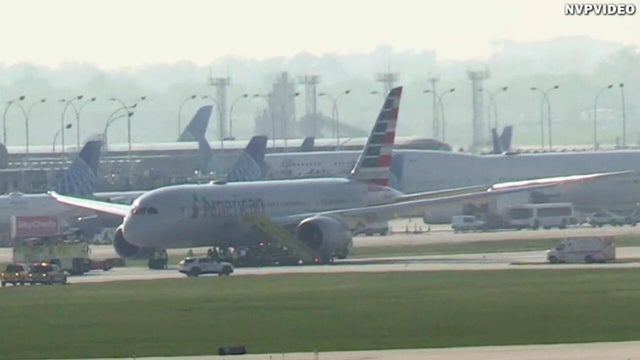
Chris, let's play that-- let's play that bit for people. Yeah, let's play this for people because we have the audio of the moment the controller realizes what happened, and it's worth listening to. Let's take a listen.
PILOT:
00:08:41
That wasn't good to watch.
AIR TRAFFIC CONTROLLER:
00:08:42
Yeah, I know. I was here. I tried to reach out to my staff, and we were dealing with an emergency earlier, and I messed up.
PILOT:
00:08:49
No, man. You did the best you could. That is the controller who allowed the truck to pass through and the plane to land, correct, who says I messed up. Yes, that's our understanding. And this is fairly after the accident. So this is a person who has just witnessed a very traumatic accident. So in most circumstances, you would think you'd want to relieve that person with a different controller so the controller could take care of themselves. But this guy stayed on the job for quite some time after that accident, ensuring that the other planes got back to the gates safely. And that's really a testament to that controller for holding it together. But it reinforces this question of was he up there by himself. Now, the Secretary of Transportation today said that staffing wasn't a particular issue at that airport, and the guy wasn't alone in the tower. But that may not mean there were a bunch of controllers on the line dealing with flights. So the NTSB is going to want to understand that. And it's the same questions, Ed, that came up during the DCA crash a little over a year ago. Controller workload and controller staffing, these are big questions again today. It would sound like 13 or so months later, 14 months later almost, the concerns haven't necessarily been addressed if you have a guy still sitting there an hour after this happened fielding flights and not able to process it or even begin writing down or processing what had just happened for the sake of the investigators. It's quite something. It certainly begs a lot of questions that the NTSB is going to need to answer. And there is a staffing issue with air traffic control generally. They are thousands of controllers short. The New York airspace is particularly complicated. So you can't just surge controllers in there to add some resiliency. It can take a year or more to certify a controller to operate in New York. So controllers who started working to get ready to work in the New York City area last January are probably just about now actually fully certified to do that.
ED O'KEEFE:
00:11:02
Right. Real quick, 20 seconds-- you've been calling out every day the callouts by TSA agents at the big airports across the country. We have a map that shows this-- 42% change in New Orleans yesterday, 41.5% of those staffers in Atlanta, 38% at BWI, 40% in Houston. They're going to miss their paycheck on Friday. How concerned is the aviation industry and those in aviation more broadly about what could transpire here in the next few days? How critical is it for Congress to act? It's very critical. I think the airlines, the fliers are very concerned. People are missing flights. And when you start talking about half of the officers scheduled to work not coming in, it starts to beg a question of can you staff your checkpoints. If an airport can't staff the checkpoints, that airport essentially is shut down for the day. And I don't think we are too terribly far away from where that starts being a conversation some airports may have to have. Can we even staff our checkpoints today? All in the midst of spring break. Kris Van Cleave out in Los Angeles. Thank you, sir. I know you were working late last night on this crash through the morning. We appreciate it, and we'll be in touch.