ADRIANA DIAZ:
00:00:00
A look at beautiful Coney Island this morning, on the eve of summer's first official day. The water temperature this morning is in the 70s, just about right for taking a swim but for some people, apparently that's too warm. It's a community of cold water enthusiasts that started right there and has spread across the world. A new book tells their story. Our Errol Barnett is here with more on that. Hey, Errol. Good morning, Adriana. A warning here, shirts are coming off in this story. OK, look, I get it. Ice baths and cold water swimming may seem like punishment for some, but I found one author, a sports journalist, who discovered the lifestyle and even social benefits of turning the temperature way down to freezing. It's an annual rite. Thousands of people in Coney Island and on beaches all across the country, taking a dip into frigid waters to start the new year.
BEACH ANNOUNCER:
00:00:54
New Year's Day plunge.
ERROL BARNETT:
00:00:57
But on this April day, there are no crowds, just a small group of people who gather each week to swim in the chilly Atlantic Ocean.
MAN:
00:01:07
Yeah. You came! These guys have been doing this forever.
ERROL BARNETT:
00:01:10
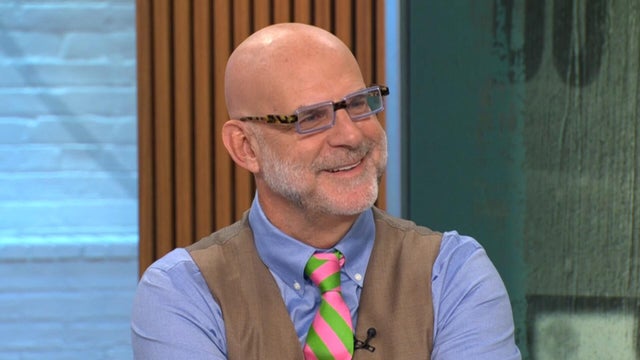
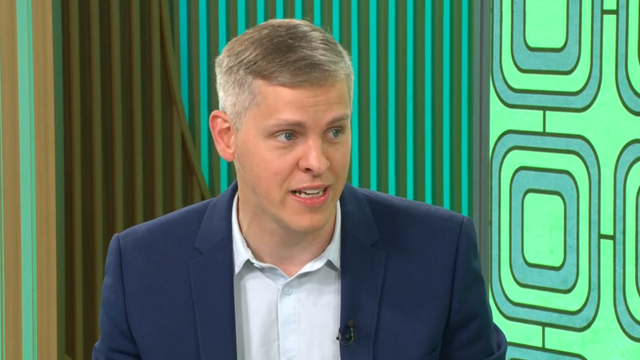
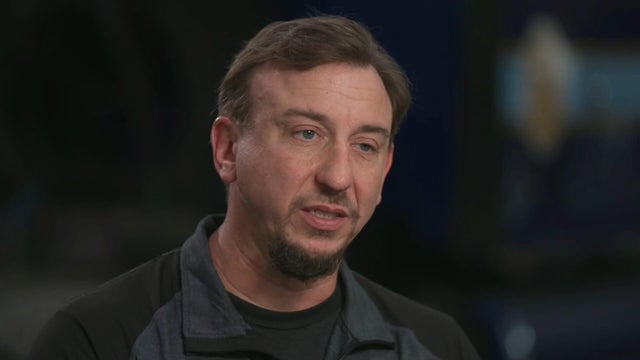
Among them is Chris Ballard, a senior writer for Sports Illustrated who is now fully immersed in the world of cold water swimming. After writing his new book, The Plunge. Why did you want to write a book on getting into cold water? It wasn't necessarily because I loved cold water. I'll be honest. I'd hit a point in my life where my body was breaking down. I played a lot of basketball. I did a lot of running. My joints were really starting to hurt. And I was looking for any way to stay on the court.
ERROL BARNETT:
00:01:40
Ballard, who covers the NBA, was tipped off about how some of basketball's biggest stars were recovering from workouts.
CHRIS BALLARD:
00:01:48
These NBA athletes like LeBron James, Steph Curry, Giannis Antetokounmpo, they were doing alternating heat with really cold, like, 39 degrees and they're going in up to their necks. And I was like, hey, if it's good enough for Steph, it's good enough for me.
ERROL BARNETT:
00:02:05
While researching cold plunge therapies, Ballard discovered an entirely different sport, competitive ice swimming. I expected to come in as a journalist, and you parachute in and as we know, then you move on to the next thing. This one stuck with me and the people stuck with me. It's a remarkable community.
ERROL BARNETT:
00:02:24
Ballard then crossed the press line, switching from journalist to athlete.
CHRIS BALLARD:
00:02:29
I was really worried about being seen as an outsider, writing about people, and they might see me as, oh, are they going to just call us crazy? So they had one question for me. And it was like, are you swimming? And the moment I said yes, it was like, you're in. You're all the way in.
ERROL BARNETT:
00:02:47
Plunge chronicles Ballard's path from taking solo swims in the San Francisco Bay to competing in the Ice Swimming World Championships. But along the way he noticed something else.
CHRIS BALLARD:
00:03:00
It got me back on the court.
WOMAN:
00:03:02
Woo hoo! Good job, Chris!
CHRIS BALLARD:
00:03:03
I'm able to maintain fitness better through swimming in addition to running and basketball. Personally, I've seen this-- I'd say like a bit of a physical transformation in the course of three years.
ERROL BARNETT:
00:03:15
Cold plunges have exploded in popularity thanks to social media and wellness trends.
LAUREN SCHRAMM:
00:03:20
Ready? Let's do it. OK. Inhale.
ERROL BARNETT:
00:03:23
Fitness trainer Lauren Schramm owns Ice Cold Club in New York City. She started coaching cold plunges, both new and experienced, about five years ago.
LAUREN SCHRAMM:
00:03:33
I was really surprised. I thought it was just going to be like my peers, like trainers and fitness people and athletes, and it was not the case at all. Have a seat. Relax down. It was people who were curious and adventurous and oftentimes a little bit uncomfortable in what was going on in their life in some way. Exhale, make some noise. Ah. [LAUGHTER]
ERROL BARNETT:
00:03:58
She's seen how taking a dip in near-freezing water can change a client's outlook.
LAUREN SCHRAMM:
00:04:04
I've had stories of people that came and were able to quit smoking because they felt like they didn't need that crutch anymore. Quit smoking? Yes! Can you believe it? I'm surprised by that. I know. And it was unprompted. This guy came up to me. He was like, you know what? Like, I don't smoke anymore. [CHEERING]
ERROL BARNETT:
00:04:23
While the science is inconclusive, the sense of community is undeniable.
CHRIS BALLARD:
00:04:28
So people will just meet on a Sunday morning. They've never met before, but they know at 10:00 AM at this beach, people are swimming. And you go in together and you create these shared bonds, really through just being willing to get in that water. You get this tribe mentality. You do this hard thing together and you feel better about, not just yourself, but about the people around you. All right, Chris. Let's go. Let's do it. Let's do it. A tribe I ended up joining in 55 degree water. Yeah. [LAUGHS] But a central theme in the plunge is that to understand the cold water, you must truly experience it. So on a Brooklyn rooftop, Chris and I took the plunge in 36 degree water. Ah. Yep. Yes, it's cold. You seem very relaxed. Why aren't you panicking? The amazing thing about our bodies is we respond to stress and we adapt to it so quickly that if you were to do this three times in a week for two minutes, and you've already got two minutes in right now-- Yeah. We're at three minutes now. Yes. Your acclimation will cut your early breathing by 70%, and that sticks around for almost a year afterwards. What you write about in your book is doing these types of things teaches you how to be comfortable with discomfort.
CHRIS BALLARD:
00:05:56
Yeah. Why is that important for people today? If you think about the stresses we have, they used to be physical, and now so many of them are psychological. Right? You look at people and their ability to say, OK, I can do this one small hard thing today.
ERROL BARNETT:
00:06:11
Right.
CHRIS BALLARD:
00:06:12
Right? And I can do it again tomorrow. And if nothing else, if I don't get anything else right today, I did that thing.
ERROL BARNETT:
00:06:18
Our plunge lasted nine minutes. I think we underestimate ourselves a lot, especially because in day to day life we don't get challenges. So you forget what you can do. I mean, I just watched you, someone who has never cold-plunged, sit in 36 degree water for nine minutes, which is crazy. It's the kind of thing if you asked someone ahead of time, it's like, I don't know. Could I do that? Seconds away from nine minutes. Could we get out now? We can. You did great, man. Yes. Chris, thank you. This was amazing. It's awesome. Yes. And my thanks to Chris for that experience. And as he says there, there are real life benefits to being able to do something difficult like that. OK. But all hail Errol Barnett. Oh my god! I did it for the story, did it for the scoop.
ADRIANA DIAZ:
00:07:01
With, like, a smile. We're seconds away from nine minutes. Can we get out now please? I'm, like, how? I would have been like, OK, what are my questions?
ERROL BARNETT:
00:07:09
Look, you both can do this. No. We-- no. And if you want, maybe the simple benefits of an ice bath, they say, the science shows, you can just wash your face with cold ice water each morning for a couple minutes. You get the same vagus nerve benefit of ice bathing. So try it out this weekend. I can do that. OK. OK. We'll get our bowls out. Thank you, Errol. Appreciate it. And guess what, guys? We're posting Errol's full ice bath interview, the one that lasted nine minutes, on our digital and social channels.
KELLY O'GRADY:
00:07:36
Yes. So definitely check that out. And The Plungeis available right now. To buy it, just scan the QR code on your screen.