HANDLER:
00:02:57
So we'll put him right up to your chest like that. Oh, my gosh. Hello.

HANDLER:
00:02:59
Like carrying a baby. DAVID SCHECHTER (VOICE OVER): This little guy's name is Riff, and he needs to be fed every three hours.
HANDLER:
00:03:05
Slowly feed him. He latches pretty well, too. Yeah, he latched down there real good. DAVID SCHECHTER (VOICE OVER): The zoo only has five veterinarians to care for 1,600 other animals, including its own collection of spider monkeys. This kind of around the clock care is a heavy burden. You realize how much it takes to take care of one of these animals.
HANDLER:
00:03:24
Yes, it's a lot of work. It's a lot of work. So not many people can provide what they actually really need. DAVID SCHECHTER (VOICE OVER): One zoo in Brownsville can't tackle the problem alone. And that's why Craig Hoover with the Association of Zoos and Aquariums says the group has permanently placed almost 100 spider monkeys at other accredited facilities around the country that are willing to share the burden. And we provide that forever home for an animal that may live now for 50 more years.
DAVID SCHECHTER:
00:03:51
I bet this guy misses his mama, huh?
HANDLER:
00:03:53
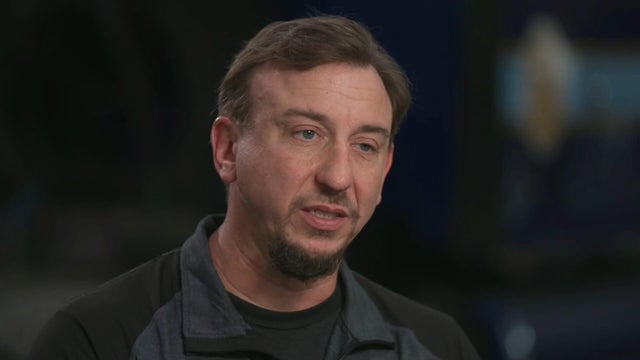
Yes. And these guys do cling to their mothers for quite a while. DAVID SCHECHTER (VOICE OVER): Adorable? Absolutely. But Steinbaugh believes if people understood how brutal the black market trade of spider monkeys is, and how law enforcement and zoos are struggling to care for these babies, they would see the truth that we are loving these animals closer and closer to extinction. If you care at all about this species, if you don't want them killed in the wild, if you don't want the babies smuggled across the border in these abhorrent conditions, don't make the purchase. The Association of Zoos and Aquariums has helped place more than 100 baby spider monkeys at accredited zoos and sanctuaries across the country, giving these animals a forever home. But that is a big ask, since these animals can live to be 50 years old or older. Wow. I know, I know the lawman wasn't trying to be funny, but that line about, listen, if you're paying for a parking lot, something is wrong. The way he said it came out very comically. Yeah, if you're paying cash for a spider monkey in the parking of a big box store.
DAVID SCHECHTER:
00:04:54
That's the black market. Something is wrong. Yeah, this is serious stuff and very hurtful to what's happening to this population. And you said it perfectly, you said loving these animals closer and closer to extinction. Yeah, that's a great line. I think the one possible fix here is some legislation-- that's what experts say. They work with tigers after the show TigerKing, it became illegal in this country to own a tiger. 20 states, it's legal to own a spider monkey, and if national legislation would make it illegal and really cut down significantly on the damage that's happening to this species. Thank you so much. We appreciate you. Welcome back to CBS MorningsPlus. In today's Caught Our Eye, we've got a story we first brought you earlier on CBS Mornings about our investigation into the growing black market for baby spider monkeys. There has been a smuggling surge across the border with Mexico, fueled in part by the animal's popularity on social media as exotic pets. Our David Schechter spoke with authorities on the front lines who are trying to stop it. Describe some of the scenarios that the monkeys are found in. They haven't been given water. They haven't been given food. They've had no medical attention. And to see them treated that way is just terrible. DAVID SCHECHTER (VOICE OVER): At the border, 109 baby spider monkeys have been confiscated in the last two years. Steinbaugh believes that's just a fraction of what actually gets through. We worked with Inside Edition on that investigation, their reporters went undercover, meeting people behind some online posts, selling spider monkeys, meeting them face-to-face in parking lots.
BROOKE BALDWIN:
00:06:29
I'm Brooke Baldwin with Inside Edition and we just wanted to talk to you about what you're doing here. We just wanted to talk to you about the monkeys. Experts say they should not be pets.
ADRIANA DIAZ:
00:06:42
And she's out. Joining us now is the anchor of Inside Edition, Eva Pilgrim. Good morning. Good morning.
TONY DOKOUPIL:
00:06:47
Good to have you, here.
ADRIANA DIAZ:
00:06:48
What an investigation. I mean-- This story is wild, right? And what's interesting is with our part of the investigation, we really wanted to see, where are people getting these spider monkeys? So we went online on social media, and it doesn't take very long to see all of these pictures of what looks like cute little monkeys dressed up in baby clothes. They're wearing diapers. But you have to remember, experts say, these should not be pets, they're wild animals. There was a quote from a Sheriff's deputy in the David Schechter piece where he said, if you're buying a spider monkey in the parking of a big box store with cash, something is wrong. Right. And of course, your reporters saw that. And we had one of the reactions there on camera with Brooke Baldwin. Is that typical? Were people are ashamed when the cameras turned on? Well, exactly what you saw with Brooke. They cover their face, they go to their car, they don't want to talk to you anymore. And with the investigation that we did, we went on social media because that's often where they're selling these spider monkeys. And what's really interesting is that you DM them, send them a message. They give you the specifics, just like you're buying like a dog or a cat. So it's like we have this many females, we have this many males, which would you like? Here's the price. And then, they'll tell you either you can come pick up the little spider monkey in a parking lot like you saw Brooke doing there, or they'll actually ship you the spider monkey-- send it to you, so that you don't even have to go get it. And as you saw, Brooke, she was our special correspondent on the story, when she met those people originally in the parking lot. They were actually telling her how to take care of the spider monkey, showing her how to bottle feed it so that she would be able to take it home and make sure it was OK. When did this surge happen? This has just become popular because of social media? It sort of happened over time, I think. And with social media, it's just more visible. It's one of those things. And you see people getting their spider monkeys and also sharing like life with the spider monkey on TikTok. That's a common post that you can find. Man, it's so odd. But I get it. I get the appeal. They're very cute, but these are real animals that should be-- Yeah, in the wild. --in the wild. And I should say, we did reach out to the sellers that we spoke with, the two that we met in the parking lot, with our producers with more questions. And they returned to us saying that they were not selling the spider monkeys, that they were rehoming them. We did try to figure out, where they got these baby spider monkeys from, and they didn't tell us.
TONY DOKOUPIL:
00:09:20
Not surprised. Wow.
ADRIANA DIAZ:
00:09:22
All right. Thank you so much for being here. So nice to have you at the table. You can catch Inside Edition's full report later today. Check your local listings.