Watch CBS News

Africa CDC director issues dire Ebola warning

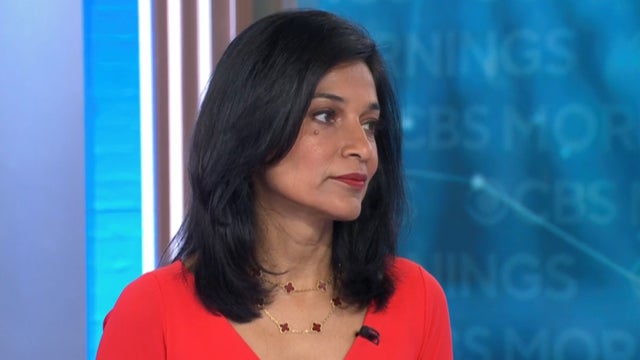
Top African health officials are warning that the deadly Ebola outbreak in Central Africa could become the worst in recorded history if transmission rates do not flatten. Syra Madad, infectious disease epidemiologist at the Harvard Belfer Center, joins to examine the state of efforts to contain the number of cases.

Jun 19 (04:02)

TRANSCRIPT FOR: “AFRICA CDC DIRECTOR WARNS CONGO EBOLA OUTBREAK COULD BECOME WORST ON RECORD”

MAJOR GARRETT:
00:02:04

And what do we know, Syra, about the ability to place health workers and facilities that they need to either trace or treat those that they're tracking or who have already been sickened? Yeah. So as we talk about the ETUs or Ebola Treatment Units, there's a number that are being stood up along a number of these areas that are being affected. What's important here is that we're seeing a significant gap in funding needs. Only about 10% of pledged donations have actually made it to the affected areas. And so we certainly need to increase resources and funding. What you're hearing among reports and from healthcare workers is that there's a shortage of basic supplies, personal protective equipment, or PPE, the ability to provide supportive care. So the most basic resources and infrastructure, like running clean water, that's still a significant need. So it's not just about having treatment centers readily available, which is still very important, but it's making sure they have these resources. So we need to make sure we're increasing the number of funding. And the funding is not a magic bullet. It's not as if you're sending money and it's getting there right away. There's an entire process of once funding is shared and sent, then it goes through an entire process of distribution and actually being able to be used on the front lines. And so this is both an issue of funding and resources, as well as one of the biggest obstacles that is being experienced here is the issue of trust. And this is a decades-old problem. This is not a problem of misinformation that folks are not believing this is an actual outbreak of Ebola virus disease. This is a long-standing history of neglect, of militarized response, of inequity happening in these communities that when we come in and only support on one outbreak response, we're neglecting that there is a number of other issues happening in that community. Poverty, injustice, other illnesses. And so we need to support it from a holistic standpoint.

MAJOR GARRETT:
00:03:55

Syra Madad, of Harvard University's Belfer Center, I appreciate that perspective. Thank you very much. Thank you.

View CBS News In
CBS News App Open
Chrome Safari Continue