Watch CBS News

6/10: The Takeout with Major Garrett

U.S. forces conduct more strikes against Iran; House member describes Bill Gates' Epstein testimony.
Jun 11 (47:17)

TRANSCRIPT FOR: “6/10: THE TAKEOUT WITH MAJOR GARRETT”

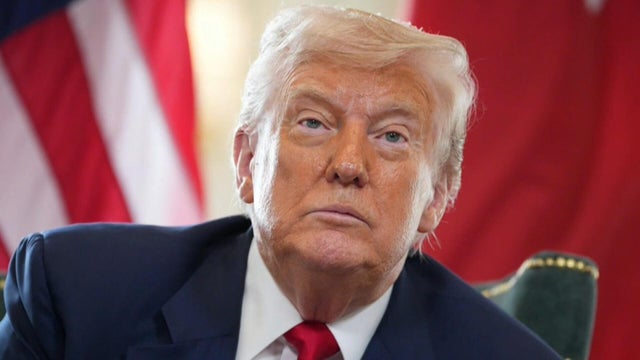
DONALD TRUMP:
00:01:10

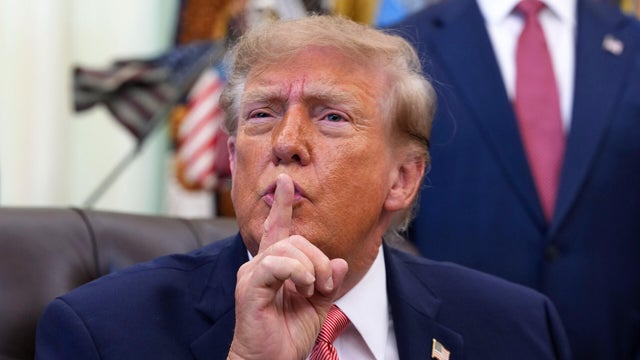
We hit them hard yesterday, and we're going to hit them again hard today. Now it's important to remember how we got here. Trump launched this war on February 28 with a promise that it would be swift. It's a promise he's been reiterating again and again ever since. Take a listen.

DONALD TRUMP:
00:01:29

Right from the beginning, we projected four to five weeks, but we have capability to go far longer than that. I think there's a very good chance we're going to end up in a deal. And so we're giving it five days. And then we're going to see where that takes us. So we estimate it would take approximately four to six weeks to achieve our mission 26 days in. We're extremely really a lot ahead of schedule. We are going to hit them extremely hard over the next two to three weeks. We're going to bring them back to the Stone Ages, where they belong.

NANCY CORDES:
00:02:08

In early April, President Trump announced a temporary ceasefire, and over the next two months, he's been insisting a peace deal is close at hand. Here, for example, is May 23. It reads in part, quote, "Details of the deal are currently being discussed and will be announced shortly." On June 1, the president said, quote, "Talks are continuing at a rapid pace." Yesterday, just after midnight, Trump said this about a peace deal.

DONALD TRUMP:
00:02:35

And the strait will open up right away. It will open up immediately upon signing, which could be in two or three days. And yet today, just 24 hours later, he insisted the opposite. He said the Iranians are dragging their heels and quote, "playing the US for fools." So the Strait of Hormuz is still closed. Oil prices are up, and the Middle East remains a battleground. Ed O'Keefe joins us now from the White House to help us parse through all of this. Ed, good to see you. What should we make of the president's sudden about-face on the likelihood of a deal? Well, as you just played out, this has a way of going back and forth between diplomacy and the threats of attack. And just a little while ago, the defense secretary visiting Central Command down in Tampa, Florida, reiterated in part that they're going to have tap, tap, tapping bombs on key facilities in Iran from the United States of America, he said. And that's not because we want to have to restart. We don't want to have to restart the war. It's because they're set the terms of this, he said. Those strikes that will happen tonight will be strong. They will be clear, and if they have to happen tomorrow night, they will be strong and clear. So even the threat of it happening tonight may get put off for some reason, whether that's the weather or some other operational decision. You heard the Defense Secretary just a little while ago, reiterating that it looks as if there will be some more military action in the coming hours. And it comes, the president says, because Iran just continues to slow-walk the agreement, as the president has said repeatedly. They have paperwork that would, in essence, end their nuclear program. He says Iran would agree to hand over the nuclear material or the powder, the substance, as the president calls it, to the United States, and that all Iran has to do is sign that deal. And they're refusing to do so.

NANCY CORDES:
00:04:26

Ed, in the Oval Office today, the president said something I haven't heard before about the US secretly removing oil from the Persian Gulf. Let's listen to that. And then I want to ask you about it. Yeah.

DONALD TRUMP:
00:04:40

We've been taking out millions of barrels of oil, millions of barrels. Every night, took out oil. But now I'm going to tell you because they just figured it out. So now that they figured it out, I can tell you it was very hard for me. I wanted to say it so badly, but I didn't want to ruin it. But it was very hard. But millions of barrels of oil has come out, and that's why it's at 85, $90 a barrel instead of $250. So millions or billions of barrels of oil have come out. What do we know about this secret oil operation? We have asked here at the White House today what exactly he meant by that. They have not clarified. This, in some ways, Nancy, sounds a little bit like early on during the conflict, when he suggested that Iran had allowed a handful of vessels to get through the strait, and then there was a dispute about whether or not that had actually happened. Here again, the president may be speaking, if not out of turn, at least perhaps not entirely accurately about what has transpired. There's no evidence that that may have happened. But again, should they choose to reveal that information, we're happy to have it. And it came during a pretty lengthy exchange with reporters today regarding Iran, regarding inflation, the fact that it's hit a record high here for the last three years, driven by increased gas and food prices, all driven by the blockade there at the strait.

NANCY CORDES:
00:06:05

And President Trump saying he likes the inflation. We're going to get into that a little later in the show. Ed O'Keefe at the White House. Thanks so much. We're going to turn now to CBS News national security contributor Sam Vinograd and CBS News Chief Washington analyst Robert Costa. Good to see both of you. Bob, I want to start with your recent interview with the vice president, JD Vance, and more of what he had to say about the conflict. Let's take a listen, then I'll ask you about it.

ROBERT COSTA:
00:06:35

What is your up-close assessment of how Prime Minister Netanyahu has handled his relationship with President Trump and the United States? Well, I think Prime Minister Netanyahu, look, he governs a country that has obviously been a very close partner of the United States. But even when we've been close partners, sometimes we have interests that are perfectly aligned, and sometimes we have interests that are misaligned. And what I've seen with the prime minister is that he aggressively asserts the interests of his country. Sometimes that means we're on the same page, and sometimes it means that we're not. And I think that our job as an administration, and certainly what the president has done, has been very clear about what is in our best interest. We have to fundamentally be focused on what is in the United States' best interests. So they've been a great partner in a lot of ways. But we also have to focus on what is in America's best interest, and where that diverges, we, unfortunately for the Israelis, have to choose the side of the American people, which we always do. Do you believe the Prime Minister has made any mistakes in how he's worked with the United States on Iran? Look, he's certainly gotten some things wrong, but fundamentally-- Like what? Well, I think that those conversations sometimes are better left in private. But what I would say is that he's been a good partner. We're going to keep on working together. But where interests diverge, the United States is going to pursue the best interests of our nation. And that's how it's going to be. A very careful answer, Bob. Very careful and revealing about how he's trying to navigate being President Trump's biggest booster as the president seeks a peace deal and as the president deals with Prime Minister Netanyahu. But it's evident in the conversation we had on Tuesday morning that Vice President Vance is both President Trump's ally and governing partner, but also someone who has his own worldview. And he has his own foreign policy outlook. Not that he's articulating and advocating, but it's been reported that the president has said publicly even that JD Vance has a philosophically different view of military intervention in places like the Middle East. And they grapple with that behind the scenes, and you see him grappling with how to handle maybe his own wariness of Prime Minister Netanyahu on some fronts, saying he's made some mistakes but not wanting to call him out too much that it would rupture the fragile relationship.

NANCY CORDES:
00:08:57

Here's another place where Vance and Trump diverge. President Trump keeps insisting, maybe not today, but a lot of times in the past, that a deal is right around the corner, a day away, two days away. JD Vance told you it could be months. Does that-- Or days. --or days-- either one. So does that more cautious approach-- does that create any tension behind the scenes between these two men? Well, it certainly creates a political tension, perhaps not between those two, but for the Republican Party. That's why I asked Vice President Vance, do you believe a deal is going to happen before the midterm elections? Because when I talk to Republicans on Capitol Hill, they don't want this issue lingering over them as they face voters in November. They want a deal or some resolution so it doesn't seem like the Trump administration and Republicans in Congress have been ineffective.

NANCY CORDES:
00:09:46

Sam, this latest round of hostilities between the US and Iran happened after Iran took down an Apache helicopter that was flying on the Oman side of the Persian Gulf. What do we know about how that came about, whether it was intentional or an accident? Well, perhaps importantly, we don't know a lot. As you just mentioned, we don't know whether an Iranian Shahed drone, which is basically a pre-programmed one-way drone, was intentionally programmed to hit the Apache helicopter, or if it was an unintentional collision. That matters because if Iran is purposely targeting US military assets, particularly over Omani territorial waters, that really points to the fact that the ceasefire is in name only. I will say this ceasefire, as you said in your opening, is on life support. This either intentional or unintentional collision or targeting of the US Apache helicopter comes after Iran has been launching a lot of strikes in the region, and the US has certainly and Israel have launched strikes into Iran. But Nancy, war is complicated. We are still at war with Iran. And even with the ceasefire in place, there are a lot of military assets flying in the skies, operating at sea, and otherwise. And so in this very fraught environment, there are going to be collisions. There are going to be unintended consequences. And managing those reverberations is getting increasingly difficult.

NANCY CORDES:
00:11:12

President Trump made a really interesting promise in the Oval Office today. He said that Bill Pulte is not going to be the director of National Intelligence, the acting director for very long, that he's going to replace him once he starts. He hasn't even started yet. Is that going to be enough to mollify Republicans who say Pulte has no intelligence experience whatsoever? Well, I've worked with three directors of National Intelligence and many cabinet officials, and I will say that you can do a lot of damage in a very short amount of time. You can do a lot of damage in terms of signing memoranda, getting rid of offices, employees, redirecting resources. And so Bill Pulte, being in office as acting director of National Intelligence for one day is worrisome enough, let alone several weeks. Samantha Vinograd, thank you so much. Robert Costa, appreciate it. Great interview. Good to have you both with us. Graham Platner prevailed in last night's Maine Senate Democratic primary despite more than a week filled with controversies. He's now going to face off against Republican Senator Susan Collins in a race that could determine which party controls the Senate. He beat out Governor Janet Mills in a landslide, winning nearly 72% of the vote. Mills, of course, suspended her campaign in April, but her name did remain on the ballot. CBS News Political Director Fin Gomez is here with more. Fin, great to see you. So Platner wasted no time attacking Collins during his victory speech last night. Let's take a listen to that. Susan Collins may have started-- [BOOING] --may have started her career decades ago in Washington with good intentions, but she has become just as spineless and corrupt as the establishment she now serves. She got elected promising to protect Roe versus Wade,only to turn around and put a justice of Supreme Court who overturned it. She lied to us. Platner also acknowledged some of his own controversies. He said people can change. Fin, what does the Susan Collins re-election strategy look like now that the primary is behind us? Nancy, I think it's important to remember that Susan Collins has faced tough, tough matches before, tough elections before, and has won. If you go back to 2020, she faced Sarah Gideon, and at that time, if you recall, Democrats were very confident that Gideon could pull off that win. Collins was outspent about 2 to 1. She overperformed just about every poll to win in that race. I think she won by 8 points, and that's in that race. President Trump lost Maine by 9 points. She is a formidable candidate and has won five statewide elections by building a coalition of Republicans, independents, and some moderate Democrats. So I think expect her to lean heavily on her record, her seniority in the Senate and her reputation as a dealmaker in the Senate. At the same time, national Republicans are already signaling that they plan to keep the focus on Platne=r's controversies. In fact, CBS News has obtained an NRSC memo-- that is the campaign arm of Senate Republicans-- and warns Republicans not to underestimate him. He has outraised her at this point. The memo also notes that despite months of negative headlines, he still won the primary decisively. So Republicans clearly see him as a serious threat. But why does this race matter so much? It's because Democrats see this as a must-win pickup opportunity on the midterm map. They need to flip four Republican-held seats. And if they don't win Maine, it would be a very, very steep uphill climb to make that happen. Nancy.

NANCY CORDES:
00:15:05

That's going to be a fascinating race to watch. Fin, I also want to ask you about the South Carolina governor's race. That was another one people were keeping an eye on. Congresswoman Nancy Mace did not advance in the GOP primary. And the president's pick, the lieutenant governor, she didn't win outright. She goes to a runoff. Is that just because this was a crowded field, or was there something more going on? Frankly, it was because of his endorsement. If you've seen throughout this midterm cycle, during this primary part of the cycle in the Republican primaries, for the most part, his endorsement has had a significant impact. And in this crowded field of five candidates, Pamela Abbott, the Lieutenant Governor-- excuse me-- and the attorney general, Alan Wilson, have made it to the runoff. That's going to be held on June 23. One person who did not make it was Nancy Mace, who had a fallout with the president after her push to release the Epstein files, of course. But it again shows that the power of his endorsement has serious sway in these Republican primaries. Nancy.

NANCY CORDES:
00:16:13

Fin Gomez, wrapping it up all for us. Thank you so much. Two of Graham Platner's ex-girlfriends spoke with The Free Press about the reactions to their claims about the Senate candidate. One of the women was Jenny Rascoe, who is a Democrat. She said, quote, "I have seen many people around me who loudly supported the believe women movement now having to ignore and make excuses for Graham's behavior." The Platner campaign did not respond to a request for comment from The Free Press. He previously told the New York Times he was far from a perfect boyfriend in the past. Audrey Fahlberg is a Washington correspondent for The Free Press, and she joins me now to discuss her new piece. It's so good to see you. Thank you for having me. Absolutely. So tell us a little bit about what these women had to say to you, how they're feeling about the reaction to them coming forward. Well, thank you so much for having me. I mean, this has been one of the biggest pieces in one of the biggest Senate races of this cycle. This huge expose drops in the New York Timeslast week. One of the most fascinating things that happens here is these women, it takes a lot for them to come forward to the New York Times. And a couple of them are kind of frustrated by how they're portrayed. One of them is a woman named Lindsey Fifield. She is a Republican that is featured very prominently in the piece. So she spoke to the New York Timesunder the assumption that other women kind of accusations or experiences with Graham Platner would be featured a little bit more prominently, but what me and my colleague Franny Block in The Free Press are really interested in gleaning from her was her reaction to how Democratic operatives and lawmakers were talking about this. One thing that really caught my eye was Sheldon Whitehouse. He's a senator from the Northeast, and he said he was not impressed by the allegations that were outlined in this piece. And that kind of raised a lot of questions about, OK, what do you mean, impress? Obviously, it takes a lot for women to come forward about negative experiences that they've had with someone. And so I think moving forward, you mentioned those-- excuse me-- comments from Jenny Rascoe. She's a lifelong Democrat. She described an experience that she had with Platner where he allegedly came to her house very blackout drunk, she alleges, and had a very unsettling experience, so unsettling that she cut off contact after that. And so, I think part of his appeal on the campaign trail is that he's a changed man. But I think a lot of women who have dated him are really kind of sounding the alarm on whether that's true.

NANCY CORDES:
00:18:40

Right. That's one of the things he said in an interview this morning is that he's changed because of his relationship with his wife. You were able to look at some diary entries from Fifield from, I think, 2016. What did they say? And did they match up with what you had heard from Rascoe as well? So when we were reporting this for The Free Press, one thing that we really wanted to do was speak to her friends. At the time, we reviewed messages that she had with them, spoke to friends, and they talked about how she had been really open about his mental health struggles at the time and how she was trying to help him through that. But those diary entries were really revelatory in talking about how emotionally turbulent this experience was for her. She opened up in those diary entries about having to break a lease to put physical distance between them. In the New York Timesexposé, they got her on the record, speaking about how, according to her, at one point, he put her twisted her arm behind her back, shoved her in a room, and held the door closed, which is something that's kind of a pretty disturbing anecdote from someone. And so I think moving forward, thinking about this midterm cycle, Democrats have all this enthusiasm. Trump's numbers are obviously sinking. They're very looking forward to this cycle. But are they really that willing to take a risk on candidates like this who have so much baggage, who may appeal to the working class, they think? But is it really worth it to make that bet on such a risky candidate? One of the things that has frustrated Fyfield is, she said, that there was more scrutiny she felt on her politics, her views, than on the claims that she was making about Graham Platner. Are these women happy now that they came forward, or do they regret it? I think they have a lot of peace that they were able to give us their peace of mind about the reaction not just from people on the internet, but also Democratic politicians. Both of the women that we spoke to, Lindsey and Jenny, were just horrified by a lot of Democratic operatives who are just kind of waving these allegations away. They're saying, Lindsey told us. It feels like we're in the '60s, '70s, '80s, '90s. Why are we still picking apart women's lives who come forward? Obviously, you need to disclose in a piece what someone's political affiliations may be. But what she wanted to emphasize to us is she's happily married. She has two children. She didn't come forward because of her political affiliations, but in spite of them. And there really was a personal cost to her coming forward. Well, it was a fascinating piece, really amazing. You were able to talk to both of these women. Audrey Fahlberg from The Free Press. Thank you so much for joining us. Thanks for having me. Appreciate it. Still to come on The Takeout,Bill Gates testifies before lawmakers investigating Jeffrey Epstein. House Oversight Committee Member Stephen Lynch joins me next. Also, Meta is launching what it's calling America's Workforce Academy. The premise is simple-- pass a five-week free course and automatically get a job with one of its partners. That sounds interesting. Plus, inflation tops 4% to reach its highest point in more than three years. We're going to explore why. Takeoutreturns in just 60 seconds. Stick around. Welcome back to The Takeout. Microsoft co-founder Bill Gates testified before the House Oversight Committee, which is investigating the late Jeffrey Epstein and his relationships. In the closed-door interview. Gates told lawmakers he had no knowledge of the deceased sex offender's crimes. He also said he was never interested in a personal relationship with Epstein and never went to his island, his ranch, or his home in Florida. Massachusetts Democratic Congressman Stephen Lynch joins us now. He's a member of the House Oversight Committee. And he was at Gates's closed-door testimony. Congressman, it's so good to see you. Tell us everything. How long did he testify for? What was his demeanor, and what did you learn? Well, I think in total, it was probably four hours that he was before the committee. We rotate. Republicans have an hour, then Democrats an hour. We go back and forth. But I thought he was responsive to our questions. He was cooperative in that sense. He didn't try to avoid things. Mr. Gates did push back on a couple of emails that were sent by Epstein but to Epstein. So he had never seen them. So there were some implications that he had engaged in some wrongdoing that could not be substantiated.

NANCY CORDES:
00:23:21

Did you find it believable when he said that he didn't know anything about Epstein's crimes, and that he didn't seek to have a personal friendship with Epstein? No, he actually did concede that he knew that there were crimes committed. When I asked him about, I said, now, when you met Epstein, I said, he was already a registered sex offender. So he said, I was not aware of that, that he was a registered sex offender. But he said he knew he had a past, and that there were crimes involved. He had been given information relative to that. There was also a piece of this that was there was an element of blackmail that Epstein used against him. Epstein had basically found out from some of Gates's staff that he had had a couple of extramarital affairs, and he was sort of hanging that over Gates's head. I think eventually Gates came out publicly and spoke with his wife and explained to her what he had done. So when that transpired, Epstein went on to something else, saying that he was going to disclose some allegations that he had contracted an STD from some Russian girls. But there was no record that that could be substantiated.

NANCY CORDES:
00:24:58

What did you make of Epstein's claim that one of the reasons that he was in communication with Epstein was because he wanted his help setting up a donor-advised fund? I mean, this is one of the richest men in the world. You would imagine he'd have an entire financial team at his disposal to do something as simple as setting up a DAF. Why would he even need Epstein for that? Right, right. Well, that was the. That was really the pitch that Epstein gave him. He went to Gates just like he went to Wexner. He was trying to get him to allow him to handle the funds. That's the business he was in. First, he sought people around Gates to introduce him to Gates. So there were several people that kind of steered Epstein towards Gates and made those connections. But it was really Epstein that was trying to get access and control of the ability to invest some of those funds that Gates had outside of his foundation. And he was promising Gates that he would bring other money into the picture, and that it would amplify the effect of what he was doing already on his Global Health Initiative in Africa and elsewhere. So that was Epstein's game. And at the end of it all, Gates, I think-- and I think Melinda Gates had a lot to do with this-- Melinda Gates said, no, you're not doing business with that guy. I don't want to see Epstein around here anymore. So she was actually protecting Bill Gates in all of this. And I think her caution and her alarm really made the difference here that that deal did not go through, to her credit. So if we pull back, what is the significance of what Bill Gates told you today when it comes to the committee's understanding of the way that Jeffrey Epstein operated? So there were a lot of very cryptic emails back and forth that we couldn't quite make sense of. And so we asked him about a lot of those. Out of that clarification by Gates, we were able to identify probably three or four people that we need to talk to next. And they were aware of Epstein's activity and did not disclose that fact to Gates. So of course, this is an 18-year saga from when Epstein first started abusing young women till when he took his own life. So there's a long trail of carnage along the way here and what we're trying to go through. We've only got the first three million documents. So there's another three million documents that we're going to have to go through as well until we get to the bottom of this. Wow. Well, it must have been a fascinating four hours. We appreciate you telling us all about it. Democratic Congressman Stephen Lynch of Massachusetts. Thank you so much. Appreciate it. Thank you, Nancy. Thank you.

NANCY CORDES:
00:28:21

Meta launches a trade academy that guarantees graduates a job. Up next, President of the National Urban League Marc Morial, who is teaming up with the tech giant to run the program, joins me live. You're watching The Takeout. [MUSIC PLAYING] One of the biggest tech companies in the country is trying to give blue-collar jobs a boost. Meta has created free, five-week training courses called America's Workforce Academy. It aims to solve shortages in jobs like fiber technicians, welders, plumbers, and electricians. The workers would help build data centers and then be guaranteed a job in a skilled trade once they complete the course. To talk about this, I'm joined now by Marc Morial, who's president of the National Urban League, which is a pioneering partner with Meta on this project. Marc, it's great to see you. Thanks so much for joining us. Tell me a little bit about why you decided-- absolutely. Tell me a little bit about why you decided to get involved and how many jobs we're actually talking about here. We have a crisis is America and literally hundreds of thousands of jobs available. But we need to reskill and upskill many of our workers. That's number one. Number two, for the work and the communities that we work in all across the nation, you've got a 6.6% Black unemployment rate, much higher than it's been in quite some time, along with a 5% Latino unemployment rate. We want to ensure that these communities have access to these jobs. Now, I like this training program because you get an offer before the five-week training program, and then the tuition, all of the lodging and the expenses associated with the training, plus a daily stipend are provided to the people in the program. So this is, I think, an approach that we've long-championed. And we'll be recruiting, encouraging people in the communities we serve to sign up for this program and participate in this. We have a jobs crisis in America, and we need to match these open jobs with people and help them skill up to take these jobs.

NANCY CORDES:
00:30:42

What are the qualifications required for the training program? Well, it's really, you don't even need high school. That's the important thing. I think you just have a limit. You've got to have desire. You've got to have the energy. You've got to want to work. And of course, there's some requirements that are going to be there. But what I want to stress is that these are not very, very high and difficult requirements for people to meet, because my view is these jobs that will pay well, that will have benefits associated with them, are the kind of jobs that we need to be encouraging and the type of work that will be available for young people, emerging people. The construction industry is aging. The traditional people who work in construction, aging. We've got to get communities of color. We've got to get women. We've got to get young people to understand that these are jobs with good wages, good benefits, and longevity. The credential that the participants in this program will earn will stay with them for their entire career. So in the short run, it may be a job on a Meta project, but in the long run, it may be a job in the energy industry, a job in some other technology companies. So that's the important thing. You get this skill. This skill stays with you. We don't have a lot of time yet, but I wanted you to address the controversy over the fact that Meta recently laid off thousands of highly skilled workers because of AI. They say now they're creating these jobs because of AI, because of the data centers that they're building. But how do you square these two different directions that Meta is going in at once? I can't speak for the corporate policies of Meta. I lead the National Urban League. My focus is on where there's a job opportunity. I want to see it filled with people from my community, and that's where my focus is. And so I think Meta should respond to that question. They can respond to it more directly than I can. I'm trying to deal with a very, very high Black unemployment rate. And this opportunity to be trained and also to receive a stipend while you are being trained is just an opportunity I don't want to see bypass our communities. Understood. Marc Morial of the National Urban League. Thank you so much. Appreciate it. Thank you.

NANCY CORDES:
00:33:05

Inflation reaches its highest point in three years. Up next, CBS News MoneyWatch correspondent Kelly O'Grady joins me live. You're watching The Takeout. [MUSIC PLAYING] Welcome back to The Takeout. We've got some breaking news. US Central Command says that US forces have begun launching additional self-defense strikes against multiple targets in Iran. In a post on social media a few minutes ago, CENTCOM said that they are carrying out these strikes, quote, "in response to Iran's unwarranted and continued aggression." We're going to have more on that in a minute. But now, inflation in the US accelerated in May to its highest level in more than three years. According to the Bureau of Labor Statistics, consumer prices climbed at an annual rate of 4.2%. That's up half a percent from just last month, and it's the first time that the CPI surpassed 4% since May of 2023. Let's bring in CBS News MoneyWatch correspondent Kelly O'Grady for more on these latest numbers. She has been talking about them all day. Kelly, that's a pretty big jump in just one month. What does it tell us? It's good to be with you, Nancy. Look, what it tells us is that inflation is moving in the wrong direction. The Fed has a 2% target. We're now above 4%. The context here-- we are nowhere near where we were in the summer of 2022. Remember, we were at 9%. But it's not the right direction. It's really driven by energy. Of course, the war in Iran, spiking oil prices, that's trickling down to gas. But I did find a little bit of heart in the fact that when you strip out food and energy prices, because those things can be pretty volatile, we like to call what's left core inflation. It only rose 0.2% in the month of May, and that's actually pretty good. So it means that energy hasn't seeped into the rest of the economy yet, that inflation that we're seeing. But of course, if the war in Iran does continue on, that is the fear that it would seep into the rest of the economy.

NANCY CORDES:
00:35:13

The president was asked in the Oval Office today about the inflation rate, and he said something pretty unusual. He said, I love the inflation. And he said that the numbers are great. Is there any reason why high inflation would be a good thing? Traditionally, when I've been in economics classes, Nancy, no, especially when the president does want lower interest rates. He might be, as I pointed out, looking at that core number, that when you strip out food and energy, the 0.2% on a monthly basis is actually pretty good. But I think if I'm an American at home, I'm looking at a different data point. It's that that 4.2% number that you mentioned, that headline inflation number, is higher than 3.4%. What's 3.4? That's how much wages grew over the past year. And you want your paycheck to be growing faster than the prices. It's actually the reverse right now. And that's why people are feeling crunched.

NANCY CORDES:
00:36:10

So the Federal Reserve is meeting next week to discuss interest rates. They're looking at these new inflation numbers. They are looking at pretty strong job growth for three months in a row. What are they going to do? They're going to hold rates steady. I can almost say with 100% certainty, Nancy. We're getting no movement on interest rates. It's going to be a tough one for Kevin Warsh. Of course, this is his first meeting as chairman. We know that the president wants lower interest rates. This high inflation number, I think, is going to create a lot of tension in the room, not about what they do at this meeting, but about what they do at future meetings. You're going to hear some people say that maybe we should have an interest rate hike at some point.

NANCY CORDES:
00:36:52

Kelly, we saw this big market tumble just before closing today. What is driving this sudden sell-off? So two things-- there was a lot of movement in chip stocks. Remember, we've got that big SpaceX IPO on Friday. I know a lot of portfolio managers are taking some profits from some AI stocks that have done really well just to make room for SpaceX. But it's also what you mentioned at the top, those CENTCOM strikes. The president had messaged that earlier in the day that there would be some retaliation. I was looking at the market. Immediately when the president said that, you started to see a sell-off. And it just goes back to uncertainty. Investors want an end with the war, not more questions.

NANCY CORDES:
00:37:31

We really see the same kind of action in the oil markets, where the president says we're close to a deal. Oil prices start to go down. Then you see strikes resume, and oil prices go back up. Is there some point at which the oil markets are going to say, we don't buy what any of these leaders are saying, what the Americans are saying, what the Iranians are saying, we're just going to hunker down and prepare for long-term pain in the oil sector?

KELLY O'GRADY:
00:38:02

It's a really interesting question because I think you're already seeing a little bit of that. So I mentioned that the markets responded in a fairly visceral manner when the president made those comments earlier. I was also watching what happened with crude prices, and they did rise above 90. But it wasn't this huge jump like we've seen in the past when you've seen some of this rhetoric. And so I do think you are having a little bit of traders saying, OK, we've kind of been here before. We've seen the back and forth, but I don't think that you're going to see oil prices, unless there is some meaningful peace agreement, come back to where they were before the war for months at this point.

NANCY CORDES:
00:38:41

Kelly O'Grady, business correspondent extraordinaire. Thank you so much for breaking all of it down for us this evening. I appreciate it. CBS News Pentagon reporter Eleanor Watson joins me now with more on the breaking news having to do with these renewed strikes against Iran. What, if anything, do we know right now, Ellie? Nancy, what we know is for the second day in a row, US Central Command has announced more retaliatory strikes against Iran in response to that downed helicopter on Monday. This comes after the president did tease retaliation, saying that the US was justified, had the right to hit Iran hard again. And after Secretary Hegseth told reporters just under an hour ago that there would be strikes tonight. They would be, quote, "strong and clear" and would be, again, strong and clear tomorrow if they have to strike again. He was framing the strikes as putting Iran in a position where they have to come to the table. This doesn't appear to be the same type of tit for tat strikes we've seen over the past month of the ceasefire, in part because the president's language today kind of dramatically changed where he said that Iran has really taken the US as suckers. Previously, he said Iran wants a deal and has been on the brink of one in potentially a matter of days. Now he is saying that they're taking too long to negotiate and will, quote, "pay the price."

NANCY CORDES:
00:40:03

The messaging has been all over the map. What do we know about the targets of yesterday's strikes? And do we know anything about the targets of tonight's strikes yet? Tonight's strikes are again called self-defensive strikes, which were the same as last night. And last night, they hit targets, including radar sites, air defense systems, and ground control sites near the Strait of Hormuz. Remember, the Strait of Hormuz is what President Trump wants in the first part of any type of deal is to reopen. And that's where the Apache helicopter was when it was taken down, apparently by an Iranian drone. That has brought these new waves of strikes. And again, in this statement from US Central Command, all they said was they've begun launching strikes. Last night, we've completed. And so right now, we're just in the initial waves, it seems.

NANCY CORDES:
00:40:51

Overnight, the Iranians claimed that the US actually struck a reservoir and desalination plants, basically that we went after civilian water infrastructure. The US military denied that. Have they said anything more about that since? US officials have not confirmed any of that information from the Iranians. But President Trump today did not rule out that when he was asked if those types of targets could be potentially hit, he said, we could do that. That's not the same type of language he was using a few months ago. He was using more apocalyptic, end of civilization language to get Iran to come to the table, but he is not ruling out potentially those strikes that would hit civilian targets and potentially be against the Law of Armed Conflict.

NANCY CORDES:
00:41:38

There are human rights groups that have said that that would be a war crime if the US were to intentionally strike civilian infrastructure like the bridges and power plants, like the president likes to talk about. We know you'll be covering it. Ellie Watson, thank you so much for the update. We want to go now to CBS News correspondent Natalie Brand, who is at the White House. Natalie, what can you tell us about these newest strikes? Well, we're still waiting, Nancy, to find out exactly what was targeted. But as you were probably discussing with Ellie, the defense secretary did give some interesting information in his remarks a little earlier with reporters traveling to him to CENTCOM in Florida, saying that the strikes tonight would be strong and really are intended to deliver a message. He wouldn't reveal what exactly they were going to be, but said that they were designed to advance military interests and also enhance the diplomatic position, reiterating what the president has been saying that Iran can still make a deal. But then Hegseth went on to say, if Iran wants to tap the US along, that the Defense Department can negotiate with bombs. And, Nancy, as you've been talking about all day, things have changed so much over the past couple of days from Monday night, when the president was saying that he thought Iran was 2 to 3 days, perhaps, away from making an initial agreement with the US to then this escalation following the downing of the Apache helicopter and now this escalation cycle and these latest strikes by US Central Command.

NANCY CORDES:
00:43:18

And, Natalie, what makes this latest round of strikes so interesting is that despite some of the president's aggressive rhetoric from time to time, it has been pretty clear that from the president on down, there was not a tremendous appetite for restarting hostilities. And yet, that is where we now find ourselves. And of course, the question is, is the ceasefire still on? Does this basically blow up the ceasefire, no pun intended? And then, of course, you've got the ongoing conflict between Israel and Lebanon. Of course. And that factoring into these larger negotiations and in the weeks prior to this, when we saw the US saying that they had to take defensive action because of Iranian aggression in the Strait of Hormuz, the wording was really careful by the administration to continue to say, these are defensive strikes, that this larger ceasefire is holding. And it did really seem like the president was leaving a lot of room for Iran to come to the table. And the defense secretary, again, in his remarks said that the administration felt that they're very close to reaching this deal, to codifying this deal. They just have not signed it, and that the US still wants to give them the opportunity to do that. But then again, you had this game-changing incident with the helicopter. And over on Capitol Hill, some Republicans are saying that given that, the US needs to take a much stronger stance, and then you have Democrats saying, well, this doesn't look like the ceasefire is holding at all. And on top of that, congressional authorization should be required at this stage.

NANCY CORDES:
00:45:05

Ellie, Natalie just brought up the helicopter, which is what started this whole new round of hostilities. The fact that the Iranians somehow-- we don't know exactly how-- brought down an Apache helicopter that was flying along the Omani side of the Persian Gulf a couple of days ago-- not the Iranian side, the Oman side, which makes all of this more curious. And at some points, the president has suggested that this was an accident, that the Iranians didn't mean to do it. Today, he sounded a lot more aggressive. And he was very accusatory. So what have you learned from the Pentagon, if anything, about the circumstances surrounding the downing of this Apache? Well, first and foremost, we have learned that the pilots are safe and uninjured after they were rescued by a sea drone-- the first time that that's been done that we know of in a US military campaign. How the helicopter went down is still a bit of a mystery because, as you said, the president has accused Iran of attacking the helicopter, but it's unclear whether the attack was deliberate, some officials say, or if there was some sort of incident where the helicopter encountered the drone. But regardless, the drone hit the helicopter. The helicopter went down. The pilots were able to evacuate and were rescued by a sea drone. What the Apache helicopter was doing on the Omani side of the Strait of Hormuz is part of this effort that the president talked about today, that is helping coordinate commercial ships to get through the strait. There are still hundreds, if not over 1,000, ships that are still bottled up in the strait that the US has been quietly coordinating to help get out without being threatened by Iranian missiles and drones that clearly still do pose some risks to the strait. We know you'll be covering these ongoing strikes for hours to come. We appreciate you coming down to update us on what you know right now. Thank you so much, Ellie Watson. And that does it for The Takeouttoday. The Daily Report is coming up next. And it's going to bring you additional coverage of these latest strikes. Thanks so much for joining us. I'm Nancy Cordes. See you again tomorrow.

View CBS News In
CBS News App Open
Chrome Safari Continue