Watch CBS News

11/7: The Takeout with Major Garrett

Flight cancellations ramp up at major airports nationwide; NY GOP Rep. Stefanik launches bid for governor
Nov 8, 2025 (43:42)

TRANSCRIPT FOR: “11/7: THE TAKEOUT WITH MAJOR GARRETT”

MAJOR GARRETT:
00:07:13

Karen Hua, thank you so very much. I appreciate it. We turn now to Caitlin Huey-Burns on Capitol Hill. Caitlin, catch us up. Where do things stand? Well, Major, today this has all felt like running on a treadmill, having some movement but really going nowhere, at this point. Earlier today, we saw Chuck Schumer take to the Senate floor and say, look, we're willing to open up the government in exchange for a one-year extension on those Obamacare subsidies that have been at the heart of the Democrats' opposition to this government-funding bill in the first place. He had all of his caucus behind him physically present in the Senate to unveil this proposal. I can tell you, though, that that is a nonstarter when it comes to Senate Republicans. They have told us as such. One even called it political terrorism, and another said that this proposal was the dumbest idea he'd ever heard. Republicans' position is vote to open the government, and then we'll negotiate on health care. So we're still at an impasse here. The difference between this Friday and Fridays past, Major, is that the Senate is actually planning to stick around through the weekend to actually work on this. The president, as we've seen, has been pushing them to find some kind of way out of this, and if not, he's been pushing them even more aggressively to end the filibuster. But as of right now, there are still not enough votes among Republicans to do that. So remaining at an impasse heading into the weekend, with all of these headlines that we've been talking about really coming to bear. Caitlin, you mentioned the filibuster. I wonder, in your conversations with Senate Democrats, do any of them harbor any anxiety that Republicans might crack on that and they might see Republicans actually end the filibuster to end the shutdown? Not at this point, Major, but that is always kind of in the background of concern for both parties because whenever this has been brought up-- and it's been brought up in previous years as well, previous Congresses as well-- both institutionalists say that-- from both sides say that it's about preserving the Senate, and if another party takes control, that will be detrimental for us. But the difference here is, Major, that you do have the president starting to become more aggressive in lobbying lawmakers, and we've started to hear from some institutionalist senators, like John Cornyn and others, say, well, maybe we can start talking about the idea of certain carve-outs for certain legislation. So we're still far off from that, but the idea is that the president wants this to be over no matter how it's done. That's a real pressure point and one to bear watching, and I know you will. Caitlin Huey-Burns, thank you so very much. New Jersey Governor-elect Mikie Sherrill's transition is underway. She named several senior advisors, including her chief of staff. Sherrill sat down with our Margaret Brennan. Here is some of their conversation. You said on CNN this past week that there's a feeling working people have not been heard and that there's too much caution and mediocrity in the Democratic Party today. What did you mean by that? That as I was talking to people across the state, thousands of people, they wanted to see an agenda to get their costs down and something that was going to take place quickly. As I said, I'm not writing a strongly worded letter. I'm not doing a 10-year plan. I'm, on day one, declaring a state of emergency, not just because I'm furious that, as too many people have failed New Jersey ratepayers, that the costs are being dumped on them. Yes, that is a huge problem for me that I'm addressing, but it also, I think, conveys that sense of urgency that I feel to work for the people of New Jersey so that they know that this is a day-one issue for me. They also want to see somebody, though, that has their backs because they know that these tariffs are raising costs. They know that the one big, beautiful bill is going to take away their health care. They know that a tax on the Gateway Tunnel project are going to raise costs here and really cut into job opportunities. So they want to know that whoever's governing is going to be focused on governing for them, not a party of one like Donald Trump.

MAJOR GARRETT:
00:11:35

Face theNation moderator Margaret Brennan joins me now here at the Family Desk. Margaret, always great to have you with us. Mikie Sherrill, the governor elect, talked about urgency, but she also knows she's going to have to deliver results. Right. Well, that's going to be the transition from being a lawmaker in Washington to being an executive of a state, and it's interesting because she still has that lawmaker role right now as representative. And we pressed her on a number of things, including that the shutdown that's happening now. She will inherit whatever long-term effects there are on her residents in the state of New Jersey, but she is still holding the party line, saying this is what the voters want to see Democrats really defend, this issue of health care. And you heard her speak more broadly for her party the kind of messages that she thinks Democrats should be driving home, like they're worried about the prices Americans are paying. In the commonwealth of Virginia, Abigail Spanberger, the Democratic nominee, now governor elect, she will also be on Face theNation. She will. We have these two governors in waiting, and it's interesting to have both of them on. And the common thread here seems to be affordability, something the president today, when he was talking, said this was a con job by Democrats because he's taking care of the affordability issue. I think this is always the thing that plagues any candidate, no matter what country you're talking about. It's the kitchen table and what people face when it comes to putting the price of their meals together or what they pay, for example, in New Jersey, what Governor-elect Sherrill was talking about there, energy. It's up nearly 20%, those utility costs in her state, versus 6% nationwide. So that's why that was that number-one thing for her agenda because people know what they pay every single month, and it's going to be hard to combat a lot of these things. And the backlash for President Trump is during the campaign, he promised to lower prices on day one. Spanberger and Sherrill have also made promises to address those things on day one. It's a great campaign slogan. But then you've got to act. But you've got to act, and if you don't, the backlash can be sometimes swift, as we saw in this 2025 election cycle. Margaret Brennan, always a pleasure. Thank you so much. You can watch more of Margaret's interview with Mikie Sherrill and her interview with Virginia Governor-elect Abigail Spanberger on Face theNationat 10:30 AM on CBS and right here on CBS News 24/7, starting at 2:00 PM Eastern Time. Flights delayed, meals missed, pay paused. Maryland Democratic Congressman Glenn Ivey on the effects being felt as the shutdown reaches the ripe old age of 38 days old. Plus, top Trump ally Congresswoman Elise Stefanik throws her name in the race for New York governor against Democratic incumbent Kathy Hochul. We'll look at that race with our political panel. And the cost of Sudan's two plus year long civil war. Famine taking grip of the country. Humanitarian aid trying to reach those in desperate need. It is a complicated process. We will explore all of it. TheTakeoutreturns in 90 seconds [MUSIC PLAYING] Welcome back to TheTakeout. Longest government shutdown in US history. The House of Representatives, well, it's not going to convene next week. That will be its eighth week out of session. Maryland Democratic Congressman Glenn Ivey joins me now. Congressman, it's good to see you. No House of Representatives in next week. That will be the eighth week, as I just said. First of all, your reaction to that. It's pretty pathetic. And if you go back to July 25, the House Republicans haven't had us in session except for 12 days since July 25. So they've been absent without leave, instead of being here on Capitol Hill doing their job. I don't agree with the Senate Republicans, but at least they've been here trying to work something out with the Senate Democrats in a good-faith effort. But Johnson passed their bill on a party-line vote. He knew it was going to be dead on arrival in the Senate, but they've been in hiding ever since. So hopefully they'll come back so we can get to work. Speaking of the Senate, Senate Democratic Leader Chuck Schumer, as you well know, offered a plan today, one-year continuing resolution at current funding levels and a one-year extension of Obamacare subsidies put in place during COVID. Do you support that? Well, I was open to it. I thought it was a good-faith effort that he proposed there, but I was quite surprised by the strength of the Senate Republican response. Your reporters just covered it a few minutes ago and talked about it's the stupidest thing I ever heard and that kind of thing. I mean, I'm surprised that they would make those kinds of statements. But at the end of the day, look, I think it's important for us to make sure that we continue to press to reopen the government. Senate and House Democrats also think it's important, though, to make sure that we help people get some kind of healthcare coverage. The refusal to extend the Affordable Care tax credits means that millions of Americans could lose their healthcare coverage because their premiums are going to double or triple or even quadruple. So we think that's the wrong result, and we think it really compounds the problem with the $1-trillion cut to Medicaid that the Republicans put through as well. We think it's important for Americans to have both healthcare coverage and get the government reopened. Congressman, let me challenge you for a moment on that because the Republicans make what appears to many people who email and text me about this in our audience a valid argument and that in the past when it's been a continuing resolution that has no strings attached to it, just at current funding levels, both sides have generally, historically, agreed to that. And they say, if you agree to that, we will negotiate in good faith on this question of health care. Why can't you do it in that sequence, reopen the government and then negotiate? Well, just a couple quick steps back. We had a CR that came out in December that not only did Biden agree to but Trump agreed to it, and you had a bipartisan vote that got it done. They didn't go back to that one. They went to the one in March where I think only three House Democrats-- the other 212 or so voted against the CR that they now want us to eat again. I'm not sure why they think we should swallow that. The other problem, too, though is the healthcare piece. During the last six months since we had the vote in March on the CR, they passed the, quote, unquote, big, ugly bill that cut $1 trillion out of Medicaid. And then on top of that, they refused to extend the tax credits for the Affordable Care Act, and we just talked about the problem that creates. So if they're not willing to negotiate with it then-- because we were offering amendments to try and address it previously-- why should we assume that they're actually going to negotiate in good faith now? And just one last point on that. If they really were willing to negotiate on it, why don't they do it now? I mean, the argument they made was we don't have enough time to do it. That was seven weeks ago. We could have figured something out in the past seven weeks if they'd actually been here-- House Republicans have not-- trying to work something out in good faith, and a little support from the Trump administration would be helpful on that front too. But they've been absent without leave. They threw the bill on the table and said, my way or the highway. Then they went into hiding ever since. So I don't know why people think that demonstrates good-faith efforts to negotiate. I think it clearly demonstrates the opposite. Very quickly, Congressman, I want you to wade into redistricting fever, which has now reached Maryland. Your governor, Wes Moore, announced today the creation of a commission to redistrict the lines in Maryland, even though the state Democratic Senate president, Bill Ferguson, has said that ought not to happen. Who's right? Well, I support the redistricting. I think we found ourselves in this position, unfortunately, because President Trump decided he wanted to do this mid-decade redistricting effort, I think because he realizes he's about to lose the House majority on a straight-up vote. So he wants to try and put his thumb on the scale, so he called Governor Abbott in Texas, said, give me five more House seats. That's how we got on this path. So I think it's important for Democrats to fight fire with fire. Don't forget that in 2024, they took away three Democratic seats in North Carolina. That's the reason Democrats aren't in the majority in the House. I don't see any reason why we think that should happen again. I think it's important for us to make sure we fight back and make sure that we have an even, level playing field in the competition to gain the majority of the House of Representatives.

MAJOR GARRETT:
00:20:24

Maryland Democratic Congressman Glenn Ivey, I appreciate the time, sir. Thank you. Thank you.

MAJOR GARRETT:
00:20:29

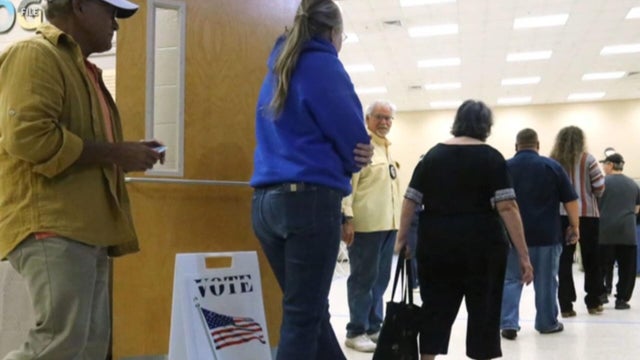
From the ballot box to the courtroom. Republicans file a lawsuit in a bid to block California's new-- wait for it-- congressional map. More on redistricting battles next here on TheTakeout. [MUSIC PLAYING] Welcome back to TheTakeout. Welcome to the Conversation Corner. We're going to be here for a while on the show. I'm happy to say that. Here's a look at what else we, and now you, are watching this evening. The number of detainees in ICE custody now a record 66,000. This according to Homeland Security data first obtained by CBS News. That number is up nearly 70%, or about 39,000 people, from the start of President Trump's second term. Never before has ICE held so many people facing deportation at any given time. That according to officials, historical data, and immigration policy experts. Three people have been killed in the latest US military strike on an alleged drug boat in the Caribbean. Defense Secretary Pete Hegseth released this aerial footage of Thursday's attack. The campaign, which began in late September, has now destroyed at least 18 vessels and killed at least 70 people. Governments and families of many of those killed in these strikes have said most of the dead civilians, primarily fishermen. California Republicans have sued to block the state from redrawing its congressional map to favor Democrats. This lawsuit announced just after-- hours, rather, after California voters overwhelmingly approved-- you see the numbers there-- the redrawn districts in a special election Tuesday. David Becker joins me now, CBS News election-law expert. He's also the executive director of the Center for Election Innovation and Research and coauthor of a very fine book called The BigTruth. You somewhat might recall the name of the other coauthor. Anyway, catch us up on what this lawsuit says in California and its legal merits or demerits. Well, first of all, the Republicans have tried to stop this before Prop 50 went on the ballot earlier this week, and they lost every single case. They even lost a case that was filed by a Republican member of Congress from Texas seeking to stop it, somewhat ironically. This is a new lawsuit. Now that it's past, it's ripe, and what they're alleging is that race predominated in drawing these districts. I think this isn't a frivolous case, but I think it's going to be a very tough case for the Republicans to win. It's very clear that the primary motive, if not the sole motive of this redistricting plan, was partisan advantage. And while the Supreme Court has said in the past they don't really like the idea of these extreme partisan gerrymanders, they've kind of washed their hands and said there's nothing they can do about it. I don't think that's true. I think there's a lot they could do about it if they chose to do so. But as long as they don't, I think we're going to continue to see this partisan tit-for-tat play out where each party thinks the only way to stop the other party from drawing these extreme gerrymanders is to draw their own. And, ultimately, that mutually assured destruction will bring both to the table to try to stop that. I don't know if they're right or wrong, but in the meantime, the real losers are the voters, who are going to find themselves in districts they're not familiar with, not knowing who the candidates are, and this might happen every two years. You heard in our previous segment Glenn Ivey, Democrat from Maryland. Maryland is now going to jump into this. The current congressional representation in Maryland, eight Democrats, one Republican. So of the nine, Democrats hold eight. If they redraw the line and get rid of that Republican one, it would be nine-zero. Yeah, I mean, if you think about it, the place where these extreme partisan gerrymanders are most likely to occur, where one-party rule is pretty strong in some of these states. Maryland has that. Others have that. But on the other hand, that often means if it's a state like Indiana, there's only a couple of seats at the most that could be gained. But given that the margins in the House are so narrow right now, it appears the parties are going to fight tooth and nail for every single last seat, and, again, at the expense of the voters where it's hard enough to manage the every decennial redistricting where you might be placed in a new district and, for the next five elections in Congress, you're going to have to be in that district. Now we're getting to the point where we might be seeing literally every two years these districts are redrawn. Election officials in California right now are busy trying to-- as soon as this election is certified, they're going to be doing the hard work of making sure that those new districts will be in place for an election where the primaries are going to happen early next year. Very quickly, about 40 seconds, everything went pretty well and smoothly on Tuesday, but yet election denialism continues to persist. It's incredible. We're still seeing grifters, conspiracy theorists spreading rumors about the election, applying this really dime-store mathematics to sayings. Turnout went up, or someone did better than the last election. That's why we hold elections because people choose differently in different elections based on the situation in the country, and especially when they're unhappy, they can turn out in very, very high numbers. We have paper ballots. Those paper ballots are all connected to voters who have been registered using ID, as they have to under federal law. We know that the elections are secure, and we know what the outcomes are. And the civil servants and election officials, they're the constant in all of this. They make it work, regardless of the noise. And they did a remarkable job this week, and we should all give them all a hand.

MAJOR GARRETT:
00:25:42

David Becker, as always, a pleasure, sir. Thanks, Major.

MAJOR GARRETT:
00:25:44

Who will replace Nancy Pelosi after she leaves Congress in 2027? Might not be the biggest question on your mind, but it's one of our questions. One of the contenders, Saikat Chakrabarti, he joins me next right here on TheTakeout. You see him smiling right there. We'll talk to him after the break. And tonight, I have the high privilege and distinct honor of my own as the first president to begin the State of the Union message with these words. Madam Speaker. [APPLAUSE] That was George W. Bush during his 2007 State of the Union address congratulating Nancy Pelosi on becoming the first female speaker of the House. Pelosi announced yesterday she will not run for re-election after 20 terms in Congress. She led Democrats in the House, created huge legislative victories, dealt with dissenters, dealt with those who were strong advocates of progressive politics, a lot of things. House Minority Leader Hakeem Jeffries said Pelosi will go down as the greatest speaker of all time. Saikat Chakrabarti joins me now. He is running for Nancy Pelosi's congressional seat. He also served as Congresswoman Alexandria Ocasio-Cortez's chief of staff. Saikat, it's always good to see you. Look, you were the first one to jump into this race. Because this program thrives on breaking political news, moments before we started talking to you, London Breed, former mayor of San Francisco, told Politicotoday-- the story just posted-- that she is strongly considering entering that race. Your reaction? Look, it doesn't really change the reason I'm in this race and why I've been running for the last 10 months. At the end of the day, I jumped into this race because I really believe we need a Democratic Party that has leaders that have the courage to stand up to Trump right now who are willing to use every tool at our disposal to stop what I see as an authoritarian coup going on in front of our eyes. But beyond that, we actually need a plan and a vision to actually improve people's lives because, ultimately, the American dream has been shattered. It's been crumbling for decades. People are working longer hours to afford less and less. If we can't turn that around, I think we're going to keep getting strongmen into power, and that hasn't changed. I'm not calling for me to just win this one race. I have been talking about trying to recruit people to run all across Democratic Party. I think we need a whole new generation of leaders. I think we need dozens, if not hundreds of people running all across the country, and I plan to keep doing that. Assess for my audience what you believe history will say about Nancy Pelosi. Look, Nancy Pelosi is going to go down as one of the greatest speakers in history, up there with people like Sam Rayburn. And I think when you actually look at her career and if you watch her retirement video, I thought it was beautiful. It was a very touching video. It was a love letter to San Francisco, and it really made this point about how San Francisco has always been synonymous with the future. And that's not just because we have a tech industry here. San Francisco has always been the city that pushes to fix what the country is getting wrong, and that's the legacy of all the movements we've had in our city, whether it's the disability-rights movement, the gay-rights movement, the sanctuary-city policies. A lot of that stuff started right here in San Francisco. And Nancy Pelosi, when she first went into the House, she was this fearless voice that was calling attention to this national AIDS epidemic that was ravaging our city, and she got action. So her ability to take actual progressive pushing and turn it into real legislation, I think that's going to be a real legacy. I think her willingness to step down is also a huge act of leadership. It's something that's all too rare in Washington, and it ensures that her career is going to be remembered for all her accomplishments, not for her just being in there for too long. Yeah, but you announced, Saikat, before that was clear, and that meant you believed it was time for her to go, one way or the other. So maybe she stayed longer than she should have? Well, I've been clear from the start that I have a lot of respect for her career, but I do think we're in a new moment for the Democratic Party. We've got a new crisis right now, which is a cost-of-living crisis. In my city here in San Francisco, we face it hardest. I think we actually do need a legislator who's going to push the bounds of what's possible there again. I think we need to be actually tackling these big, structural issues, things like health care, the cost of housing, the cost of education, the cost of childcare. We've got to do that at a national level. We have to do the big, structural fixes because it's come to a breaking point now, not just for me but for everybody living in this country. So I call for things like a single-payer healthcare system that will guarantee health care to everybody because every developed nation in the world has it, and we're the richest country in the world. I also call for putting our country on a mission to actually rebuild our manufacturing, rebuild our industries, create middle-class and working-class jobs again at a mass scale. Ultimately, I believe the big job ahead of us right now is to prove that democracy can work to improve your lives because if we can't do that, I think we're going to keep seeing authoritarians come into power. And I really feel-- I'm instructed by what I've seen in our own past because there was a far-right movement back in the 1930s that was extremely powerful, was filling Madison Square Garden with these huge Nazi rallies. And the way we defeated that movement was FDR came in with a whole new movement with the New Deal movement. And through the New Deal and the mobilization for World War two. He used democracy to improve people's lives so dramatically, it just laid to rest this idea that you need an authoritarian to do it for you. So that's, I think, the moment we're at right now. I think we need new ideas. We need new leaders. We need a new kind of energy, and that's why I was running, and that's the kind of energy I'm trying to bring to Democratic Party.

MAJOR GARRETT:
00:31:17

It's going to be a crowded primary. It may include London Breed, the former mayor of San Francisco. Saikat Chakrabarti, I appreciate your time. Let's keep the conversation going. Yeah, thanks for having me, Major.

MAJOR GARRETT:
00:31:28

United Nations has called it one of the worst humanitarian crises of the 21st century. The civil war in Sudan is what it's talking about. There's a US push for peace. It's been largely ignored. There are lots of complications and humanitarian issues. We're going to delve into all of that right here next on TheTakeout. Welcome back to TheTakeout. What we're about to talk about next might be the most undercovered story of human misery on planet Earth. The United States is trying to get peace in Sudan. The civil war continues to rage as we speak. Explosions were heard today in the nation's capital, just a day after the country's paramilitary forces agreed momentarily, obviously, to a US-backed humanitarian truce. Over the last 2 and 1/2 years-- here's what I was driving at-- about 150,000 people have been killed. Some 12 million displaced, half of them children, following the country's coup in 2021. I want to bring in Katy Crosby, senior director of US policy and advocacy for Mercy Corps. Provides humanitarian assistance in regions in crisis, and that most definitely includes Sudan. Katy, it's good to have you with us. Thank you for having me. Explain to my audience what's going on and what you're trying to do to help it out. So, as you mentioned, we've seen a civil conflict in Sudan over the last two-plus years. And throughout that conflict, more than 30 million people are now in need of humanitarian aid within the country of Sudan. This has crossed lines time and time again across all 18 states that are within Sudan. As you've mentioned, we've seen incredible displacement, people being forced to flee from their homes, many of them multiple times. So just when they thought that they were safe, they would have to flee again. And what's been incredibly challenging is the violence that we have seen, the siege tactics that have been used, and the deliberate obstruction of aid from being allowed to get into Sudan and throughout to Sudan to the people who need it the most. How does that get, in any way, addressed or redressed, getting aid in and assisting those who have been displaced, facing famine, and worse? So, as you mentioned, there is a ceasefire deal on the table that we are hopeful about, and certainly any attempts to broker a ceasefire deal that all parties agree to is critical. And that needs to go from words to deeds. Even now, as we've seen this progress towards a potential ceasefire, at the same time, we've still seen drone strikes on civilian populations across the country. And so it can't just be words on a page or a partial agreement. There needs to be an immediate ending of the violence on the ground so that we can surge in the humanitarian aid that is so badly needed. And most of this aid is really being provided through local groups, soup kitchens, volunteers. They have really been the backbone of this response, especially in the hardest-to-reach places, the places where the lines of conflict have just not enabled either people or aid to get in. There is a place called El Fasher. El Fasher. Where is it, what is it, and what's going on there, and what has you most worried? So El Fasher is a city in the state of Darfur. And over the last 500 days, it has been under siege by the RSF, one side of the conflict. They have been shelling it with mortars. They have cut off all aid. Food has not been allowed in. Water has been cut off.

MAJOR GARRETT:
00:35:10

A straight-up siege, nothing in, just bombardment. Just absolute siege. I mean medieval-style siege. And we saw that, after over a year, the city has fallen. So RSF forces have come in, and people who are left in El Fasher now have to face another decision of whether to flee or whether to stay. And so many are trying to flee. We have seen horrific reports of mass killings, of men and boys being separated from women and children. And even the cost-- the actual cost of trying to flee can be up to $500 per person just to get a seat on a truck or a donkey ride for part of the way.

MAJOR GARRETT:
00:35:55

And to be clear, they don't have $500? They do not have $500, not at all, not even close. And as a result of that, some people have been held for ransom. They've been robbed on their way trying to leave El Fasher. One of our colleagues walked for seven days trying to get to a safer place, literally counting bodies along the road that he was traveling on, and he was robbed. He was taken-- all of his earthly possessions that he was still able to hold on to were taken from him before he showed up in a safer place.

MAJOR GARRETT:
00:36:34

Katy Crosby, I appreciate you coming in and letting us know about this. We're going to continue to keep an eye on it. Thank you. Our political panel waiting in the wings. We have wings here. I don't even know that, but they're waiting there, apparently, to break down this week's biggest political stories. That's next here on TheTakeout. Welcome back. To the surprise of absolutely no one, New York Republican Congresswoman Elise Stefanik announced her bid for governor, what could be one of the tightest, most expensive races in the 2026 election cycle. In her launch video, Stefanik called current New York Governor Kathy Hochul the worst governor in America. The governor responded, calling Stefanik President Trump's, quote, "number-one cheerleader in Congress." I want to bring in our political panel, Democratic strategist Jonathan Kott, who served as a senior advisor to senators Joe Manchin and Chris Coons, and Republican strategist Lance Trover, who was Doug Burgum's spokesman during his White House bid in 2024. Gentlemen, good to see you. Remember, the candy doesn't eat itself, so get in there as often as you want. New York, Kathy Hochul, Elise Stefanik. That's going to be a brawl. Oh, heck yeah, and I love it because Kathy Hochul wanted Mamdani, and she's got him, and now she's going to have to help deliver on all of these crazy socialist policies that he promised. So is she going to do it? That's going to be the big question. Do you think there is any possibility that before that race is over, both Kathy Hochul and Elise Stefanik are running ads against Zohran Mamdani? I mean, anything's possible in this political world. But yeah, look, she-- Because she's against the tax increases at the state level that would have to go through to finance some of what Mamdani has promised.

LANCE TROVER:
00:38:09

Yeah, absolutely. But look, she went all in on this guy because she didn't want a primary.

MAJOR GARRETT:
00:38:13

They'll get one anyway-- But now she's going to have to--

MAJOR GARRETT:
00:38:15

--from her lieutenant governor. --go to Albany and deliver. She's going to have to go to Albany and deliver what it is he wants, and so is she going to upset the, quote, unquote, Mamdani wing of the party now? That's the big question for Kathy Hochul.

MAJOR GARRETT:
00:38:24

Jonathan, that's yours. You're the Mamdani wing of the party, with Chris Coons and Joe Manchin. So please explain how this is all going to go down. Look, she made a calculation. She didn't want a primary challenge. She endorsed him. If his policies work and she can get him through, she's going to smooth sail in 2026. If they don't, she's going to have a hard time explaining them. Do you think she looks-- that is to say Kathy Hochul-- that the results Tuesday for Spanberger in Virginia-- Abigail Spanberger-- Mikie Sherrill, Democratic nominee in New Jersey, and say, wait a minute. The wind might be at my sails? I think she should. I think she should look at that and say voters liked bipartisan pragmatists who had a record of accomplishments. Now, she's got a year to follow through on that, but she's also got to work with Mamdani to get some of his stuff done. I don't know if she can get all of it done. I don't think anybody can get all of what he wants done in a year. She's going to have to get one or two of those things done, or the progressives are going to turn on her, and her hope of not getting a primary is out the window. This is going to be incredible race. I mean, Lee Zeldin only lost by, like, five points, I think, in the last election. Right, Republican. So I think this is going to be really one to watch for next year. So in my audience, you might not know the name Carrie Coyner. To be honest with you, I didn't know it until about three or four hours ago. Member of the Virginia House of Delegates, a Republican. Why am I interested in Carrie Coyner? Because she's the one who leaked the text messages about Jay Jones threatening violence against a Republican in the House of Delegates that roiled the Virginia governor's race and the Virginia attorney general's race for seven weeks. Why do I bring up her name? Because she ran for re-election. She lost by five points. So the person who brought this to the public attention that was debated for weeks upon weeks in the commonwealth of Virginia is the only casualty. Jay Jones won by five points against Jason Miyares, the incumbent and a pretty strong, stout political figure in his own right. Question to you gentlemen-- is there anything left that is truly scandalous in American politics?

LANCE TROVER:
00:40:24

I mean, I think that's a valid question. I mean, those texts that we saw from him were beyond horrific.

MAJOR GARRETT:
00:40:29

Six years ago, they are straight-up, bipartisan consensus disqualifying. Yeah, absolutely, and he won by five points. I don't know if there is a political scandal left in this country. I mean--

MAJOR GARRETT:
00:40:39

Jonathan-- --I refer to Jonathan. --I think you have some perspective on this that might be valuable. I worked for Anthony Weiner. I'm going to say that scandal might still disqualify you. [LAUGHTER] But other than that one-- Look it up kids, on your Google machine, if you don't remember. I'm going to loosen my tie for this. There we go. Jonathan, do it. But other than that, I don't think there's a political scandal that can wipe you out. I think Donald Trump actually paved the way for that. And the reason this fascinates me is everyone said it was a legitimate issue. Now, Democrats said leave it to the voters to decide if that's disqualifying, but they didn't say it was illegitimate to bring it up or it was dirty tricks or some sort of smear campaign. They were legit texts. He did it. She brought them to the surface, and she's the one who suffers politically. Well, look, and newsflash to all political operatives out there. I mean, what does that say to you that if you've got a candidate that's in trouble politically? Get the party to rally around you. That's the one thing they did. They never really--

MAJOR GARRETT:
00:41:31

Circle the wagons. They circled the wagons.

MAJOR GARRETT:
00:41:33

Republicans and Democrats. Never resign. Never resign. Never resign. What else are your takeaways? Did you tell Anthony Weiner that? [LAUGHTER] Jonathan, how do you explain to Democrats who might ask you, what does Zohran Mamdani mean for the future of the Democratic Party? What's your answer to that question? It means he is an exciting, charismatic, far left wing of the party that had a great message.

MAJOR GARRETT:
00:41:58

That won one race in one jurisdiction. Yep.

MAJOR GARRETT:
00:42:01

And it's got no more importance than that? If it had more importance than that, we'd be talking about President De Blasio, President Giuliani, President Bloomberg. We're not.

MAJOR GARRETT:
00:42:11

We're not.

LANCE TROVER:
00:42:11

A little bit of a contradiction there. You're saying he has got this following, yet it's just restricted to New York. I'm not sure that's the case. I mean, you look at how the Democratic Party is going in this country. It is moving and skewing further and further left. Their leaders right now, AOC, a socialist; Mamdani, a socialist; Bernie Sanders, a socialist. That's where the direction of the Democratic Party is headed. I mean, I don't think it's just constrained to one city. I would just point out Bernie Sanders, no candidate that he has ever endorsed has ever won in a purple or red district. Bernie Sanders--

MAJOR GARRETT:
00:42:42

Meaning in a competitive place. In a competitive place. Bernie Sanders doesn't represent the majority of the party. Abigail Spanberger, Ruben Gallego, people like that represent it. Those people on the left are a fringe. They represent the far left of our party. They get excited. They talk a lot on Twitter. They get a lot of attention. They're not the majority of our party. They obviously go vote. They do. Jonathan, going to give you 30 seconds because I name checked who you worked for, Joe Manchin, Chris Coons, institutionalists both in the Democratic senatorial caucus. The filibuster is now being pressurized by President Trump. What is your message about the filibuster, and what should be done to it or about it? I think my Democratic friends are probably happy they didn't get rid of the filibuster last time. Who helped them not get rid of it? Joe Manchin isn't taking a victory lap, but, look, when you don't have the minority views represented, then it's just majority rule. And when bipartisanship doesn't happen in the Senate, it doesn't work. Jonathan Kott, Lance Trover, I appreciate it. Thanks so much. Happy Friday, everyone. This is TheTakeout.

View CBS News In
CBS News App Open
Chrome Safari Continue