MAJOR GARRETT:
00:03:39
Which we typically do for all sorts of important reasons. Including a more aggressive China, not just the threats around Taiwan, but the South and East China Seas. So that's really interesting in this moment in time particularly, also the threats DPRK, the North Koreans firing off some missiles, not really taking up President Trump on his offer to engage in diplomatic talks. So there's reason to be concerned about Asia and moving the strike group out of there. It just speaks, again, to the fact that there's this sense now that the president is mired in the Middle East. There are about 20, I believe, warships in the Mideast at present. And this movement was also to relieve a very long-deployed USS Lincoln,which is on its way to California. So those movements are reflective of what is this bigger question for the president is, how do I get out of this region? Which he was not the first president, nor will he be the last to say he wanted to disengage from and re-engage in Asia. And this is an example of the exact opposite.
MAJOR GARRETT:
00:04:37
And we'll dig in with Elliot Ackerman a little bit more deeply on this. But you're very read-in, Margaret, and have been for years, on economic sanctions, their vitality, but some of the blind spots they have, especially secondary sanctions, not on direct named entities, countries, or businesses or companies. And that's what we're talking about now. Right. I mean, financial warfare has been the prime tool that presidents have loved using. Bush, in fact, George Bush built up a big sanctions regime against Iran. You could really argue about their efficacy because we're still in the same place with Iran, where they are incredibly isolated. North Korea incredibly isolated because of all these sanctions regimes. So how much more can you corner a regime? Cuba another example of that. How far can you push them? And in Iran in particular, when they are fine being isolated, when, in fact, the military that is the Revolutionary Guard has made itself a business entity finding ways through and around-- A kind of corrupt black market business entity, but one that still can exist.
MARGARET BRENNAN:
00:05:34
Exactly. So you wonder, what is it that Treasury Secretary Bessent has up his sleeve when he has announced that on Monday he's going to unveil something more, and that the president is really looking at this? But they had allowed for some oil sales in there. Maybe they're rolling those back out and going after other actors. We'll have to see what he announces. You're also going to talk about the FDA and its future on Face the Nation. We didn't talk about it very much this week, but it is an important nomination. Heidi Overton, White House aide, nominated by the president to be the next FDA commissioner. Scott Gottlieb, former FDA commissioner, will be on the show. Trump's FDA commissioner in the first is going to be talking about the second. You may not be talking about the FDA, but you've certainly been talking about food recalls. You've certainly been talking about all these outbreaks. And so the fact that we haven't had a Senate-confirmed head of this agency, once again, underscoring these problems for the president in getting health care professionals to take on leadership in some of his health agencies, in part because of this split that has been made apparent, in part because of the support of the MAHA movement and some of the vaccine skepticism among its members, their most prominent one, of course, the HHS secretary. And that's what's going to be sticky here for Dr. Overton, who is viewed as a traditional conservative, pro-life. She has said things about mifepristone, the abortion drug, that I'm sure other Senate Democrats will publicly question beyond Patty Murray, who has already come out and said she has real problems with restrictions that could be put in place there. But when you ask about, will the Republicans get on board, including Dr. Bill Cassidy, the powerful chairman of the Senate Health Committee, he said it was almost-- almost-- disqualifying, the fact that Heidi Overton stood beside RFK Jr., the HHS secretary, and the president in that Oval Office event, where they laid out in this executive order, not just this plan hard to deliver on to split up the MMR vaccine in the midst of the worst measles outbreak this country has had in 35 years, but also laying out a legal pathway for states to basically pull back what our state mandates on vaccines that your kids have to get to go sit in the classroom next to somebody else's kid. So they're trying to create a pathway to peel back some of those restrictions that your governor and your state legislature puts in place. And that's going to be really tough. Can she get enough Republicans on board with her, given that she was in that Oval Office event? We'll talk about it. Outstanding. Margaret Brennan, thanks so much. Really appreciate it. You can watch Face the Nation this Sunday on CBS at 10:30 AM Eastern. Also included on the panels and the conversation, Florida Republican nominee for governor, Byron Donalds, as we just mentioned, also the former FDA commissioner, Scott Gottlieb. I want to bring in former CIA officer and Marine Corps veteran Elliot Ackerman, also a CBS News contributor. Elliot, you heard Margaret and I talking about this. Give me your perspective on the utility and the limits of economic warfare with Iran right now. Well, it seems that this refocusing on economic warfare in Iran is more of an admission that the military phase of this operation has stalled. I mean, Iran is the second most sanctioned country on Earth. There are more than 6,000 sanctions designations against Iran right now. So I don't see how pivoting to economic warfare is going to be a game changer for the Trump administration.
MAJOR GARRETT:
00:08:55
And how will we know if it is or isn't, Elliot? It's always been my experience with sanctions, it's hard to tell how hard they're biting and if someone is really squealing on the other side of them. Well, I think what you would see would be a level of engagement with regards to negotiations. You would see Iranian regime wanting to come back to the table. But I think it's highly unlikely. I mean, first of all-- and you and Margaret talked about this-- these sanctions, really, the pain is passed down to the Iranian people, less so to the regime. And the regime is trapped in an existential crisis with the Trump administration, where if they lose this war, they cease to exist. So it's tough to see how doubling down on economic sanctions is going to give the Trump administration the victory it's searching for.
MAJOR GARRETT:
00:09:46
China would have to be involved in this to make it really bite. And they said today they're not interested and don't believe they'll be effective, don't believe this is the right course. Is that a big deal? I think it is a big deal. And we've seen this continuing every few days, every week or two, strategic pivot, strategic pivot, strategic pivot by the Trump administration. So from my analysis, it seems they are flailing around, trying to find some type of lever they can pull that will bring this war to a conclusion. But it doesn't seem that sanctions are going to be that lever. The United States has been sanctioning Iran since 1979.
MAJOR GARRETT:
00:10:23
Elliot, I want to ask you about something that has been very topical today and this week about the leadership of Stars & Stripes. It's partially taxpayer funded, entity that covers the military for the military. And there are moves today to fire its publisher and its editor-in-chief. And the apparent reason for this is insubordination. And some of that insubordination is just saying that the Stars & Stripes entity journalistically should remain independent. And there's also an effort to have a former Navy or current Navy public affairs officer in charge of the editorial leadership there. Give me your thoughts on this. Well, Stars & Stripes is really a venerable news organization. It's existed since 1861, the first year of the Civil War. And the fact that the United States military can have an independent news outlet outside of the chain of command has spoken to the fact over generations how strong and resilient the US military is and how high our morale is as a military that serves a democracy. So if, in fact, the current heads of Stars & Stripes are being fired for basically saying that they refuse to not be independent, that's a very sad day, not only for Stars & Stripes,the US military, but also for our country.
MAJOR GARRETT:
00:11:45
And Stars & Stripeshas built a reputation, to your point, Elliot, of covering this part of American life in ways that are rigorous and daily, in ways that other publications simply don't. It's their beat 24/7. And they were one of the first ones to bring to light some of the difficulties aboard the USS Abraham Lincoln, which the Pentagon disputed but moved rapidly to remedy by taking it off station. Yeah, absolutely. I mean, to me, this is a huge swing and a miss by the Department of Defense right now. I mean, listen, I've been a troop leader in the past. If you know anything about leading troops, sailors, soldiers, airmen, Marines, is that you have to be able to step in front of them and tell them the truth. And so as a Department of Defense, we should be strong enough to have a news organization that tells the troops the truth and not be afraid of that truth, and not be a propaganda rag.
MAJOR GARRETT:
00:12:42
Exactly. Elliot Ackerman, I appreciate your time very much, as always, sir. Thank you. CBS News Chief Legal Correspondent Jan Crawford joins me now. Jan, what did the Supreme Court do today? And how big a deal was it in the context of the military bunker and ballroom at the White House? Well, we got a pause today from the Supreme Court. So what happened is, Major, a lower court injunction was scheduled to take effect tonight at midnight that would have blocked any construction from going forward on that above-ground ballroom that President Trump obviously has been clamoring for and construction has been underway for quite some time. With that looming injunction to stop the construction, the Supreme Court stepped in and put a temporary pause on the Trump administration's appeal, just to give it more time to decide whether it's going to take up this case, whether it's going to rule for the Trump administration, or whether it's going to affirm the lower court ruling that went against Trump. The Trump administration had appealed this case to the Supreme Court, saying that if it didn't step in, the Court would have to-- I mean, the administration would have to stop this construction of the ballroom. So this is a really common procedural move that courts do when things are unfolding in a really quick turn of events like this. And so the Court today, in a very brief order by the chief justice, John Roberts, who oversees matters that come from the DC area, said, we're just going to take a little more time with this. So I don't think we'll hear anything, probably, certainly not before next week on the final rule. Can the ballroom go forward, or does the Trump administration have to stop it?
MAJOR GARRETT:
00:14:20
Have to stop it and go to Congress if it wants to proceed, get congressional approval and congressional buy-in before it presses ahead. Jan Crawford, as always, thank you. Thank you so very much. I appreciate it. As we mentioned earlier, President Trump will be in Myrtle Beach, South Carolina, tonight campaigning for Senator Darlene Graham. For more on this race, I want to bring in Nick Reynolds. He is a politics reporter for the South Carolina-based Post and Courier. Nick, it's great to have you here. Give my audience a sense of where this race is, as I was on the phone today talking to several Republicans in South Carolina who told me it's very close. And there's internal polling that Ralph Norman has and that the Darlene Graham campaign have that they're not disclosing that shows Norman with a little bit of a lead. Yeah, and that's what's made this so interesting. This is one of the most scrutinized races in the nation, which is really surprising given the fact that, really, this is a deep red Republican state. But the state has really had a legacy of punching above its weight in Senate and Congress for years. And so the fact that there's been so little out there publicly right now is very, very interesting. But there was an event the other day in Columbia. It's this usual business showcase, where in the state capital, you see most of the lobbyists, most of the major industry groups gather there. And Ralph Norman actually happened to be speaking there, along with several other members of the Congressional delegation. And in the crowd, it did seem to feel like all of the momentum in this race was going toward Norman right now. People were discussing some of these polls. There was numbers ranging everywhere from him being up by 6 points to nearing double digits, which is really surprising given the fact that he's been outspent astronomically. Even though there's been some political action support behind him, most of the money coming into this has been toward Darlene Graham. If you go through FEC reports, you're seeing some of the richest people in South Carolina and the United States at large supporting her. There have even been some outside groups that are not related to South Carolina Republican politics at all, attempting to prop her up and go against Ralph Norman. So it's been a really interesting race to see. And the fact that there hasn't been a lot publicly released about the state of the race has definitely been very interesting. So, Nick, two questions. First, there was an Emerson poll before the original primary that said about 53% of South Carolinians said that a Trump endorsement would not move them one way or the other. Do we still believe that's true? And question two, help my audience understand the geography of South Carolina. The president will be in southern South Carolina. Ralph Norman's base, as I understand it, more northern South Carolina. Yeah, and this is a really, really interesting dynamic to see because this isn't the first time that President Trump has gotten involved in South Carolina's politics. If you'll recall, back in the governor's race, he actually endorsed rather late in the game backing Lieutenant Governor Pamela Evette ahead of her eventual runoff campaign against Attorney General Alan Wilson. If you looked on the ground here, I mean, Evette boasted really, really close ties to the White House. Her staff largely worked with Trump on his 2020 and 2024 ground game here in South Carolina. So she inherited a lot of his alums, basically predicated the entire race on getting that endorsement. She ultimately got it. The issue was that they were running against a campaign that just had much stronger fundamentals and a much stronger connection to the state than she did. Ultimately, that resulted in a pretty large loss come the runoff time. We also saw it a little bit earlier this year with a special session for redistricting. The president pushed very hard to draw our Democratic congressman, Jim Clyburn, out of his seat. The legislature, I don't necessarily want to say it was a rebuke of the president, but they ultimately decided to go in another direction. So the president's influence, it's important here. The endorsement does matter. He is still very popular here. But there is a sort of independent streak here that really comes to define the race and probably will carry on through the rest of this. And you're going to see that with the map, to your second question, is Horry County, where the rally is being held right now, is part of this broader region called the Grand Strand and PD. So the Grand Strand is mostly based around Myrtle Beach. That's a really, really conservative area, of course. But it's also mostly a transplant area. And it's a very MAGA crowd. But they're not necessarily moved as much by some of the hyper regionalism as you see in the rest of the state. Now, that area went toward Congressman Russell Frye in the first round of voting. And he had already endorsed Darlene Graham. It's expected a lot of the vote is probably going to go toward her. She finished second in the region. That's probably going to be a safe bet for her. The interesting part that we're going to be seeing is the rest of this congressional district, which is the PD, which is a little bit more independent. It's largely rural. There's still some outcrops of Democratic support there from just the old guard that used to define politics here. That'll be one to watch. Upstate South Carolina, where Norman's base is, that's more evangelical. They tend to stray more conservative. It's actually one of the areas that's consistently voted against Lindsey Graham when he was in office. Even though he carried about 56% of the vote in the primary earlier this year, he lost both Greenville and Spartanburg counties, which are the main population centers of the region.
MAJOR GARRETT:
00:19:43
Nick Reynolds, I appreciate the time and the expertise very much. Thank you. Still to come on The Takeout, artificial intelligence and bills before Congress, a match made in statutory hell. Also, the defense rests in the Lindsay Clancy murder trial. A look at today's testimony, upcoming closing arguments, and basically the massive look-in interest this trial has generated. Plus, the Cook Political Report says it is, quote, "increasingly hard to ignore both public and private polling," unquote. And so it has moved the Texas Senate race from lean Republican to tossup. And it did the same in the Iowa Senate race. Our political panel of reporters will take a look. Takeoutreturns in 90 seconds. [THEME MUSIC] Well, welcome back to Takeout. Welcome to the conversation corner with our very, very cool new chairs. God, I love them. Artificial intelligence, as you well know, everywhere. It's also on Capitol Hill. New political report finds that the Office of Legislative Counsel-- you've never heard of it probably, but it's a really important conduit. It sorts through all sorts of legislation. And it is now dealing with a massive influx of AI-generated bills. But those bills often arrive chock full of errors and inaccurate information. The use of technology, such as AI, came up last night at a Massachusetts Senate debate. And here is Senator Ed Markey talking about how he uses it, or maybe doesn't. I use whatever is inside of my iPhone and my iPad, whatever comes up. And I don't know what companies my iPad might be using. With all due respect, Senator, if you don't even know what you're using on your phone or your iPad, this is why we need a new generation of leaders to regulate these technologies.
MAJOR GARRETT:
00:21:33
Owen Dahlkamp is the author of the piece I was referring to, and he joins me now. He's from Politico. So, Owen, talk to me about what this problem is with both lawmakers, and as I read your piece, lobbyists going to AI, putting in prompts, and wanting legislative text. Yeah. The first thing I'll do is take just a little bit of a step back. When you are prompting AI chatbots to do something, it's making a lot of assumptions. When you are saying, find me the best dinner near me in this neighborhood, it's making a lot of assumptions about what type of dinner you might want to have and giving you a variety of options. It does the same thing when you ask it to write a bill. It makes many, many little decisions that normally are left to humans. So when that happens, staffers and outside groups who are drafting this legislation are not actually in the legislative-making process. They're leaving a lot of the decisions to AI. And it's pretty bad at making a lot of those decisions, and it makes a lot of mistakes. Now, in the US House of Representatives, there's this small little office called the Office of Legislative Counsel. It's about 60 lawyers who are charged with drafting pretty much all of the legislation that passes through Congress, or at least reviewing it. And they are facing just a barrage of AI-generated bills that are being passed through that office. And they're having to review them and catch all of these errors. But AI can generate bills so fast that they're having difficulty keeping up. And for people who haven't read legislative texts, there are all sorts of paragraphs, sub paragraphs, sub numbers, sub letters, two sub numbers. And if you are not experienced in that particular highly specific language, which AI simply can't be, at least not at this stage, of course, it's going to be filled with errors. Yeah.
MAJOR GARRETT:
00:23:10
What I don't understand is why lawmakers and lobbyists would think it could be a useful tool. I would assume they would know it can't be, at least not yet. Yeah, you'd assume that they'd think so. But in the Office of Legislative Counsel, the lawyers who actually write it, it takes about seven years to train them to actually write the laws. Now, it takes a lot of time, a lot of nuance. They have to learn a lot of the specificities. And they really do incredible work. Lawmakers will come to them and say, I want to draft a new bill that's going to do x, y, and z. And they have to figure out some way to fit that into existing US law. Now, it's really, really complicated. Most US bills that are introduced in the House are inserting or striking different language that already exists in law. And it's very bad at going into the US code, mostly because it's kind of all over the place, and finding that language and saying, OK, this is what we want to strike out, this is what we want to insert. Sometimes it makes up portions of the US code or references the wrong portions. If that were to happen, if it were to be passed through the House and the Senate, signed by the president, without anyone catching it, there would be no place for that law to actually go. Congress would then have to go back in, pass an amendment, do the whole process again. And it would just take a whole lot of time and waste everyone's effort and energy.
MAJOR GARRETT:
00:24:17
I think I know the answer, but I just want to ask. Has anything bad happened yet? Not so far, which is good. The Office of Legislative Counsel is very good at what they do. But they are only human. It could eventually pass through, and they could not catch every single mistake that is in that bill, which is frightening.
MAJOR GARRETT:
00:24:32
And nothing bad has happened yet. But the workload has increased. Because AI works so rapidly, they're pushing so many more bills in this direction. Exactly. There was a testimony given by the head of the House Office of Legislative Counsel. There are many reasons for this. But he suspects that one of the reasons, he says publicly, for the increase in bills that they are receiving is that they are actually receiving these AI-generated bills. They are very, very concerned about this. Outside groups, staffers, lobbyists, people I talked to have admitted, yeah, I've used this to write bills, or no, I have reviewed legislation that is clearly drafted by AI. No human would be able to write this and make these kinds of mistakes. It's becoming increasingly verbose, it's using the wrong definitions, it's using the wrong portions of the US code, all of these hallmarks that are clear markers that AI is involved in this drafting process. 30 seconds, Owen. The House has rules. Could the House, through the majority party, apply a rule and say, no more AI-generated stuff? They could. But the Office of Legislative Counsel is actually pretty adept at adapting technology. They use some cutting-edge technology to help them in their drafting process, understand how different bills would change the US law. So they're not averse to that technology. They could use it. But in the end, it's just like AI-generated text anywhere else on the internet. It's very, very hard to tell whether or not that text is actually AI-generated. So how are you going to enforce that rule?
MAJOR GARRETT:
00:25:54
How are you going to know? Owen Dahlkamp, Politico. I appreciate the time very much. Great stuff. The New York Timesloses a defamation case in the US for the first time in more than 50 years. More on that when we come back. You're watching The Takeout. [THEME MUSIC] Welcome back to The Takeout. Thanks for hanging out with us. Here's a look at what else we-- and now you-- are watching this evening, Bay Area voters selected progressive Democratic State Senator Aisha Wahab to serve the remainder of former Congressman Eric Swalwell's term. She defeated Bay Area Rapid Transit-- that's BART-- Director Melissa Hernandez. Outside groups spent more than $4 million on this race. AIPAC's super PAC spent nearly $2.5 million to boost the losing candidate, Hernandez. These same two candidates will be on the ballot in November to serve for a full term. An Alabama jury awarded more than $9 million in damages to a former University of Alabama basketball player who sued The New York Timesfor defamation. This is the first defamation lawsuit The New York Timeshas lost in more than 50 years. Kai Spears sued over an article that falsely reported he was at the scene of a deadly shooting. In actuality, three of his teammates were present, but he was not. After Spears filed the lawsuit, The New York Times corrected its piece and added an editor's note. The defense in the Lindsay Clancy murder trial rested today. Closing arguments scheduled to begin Monday. Clancy has admitted to killing her three young children in January of 2023. She has pleaded not guilty to murder charges, arguing she had postpartum psychosis, bipolar disorder, and was overmedicated. The defense's final witness was a forensic psychiatrist who testified that there was no evidence that Clancy faked any of her psychiatric symptoms. CBS News legal contributor Jessica Levinson joins me now. Jessica, we talked about this earlier this week. It's now been summarized by the defense. How do you evaluate? Well, I think that, obviously, it all comes down to whether or not the prosecution proved that, in fact, Lindsay Clancy did understand what she was doing and was able to comport her behavior within the bounds of the law. We know that in Massachusetts, it's a little bit different than in other places, whereas the prosecution that has the burden of proving that, in fact, she understood that what she was doing was criminal or unlawful, and again, that she could not comport herself within the law-- or that she could. Now, what we have, I think, really is a battle of the experts. We have some experts saying that this is psychosis. We have others saying this is a woman who was struggling mightily, who was clearly suffering. But it doesn't rise to that legal threshold that we just talked about.
MAJOR GARRETT:
00:29:01
And, Jessica, when we last spoke about this, we referred to the Andrea Yates case from the early 2000s. Psychiatrist Dr. Phillip Resnick testified today. He also testified in that Andrea Yates case. Let's listen. My opinion is that Ms. Clancy was, due to her mental disease, unable to conform her conduct to the requirements of the law. She was hearing a voice, which was commanding her to engage in the killing. And that testimony seems designed to address what you just raised, Jessica. What is this under Massachusetts law? So under Massachusetts law, this is the entire ball game. And here we have a psychiatrist saying, there cannot be criminal liability in this case. Not only was she suffering-- we all understand that. We all understand she was suffering from depression, that there were other mental health issues going on that were very serious. But here we have somebody saying she truly did not understand right from wrong. She thought she was being told to kill her children and that that was the thing that was going to keep her safe. It's not fair under the law to impose liability because she simply was not in a place where she could understand, this is legal, this is not legal. Now, what's interesting about this particular witness is that I think he was very helpful for the defense. But then on cross-examination, the prosecutors pointed out the difference, Major, between the Yates case and this case, where with respect to Yates, you had somebody who was suffering much longer and apparently more severely for a longer period of time. So there, that's helpful for the prosecution.
MAJOR GARRETT:
00:30:55
Jessica Levinson, great stuff, as always. Thank you very much. I appreciate it. If Prince Harry thought living in California was expensive-- and he probably did-- well, there's a big bill awaiting him in Britain. He won't be paying it alone, however. Elton John will, too. It's over losing a lawsuit against a British tabloid. We'll have more on that when we come back. This is The Takeout. Yeah, I think that they should be able to live happily and peacefully wherever they want to go. He's a royal at the end of the day. So I think he misses that life. For somebody who said he was going to leave because he wanted a quiet life and not to be bothered by the press, he seems to have sought that out very, very much. Those are some of the mixed reactions from Londoners on news that Prince Harry and Meghan Markle are moving back to the UK after six years in self-exile in America. Also today, a judge ordered Harry and six others, including Elton John, to pay $13 million in legal costs to the publisher of the tabloid The Daily Mailafter losing a privacy lawsuit. I want to bring in CBS News royal contributor Amanda Foreman. Amanda, we had you on yesterday. I had to rush away, and I apologize for that. I'm delighted you're back because this story really has its hooks in me. So very quickly, what about this money that he's going to have to pay about this Daily Mailthing? Yeah, so the bill could be as high as 34 million pounds. That's over $50 million. They do have insurance, which will cover half of it. But if they have to pay the full whack, that's several million dollars each per person. There's seven claimants. They all are on the hook.
MAJOR GARRETT:
00:32:36
Nobody wants to pay the full whack, that is for sure, Amanda. All right, talk to me about the practicalities, we'll get to the emotions, the bitterness, the realness of it all, but just the practical aspect, security for Harry and Meghan and the two children. Any idea how that's going to work? Yes. So the way it works now is it's on a case-by-case basis. It's not true that Harry has no security. The government, through what they call RAVEC, the committee on public safety for high-profile individuals, they do provide Harry and Meghan and the kids with security, but only when they deem it necessary, like at a public event. It's not 24-hour. Harry has to supply the rest of that. And those security officers, they can't carry a gun. They don't have arresting capabilities. They don't have any intelligence. So that's what Harry wants. That's what the argument is about, really.
MAJOR GARRETT:
00:33:33
Got it. Is there an acting angle for Meghan in her return and the family's return to the United Kingdom? Well, that is the claim today. But when you really look into it, it's all smoke and mirrors. The claim is that Meghan is in talks to have a role especially written for her for season 3 of Guy Ritchie's Netflix series, The Gentlemen. Now, bear in mind that this is for season 3, which isn't written yet. And season 2 hasn't come out yet, and season 3 hasn't been commissioned. So she's in talks for a season that hasn't been commissioned for a role that hasn't been written. That's the full extent of her return to acting in this country.
MAJOR GARRETT:
00:34:21
Very smoky, very mirror-y. And we should remind ourselves, Amanda, that Prince Harry and Meghan came to the United States with this massive media empire that has, in six short years, effectively evaporated. Yeah, it's really embarrassing because nobody has arrived in the US with such wind in their sails and with such goodwill, and to be honest, fawning adulation. They had everything. They had a Netflix deal that was rumored to be up to-- some estimates as high as $100 million, if they were lucky. There was the Spotify deal, where they were going to produce their own podcast. They could really do anything. And Netflix canceled Meghan Markle's As Everseries after two seasons, and it was a flop. Spotify canceled their podcast. And in fact, famously, the executive at Spotify, whose head of production, called them grifters. I mean, it was a big fail. And it was embarrassing. You said on the program last night-- this really caught in my ear-- that anything that happens now for Buckingham Palace is a lose-lose situation. Everything is going to be scrutinized, and everything is going to maybe default somewhat favorably to Harry and Meghan. Walk my audience through that, if I understood it correctly. No, that is correct. So on the one hand, what you have is a powerful institution. And on the other, you have a powerful media couple. So it's asymmetric warfare. Institutionally, Buckingham Palace, the monarchy, they do have it all. So no charity that wants to have any kind of official support is going to extend a welcome to Harry and Meghan because charities, they want royal patronage, not celebrity ex-royal patronage. So they're outside of that. All that kind of thing, if you want to be in with the royals, you're not going to be in with Harry and Meghan. However, the court of public opinion, the person on the street, that's where Harry and Meghan are really good. They're better than anyone, actually, at pulling those strings. And the surprise press release. They come to England for a short visit. Nobody knows what they're really planning. And then just a few weeks later, up comes this release that they're coming back to England, and nobody knows. And it wrongfoots everyone. They're really good at that kind of thing. Very quickly, Amanda, the internal family dynamics. You touched on this briefly yesterday. Any length of time you can imagine, five years, 10 years, longer, to reconcile with Prince William? With the king, oh, it's a matter of months. And the king is not in the best of health. With William and Kate, it's never. But publicly, in a few years, they will be in the same room with each other and look polite.
MAJOR GARRETT:
00:37:29
Amanda Foreman, great stuff. I really appreciate it. Thank you so very much. Coming up, good news for Democrats in Iowa and Texas. Our reporter panel will tell us about it and their thoughts on it. Some interesting news this week from the Cook Political Report. That's next right here on The Takeout. [THEME MUSIC] Well, welcome back to The Takeout. And it's Friday, Takeout Tavern time. Remember, Monday, Wednesday, and Friday. And always, kids, it's coffee for me. I do keep my wits about me. I prove it every time. Our guest, Deirdre Walsh, covers Congress for NOTUS. Remember, that's News Of The US. And Ken Thomas, most excellent political reporter nationally for The Wall Street Journal. Let's talk about South Carolina. The president's going to be there later on tonight. Darlene Graham, there's a sentimental attachment there. But there's also a bit of history. Ralph Norman, who's running, only member of the South Carolina delegation to endorse Nikki Haley in 2024. And, Deirdre, as you know, the president does not forget such things. No, loyalty is huge with President Trump. And one of his most loyal friends was Lindsey Graham. And I think once he lost Lindsey Graham and Darlene was the interim senator, people were surprised that she decided to run for the full term. And I think there was a field waiting to jump in and get the Trump endorsement. A lot of them thought they were going to get it. And then he quickly endorsed her, and that sort of changed things. But once she didn't do so well and had to face a runoff and had this gaffe in the debate, I think there has been some real nervousness in the Trump's political orbit about, did they make a mistake? Right. And this rally is going to put Trump front and center in this. And so whatever the outcome on Tuesday is, he's going to own part of it. Right. And there's the backdrop that he issued the dual endorsement in the governor's race with Pamela Evette and Alan Wilson. And so there's a lot of speculation that maybe we could see something like that happen.
MAJOR GARRETT:
00:39:20
What does he say about Ralph Norman tonight, if anything at all? If he doesn't, then he's going to stick with Darlene. But if he says anything about Ralph, then it might be trying to figure out a way to make a coming loss maybe not sting so much. Let's talk about Texas and Iowa. Cook Political Report moved them both from lean Republican to toss up in the Senate races. The Texas one based on the polling doesn't surprise me. Iowa is kind of interesting, Ken. Yeah, Iowa is a state that has a history of welcoming Democrats. I mean, obviously, Barack Obama won there twice, Tom Vilsack.
MAJOR GARRETT:
00:39:51
Then it moves hard in the Trumpian direction, has been there. Right. And this is a state that has been hammered by tariffs, high fuel prices-- Fertilizer prices. --fertilizer prices. So this is really a place where Democrats could, in theory, flip a lot of these Trump voters. Josh Turek is the Democratic nominee for Senate. Rob Sand is the nominee for governor. Rob Sand is even more strongly positioned in that gubernatorial race. And there are a couple of House races in Iowa that could also loom large. Yeah, and I think the economy is really driving the whole ticket there. In terms of the Senate race, my colleague, Paul Kane, was reporting about this is a place on the Senate map where a Democrat could win with a plurality because there is a third party candidate on the ticket. And a lot of these races tend to be really close. I mean, Texas is another place where there's a third party person on the ticket. And you could have third party voters determining control of the Senate. Especially in Texas because Ken Paxton is a Republican nominee. He ran hard against John Cornyn. There was $50 million thrown against Ken Paxton by those supporting John Cornyn. Still a lot of bitterness there. They may not vote for James Talarico, but they may vote for the independent or sit out. And that could be crucial in that race. Yeah, there's a libertarian on the ticket, Ted Brown. And maybe they can't stomach voting for Paxton.
MAJOR GARRETT:
00:41:09
Or Talarico, but they park themselves over there. Right. And it doesn't take that many votes-- 2% or 3%. --in an environment like this. How do you think the White House is assessing this political environment, Ken? Because it is sitting on a ton of money. The one thing every Republican who you talk to in this space will tell you is, hey, don't pay attention to the polls now because we have not unleashed yet. When we unleash, we got all the money to do it. Things are going to be rebalanced. That is the biggest factor that Republican strategists are talking about internally. There's roughly $400 million in this MAGA Inc fund, and no one really knows how it's going to be deployed. I think the expectation is they're going to have to put a lot of it in Texas because Paxton is such a bad fundraiser, and Texas is Texas. And expensive. And expensive. But after that, where else do you deploy it? I mean, there are-- Do you deploy it to Georgia? Do you deploy it to North Carolina? Probably not. But you have to spend it in Maine. You may have to spend it in Ohio.
DEIRDRE WALSH:
00:42:09
Alaska.
MAJOR GARRETT:
00:42:10
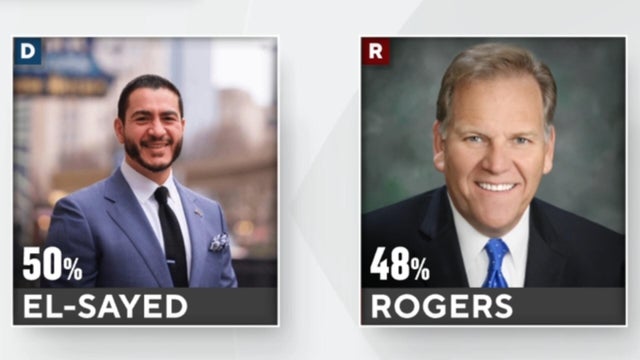
Alaska's pretty inexpensive, but you're going to have to put some money there. And you want to spend it in Michigan. And you've got to spend it in Michigan because Mike Rogers needs it. So where does all that money go? But that is what Republicans constantly talk about. I mean, they're worried about the economic environment almost being set. I mean, gas prices are not projected to go down even if we do see some sort of offramp in the war on Iran. But the economy could be where it's going to be. So money could end up being the factor determining a lot of these races. And, Ken, as you know, as you're deeply experienced in this space, by this time in an election cycle, late summer, it's sort of baked in what people have decided about the economy or the trajectory. Some good news in September typically doesn't wear off something that's accumulated all year long. Yeah, and that's the hole that Republicans are in right now. There's really no end in sight in the Iran war. The Iran war is what's driving up all these costs. And like you say, voters have their minds set on their situation. Exactly. And if South Carolina doesn't go well for Trump, that'll be the seventh endorsement just in the month of August that will have turned against him. That would be kind of a new in-house record and one the White House will not readily embrace. Deirdre Walsh, great to have you here. Please enjoy. Ken Walsh, please enjoy. That's why you're here at the Tavern. Quick reminder, The Takeout is available as a podcast on Apple, Spotify, YouTube, and everywhere else. There you can find each show and our long-form interviews, of which we do many. Happy Friday, everyone. This is The Takeout. Quick reminder-- relentlessly curious, reliably civil, and like the Brits, occasionally clever. The Daily Reportcoming up next. Again, one more time. [THEME MUSIC]