REPORTER:
00:01:23
President Putin, will you agree to a ceasefire?
REPORTER:
00:01:27
Mr. President, what's your message to Vladimir Putin?
REPORTER:
00:01:30
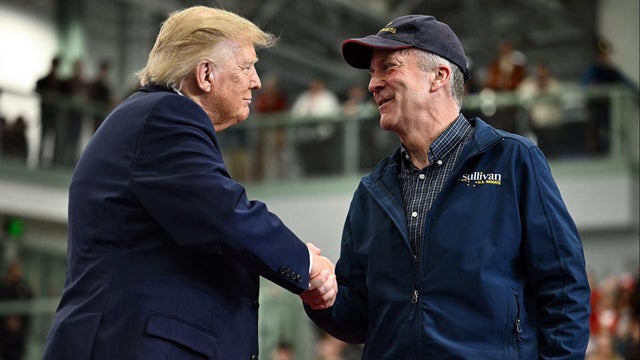
Mr. Putin, did you underestimate Ukraine? President Putin, will you stop killing civilians? Then an extraordinary invitation to ride in President Trump's limousine, a big smile and chuckle from Putin as the car pulled away-- those optics, as good as Putin and his Russian handlers could have hoped for, the outcome unknowable. And possibly, this red-carpet treatment was necessary to pull Putin toward a ceasefire, which Trump said, before he landed in Alaska, was his goal. Margaret Brennan joins me now from the summit. Margaret, I'm so glad you are with us. Evaluate what I just described, what we saw play out on the tarmac, and all the ways in which Europe and the Ukrainians might behold the handshake, the obvious affection, and the ride in the presidential limousine. Well, Major, these images are being broadcast around the world. And it is very late night in Kyiv, but you can be assured that Volodymyr Zelenskyy is tracking all of this. And it contrasts just so starkly with the treatment he was given when he was welcomed into the White House by President Trump but reminded that he was not grateful enough for all of the US aid that had been provided to him in the description of the president at the time. But since that time, President Trump's position on Ukraine has fluctuated. And it's not exactly clear what President Trump wants to see, other than this general description of a ceasefire. He hasn't been specific. When he was asked again on Air Force One about that, he said something like some form of a ceasefire. So he's sketching out very broad benchmark for success there. And the pictures themselves, those are a win for Vladimir Putin. He has already gotten something. He has delayed those sanctions. He has gotten that reemergence onto the global stage, despite breaking virtually every international law on the books, every international law written after World War II, when the globe decided that might was no longer going to make right, and that you couldn't invade a country and seize territory by force, or at least not do so without international sanction. Vladimir Putin did that in 2022. That's why he's under sanctions. But he got this reprieve today, able to land on US soil. And the red carpet was rolled out for him, as you were just describing. Margaret, let's talk about the 10 minutes, roughly, that the two spent inside the presidential limousine. It's my understanding-- you know much more than I do and much better than I do-- that Vladimir Putin understands English, doesn't speak it all that well. How much might we imagine was or wasn't exchanged in those 10 minutes one on one inside the limo? Well, that was extraordinary to see. President Trump was so warm in his welcome, to have Vladimir Putin, treating him as that honored guest, bring him into The Beast, as we call it, the vehicle that the president used, that armored car, for the relatively short walk within the air base. But it did provide President Trump with that opportunity, the promise he had made that he would get one-on-one time with Vladimir Putin. Remember, the Kremlin said and the White House said that it was Putin's request that they meet one on one. So at least for those 10 minutes, he got that face time before he went into this closed-door meeting, where President Trump, as we understand it, at least from the White House, was supposed to be accompanied by his secretary of state and by his special envoy, Marco Rubio and Steve Witkoff, respectively. So what happened in that car, all of us could speculate. Does one-on-one time with another world leader break every rule in the books? No, it's happened before. But when you are dealing with someone like Vladimir Putin, a former KGB agent, there is always that extra layer of suspicion as to his intent and the manipulation that he might be trying to carry out. Now, we'll have to see what happens. So far, those planes are still on the tarmac, as far as we know. No one's walked out. And we'll see if the two men show up at the podium for that joint presser. The very fact that a joint press conference was set up makes it sound like this is expected to end with some measure of success. And the Russian spokesperson for Vladimir Putin said before he landed that these negotiations could go on as long as seven hours. I'm sure that's not what the White House anticipates. But, Margaret, you and I have covered summits involving Putin before. He likes to go through an elaborate-- not throat clearing, but preparatory lecture with any American president, Republican or Democrat, about whatever the Russian agenda is. So that might take up some number of hours today. Well, that does. You're totally right, Major. But there is nothing typical about what is happening today. That throat clearing, that let's read our grievances on either side before we get down to brass tacks, that's what diplomats do. That's what trained foreign service officers do. That's what you would expect in a traditional bilateral meeting. But that's not what we're seeing. And the other thing Vladimir Putin loves doing, Major, is showing up late. He was smack dab on time this morning, ready for the cameras. I've been there. I've sat in Moscow, where he's kept John Kerry waiting for three hours when he was secretary of state. He is notorious for playing this cat-and-mouse game-- not today. This is a big moment for him. He was being honored. We'll see, though, if he actually makes any concessions. Remember, President Trump said he'd know in the first two minutes whether Vladimir Putin would make a deal. It's been well over two minutes at this point. Margaret Brennan, such a great pleasure. Thank you so very much. Former US ambassador to Russia for President Trump and for President Biden, John Sullivan, joins me now. Mr. Ambassador, great to see you. Look, I want to give you a chance. You saw the pictures. The world saw the pictures. Break them down for us. Well, literally, Major, it was red-carpet treatment from Vladimir Putin. He couldn't have asked for a better setting for his arrival in the United States. His message to the world is, I'm not isolated. Some may think I'm a war criminal. I deal toe to toe with the President of the United States. I'm welcomed as a co-equal with the president of the United States, which he believes he deserves as president of the Russian Federation-- so a real validation for Putin. And all the times in the last few weeks, John-- and we've discussed on this program-- when the president has expressed frustration, being unhappy with Putin-- none of that evident today. None of it evident today, and not really evident in the actions that the United States has taken. To be sure, the United States has imposed secondary-sanctions tariffs on India for buying Russian oil. But the United States could do so much more to put pressure on Putin to really come to the peace table and stop this war. The United States has the means to do so. So far, it hasn't had the will to do so. The question is whether the administration, the Trump administration, will get Putin to agree to a ceasefire first and then an enduring settlement. And it's doubtful in my mind that this is going to happen, unless much more pressure is brought to bear on Putin. And it is possible, John, that the president could look the way he did, but sit down and say, I have the sanctions in my back pocket, and I'm ready to go. And if you don't move, I'm going to drop this hammer on you-- and be much tougher in private than he looked in public. It's possible. Absolutely. Look at the way he dealt with Kim Jong Un, right? He had three meetings with Kim Jong Un, two summit meetings, in a sense, and then the meeting in the DMZ. But he ultimately walked away because there wasn't a good deal for the United States, what he wanted. But he didn't disrespect Kim Jong Un. And my hope is that-- what the president would say in his defense, if he were criticized for how Putin was received, he would say, look, I'm sucking up to Putin. I'm doing to Putin what you say other world leaders are doing to me, buttering me up because I want something from him. And if he doesn't give it to me, I'll walk away, but I'm not going to embarrass him. I'm not going to make a spectacle out of it. John-- and I want to let our control room know I'm going to take these in order. I just want to summarize from our audience the toll of this war. So Ukrainian-Russian war, dead, 60,000, 100,000 on the Ukrainian side-- these are all rough estimates-- 250,000 on the Russian side. There's been a lot of aid flowing to Ukraine from the European Union, $195 billion in military aid, $105 billion in financial and humanitarian assistance. From the United States, $76 billion in military assistance, $54 billion financial, humanitarian. Also, when it comes to those displaced, in Ukraine, 6.9 million refugees, 3.7 million internally displaced. Civilian casualties in Ukraine, killed-- these are rough estimates-- 13,883 injured, more than 35,000, 726 children. There are lots and lots of numbers. But I just wanted, for my audience's benefit, to contextualize all that has gone on. And we should understand that the toll has been high for both countries. And it continues to this very day, Major. The Russians have bombed major cities in Ukraine while Putin is en route to meet with Trump. So the brutality of what the Russians have done, this aggressive war that Putin has raised, is staggering-- massive number of war crimes, tens of thousands of Ukrainian children taken, in violation of international law, into Russia. It's those statistics and the brutality behind it that causes-- when people ask me, why do the Ukrainians continue to fight? Because of what the Russians have done to them and the brutality with which they've done it. Very quickly, John, when you're looking at a way to assess this summit, when it is done, what's the first thing you're going to ask yourself? Is there follow-up with Zelenskyy? There is no path to peace and a settlement in Ukraine without Zelenskyy and the Ukrainians at the table. Right now, Putin doesn't want to meet with Zelenskyy. If President Trump can get a ceasefire and a follow-up meeting with Zelenskyy at the table, that would be a step forward. Putin doesn't want to do that. Putin doesn't want to give Zelenskyy what Trump gave to Putin today. Putin doesn't want to be on the same stage with Zelenskyy and equate him with the president of the Russian Federation. He thinks Zelenskyy is beneath him. And right now, he's not interested in meeting with Zelenskyy. But we'll see if President Trump is able to convince him of the need for that. That's an important and valuable metric. Ambassador John Sullivan, thanks so very much. My pleasure.
MAJOR GARRETT:
00:13:09
Still to come, US attorney Bondi tightens the Trump administration's grip on the DC police force. In turn, the district sues the president over what it calls an illegal overreach. Texas House Democrats get a boost from former President Obama. Republican redistricting plans have been stalled, but for how much longer? And the world continues to wait. What will come from the Trump-Putin talks going on right now? We are in Alaska for the summit. We'll have more as TheTakeoutcontinues. And it will return, I'm happy to say, in 90 seconds. [UPBEAT MUSIC] Welcome back. The District of Columbia has sued the Trump administration over its federal takeover of DC police, arguing that takeover violates federal law. Jake Rosen is here with all of the latest information. And, Jake, we have some important developments just this afternoon. Walk my audience through what we have learned. We do. Federal judge Ana Reyes, who's no stranger of criticism against the Trump administration-- she's been very loud about it-- encouraged both sides, after an hour of argument, to take some time and meet together, knowing that any decision she made, A, likely to be appealed almost immediately. And B, for somebody to chime in on such a sensitive issue without some kind of agreement or understanding of maybe rewriting what is at that hand here, which is this policy, five bullet points from Pam Bondi last night, which essentially stripped away sanctuary city provisions from the Metropolitan Police Department and the officers there, which would have forced them to cooperate with ICE if asked to. In addition to that, essentially stripping the DC police chief out of her role and reinstalling a Trump ally and current DEA head Terry Cole in that role-- all of that has now been talked through by the attorneys. They took two and a half hours after an hour of argument to come to a conclusion here, which is that the DOJ is going to rewrite this memo that the Trump administration made no secret about last night, knowing that Muriel Bowser was out of town, knowing that there was an opportunity to assert further federal control, especially on things like immigration in Washington, DC, that they can put in a new police commissioner. That no longer is the case. The DC Police Commissioner Pamela Smith is going to go back in. Terry Smith is going to be a designee to work between the Metropolitan Police Department and the White House to coordinate what the next 25 days looks like. And that's kind of where things stand. So to summarize, the judge said two parties, the District of Columbia and the Trump administration, talk, stop issuing decrees in one direction or another. Work this out. See if you can collaborate, possibly. And some collaboration has thus emerged. Some of it will be rewritten. Some of the people appointed will be changed. And the district will emerge with some of its legitimacy reasserted. And the big thing is, who do these Metropolitan Police Department employees and officers report to? Is it a Trump appointee, or is it the person who's been in charge for the last five days of this federal takeover, and who's agreed to cooperate, in large part, with the White House with almost no pushback? Interesting. Jake Rosen, I appreciate all the expertise. Thank you so much. Earlier today, I spoke with the head of the DC Police Union about all of this. Here's our conversation. Gregg, first question-- the District of Columbia sued the Trump administration today, alleging it is illegal to do what it has done in seizing the Metropolitan Police Department. Your rank-and-file members agree with that. Well, it's important to know why exactly the Feds are here in the first place. And the fact of the matter is that five years ago, the city council passed a boatload of legislation that hamstrung cops, made it impossible for us to do our jobs, and exposed us to administrative, civil, and even criminal penalties, even when we go out and do our job properly. We currently have an authorized strength of 4,000 sworn police officers, but we only have 3,180. So we have over 800 vacancies for the position of sworn officer. And that's why we cannot get a handle on crime here in the district. So it should come as no surprise that the federal agencies, through the president, have decided to intervene, because we cannot keep this city safe. Listen, we welcome any help we can get, whether that's federal agents, whether that's National Guardsmen. Anything we can do to put handcuffs on bad guys and try to keep these communities safer, we're going to welcome that. What we're hoping is that however long this lasts, whether that's 30 days or longer, we're hoping that these federal agencies get some insight into the problems that exist here in the district so that we can fix them and have a longterm prescribed impact on crime, and they don't just pack up and leave, and we end up holding the bag with the same problems we had before they got here. How would you describe the problems as they exist today? The city council passed a bill called the Comprehensive Policing and Justice Reform Act, which was 80 pages of activist-driven, anti-police rhetoric. Since that bill passed, we have been unable to staff this department. We've lost over 700 police officers. The city is currently offering $25,000 hiring bonuses, $6,000 housing allowances. And nobody seems to want to line up to take this job. We have people retiring early. And half of the people that separate from this department are separating through resignation. No one wants to work here. The working conditions are absolutely miserable. The way the department makes up for this gap is through 2 million hours of mandatory overtime that's imposed on our members, which just increases the burnout, the frustration, and the attrition rate. So something needs to be done. And we're hoping that these federal agencies, when they come in and get some eyeballs on how bad these problems are, they can help us get these laws that the city council passed at least amended, if not overturned. Gregg, the statistics that have been released by the city suggest the following-- violent crime, compared to last year, down 26%. Homicide, compared to last year, down 12%. Assault with a deadly weapon, compared to last year, 20%. Do you believe those? I do not believe those. I don't think those numbers are accurate, the reason being is that our members report to us. Albeit anecdotal, it is quite a prevalent problem, in that they respond to the scenes of the type of offenses you just mentioned. And inevitably, some management official-- a captain, a lieutenant, sometimes even a commander-- will show up on the scene and direct those officers to take a report for a lesser offense. They'll turn robberies into thefts. They'll turn stabbings into simple assaults. They'll turn shootings into injured person to the hospital cases. On top of that, there was a recent report by a local affiliate that showed that there was a police commander who was under investigation for manipulating crime stats. He's accused of going into police databases and changing felonies to misdemeanors after the fact to keep crime stats low. Now, listen, I know that commander, and he's a very reputable, trustworthy guy. Our members trust him. They look to him for leadership. I can't imagine that he did something like that maliciously, if he, in fact, did. I'm assuming that it's a directive from on high so that all commanders go into police databases and change police stats down so that city officials can report crimes down. I don't believe it is. Even if I stipulate that crime has gone down in those amounts that you just mentioned, 2023 was the most violent year we've had in 30 years. We had 297 homicides. We had 960 carjackings. The robberies, the shootings were off the charts. To report that crime is slightly down from there, while that's a positive development, it's nothing to take a victory lap about. We should not be celebrating a city that has 200 homicides per year that's this size. We need to try to drive those numbers as close to zero as possible. No one should be satisfied. No one should be normalizing 200 homicides. Gregg, I lived in this city in 1991, when there were 504 homicides. And the statistic came from the medical examiner's office. They would know how many bodies came through. 504 is a very large number. The president, in the context of this particular conversation, says crime in the district has never been worse. That is a statistical lie. It's not true. It has been worse. I lived here in this city when it was worse. Is the only remedy for where we are now federalizing MPD? Well, let's look at those numbers. Because you're absolutely right that there were 500-plus homicides in the early '90s. And the way that the Department dealt with it was, they hired an additional thousand police officers to get the staffing level up to 5,000 sworn Metropolitan Police Department officers, who went out, did their jobs. And they were authorized to get bad guys off the street and put handcuffs on criminals and investigate violent crime. And by the time we got to the year 2000, those numbers were down below 200 homicides. Since then, we've gone from 5,000 police officers to 3,000 police officers. And we're standing eyeball deep in legislation that prohibits us from doing our job. So the fact of the matter is, you're right that the 1990s were much more violent. But I'm not satisfied that we're living in the nation's capital in 2025 with 200 homicides per year. And I think the way that we can get those numbers down as close to zero as we can is to have more police officers on the street and permit them to do their jobs so that we can actually get bad guys held accountable and get them sentenced to sentences that are commensurate with the crimes they've committed. Is it your message, Gregg, to the city council, if you want the Feds to back off, hire more cops? Our message to the Council is that, look, you're managing a city that has the seat of the federal government here, that they often act like a babysitter. And I know that the district government does not want a babysitter. But if that's the case, they should not act like petulant children. The bills that they have passed are horrific. They're horrible. They have been written by activists. We have the empirical data that has devastated the police department and has caused crime to flourish. If they don't want the Feds to be involved in criminal activity or in criminal enforcement, they should change those bills immediately. They should put an omnibus bill together and repeal everything that they pushed through in 2020 at the height of the anti-police rhetoric. That's my argument. I would prefer not to have federal involvement in law enforcement. I would prefer to have a proper number of police officers so that we could go out and do the job that we all signed up to do, which is keep these neighborhoods safe. Gregg Pemberton, I appreciate your time. Thanks so much. Major, thank you.
MAJOR GARRETT:
00:23:45
Hours after Texas Democrats get a boost from former President Obama, the state's Republican Governor sets round two of the redistricting fight in motion, another special session. We're tracking that right here on TheTakeout. [UPBEAT MUSIC] [UPBEAT MUSIC] Welcome back to TheTakeout. The summit talks between Trump and Putin are continuing. We'll get back to that presently, I promise you. But here, for the moment, is a look at what else we-- and now you-- are watching this evening. New Orleans Mayor LaToya Cantrell has been indicted on federal corruption charges. It comes after allegations a businessman exchanged gifts with the mayor so she would fire a municipal employee. The Democratic mayor's legal troubles come after an alleged romantic relationship with her former security guard. Last July, that security Guard was indicted on federal charges, including wire fraud and falsifying records, in an attempt to cover up the romantic relationship. Erin has become the first hurricane of the 2025 Atlantic hurricane season. The storm system is moving just north of the Caribbean islands. Tropical storm watches are in effect for that region. Forecast models, which are subject to change, shows Erin has the potential to become a major category 4 hurricane by early next week. Those models-- again, subject to change-- indicate at present that it will move north and miss the US East Coast, but please stay tuned to that. Former President Barack Obama has praised House Democrats in Texas over their efforts to thwart Republican redistricting in that state. During a virtual call, Obama was critical of the GOP efforts, calling them an assault on democracy. I think we became a little bit complacent over the years. We assumed that things would continue to get better, that our democracy would become more inclusive, that it would become more fair. What we forgot is that history doesn't always move in a straight line, and it's not always two steps forward and another two steps forward. Sometimes it's two steps forward and a step back. Former US attorney general and current chair of the National Democratic Redistricting Committee, Eric Holder, also spoke virtually with those Texas lawmakers. Hunter Woodall joins me now at the family table. So, Hunter, let's catch our audience up on what's happened today. Special session one, thwarted by the lack of a quorum, ended. Special session two, which Governor Gregg Abbott vowed to start as soon as possible, has already commenced. That's exactly right, Major. So Republicans are adamant they want to pass this redistricting plan. And they have all the power to do it. And essentially, once Texas Democrats come back, they get enough numbers, every sign is that Texas Republicans will be able to pass this. And that's some of that political gravity we've talked about, where they had so much power, Democrats' only route to really denying them this quorum break. But also, they feel like now, the Democrats have called national attention to this. And they feel like they've done their job to an extent. And that was where this call with the former President Obama was so interesting. It was essentially him saying, you've done your part. You've really galvanized the country. You've gotten attention to this in a way that really has gotten people to look at this. And it is believed that a sufficient number of House Democrats will return to the state, and this second special session will have a quorum, and in the not-too-distant future, this redistricting plan will be approved. That's the expectation. Texas Democrats, they're still expecting to put up a fight over this, but they just don't have the numbers. And Texas Republicans, they've rallied around this because President Donald Trump wants to see this pass. And as we know, essentially, with the Republican Party, if Trump wants to see something, Republicans usually fall in line and make it happen. And Texas House Democrats who are looking at the state of California-- the state of California under Governor Gavin Newsom-- and Democrats, supportive of his efforts, have released a new map? Not quite yet. We're still waiting to see what this map looks like. But the idea is, in Texas, Republicans are taking five Democratic seats and making them favorable to Republicans. We know that matters a lot because right now, the majority in the US House that Republicans have is essentially three seats. So this really could matter. The idea is, California counters what Texas is doing. They're trying to take five Republican seats, we believe, and make them more Democratic. That's going to be a challenge, though. Because some of these seats also, in any given year, they can go either way. And California does have a fair amount of Republicans. So both Texas and California, they're saying, hey, five seats here, five seats here. We don't really know what will happen. There are always risks when you redistrict, especially in a midterm election cycle, where there's a lot of attention. There could be a wave. And no redistricting I've ever seen can withstand a wave. Hunter Woodall, appreciate your time. Thanks so very much. Back over here to camera 2, the National Guard is about to be mobilized in another part of the country. Why governor of Iowa is activating the National Guard there-- you're going to find out what the reason is when we come back here on TheTakeout. Welcome back to TheTakeout. Welcome to the conversation corner. While we have been focused, I'm sure you've noticed, on President Trump's deployment of the National Guard here in Washington, DC, National Guard will soon be mobilized in a state in the Midwest. Iowa Republican Governor Kim Reynolds this week directed the state's National Guard to assist with Immigrations and Customs Enforcement operations. This will begin next month. The move has won the support of Iowa Republican Senator Joni Ernst. They are not doing the law enforcement functions, but they are providing support to those agencies. I do fully support that. And I support President Trump's initiative to make sure that our country is safer and secure.
MAJOR GARRETT:
00:29:28
CBS NewsIowa station-- this is in Des Moines, KCCI, a phenomenal affiliate of ours. Chief political reporter, Amanda Rooker, joins me now to discuss this and so much more going on in Iowa politics. This has been a busy summer. Very busy. Talk to my audience about this move by the governor and how it's being received. Yeah. Well, it's not entirely surprising. Major. The governor in previous years has sent Iowa National Guard down to Texas to assist with immigration efforts. So it didn't shock the state, necessarily, that she would deploy Iowa National Guard in her own backyard in Iowa. Although, as Senator Ernst mentioned, administrative logistics--
MAJOR GARRETT:
00:30:04
Logistical. Right, right. However, they haven't deployed yet. They deploy in September. We're already seeing some impact of President Trump's immigration policies in Iowa. So it will be interesting to see if that accelerates with this deployment or not. In my travels in Iowa, I came across those who said, yes, there are immigrants in Iowa, some of them undocumented, but they work in meat-processing places. They work in agriculture. And they have incorporated themselves into our communities-- and an ambivalence, General, about a super aggressive crackdown. Has that manifested itself in Iowa? Iowa is the number one hog producer in the country. I believe we have-- the 20 top meat-processing businesses in the country are in Iowa. And certainly, migrant labor is important to that sector and those businesses. So the concern about that is real. Recently, there was 200 workers who were in Iowa through a humanitarian parole program that the president terminated. The meat-processing plant told them that their legal status had been revoked and that they were going to be let go. And the impact of that can't be understated, in terms of, those people likely had kids in schools in that community. They had homes in that community. Plus, just the impact to the economy-- if you lose 200 workers at a business, what does that do to the city? What does that do to the consumer at the plant? So there are lots of those questions. At the same time, many voters in Iowa in 2024 said border security was incredibly important to them. So there's a balance of, they want the community to feel safe, but they don't want it to disrupt their local economy. Non Iowa caucus related stuff, there's real stuff going on in Iowa right now-- open governor's race, open Senate race. Incredibly busy. It's like the caucuses ended and then boom, we were back to the political races. There's a lot going on. So, very quickly, the Iowa Senate race, Joni Ernst-- Possibly. She said within less than a month, she's going to make an announcement. About whether she's going to seek reelection. Right. She has a campaign manager, but she hasn't made an announcement yet. And five Democrats have already jumped in. Right. We still have more than a year until the general election. And there are five Democrats.
MAJOR GARRETT:
00:32:28
And five pretty serious Democrats.
AMANDA ROOKER:
00:32:29
Yeah. You have three of them that have legislative experience that are known within the state, within the party. You have Jackie Norris, who was the former chief of staff to Michelle Obama, worked on Barack Obama's caucus campaign. And then you have a working-class, veteran Democrat-- so lots of different flavors, depending on where maybe the direction of the party goes.
MAJOR GARRETT:
00:32:48
And Governor Reynolds not running for reelection.
AMANDA ROOKER:
00:32:50
Right. And so that is generating a lot of interest and attention. There are no term limits for governors in Iowa. So if you can get in, you could potentially stay in that seat for a long time. And so an open-seat race is generating a lot of buzz. Someone I knew pretty well, Governor Terry Branstad, would tell you you can stay there for a very, very long time. Amanda Rooker, it's so great to have you here. Thanks so much for coming by. Thank you, Major. We are live in Anchorage, Alaska. That's where the summit is. And we'll have the latest on those conversations between President Trump and President Putin when we come back. Welcome back. President Trump and Russian President Vladimir Putin are, as we have told you all this hour, meeting behind closed doors in Alaska. The two leaders are discussing, among other things, the war in Ukraine and other issues Putin is sure to try to wedge into the diplomatic and economic conversation. Nancy Cordes joins me now from Anchorage, Alaska. Catch us up on what we know so far, Nancy. Well, Major, here's what we know. The president went into that small meeting with Vladimir Putin about two hours ago now. They both had two of their top foreign policy advisors with them. On the Trump side, that's Secretary of State Marco Rubio and his special envoy and longtime friend, Steve Witkoff. He also had an interpreter. And that meeting is still going on, which means that this could go on for a while. This could go into the night. Because after this meeting, they're supposed to sit down for a meal-- it was going to be lunch. Now it's more like an afternoon snack-- with a larger group that will include the secretary of defense, the secretary of the treasury, the secretary of commerce, and other Russian officials. At the start of this, Russian officials predicted that this would go six or seven hours. And it now looks like that is a possibility. What we do know is that once it all wraps up, President Trump and Putin will stand at those two podiums behind me, if things go well, and do a joint press conference. If things don't go well-- in other words, if Putin doesn't show a willingness to compromise, doesn't show a serious interest in a ceasefire-- that President Trump says he'll simply hold that press conference on his own and head back to Washington. So one of the things, Nancy, you and the assembled reporters-- as I gather, there are a great number of journalists there to cover this quite historic moment. Among the things you are first going to look at is the stage and whether the two podiums remain. And there are other military advisors to the president-- I was just going through some of the notes conveyed to us by Margaret Brennan and others-- who have been added to the president's entourage to give him a military perspective if things really get highly specific about Ukraine. Exactly. Because while Putin has said things that indicate that, theoretically, he'd be open to a ceasefire, when it gets down to brass tacks, he has always resisted. And he has issued a long list of demands of his own that haven't changed much over time. And most of those demands are non-starters for the Ukrainians and, more broadly, for the Europeans. He wants an entirely new government installed in Ukraine that would be more friendly to the Russians. He wants the Ukrainians to hand over territory that he has claimed, even territory that he doesn't currently control. And so the question today will be, does he give up any of those demands? That would be a sure sign that he is ready to see this war draw to a close.
MAJOR GARRETT:
00:36:40
Nancy Cordes on the spot for us as always, whether here or on the road with the president. Thank you so very much. CBSNewsnational security contributor, Samantha Vinograd joins me now. Sam, great to see you, as always. Margaret Brennan sent us a note a moment ago, talking to a top US official there on site. How's it going and what's the attitude? It's a toss-up, all up to Putin. How do you evaluate that? Sleep tight, America. Well, in all seriousness, I hope that that's not true. Typically, heading into a meeting with not just a seasoned head of state, but a 15-year veteran of a foreign intelligence service, a president of the United States is going to prepare extensively and have a strategy for those meetings so that there's an even playing field. It is unclear what kind of preparations Donald Trump did for this meeting to avoid being exploited by President Putin. And it is a little concerning, the longer these meetings drag on. Certainly, a restricted meeting between President Trump, President Putin, and their closest advisors is going to want to cover a lot of issues. But the longer that President Putin and President Trump talk, I am concerned that negotiations could drag on. And President Putin, who has a lot more experience in these bilateral restricted settings, could gain an upper hand. And it has been said by many looking at this that what Putin wants to do is, yeah, yeah, Ukraine, and I want to add this and this and this and this, unrelated to Ukraine. And what President Trump and his advisors need to do is keep focused on Ukraine and try to get some specifics and some resolution there. Well, and not just to get any specifics or any resolution, but to get good resolution. President Putin knows that President Trump has said since the campaign, he could get a deal done quickly. So President Putin knows he could put a deal on the table. But, Major, the question is, is it a good deal? Is it a deal that is going to avoid us having a repeat of this in several years? Is it a deal that's going to allow President Putin to feel empowered to just roll through Ukraine for a third time and perhaps even further? So President Putin knows what President Trump wants out of this. And my hope is that President Trump consulted with some real Russia experts-- I don't know who's left at the State Department with significant Russia expertise or on the National Security Council-- but spoke with some real Russia experts to go into this meeting prepared with a strategy for how to handle Putin. If my audience sees a headline that mentions the word ceasefire, what would you say to be cautious with about that terminology? The terms of a ceasefire. What are they agreeing to stop doing, for how long, and who's verifying it? Putin has agreed to things in the past, and then he just blew through those arrangements. That's what President Zelenskyy alluded to in that famous February Oval Office meeting, when President Trump got so angered. Putin agrees to things and then just breaks his promises. So we need to make sure it's a credible ceasefire with terms that don't just benefit Putin but also benefit the Ukrainians. Sam Vinograd, always a pleasure to have you. Thank you so very much. We're going to take a quick break. More on the summit, I promise you, when we get back. You're watching TheTakeout. Welcome back. Politics, national security, diplomacy, it all comes through here at TheTakeout. Republican strategist Kevin Sheridan joins me now. We talked to you about the summit because-- some of our audience know this. But those of you who don't, Kevin worked on Mitt Romney's campaign in 2012. And Mitt Romney said in that campaign that the largest strategic foe of the United States was-- Was Russia. And he was? Mocked endlessly by Barack Obama and the entire Democratic Party and John Kerry. And they were cutting videos and mocked him. You believe he was vindicated and has been vindicated. Well, look, I think-- In the context of this summit-- Yeah, I think China has become our biggest strategic threat, by far. But at the time he was saying that Russia was-- they were meddling. They were in our politics. They were in our geopolitical spaces. And they were messing with other countries, their neighbors. So that was the only point he was making in that debate. Barack Obama went on to totally mischaracterize it. But-- That's what happens in politics, and we are where we are. So speaking of where we are, what do you think are the inherent risks, if any, for President Trump in Alaska right now? Well, that he doesn't get any kind of a deal or even a second meeting. But it sounds like, if they're going on this long, that it's probably a pretty productive discussion. I think the optics of this thing were quite incredible with the-- Trump flew a B-2 stealth bomber over the head of Vladimir Putin the second he stepped off the jet, so incredible optics. I think the press conference that we're going to see questions is going to be fascinating.
MAJOR GARRETT:
00:41:19
If they're both there. Yeah, if they're both there. And that will tell us a lot. Are they still talking, or did this go south? Evaluate the MAGA base and Ukraine and what latitude the president does or doesn't have. Can he cut any deal he wants, or can he continue to buttress Ukraine if he's unsatisfied with Putin and apply sanctions and go down that road? Yeah, a lot of MAGA wants out of Ukraine completely. A lot of the Republican Party is going that way now. But he's the leader. And everybody in the Republican Party is still following his lead. They know that he's trying to get something done here. A ceasefire would be great if they can get that. And then talks, and actual sitdown talks, would be a huge win. And I think, even hearing people like Hillary Clinton saying, if he can get a deal here, he's going to win the Nobel Peace Prize.
MAJOR GARRETT:
00:42:08
Well, she said, to be clear-- She wants a pardon too. She said, to be clear, if he can get Putin to agree to give back all the terrain the Russian military has captured, I will nominate him for a Nobel Peace Prize. Well, that's not going to happen. Neither one of those things are going to happen. But what's the upside for Trump here? Is there a potential for something that is-- Trump's the peacemaker. He's done this in six, seven other places now-- Pakistan, India, Azerbaijan. So he really wants to be on that block, that peacemaker block. He wants that to be his entire legacy. He does not want to start new wars. He talks about it all the time. And he's trying to be-- You mentioned China when we first started this conversation. How do you think Beijing is viewing all of this? Well, if he can break Russia from China a little bit-- and that's probably what they're having some talks with-- that's going to be a huge strategic win for the United States. Yeah, they're watching closely. They still don't have a trade deal with that. And we all wait to hear how that's going to go. But yeah, I'm sure they've got all eyes on Anchorage right now. Kevin Sheridan-- he has the scars from 2012, but he looks great, nevertheless. Kevin Sheridan, it's been a pleasure, as always. Thank you, sir. Thank you. That is it. Oh, I'm over here at 1, guy. You were doing this and that and this and that. It's OK. That's it for TheTakeout today and for this week. We are awaiting what can only be described as a pretty highly anticipated press conference, if it happens, between President Trump and Russian President Putin. We'll bring that to you as soon as it happens, if it happens.