Watch CBS News

7/10: The Takeout with Major Garrett

President Trump says U.S. continuing Iran talks, but ceasefire is "over"; Graham Platner officially withdraws from Maine Senate race.
Jul 10 (43:39)

TRANSCRIPT FOR: “7/10: THE TAKEOUT WITH MAJOR GARRETT”

MAJOR GARRETT:
00:08:14

And when the Iranians can reduce the conversation just to that article five, that appears-- correct me if I'm wrong-- to be kind of, at least for the moment, a tactical win for them. I think it absolutely is, and it's a visible win, and it's a way to reverse whatever progress it would seem the Trump administration has made to bring about a peaceful resolution to this conflict, or at least a ceasefire. And so you look at the last Tuesday and Wednesday of this week, 170 new US strikes. And that puts the president in an awkward position of he's touting his peace initiatives, and then a week later, he's launching new strikes. And, Elliott, for the average American who sort of comes in and comes out of this story, they will remember, because President Trump said it so often at the beginning of this war, we've decimated Iran's capability to do X, Y, and Z. And yet we're still striking targets, and the Iranians still fire something back. So they're not totally out of this game. They're not, and the Iranians are very astute. They understand that a huge part of war is politics and that the politics of this don't look good for President Trump, and they're going to just keep pushing that button over and over again. Surviving with what little they have to make mischief wherever they can. Is that a way to describe it? Absolutely, and they've been very effective at that. And I think the Trump administration should anticipate that they'll keep doing it. Tactically, what are the US options to stop that? Well, I think we're seeing the tactical options, which are just to continue launching these strikes into Iran to send them the message that if you do this, if you reopen hostilities in the Straits, you are going to pay a price. But to the top of your segment, there's a challenge in that Iranian decision making does not seem to be centralized. We don't have real insight into who's making the decisions and who is the ultimate decision maker and guarantor of whatever is agreed to. Right, which makes it tough to understand what our points of leverage are inside the Iranian regime.

MAJOR GARRETT:
00:10:01

Elliot Ackerman, great stuff, as always. I appreciate you coming in. Thanks for having me. Back here in the States, Maine Democrats are facing a tight turnaround to replace the party's nominee for the Senate, Graham Platner. We learned just moments ago that Platner-- and this is important-- officially withdrew from the race today, formally ending his bid for the highly contested Senate seat following what can only be described as a slew of controversies and a recent credible allegation of rape. Now, Maine's Democratic Party will hold a nomination convention to fill the vacancy. Under state law, a decision must be made by 5:00 PM July 27, no later than that. Candidates are now submitting their declarations of intent and collecting signatures to get their name on the ballot for that nominating process. They are required to be a resident of Maine and a member in good standing of the Democratic Party. Here is what the Maine Democratic Party executive director said about this process. We are continuing to race towards the release of our fair and inclusive process to select a new US Senate nominee, and we are not leaving this office until that process is in the hands of you, the people.

MAJOR GARRETT:
00:11:10

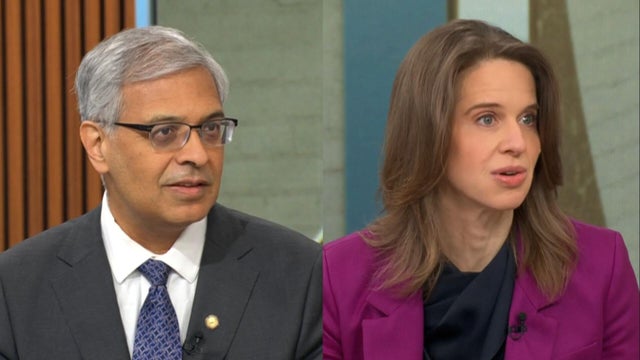
And Dan Kleban is one of the Democrats vying for the Senate nomination in Maine, and he joins me now. Dan, why you? Well, thanks for having me, Garrett. Why me? Because I think it's clear that there's a hunger for non-career-politicians, outsider candidates. People have seen that the status quo simply has not been delivering for them, and that includes Susan Collins, who has been in the United States Senate for almost 30 years. I'm not a career politician. I spent nearly the last two decades or so building a small business that started in my garage, building a brewery from the ground up, but doing it the right way with a motto of do what's right. So we pay a living wage to our employees. We cover 100% of their health insurance, give back to our communities. And I think there's a hunger from people that want people that can think outside the box and build things and show that we can create an economy that wins, where everybody's a winner. So I think that I bring that experience to this race, and that's, frankly, unique in this day and age. But, Dan, you tried this before, and it didn't take. You were a candidate for this position earlier, and it didn't work. So what does that tell you? Look, my number-one goal from the moment I started talking about entering the race was to beat Susan Collins. And when Graham Platner got in the race and eventually our governor got in the race, that remained my number-one goal. And in order to do that, I thought clearing the primary field and letting the governor and Graham have it out was going to give Democrats the best chance of beating Susan Collins. So that remains my guiding light, and it's the reason I'm getting back in this race because I think I am the strongest candidate to beat Susan Collins because, again, I'm not a career politician. I've been married for 22 years. I'm raising twin 15-year-olds. I understand what it's like, the challenges that parents face raising teenagers these days in the era of AI and social media. I think I bring that unique perspective that's sorely lacking in Washington, DC, where too many politicians aren't doing right. They're in it for themselves. The amount of grift going on in Washington, DC, is simply out of control, and politicians like Susan Collins aren't looking out for the interests of ordinary, hardworking Mainers. I see it every day. People are suffering. They can't afford their housing. They can't afford education. They can't afford health care. And thinking that just by doing the same thing over and over again, we're going to get different results is foolish. We need change, and we need a fresh perspective, and we need someone that comes from outside the political establishment. Dan, you've described yourself as a get S done Democrat. You can fill the S in if you want. What does that mean? I mean, look, as a small-business owner, I understand that I'm driven by results I don't let perfect be the enemy of the good. People are hurting. They cannot wait for perfection. They want to see results, and they want to see them now, and they deserve results. And Susan Collins is not delivering results. She's delivering for herself and for insiders in Washington, DC. I have shown-- I have built a small business here in Maine that employs over a hundred Mainers. I've shown that I can deliver results, and I can build things that not only deliver for the entrepreneurs but deliver for workers, for my community, and in the environment up here in Maine. And I think we need more people that have that kind of understanding and experience. It's sorely lacking. So let me pick up on that, Dan, with your permission, because you say-- You have permission. You say the system is rigged. You were laid off during the Great Recession. Then, as you mentioned, you built a craft-brewery business, and you worked hard to do that. That success of that business, doesn't that vindicate the truism that in America, if you work hard and absorb a blow, you can get ahead, meaning the system isn't necessarily rigged if you have a good idea and are willing to fight for it? Look, Garrett, amen. I mean, that is the unique promise of America. Unfortunately-- I was lucky. I consider myself fortunate. Yeah, I work my ass off. No doubt about it. But the fact is is that today, the American dream is a myth to most people. Most people, they're playing by the rules. They're working hard. They're going to school. They're graduating-- they're graduating hamstrung and saddled with student loan debt. They can't afford a house. They can't imagine even starting a family. I think that the unique proposition of America is that if you work hard and have a good idea, government should be wind in your sails. But the reality is that in this day and age, it no longer is. There's roadblocks put up all along the way, and unless you're a well-connected person down in DC or born into wealth, you, frankly, can't get ahead anymore. And that's what's wrong. We need to revitalize the American dream. But you got ahead. I did. I mean, like I said, I consider myself fortunate. I was laid off during the Great Recession. I was saddled with student loan debt at the time. My wife and I barely had enough money to buy our first home. But the fact of the matter is that too few people have been as fortunate as I have been. We need to make sure-- we need to break down barriers to success for people, and I will do that in Washington, DC. I want everybody to have the same opportunities for success that I have had. And, Dan, before I let you go, do you understand how this process is going to work? And how will you personally go about trying to secure this nomination? We have the vague contours of the process have been written out by the party. It will be some sort of mini convention with 600 delegates. Each candidate will need to secure signatures, and we're hard at work. We will secure those signatures needed to get on the ballot, and I'm going to work my tail off, making sure that every single delegate that is at that convention knows who Dan Kleban is and knows why I am the best person to beat Susan Collins in November.

MAJOR GARRETT:
00:17:36

Dan Kleban, I appreciate the time very much. Thank you. Any time, Major. A significant housing bill is set to go into law tonight without President Trump's signature. That inactivity is an act of protest from the president because he still wants the Senate and the House to pass legislation about voting. That's not going to happen, so the president is basically saying, I'm not going to deal with this housing bill. I'll let it become law but without my embracing of it, at least directly. Nancy Cordes joins us now from the White House. Nancy, there was once a time, not too long ago, when there was going to be a big signing ceremony. That's gone by the boards, and now this will become law. There's nothing that's going to make it any less lawful. But the president's not part of it. It could have been a win. Right. He's not taking a victory lap for a big piece of legislation that he was able to push through in an election year. He's just going to allow it to pass into law later tonight. And he's engaging, he says, in a form of protest. He's angry that the Senate hasn't also passed the SAVE America Act. This is a piece of legislation being championed by Republicans that would require proof of citizenship in order to register to vote. There are a number of things that would do that Democrats oppose, and he's frustrated that Republicans haven't been able to get it through the Senate. He wants them to get rid of the filibuster so it can pass with fewer votes, something Republicans are very reluctant to do, Major, because they worry that Democrats would do the same thing when they are in power. So this is the president's way of saying if you're not going to pass legislation I want, I'm not going to sign the legislation that you're really excited about. And as long as he doesn't veto the housing bill-- and we know that he won't-- it's all the same to Republicans. They'd love to have a big signing ceremony, but the most important thing for them is that it ends up becoming law. And you have new reporting, Nancy, on additional security measures around the White House that are either being set in motion or actively being contemplated. Yes, and it's taking place right behind me. What you're looking at, Major, typically the North Portico of the White House, you're not actually seeing at the moment. It looks like that, but, actually, this is a screen that has come down to basically obscure the construction, and it looks like the North Portico because it's got the columns printed on it. But, basically, the White House is doing some reconstruction on those columns, and we learned today that they are also working on the North Portico doors themselves. These are the front doors of the White House, if you will. They face out onto Pennsylvania Avenue. We're told that the work that they're doing is for security enhancements and upgrades, and it's serious work because they say it's not going to be done until mid-September.

MAJOR GARRETT:
00:20:32

Nancy Cordes, thank you very much. I appreciate it. Still to come on The Takeout, HHS Secretary Robert F. Kennedy Jr. wants to create a list of injuries that he says come or came from COVID vaccinations, and he wants the federal government to compensate those he alleges were hurt by them. Dr. Céline Gounder joins us to it all out. Plus, the World Cup quarterfinals are already well underway, and we're just a week away from the World Cup Final. Can Messi do it again? And does anyone stand a chance against France? And one man's trash is another man's trash. We'll tell you how much Swifties or Swiftie adjacents are paying for literal garbage found outside her Madison Square Garden wedding. The Takeoutreturns in 90 seconds. [MUSIC PLAYING] Welcome back to The Takeout, coming to you from New York. The Department of Health and Human Services is preparing a list of injuries it believes it can assert are presumptively caused by COVID vaccinations. Now, this list would allow people to be compensated for these injuries without-- and this is interesting-- to prove that the shot-- meaning the vaccination-- was the cause of said injuries. HHS Secretary Robert F. Kennedy, as you know, is not only behind this proposal. He's a longtime skeptic slash critic of vaccinations, COVID and otherwise. Dr. Céline Gounder joins us to discuss it all. What is this list, and how is it being propagated or put together? So right now, if you think a COVID shot hurt you, you actually have to prove causation, and almost no one can. The government denies about 98% of these claims, and the new rule would actually flip that. So if your injury were on this list and it occurred within a specific time window, then it would be presumed to have caused the injury, and you would get compensated automatically.

MAJOR GARRETT:
00:22:28

So if I understand what you just said, Dr. Gounder, you got a vaccination in a window. There's a list of things you say, no, I got that. It's on the list. Therefore, I am eligible for compensation, and that's all that has to happen. That's all that has to happen. And for a few specific injuries, it's actually overdue that we do this. So we know myocarditis, which is a heart inflammation in young men, it's very rare, but it is a real site effect of these vaccinations. Severe allergic reactions we know can occur, again, very rarely. So people who have those documented injuries should get help without having to fight for it. In general, for the other ones that don't fall into those distinct and already identified categories of injury, how unusual would it be to have a kind of compensation process that's this, let us say, informal? Well, I think the concern is who is making the list. We do have a vaccine injury compensation program for childhood vaccinations, but the way in which conditions are put on that list is very scientifically rigorous. And we know Kennedy has spent years claiming that the COVID vaccine causes harms that the evidence does not support. By law, there should be strong medical proof to put these different conditions on the list. Timing alone should not be enough to say this caused it. Just because A happened before B does not mean A caused B. But we are concerned that this turns into coincidence being interpreted as cause. And do we have any sense, Dr. Gounder, of what the amount of compensation could possibly be? Well, it depends on what's on this list. I see. One of our other concerns is with the childhood vaccines. If Kennedy puts autism on the list of childhood vaccinations as a potential condition caused by vaccinations-- which there is no evidence for. But if he did that, that could bankrupt that injury compensation fund.

MAJOR GARRETT:
00:24:23

Wow. So as people are watching this, are there some time deadlines they should think about? Is this a summer and fall sort of situation? When are we going to know more about some of the things we have been discussing but don't know all the specifics of? Yeah, so we think that in November, we should have a much clearer sense of what's happening with this list. The thing that I'm going to be looking for is, does death appear on that list? And the program, to be clear, already pays death benefits when it's proven that the COVID vaccine has had something to do with somebody's death. But again, these are extremely rare incidents. And the bigger concern is that this will signal to people that these conditions are truly due to the COVID vaccine. And we do not believe, again, to be clear, that most of what is likely to be proposed by Kennedy would fit into that category. And very quickly, Dr. Gounder, in the public-health space, I'm sure you have some nervousness that this entire conversation could increase overall vaccine hesitancy. Yeah, and we're seeing measles rates, measles cases continue to go up. We're about to surpass the 2025 numbers. We're likely to lose our measles elimination status later this year. And all of this is feeding into this narrative of, are vaccines safe and effective? And to be clear, those that are licensed and available in the US, they are. Dr. Céline Gounder, great stuff, as always. Thank you so much. The five-day preliminary hearing for accused Charlie Kirk assassin Tyler Robinson wrapped up today. CBS News Legal Contributor Jessica Levinson has the latest. That's coming to you after the break. You are watching The Takeout. [MUSIC PLAYING] Welcome back to The Takeout. Thanks for hanging out with us. Here's a look at what else we, and now you, are watching this evening as we come to you from New York. Houston officials say Lorenzo Salgado Araujo, who was shot and killed by ICE during an immigration raid, was not a person authorities were targeting. Araujo was a Mexican man living legally in the United States, and he had no criminal record. Here was Harris County District Attorney Sean Teare this afternoon. Look, when someone in our community loses their life at the hands of law enforcement, that is the ultimate breach of trust with our community. And if we aren't transparent, if the people don't believe that we are actively investigating and holding ourselves and law enforcement accountable, we will lose that trust so quickly, and that's what you're seeing right now. The Department of Homeland Security says Araujo, quote, "weaponized his vehicle and attempted to run over an ICE officer." Araujo's family and eyewitnesses have contradicted that account, saying at no point did he veer toward an agent. President Trump has fired all the members of the Elections Assistance Commission just months before the midterm elections. It is a bipartisan board created by Congress to help state and local officials administer elections and do so smoothly. It was designed to be independent, with no more than two of its four total members to be from the same party. A White House official said the members will be replaced, and they are subject to Senate confirmation. A week-long pretrial hearing for the man accused of killing conservative activist Charlie Kirk wrapped up today, with the defense calling one final witness. It's now up to a Utah judge to decide if there is sufficient evidence against Tyler Robinson to take this case to trial. CBS News Legal Contributor Jessica Levinson joins us now. Jessica, what did we learn this week? So what we learned is essentially a preview of the prosecution's case, much of which we've already heard about. So we knew that the roommate's testimony was going to be key. We knew that there was allegedly a note left by Tyler Robinson for his roommate. We knew that there was going to be DNA evidence. We heard about that DNA evidence today. Maybe the biggest takeaway from today is you have that forensic expert-- again, testifying for the prosecution-- saying that it is at least 1 trillion times more likely that the DNA found on the rifle came from Tyler Robinson and somebody else than two unknown individuals. So again, I think what we saw over the last number of days is really a preview of the fact that the prosecution has a lot of different levels of evidence that they're going to use at a potential trial against Tyler Robinson. And what was the disposition of the defense attorneys in this process, and how much of a role did they have in either disputing or trying to recontextualize what was presented? Such an important question. So as you know, what we're talking about here is a preliminary hearing, and the standard that you need to show to move forward, the prosecution's burden, is to show that there is probable cause. And that actually means that there is a reasonable belief that this crime occurred-- we know a crime occurred-- and that Tyler Robinson committed these crimes. You do not need proof beyond a reasonable doubt, which, of course, requires a virtual certainty that Tyler Robinson did, in fact, commit these crimes. Now, I start with the burden of proof because that really feeds into what the defense needs to do here, which is the defense is just trying to, frankly, do what I think is almost insurmountable given the amount of evidence, to try and argue to a judge there's not probable cause here. What we saw is a little bit of a preview of the defense's strategy here where we saw the defense try and question the credibility of the evidence and try and essentially poke holes in the prosecution's argument. I didn't hear them give a full alternate theory of the case, and I, frankly, think it would be strange to see that at this point in the case.

MAJOR GARRETT:
00:30:22

And, Jessica, should anything be taken one way or the other from the fact that a judge did not declare this a settled matter with a move to trial today? I'm not taking anything from it. I still think that when it comes to that relatively low standard of probable cause-- again, a reasonable belief that these crimes were committed by Tyler Robinson-- I still think the prosecution is going to pass this threshold. This is a case that, of course, you and I are talking about. I think the judge is going to be belt and suspenders about this. We had this five-day hearing. Now, both sides are going to submit more briefs. Then the judge will make a decision. I don't take from this that the judge is unsure about where to go next. Jessica, I'm going to ask you an unanswerable question, and I'm not trying to be unfair-- Love these. --but you know that this process is occurring within a small cauldron of disinformation that Charlie Kirk's widow, Erika, and her larger family of survivors have been trying to combat about what this case is about and theories alternate than what the prosecutors presented. You can't answer whether or not that's going to end that, but a lot was put on the record today that might. And I hope that it does. This is a really important and, yes, unanswerable question, which is, how do we get people to focus in on the facts and not conspiracy theories? And I know that people who are watching your program are listening and hearing what happened in the courtroom, not what somebody's theory is, not what somebody thinks must have happened, but really what the prosecution is laying out. And to the extent you don't believe the prosecution, listen to how the defense is trying to combat the prosecution's case. It's not at this point, as far as I can see, through conspiracy theories. It's through the typical way that the defense does that, which is trying to call into question things like the DNA evidence. And I do not-- I think it's so important for us to focus on what both sides argue in a courtroom, as opposed to social media and elsewhere. Jessica Levinson, appreciate it very much. Thank you. France and Spain have punched their ticket to the World Cup semifinals. More on the latest action coming up right here on The Takeout. [MUSIC PLAYING] Welcome back to The Takeout. Spain-- really not a surprise-- headed to the World Cup semifinals. Spain beat Belgium 2 to 1 today, taking the lead late in the 88th minute. Very exciting. Spain will play France-- that's a big game-- Tuesday. Calen Carr joins us to discuss. He's an MLS commentator and former professional soccer player. OK, I was just given a note during break. The Belgian goal was the first one that Spain allowed this entire tournament. So that formidable defense gives them a chance against France. Yeah, absolutely. And I think the attack's starting to wake up, to, and some of the depth-- just when you think of Merino came off the bench. He scored the winner in their last two games. Lamine Yamal hasn't quite found his best as of yet, but Nico Williams another substitute. So the depth of Spain is there. But France on the other side have been absolutely devastating. It almost looks like they're still in the group stage. That's how easy it's been against a really tough Morocco team. You look at Mbappé, Dembélé. You go through Olise. The attack, it's a wealth of options. You can't just focus on one man because they can hurt you, especially if you push forward in the attack. They're going on the counter.

MAJOR GARRETT:
00:33:51

And World Cuppers, come on. Get excited about tomorrow. England and Norway, Argentina-Switzerland. Come on, it's a great Saturday. I can't wait. I can't wait. And, look, I think England and Norway has the potential for some upset.

MAJOR GARRETT:
00:34:06

Who do you think the favorite is? England. All the pressure I think is on England with you hear the fans chanting around the country and around the world saying it's coming home, and it's been since 1966. Norway haven't made the tournament for 28 years. 1998 was their last time making the tournament.

MAJOR GARRETT:
00:34:23

So they're playing with house money. Yeah, and they've got Erling Haaland, who's become the breakout star of this tournament from a sort of nonsoccer/football perspective. He's been incredible. I mean, Manchester City, one of the best strikers in England-- probably the best striker in England, now maybe the best striker in the world. And this is Messi's moment, and it has been this entire tournament. Yes, Haaland has been the breakout star, but Messi has re-established or reminded everyone why he's the GOAT. But that's the incredible part is he has nothing left to prove. It's already done and dusted. I watch him in every week in MLS, Inter Miami. I call their matches often. And it's just incredible to see the voracious appetite that he has, still at this age, to continue to push forward, rescuing against Egypt that late goal. They scored three goals in the last 15 minutes, just driving them forward and the entire world. This is like The Last Dance with Michael Jordan right now. We're watching it in real time. Calen, give me your eulogy on the men's US national team. Ooh, I was hoping-- yeah, I knew that question was coming, but it was a really sad ending to what had been a beautiful beginning of this World Cup, with the national team really pushing forward. I thought that amazing start against Paraguay, a 4-1 win. Did you believe they were real? I did, yeah, and I know these players. I know the character of the group. I've seen them often begin through the youth academies in MLS. Tyler Adams stands out to me as a guy who grew up here in New York, now playing in the Premier League. And he was one of the captains, the emotional leaders of this team, alongside Christian Pulisic and others. But in that biggest moment, they let themselves down, and I think that's something they're going to have to live with. But still, I think the impact of what they were able to do, just bringing some hope and that sense of belief to this tournament, will have ripple effects for generations. We've got a little bit more than a minute, Calen, and I want to get your sense. VAR has come under tremendous scrutiny in this tournament. Do you think it will be re-examined afterward?

CALEN CARR:
00:36:11

I think so. I think it has to be. Because goals have been disallowed that people thought, wait a minute. That's never been a thing before. I mean, they've been disallowed before but under the circumstances that VAR interceded had never been seen before. Yeah, and it's when they're interceding. I think that's the part that needs to be looked at again because the original intent of video review was to stop a clear and obvious error. But we found now that's a really slippery slope of, how far back? What's a foul? What's in slow motion? And I think that's where we really have to get back to the original intention of, OK, clear red card or this was given to the wrong person. But once we get down to these little millimeters or freeze frames, I think that's where we go off track. Because the game is a fast-moving, highly physical game. And if you're going to flyspeck every single frame, you're going to be calling fouls relentlessly. Yeah, I think it's too much, and we want the beautiful game to have a little bit of that-- there's always going to be arguments. There's always going to be controversies. But we don't want to go down into the nitty-gritty and take some of the joy away, and I think that's the little line we have to be careful of moving forward. And it will be examined post-tournament, but enjoy it while it's going on. Calen Carr, great to have you here. Thank you so much, sir. New York City Mayor Zohran Mamdani has long faced criticism over comments made about Israel, but a new poll finds he is more popular with Jewish Americans than Israeli Prime Minister Benjamin Netanyahu. We're going to dig into that next. You're watching The Takeout. [MUSIC PLAYING] Welcome back to The Takeout, coming to you from New York, and you're going to see a pretty well-known New Yorker here in just a second. A new poll from the Associated Press and National Opinion Research Center finds Jewish Americans are increasingly dissatisfied with Israeli Prime Minister Benjamin Netanyahu, so much so that New York City Mayor Zohran Mamdani has a higher favorability rating among Jewish Americans than Netanyahu. 44% of those surveyed had a favorable view of Mamdani, just 32% of Netanyahu. Here's what I was talking about. Former New York City Republican candidate for mayor Curtis Sliwa joins us now. Curtis, always good to have you on the program. Thanks for being here. Oh, my pleasure. That poll-- Yeah tell me about that. If you would have told me that two years ago when Zohran was just getting ready to jump in, I would have said, oh, Major, you seriously dropping LSD?

MAJOR GARRETT:
00:38:28

Right. That's not possible. Are you in a drug-induced psychosis. This is all Bibi's self-destruction-- Bibi, the first really Americanized prime minister. He thought he could be prime minister for life. I think in Israel they have their parliamentary elections on October. Time for Bibi to go because even Trump, who used to have him as an appendage-- FU, Bibi. FU. I saved you. In quotes. You would have been in jail. In quotes ratified by the president. That's not made up. That's real stuff. Right, but it shows you, as the president gets along so well with Zohran-- he's had him to the White House twice. Now they're in solidarity. We both hate Bibi. The world hates Bibi. I hate Bibi. Nobody likes Bibi. Why do you think that is? What is it, if you were to try to summarize what Bibi has gotten wrong, how would you summarize it? Oh, he just wants to pulverize every perceived enemy of his. 15 years ago, remember at the General Assembly, he had that comic figure of the bomb. Oh, Iran, they're going to have the nuclear bomb in 15 days. That's 15 years ago. It's like we're tired of Bibi. He wants endless war with-- we've got to keep America out of endless war. When I interviewed the prime minister in Tel Aviv, he said, Major, I was criticized before October 7, 2023, as being too lenient and not being militaristic enough. Now I'm being criticized for being overly militaristic. That was his response. I don't know whoever accused him. He wasn't a Nobel Peace Prize winner, although I thought that was supposed to go to Trump. Yeah, Trump, you want the Nobel Peace Prize? Now Bibi suckers you into a war, and you have us into an endless war. What a mishegoss. What a mess. I want to ask you about something that also came out recently, the New York City immigrant enclaves map. Curtis, I see references here to a Little Odessa, a Little Palestine, a Little Pakistan, a Little Albania. What I don't see, Curtis, is a Little Italy. How is that possible?

CURTIS SLIWA:
00:40:30

You mean Mulberry Street? You mean the San Gennaro Festival, 12 days? You mean Christopher Columbus, all of that? Well, look, this is Zohran. He's like Trump. He polarizes. If you ain't with them-- Now, the mayor has said this is an oversight, and it will be corrected. Yeah, I grew up in an Italian household. You know what we'd say? You're a [ITALIAN]. It's like you're a Pinocchio. Anybody who is opposed to Zohran, he just wants to eliminate them. Trump does the same thing. So that's why we're into a situation now where-- Do you think that's why they kind of admire each other? Oh, yeah, because they polarize. I want to try to unify. The way you unify people is you put out a map in New York City and you point out all the ethnic enclaves. How do you leave out Little Italy? And what about the Irish? Oh, the Irish up there in Woodlawn. Oh, that's called Little Dublin. Oh, it doesn't exist. You just wipe it off the map. But isn't that what Donald Trump did? The Gulf of Mexico is now the Gulf of America. And if you don't call it the Gulf of America, a pox on you. Boy, they are like two peas in a pod. Before I let you go, Curtis, I've got to ask you, how did you enjoy the Taylor Swift-Travis Kelce wedding? I know you attended. No. I was on the outside. By the way, where were all the Swifties? We had all those cops out there shvitzing in their bulletproof vests.

MAJOR GARRETT:
00:41:55

There was a few out there. Let me tell you, Garrett, I don't want those freakazoids, trendoids, jet-setters that came, the 1,000. The last marriage that took place in Madison Square Garden was Sun Myung Moon with his brainwashed Moonies. Remember those arranged marriages? How tacky. And they had a buffet. Why not do it in Kansas City or flyover Cleveland?

MAJOR GARRETT:
00:42:16

Something else happened after the wedding. Someone named Justin Gignac gathered up bags of garbage that were outside of Madison Square Garden. We're not even sure-- I don't believe he's sure that the garbage actually was from the wedding itself, but he sold it $25 a bag, $100 for larger bags. And, Curtis, it sold out. Oh, yeah. And you know-- That tells you something about the pop-culture phenom that is Taylor and Travis. Oh, there's no doubt, and you'll probably see it in all kinds of street fairs being sold, knockoffs. And watch Taylor Swift come in with a legion of lawyers. We're going to sue you, sue you. That's our trademark. That's our copyright. By the way, any of the pictures come out yet? No. She wants to control everything. Hey, Travis Kelce, you're going to be another boy toy. A year or two, she's going to drop a diss and dismiss album on him like she has all her other--

MAJOR GARRETT:
00:43:08

You think so? Wait a minute. That's your prediction? This is not going to last? Absolutely. This is on an egg timer? Either that or hey, Travis, time to man up. We never hear from you. All we hear is from Taylor Swift and the Swifties. Oh, oofa to them.

MAJOR GARRETT:
00:43:23

Curtis Sliwa, he came to play, ladies and gentlemen. Always a pleasure to have you. Happy Friday, everyone. This is The Takeout, relentlessly curious, reliably civil, occasionally clever. The Daily Report is coming up next.

View CBS News In
CBS News App Open
Chrome Safari Continue