Watch CBS News

6/19: The Takeout with Major Garrett

Israel and Hezbollah reach a ceasefire in Lebanon; Reflecting Pool facing new issues despite President Trump's recent renovation.
Jun 19 (43:34)

TRANSCRIPT FOR: “6/19: THE TAKEOUT WITH MAJOR GARRETT”

MAJOR GARRETT:
00:00:00

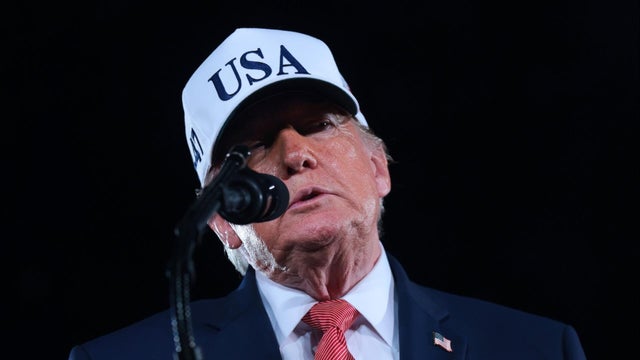
This is a soccer ball. You know, US men's national team World Cup. Hello? We have something very special planned for you later in the show. President Trump tells Axios he sees no limits on his power and that Israel has to do what he says. Marc Caputo, the reporter with the interview, joins us. The Reflecting Pool, it has had its issues over the years, but Trump's hyped-up redo is not American-flag blue but a soupy, messy green. We find out why. By the way, we don't take hydration breaks here. We just kick it. [MUSIC PLAYING] Hello, everyone. I'm Major Garrett in Washington. Welcome to The Takeout. There are times when two unrelated things tell or strongly suggest one unified story. The Reflecting Pool in Washington and the US war with Iran have nothing to do with one another, but both have similarities worth reflecting upon. Did the Reflecting Pool need an overhaul? Did the US and Israel need to attack Iran in late February? The Reflecting Pool was in no obvious distress. US intelligence shows Iran did not have a nuclear weapon, and international monitors and experts said it had not seriously resumed efforts to build one after US and Israeli strikes severely damaged key nuclear facilities last summer. There was no urgency, then, to launch either project. Both were President Trump's initiative, his choice. Did President Trump overpromise on the Reflecting Pool and the war with Iran? The simple answer to both is yes. Trump promised an algae-free, miraculously clean, inexpensive, and American-flag blue Reflecting Pool redo. What he and the country now have is an algae-clumped mess, greenish and cluttered with workers vacuuming bio slime and generators pumping furiously to fight the microbes. Oh, yes, and two no-bid contracts much more expensive than the original cost projections. Beneath the algae, the blue sealer coat is already in some parts detaching. Experts on Reddit-- and yes, I did kind of a Reddit rabbit hole on this-- say the cause is almost certainly poor prep work and a rushed refilling of the pool. When the war began with Iran, Trump said the goal was Iran's surrender. He told Iranians under the bloody thumb of its theocratic regime that, quote, "help is on the way." Iran has not surrendered. No US help ever came for Iranian civilians. Talk to end Iran's pursuit of a nuclear weapon are now so tenuous that talks to start those talks, scheduled to begin today in Switzerland, have been postponed. This is not a commentary on intentions or capabilities. The intentions may have been valid. The capabilities may certainly have been sufficient. It's about decision made once things were set in motion and when problems arose, Trump rushed a Reflecting Pool redo in his image to be ready for the 200th anniversary of America, a celebration he has made abundantly clear must be in his image and on his terms. Now there is scurrying to fix what's gone wrong. The war with Iran was launched to drive a perceived weak Iran over the cliff and remake the entire region, possibly with Iran's death to America and death to Israel cadre of leaders gone for good. But Iran remains, at the leadership level, as it was-- weakened militarily, yes, but still there. Now, Trump says he sees no limits on his power, and Israel must do as he says. Lots of promises, lots of boasting, but we are left with a Reflecting Pool and a region riven still by familiar, predictable problems at the surface and much deeper. One of the biggest problems with the Iran war? Lebanon and Israel and Hezbollah's continued fighting. This poses a genuine threat not just to the ceasefire but, interestingly, to the state of US and Israeli relations, which suddenly look as murky as the Reflecting Pool here in Washington. For more on Lebanon, we turn to Imtiaz Tyab in Tel Aviv. Imtiaz, take it away. Well, Major, I've got to say, you had me gripped at your monologue there. I mean the parallels that you're drawing, and it really begs the question as to what we're seeing here in Lebanon. It is, in short-- and this is not a scientific term-- but a mess, and some would have argued a very predictable mess. Now, what we have right now in Lebanon is a ceasefire. It came out of nowhere. I'll be honest with you. When it was announced, we were all caught off guard by it. If anything, we thought the fighting in southern Lebanon was only going to intensify far more than what we saw overnight, when Israel targeted 150 separate sites in southern Lebanon. We understand that 18 people were killed in Lebanon, according to the Ministry of Health there. And we also understand that four Israeli soldiers were killed. We had a statement from the Israeli prime minister saying that the fighting would continue, and now we have this ceasefire. How did this ceasefire come into place? Well, I think we only have to look at 1600 Pennsylvania Avenue and the president himself no doubt putting a lot of pressure on Israel. We've had those extraordinary statements, not just from him but also from the vice president, JD Vance, criticizing Israel in ways that we very rarely ever hear from a US president. And so now we have this ceasefire, but it is a very brittle one, Major. Imtiaz, I want to have our control room bring up a graphic that sort summarizes what's happened in Lebanon and what Iran requires, that it says it must have a ceasefire or talks with the US won't continue. But I want to bring the audience's attention to these numbers you see. Inside Lebanon, 3,912 people killed since March 2. Inside Israel, 32 soldiers, 4 civilians killed. Death on both sides, but the numbers speak to much more death inside Lebanon. Not only that but this so-called security perimeter that Israel wants to exact inside southern Lebanon has been growing, has it not? Oh, it has. In fact, Israel just tonight releasing a number of maps pointing out to what it describes as this buffer zone. Now, to give you a sense of it, if we were looking at it, it is about 6.2 miles wide, which stretches north from its internationally recognized border with Lebanon deep into Lebanese territory, as far as the city of Nabatieh. Nabatieh is probably the largest city in southern Lebanon. It is the commercial hub there, and many people also see it as a Hezbollah stronghold. And, really, this has been a place of conflict going back all the way to 1978. We've seen round and round of violence there. Now, this ceasefire is in place, but what does it actually look like? It looks like Israeli soldiers still on the ground inside Lebanon. Now, for Hezbollah, that is a red line for the Iranians. That appears to be something that they will tolerate in order to get to these negotiations, which, while the clock is ticking, it hasn't actually started yet. And that is the big question here. Will these talks actually begin to handle the far more thornier issues, like Iran's nuclear program and many other issues? Major. Imtiaz Tyab, great stuff, as always. I appreciate it. Thank you. New round of peace talks, as I mentioned, between the US and Iran that were scheduled to start in Switzerland today, well, they've been postponed. And the White House is blaming what it calls logistical issues for Vice President JD Vance cancelling his planned departure. CBS News Congressional Correspondent Nikole Killion joins me now at a new location, the North Lawn of the White House. Nikole, great to see you there. Catch us up on what we learned today. Well, we just heard from the president, who was standing in front of a brand-new Air Force One, a plane that was gifted to the United States by the Qatari government. But he did spend some time talking more specifically about the latest with respect to Iran, continuing to tout and defend this memorandum of understanding that was signed this week between Iran and the United States and also referencing that 60-day clock that gets underway to try to strike a more secure deal with respect to Iran's nuclear program. Now, as you mentioned, those technical talks were set to get underway today in Switzerland, led by Vice President JD Vance. But so far, we have not been given any updates as to when the vice president may travel there. Although yesterday, he told reporters he thought it could still potentially be this weekend, but we're kind of in a wait-and-see mode at this point. But the president still defending this deal as a good deal. Obviously, continuing to defend what he sees are perceived victories from the US campaign against Iran through Operation Epic Fury. Once again reiterating how the United States has really defeated Iran militarily in terms of its navy, its air-force capabilities, its ballistic-missile capabilities. But that being said, as you very well know, Major, there's still a lot of questions and criticisms from both Democrats and Republicans about this deal, about whether or not it gives away too much to the Iranians, particularly without negotiating some of these nuclear issues up front. And so that is really the devil is going to be in those details whenever those talks eventually take place.

MAJOR GARRETT:
00:09:45

Nikole Killion, thank you very much. CBS News contributor Roger Carstens joins me now. He's a retired lieutenant colonel with the Army special forces and, most importantly, spent a very long time and played a very important role in US hostage negotiations with various administrations. Roger, I'm glad to have you here. Thank you very much. Give me your evaluation. You've been in tough diplomatic conversations. You know how hard they can be. Evaluate what has been achieved, if anything, and what is still yet to come. Major, first off, thanks for having me here. And secondly, I think the negotiations are funny in that there can be a lot happening just under the surface that we just don't see. A good example is the hostage negotiations. We have currently six or more US citizens that are currently being held as wrongful detainees in Iran.

MAJOR GARRETT:
00:10:32

Inside Iran. Indeed, we do. And there are some of our partners and allies have citizens, like Ahmad Reza Djalali He's a Swedish scientist who was taken by the Iranians in 2016 undergoing a death sentence right now. So six-plus Americans, 25 of our partners and allies, they're held hostage, and we don't know if they are part of the negotiation or not. They're not a part of the MOU. And yet when I talk to my buddies that are still in the administration and working it, they're like, look, we're still working it. These are certain things that you just will not see, and they're not going to pop on the front page of the Wall Street Journal, nor on your show. And yet I've been assured that these negotiations are taking place. Right, so we can never be certain what is being talked about and what is being talked about, but not disclosed.

ROGER CARSTENS:
00:11:17

Yes. Correct. That's a key difference. But we have things that have been disclosed. We have a text of a memorandum of understanding. Some Republicans on the Hill are sort of muttering to themselves, is that all there is? Really, that's all we've got after almost a hundred days of war and a very stout US and Israeli joint military set of strikes in Iran? Shouldn't we have more? It's a question they're asking. How would you answer that question?

ROGER CARSTENS:
00:11:40

I think no matter what happens, I think we are at risk right now in that you see that in points four and five, the Strait is to be opened. And then if you go to points 10 and 11, they're actually going to be giving the Iranians something before the negotiations reach that final point of 60 days. So regardless, if they start to meet and start to negotiate, we are going to unfreeze frozen assets. And by the text that you read--

MAJOR GARRETT:
00:12:02

Waive some sanctions. Yeah, and waive sanctions. So that means they can sell billions of dollars worth of oil. They have free and unfettered access to banks so that the money can move around. And that's important because the Chinese, for example, have funds that the Iranians have in, like I say, storage. And if the banking systems open up to the Iranians, that money can be repatriated from China back into Iran. So there's a lot of money at stake. And at least by my reading of the text, it seems like the Iranians will get that upfront. It will be front loaded before the negotiations are completed. And that alarms a lot of people who are not necessarily hostile to this administration or to President Trump. Yeah, I'd count myself as one of those. I'm hopeful that, as things go forward, things start to settle out a little bit. But I would fear the money getting into the hands of the Iranians when we've not seen a behavioral change yet because we still are worried about the funds going to things like supporting proxy armies, their missile/drone complex, their strike complex, and also just working with proxies around the Middle East. And, Roger, there's also this other issue of a reconstruction fund. It's not US taxpayer dollars, but it's $300 billion of neighboring nations willing to rebuild Iran after Iran attacked them.

ROGER CARSTENS:
00:13:13

Now, I'm glad you brought that up, and that's kind of troubling, too. That tells me they're trying to get back into some sort of tenuous relationship with Iran because they know Iran has withstood this attack. That's exactly how I read it. And that's bad news, isn't it? I think it is. If the Iranians were going through a behavioral change, that would be another thing. Or if there was some sort of regime change, I would be saying other things. But a government that killed and murdered 30,000 to 40,000 of its own citizens in a 48-hour period in January now making promises to us, just like they have in the past, that they're going to cease their nuclear weapons programs, I just have to be a little skeptical. And I'm just hoping and praying and wishing the best to the negotiators from the United States to turn this deal into something good. But I think as I look at the MOU, it looks troubling. Roger Carstens, great to have you here. Please come back. Thank you, Major. I appreciate it. President Trump sat down with Axios reporter and CBS News contributor Marc Caputo after returning from the G7 summit. I spoke with Marc about his conversation with the president. Please listen. You asked the president an important question about power and whether any limits he perceives. Let's play it. What have you learned about not just the exercise of power but the limits on your power as a result of the conflict? There are no limits. No limits? No. None. I haven't learned that lesson yet. I know there are, but there are no limits. Was he serious, in your evaluation, with that answer? I think he was. It's typical Trump, right? In fact, you can almost see my shoulder giggle a little thinking like, wow, that's actually kind of funny because I did not expect him to say, not only are there no limits-- like I'm sure they're out there. I just haven't encountered them. And yeah, he surely believes that. Now, he has encountered his limits, though, in the Iran war. That's just beyond a doubt, but he's just not going to admit it. He's not going to admit it. Yeah. You also asked him about the Israeli prime minister, Benjamin Netanyahu, and Israel writ large and what may or may not happen that is possibly uncomfortable between the two nations in the not-too-distant future. Let's listen to that. If it weren't for Donald Trump-- and Bibi Netanyahu worked well with me. But he will tell you, we're the ones with the guns. We're the ones with the whole deal. We're the ones with the B-2, bombers, et cetera. If it weren't for Donald Trump, Israel would have been eviscerated. What's your relationship with Netanyahu? It's good, but we have to keep him a little bit sane. Are you going to be able to control Israel from attacking Lebanon? Yeah, I will be. I mean-- How? --that would-- they have a lot of respect for me, and they do as I say. Marc, you know and I do, there are three things in there that the president said that are pretty important and will resonate in Israel for quite some time. Essentially, the implication that without America and without him leading America, Israel, its sovereignty, and existence may not be guaranteed, which I think the Israelis would take as a personal affront. Second, Bibi Netanyahu without President Trump can be insane, two. Last, they will do as I say. Whoa. Yeah. Well--

MAJOR GARRETT:
00:16:30

That's a lot, man. It's a lot. I detect and I have gotten indications-- I'm being very cautious and careful with my words-- from advisors to Trump who say that, while they haven't asked him this because they wouldn't dare, they suspect that if Donald Trump had a time machine or if, back on February 28, he had the ability of foresight, he would not have gone into war the way he did against Iran. Now, this is just their suspicion, their guess, their feeling. And my feeling is that deep inside of Trump, there's a little bit of resentment to Netanyahu, who was a leading proponent for this action.

MAJOR GARRETT:
00:17:13

So leading. Yeah. Don't get me wrong, I think it's wrong to say that if Netanyahu didn't exist, Trump would have never done this. I think Trump probably would have. But Netanyahu was a major proponent of this war, a major marketer of selling how easy it's going to be. In the opening days of the conflict according to my colleague Barak Ravid, who writes extensively both stateside and from Israeli politics side, that Netanyahu thought that this would be over very quickly, and that was sold to the president. Now, the CIA had its own assessments that the president bought. But deep inside, I think what you're hearing from Trump is a sense of, I got sold a bill of goods here. Would you go so far as to say buyer's remorse? I think he wouldn't admit it, but again, in my conversations with people who know his thinking, that's probably deeply buried in there. Anything else from the interview that struck you that we did not play? Just the general sense of relief that Trump had. And understand that when I talked to Trump, he had just flown back from Europe. He had only two hours of sleep, tops. He's 80. I would have just been a mess. He, nevertheless, has carried this positive sense, this sense of relief that he's found a way out. And that's evidenced by the fact that in the interview-- you'll see we have the full interview at axios.com-- he talks about stock market's up. Oil is down. And then he says at one point-- there's a great line. He's like, it's a gusher, as if he's discovered an oil field. And I think that sort of sort of gusher symbolism or imagery sort of symbolizes how he feels about this, like this sort of release. One man's gusher is another man's off-ramp. Marc Caputo, Axios, great stuff, as always. Thank you. I appreciate it. Lawyers for Luigi Mangione have withdrawn their plan to pursue a psychiatric defense in his New York state murder trial for the killing of UnitedHealthcare CEO Brian Thompson. This move comes just one day after those lawyers told the court that they would pursue that psychiatric defense. Mangione faces several charges, including second-degree murder. CBS News Legal Contributor Jessica Levinson joins me now. Jessica, let's start at an important place because this terminology is new to me. Psychiatric defense, as a layperson I think, is that the same as an insanity defense? It's a good question. So this varies a little bit state by state, but, essentially, what they were going to argue is that there was an extreme emotional disturbance. That is different from what you and I are used to talking about, which is insanity. So when it comes to this particular defense in a state case in New York, what it would have done is brought down the charge from second-degree murder to a manslaughter charge. So it wouldn't erase culpability. It would just say that there's less culpability and, of course, less punishment that would go along with it. When it comes to the insanity defense, it's, of course, known as the insanity defense, but the full term is generally not guilty by reason of insanity. And in that case, of course, you're arguing something different, which is that the person was really not able to form the intent necessary to prove that somebody is guilty beyond a reasonable doubt for these intentional crimes. And, obviously, that does a lot more than bring you from a murder charge to a manslaughter charge. Again, that would indicate that the person really is not guilty because they could not form that mental intent necessary. From the outside, Jessica, this appears to be a pretty capable set of lawyers representing Luigi Mangione. How unusual would it be for an experienced set of lawyers to pursue and tell the court it was going in one direction and then abruptly reverse? So I actually-- I think I have a little bit of a contrarian view here where I don't think this is hugely unusual in this circumstance, which is that there is a state trial and a federal trial. That, in and of itself, does not happen every day. And when we were talking about this emotional-disturbance defense, it is not available in the federal trial. So I think what you are seeing here is that the defense attorneys were waiting all the way to the deadline to determine whether or not they wanted to move forward with the defense. This was their deadline to say, here are the experts. This is what they were going to say, and have all of that information out in the public. My understanding is that that could have been tantamount to he actually did commit crimes, but again, don't hold him as culpable as you otherwise could. That's a problem in the federal case where this is not available as a defense, and then what you could be leaving yourself open to are essentially having made an argument in state court, yes, he did it. Jessica, this trial, whenever it happens, will draw a lot of attention for lots of reasons that are some legal, some cultural, some political. Which first trial will we see? So I think, obviously, we're going to see the state trial first when it comes to legal, political, cultural. I think for those of us watching outside of the courtroom, all of those things are going to happen at once. I think you and I have talked about a lot of legal issues over the years, and I increasingly think we're seeing almost every legal issue through the lens of our political experience, our social experience. We should remember for the jury, this is not based on their views of what they think of the insurance industry. This is based on one person and his actions and whether or not they satisfy the requirements in state court to show that there was a second-degree murder charge here.

MAJOR GARRETT:
00:23:16

The evidence, the facts, and the law, that's what juries live with. Jessica Levinson, thank you very, very much. Still to come on The Takeout,more on the trouble for President Trump's Lincoln Memorial Reflecting Pool makeover. New and improved? Well, as you can see there, not so much. Plus, it is a very big day for us here on The Takeout. For the first time, a reporter panel will join us from the brand-new-- you see it there-- Takeouttavern. What do you find in a tavern? You find a bar. Will there be adult beverages? You're going to have to stay tuned to find out. We will be back in 90 seconds. Welcome back to The Takeout. As we noted at some length-- I grant you, at the top of the program-- problems at the Lincoln Memorial Reflecting Pool persist, despite President Trump's multimillion-dollar makeover and despite assurances like this earlier this month. You're going to have something you're going to be very proud of, and it will last for 50 to 100 years before you have to do anything with it. Very strong, powerful substance that we use. David Fahrenthold, who has been covering this matter for the New York Times,joins me now. David, chronicle the problems as they currently exist, what the Interior Department is frantically rushing to try to solve, and some of the underlying no-bid contractual questions that you've uncovered. And it's a lot, so you can take them in whatever order you want. Well, start back at the beginning. The way that they chose to fix the Reflecting Pool was to give out two no-bid contracts, one no-bid contract to put a waterproofing substance on the bottom of the pool that turned it blue, one to put in a filtration system that was going to clean the water once they refilled it. The filtration system, we reported yesterday that contract was given to a company owned by somebody who's a longtime friend of Mr. Trump, a donor to him, somebody who lives near him in Mar-a-Lago. His wife was the chairwoman of a big event at Mar-a-Lago. So these two firms got those contracts, and they spent a lot of money on it, more than $15 million, a lot more than Trump said they would. But then the pool was done a few days ago, and they said, OK, now it's all going to be worth it. You mocked us, but now you'll see how great it's going to be. Then they refilled the pool, and immediately it turns this bright shade of green because of algae. It fills up with algae, which is not a surprise. Algae's bothered the pool for a long time. What's crazy is that they refilled the pool, it turns out, before they put in the filters that would stop the algae. So to have one day of clear water, they immediately stepped on a rake. They took the risk of doing something that would step on a rake and make the pool green and humiliating again. The worst part for them is that what we've seen in the last couple of days is not just algae, which perhaps could be fixed, but that that $15-million coating, the waterproofing that the no-bid contract put on the bottom of the pool, what President Trump said would last for 50 or 100 years, it's already peeling off. Chunks of it are now visible peeling off the bottom of the pool and floating to the top. So what you've seen in just a matter of a few days is kind of the undoing of this long project that President Trump has spent so much money on and talks so much about.

MAJOR GARRETT:
00:26:22

And, David, I mentioned this in the open to this program. And I don't do a lot of Reddit rabbit holes, but I did one today, and there were a lot of guys or gals representing themselves as experts in this particular field of work-- coatings, cement, pools-- who said it was obvious to them that if this sealer, this American-flag blue treatment put on the Reflecting Pool bottom was coming up so easily, it had had poor prep work and probably water was added too soon and that it's going to keep detaching forever. Well, what we reported back when they were working on this, that folks within the National Park Service had raised the same kind of concerns, that the coating was uneven. There were little pinholes and bubbles in it, and they worried that that could cause it to delaminate, to come loose, at least slowing down the process of putting it on and maybe leading it to come loose later. So these were problems that were identifiable. And the crazy thing is that the most important piece of repairing the reflecting pool is something that they haven't done, they haven't even started doing yet, which is there are pipes under the ground that connect the Reflecting Pool to the filtration system that's supposed to clean the water of algae. Those pipes leak. They've leaked for years. They've known they need to replace them for years, and they haven't replaced them. So even when all this work is done, they left this invisible problem that is probably going to cause algae to come back for a long time.

MAJOR GARRETT:
00:27:45

And what's next, David, based on your reporting? I think the Park Service is struggling to figure out what's next. They're asking for volunteers. They're vacuuming out the algae. They're pouring in hydrogen peroxide to try to kill this algae. They're installing these permanent filters, maybe later this week. That might make a difference. What I wonder, though, is the whole lead-up to this is July 4. The whole point of doing this now and doing it in a rush and giving out these no-bid contracts was it has to be ready by July 4. And it seems like if the bottom is peeling off, you may have to drain it before July 4. How could you address the problem of the bottom coming off without removing the water in the pool? So I'm very curious to know how they're going to deal with this and stop it from becoming a debacle on this important day on July 4.

MAJOR GARRETT:
00:28:30

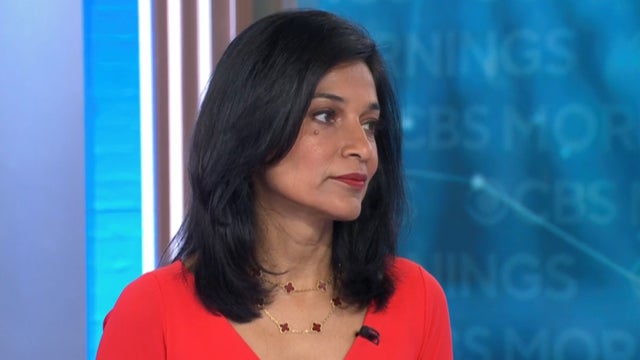
It was a rushed project because there was a national urgency behind it. That's what the administration said. David Fahrenthold of the New York Times,thank you very much. I appreciate the time. Next, a pretty dire Warning from health officials in Africa on the Ebola outbreak. Where efforts stand right now, as we know them, to curb transmission rates. We'll find out when we come back. This is The Takeout. [MUSIC PLAYING] Welcome back. Welcome to the Conversation Corner. Here's a look at what else we, now you, are watching. This evening, dozens of service members at Lackland Air Force base in Texas have come down with the flu the last three weeks. The outbreak at the training wing comes after Defense Secretary Pete Hegseth rescinded a flu-vaccine mandate. A spokesperson says the unit has implemented what it calls mitigation measures to isolate and treat symptomatic trainees with antiviral medications, such as Tamiflu. Top health officials in Africa are warning that the Ebola outbreak in central Africa could become the worst in history if transmission rates are not flattened. The director of Africa Centers for Disease Control and Prevention says more than 200 people thus far have died in the Democratic Republic of Congo and neighboring Uganda. The total number of confirmed cases, nearly 900 and appears to be growing. That is the number of cases. I want to bring in Syra Madad. She is an infectious-disease epidemiologist at Harvard University's Belfer Center. Syra, I'm glad to have you with us. Thanks for joining us. Walk my audience through what we know and what we fear might happen. Yeah, well, I think first I'll start by sharing the current Ebola outbreak of the Bundibugyo virus is already the third-largest Ebola outbreak on record. So that really goes to show you that a little over one month since this outbreak was detected, it's already the third largest, which is expanding in geographic location. We're up to 31 health zones and three provinces being affected and nearly 900 cases. This is not just a story of the number of cases that are being detected. It's a story of the number of people that are also being contact traced, and that's also where we're also falling behind. So there's a lot that's complicating the matter. The first is as we talk about contact tracing, these are the number of individuals that have come in contact with a confirmed case of Ebola. Now, estimates show that we should be tracking about 33,000, and the reason why we're coming up with that 33,000 number is for every one case, we're typically looking at about 40 contacts that they may have. Now, according to the most recent World Health Organization report, they're only contact tracing about 4,000 of those individuals, so there's a very large number that still are out and they're not being contact traced. So there's lots of complexities, and the one thing that I'll also share is that this outbreak is occurring in an area of conflict, of neglect, of militarized response, and a huge humanitarian need. So there's lots of confounding factors here. And what do we know, Syra, about the ability to place health workers and facilities that they need to either trace or treat those that they're tracking or who have already been sickened? Yeah, so as we talk about the ETU, or Ebola Treatment Units, there's a number that are being stood up along a number of these areas that are being affected. What's important here is that we're seeing a significant gap in funding needs. So only about 10% of pledged donations have actually made it to the affected areas. And so we certainly need to increase resources and funding. What you're hearing among reports and from healthcare workers is that there's a shortage of basic supplies, Personal Protective Equipment, or PPE; the ability to provide supportive care. So the most basic resources and infrastructure, like running clean water, that's still a significant need. So it's not just about having treatment centers readily available, which is still very important, but it's making sure they have these resources. So we need to make sure we're increasing the number of funding. And the funding is not a magic bullet. It's not as if you're sending money and it's getting there right away. There's an entire process of once funding is shared and sent, then it goes through an entire process of distribution and actually being able to be used on the front lines. And so this is both an issue of funding and resources, as well as one of the biggest obstacles that is being experienced here is the issue of trust. And this is a decades-old problem. This is not a problem of misinformation that folks are not believing this is an actual outbreak of Ebola virus disease. This is a longstanding history of neglect, of militarized response, of inequity happening in these communities that when we come in and only support on one outbreak response, we're neglecting that there is a number of other issues happening in that community-- poverty, injustice, other illnesses. And so we need to support it from a holistic standpoint.

MAJOR GARRETT:
00:33:24

Syra Madad of Harvard University's Belfer Center, I appreciate that perspective. Thank you very much. Thank you. I told you when we launched this show, those of you who remember, that we treat this set as an apartment. Well, we've got a new addition to the apartment. I'm going to walk over and show you what our new addition to the apartment is. It is the Takeout tavern bar, where I'm going to put the soccer ball that we started the show with, and soon we will have two reporters here. I will be behind the bar as bartender and interlocutor, and it's going to be fun. Again, you're going to have to wait to find out if there are adult beverages involved. You're just going to have to wait when we come back. [MUSIC PLAYING] Welcome back to The Takeout. It's the debut of the Takeouttavern and bar, which I bought myself. Believe it. I have the receipts. Reporter panel time. Sophia Cai and Daniel Desrochers, both from Politico. Sophie is a White House reporter, Daniel a trade reporter. Great to have you with us. Let's do what everyone is doing in America right now at a bar, talking about America's 2-0 victory over Australia. Sophia, what did you see? Let's go. Let's go. This is their second great game. And they forced another own goal by their opponents. And now they get to advance to the knockout round. I mean, this was a big question before the tournament. How good was this team, and could they come together? Of course. Of course. And any elected I asked, Who are you voting for? of course they had to say US soccer. But the US men's team before the tournament, we weren't so sure if they would advance. Kind of uneven, Daniel. Now they've got it. Yeah, I mean, I think that they've exceeded expectations-- Have a sip. --and have looked really good. I mean, today they didn't have Christian Pulisic, the star, and they still were able to pull off-- Right, calf injury. --a 2-0 victory, and that's huge. I mean, there's an expanded field. They're allowing more teams into the knockout round. And if you're the host country, you're in automatically. But nevertheless, this team is looking pretty solid, front and back line. And scoring way more goals than they normally do. They've already exceeded how many goals they scored in the whole 2022 tournament already. And, Sophia, do you think this is a kind of moment of larger American significance? Because it seems like the crowds are building. Anticipation is growing in the sense that, wait a minute. Something cool is happening. It's kind of spreading around the country. Crowds are building. President Trump did not go to the opener. My feeling is that we will see him at some point, potentially the final. TBD if the US men will make it there. But I think we're building to something great. Which may or may not have to have a Trumpian overlay. It could just be great on its own. It can just be great on its own, absolutely. Yeah, RFK Jr. was there today--

MAJOR GARRETT:
00:36:03

Yes, he was-- Marco Rubio--

MAJOR GARRETT:
00:36:03

--in Seattle. --was at the opening game. I mean, I think that we're in a kind of moment where sports are really bringing the country together. I mean, New York was going nuts over the Knicks--

MAJOR GARRETT:
00:36:13

Precisely. --obviously. The way that Boston has embraced the Scottish fans has been really interesting. In Lawrence, Kansas, they're loving Algeria. So we're seeing-- And Kansas City loves Argentina and Messi. Yeah, I think that's who's in Kansas City. But it's just allowing America to show off the welcoming nature, the thing that we do get credit for.

MAJOR GARRETT:
00:36:34

You know we talk about politics here and sports, too. So let's intermingle the two, like everyone does at a bar, sports and politics. So Zohran Mamdani, New York City mayor, was at an event last night with Bernie Sanders talking about progressive Democratic politics and something he thinks needs to go away. Please listen. Because for far too long, our party has seen its job as managing decline instead of delivering material change for working people. It has seen its job as explaining why we cannot instead of showing how we can. And that old way of thinking will lose on Tuesday. And, frankly, it will lose in South Carolina and New Hampshire. It will fall short of 270 electoral votes. By the way, this is what we describe as a hydration break here at The Takeout. Hydration break. Let's go. There we go, all right? That's our kind of hydration break. So you're sipping. You're finished. Yes. Give me your sense of Mamdani and what he's trying to lay out, not just for the midterms but what we all know is going to happen right after the midterms, which is people are going to start announcing for president. Yeah, and I think he's reflecting a kind of larger discontent with the Democratic Party. In this moment, it looks like Democrats have momentum in the congressional races. But at the same time, they haven't necessarily fixed the issues that were underlying that happened in 2024. And so there is still a battle waging within the party. What is the direction that we need to go in the future? What's the right approach to take? And he won the mayoral race with that sort of, here's the message. It's affordability. It's making sure that you care about families. It's about saying, here's what we can do. And I think that people were paying attention. People noticed the way that Mamdani speaks, and it certainly, I think, is having a major effect on the Democratic Party. Daniel, Sophia, we don't have hydration breaks. We do have commercial breaks. We need to take one now, so hold on. Hold on. Hold on. You can have more sips. Commercial break. We'll be right back. [MUSIC PLAYING] Welcome back to The Takeout, and here's a pro tip. When you put beer in front of reporters, they never leave. OK, so they're still here. We'll be here all day, Major. Sophia Cai, Daniel Desrochers, both with Politico. Sophia-- and by the way, kids, I keep my wits about me. This is coffee. My coffee maker is right here, as you can see. The beer is real, by the way. The beer is very, very real. Sophia, you talked while you were in Mexico City at game one of the World Cup to the Iranian ambassador to Mexico. What did you learn? Look, I found him at this global expo in the central park of Mexico City. Iran was the first booth when you come in, and you have women in colorful headscarves serving Persian samosas. And I hear that the ambassador is just sitting in the back, so I asked to talk to him. The ambassador speaks Persian. I'm asking my questions in English. His aide is translating his answers in Persian into Spanish for me, and then I ask my next question. And what I hear from him is--

MAJOR GARRETT:
00:39:43

A trilingual interview. A trilingual interview, if you will. But look, he was headed to Tijuana, where their team is training. That's where they're based. And their sense of Mexico is that Mexico has really welcomed them at a moment when they were at war with the US. The US has given them a hard time as far as approving all their visas. And their team is trying to focus. So they'll be playing Egypt this weekend, and the ambassador told me that he expects his team to advance out of the group stage. The games are inside the United States, but they are staying in Tijuana in Mexico because of all of the difficulties-- and that's putting it mildly-- between the two countries. Daniel, I'm glad you're here. You cover tech. That's your space. You've got some fascinating reporting about things going on right now this week in Washington between the White House and Anthropic. Yes. I cover trade.

MAJOR GARRETT:
00:40:33

Trade, I'm sorry. I'm sorry, trade. But yeah. No, I mean, there are really interesting things going on between the White House and Anthropic. The US has made it harder for Anthropic to sell their products abroad, which is a new use of export controls in a way that we haven't seen before.

MAJOR GARRETT:
00:40:49

And the administration, up until very recently, was very bullish on AI writ large and saying, we want to accelerate growth. We don't want to be super protective or super nervous like the Biden administration was. Is this a new leaf it's turning over, or what's going on? Yeah, I mean, I think that there's some element of when you talk about how your technology will disrupt the world and can be used as a weapon--

MAJOR GARRETT:
00:41:12

Which Anthropic has done. It is sort of singular in the space saying, there are things to be concerned about here. And administration officials reading your pieces and others say, look, if they're going to tell the world there's something to be afraid of here, we're going to take them at their word and slow things down for them. Yeah, and Sophia has actually done some really good reporting here. Jump in, Sophia. Like they do at a bar, just jump in. So Fable comes out. Fable, this new advanced model, it comes out. It's a cybersecurity model, right, Fable? It's an AI model. AI model, OK. And it's able to do a lot. And Amazon discovers that it's got this vulnerability that it takes to the White House. And last Friday, just a week ago, the White House gets into a series of meetings. They're trying to reach Dario Amodei, the head of Anthropic. And when they finally get him, he says, oh, no, it's not that big of a concern. But you've got Secretary Bessent, and you've got Secretary Lutnick-- Treasury and Commerce. --and Commerce who say, wait a minute. You told us that your model was safe. Now we find some issues. You're not taking this seriously, so you've got to take your model down. And Anthropic says no. Well, we want some more time. And the US government and the White House, they say, all right. We've got export controls.

MAJOR GARRETT:
00:42:20

So as they would say in World Cup venues, let's kick this around. Is this a big moment for AI itself? I mean, are a lot of companies watching this from the outside trying to figure out what the implications are? Absolutely. So after Friday, big rift between Anthropic and the White House. This means any foreign national who was previously using this model can no longer use it. And by the way, nobody can, and that's a big deal because while that's happening, the Chinese models can advance. People are turning to models abroad. But we finally are in a space now where Anthropic and the White House this week are starting to work together to come up with an assessment of how bad is this vulnerability, and that will guide future government intervention. Daniel, I was going to give you 15 seconds of stoppage time, but I can't. We're out of time. Daniel Desrochers, I appreciate you being here. Trade reporter, Politico,not tech. Sorry, Politico. Sophia Cai, White House reporter, Politico. Enjoy the beer. Enjoy the tavern. Happy Friday, everyone. This is The Takeout, relentlessly curious, reliably civil, occasionally clever with beverages, adult and otherwise. We say goodbye. The Daily Reportcoming up next. [MUSIC PLAYING]

View CBS News In
CBS News App Open
Chrome Safari Continue