Watch CBS News

6/12: The Takeout with Major Garrett

Iran's top diplomat says deal "has never been closer"; FISA surveillance set to expire despite new intelligence chief pick.
Jun 13 (43:44)

TRANSCRIPT FOR: “6/12: THE TAKEOUT WITH MAJOR GARRETT”

NIKOLE KILLION:
00:05:28

Fighting is still ongoing in Lebanon. Could a deal with Iran make a truce there more likely? Potentially, but then also kind of the third party here is the conflict between Israel and Iran, and any type of deal the US does with Iran is going to have to also be aligned with Israeli interests. And if Israel isn't on sides, it's very easy for the Israelis and Hezbollah to keep on fighting in a way that could undermine a deal between the US and Iran. So, bottom line, if this deal goes through as it's being discussed and negotiated now, how different would things really be from what they were before the war started? Well, that's the big question, and I think that's going to be one of the central criticisms of the Trump administration. Listen, whatever deal gets done, ultimately both the Iranian regime and the Trump administration are going to declare victory, and they're going to have to go home and try to sell that victory domestically. But it's a very legitimate criticism that any type of deal just takes us to the exact same position we were before the war. And, of course, this isn't the first time that President Trump has signaled that the war might be close to an end. Do you get the sense that this time is different, or could this deal potentially fall through? Again, that's a great question. Listen, the deal can absolutely fall through. There have been so many stops and starts. And I think the one thing we've all seen play out is that it's much, much easier to start a war than it is to finish a war. But I remain optimistic. Both sides want a deal. The question just is who's going to get the better deal.

NIKOLE KILLION:
00:07:02

All right, Elliot Ackerman tonight from New York. Thank you so much for being with us. Thank you.

NIKOLE KILLION:
00:07:07

The US's foreign surveillance powers are set to expire today. The House rejected a short-term FISA extension Thursday, as some lawmakers oppose President Trump's interim pick for director of national intelligence, Bill Pulte. Shortly after that vote, the president nominated US Attorney Jay Clayton to take on the role permanently. Here's what we heard from lawmakers on Capitol Hill. I've never been a big fan of Tulsi Gabbard, but that Tulsi Gabbard would stay in place until Mr. Clayton was confirmed. We have a path out. I don't know Jay Clayton, but I was quite certain the acting guy wasn't going to cut it. Shall we say Pulte. CBS News Intelligence and National Security Reporter Olivia Gazis joins me now. And, Olivia, with FISA set to lapse, what impact could that have? Sure. Well, what FISA 702 does, at a basic level, is to allow the government to acquire information about the communications frequency, the content of non-US persons outside of the United States without a warrant. So, hypothetically, if you're targeting two foreign spies or terrorists who are using Gmail or WhatsApp to talk to each other and conceive a plot, rather than having to seek a warrant, the government can compel the providers of those services, Google or Meta, to hand over those communications of those individuals for national security purposes. What makes it controversial, as you well know, Nikole, is that sometimes those foreign individuals could be discussing a US person, whose information is then incidentally collected by the US government, even if they're not a surveillance target, which is why it's such a controversial authority that lawmakers have sought to amend. And that being said, is there any precedent for this provision expiring like this? And is it a national security threat? No, and what makes the expiration, potentially, of it so consequential is that it's not just a collection tool. It's the legal architecture underpinning the cooperation between the government and those tech and telecom companies. What they are standing to lose now is the liability protections that have shielded them when they comply with government requests for that content. It used to be phone calls and then text messages, and now it extends to a whole lot of things, including what's in the cloud, what's in data centers, other internet infrastructure that is increasingly used in intelligence collection. So it's the grayness of that legality that is really problematic. Companies now could sue in order to refuse to comply with the government's requests. They could comply and then expose themselves to lawsuits from other parties. Or they could be opened up to foreign regulatory scrutiny from overseas, EU and the like. So it's very much a Pandora's box from a legal perspective now that this is lapsing. And we mentioned earlier how lawmakers have tied extending FISA's powers with who's in charge of DNI. Should those two things go hand in hand? I think in a perfect world, obviously not because of how essential this authority is. Much of the president's daily brief comes from FISA-related material. But, for better or worse, lawmakers saw that this was their best opportunity to extract a meaningful concession from the White House in the form of the controversial pick of Bill Pulte. What I think, no doubt, all sides are hoping for now is that 702 is reauthorized in very short order. As you know, Clayton's confirmation hearing was put on the calendar in a hurry and is slated for next week, Wednesday, before the Senate Intelligence Committee.

NIKOLE KILLION:
00:10:39

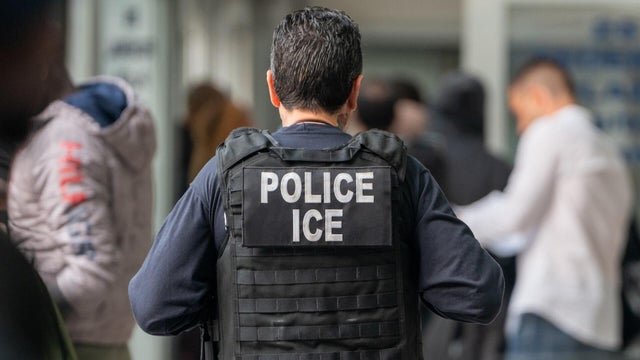
Yeah, that's right. Although the House won't be back for another week after that, so we'll see how things play out. Olivia Gazis, thank you so much. Thank you. SpaceX launched onto Wall Street today with the largest initial public offering in history. Shares of Elon Musk's rocket and satellite company were priced at $135 a share at the open, raising $75 billion under the ticker SPCX. The IPO values SpaceX at nearly $1.8 trillion. It also makes Musk the world's first trillionaire. CBS News MoneyWatch Correspondent Kelly O'Grady is at the New York Stock Exchange with more. And, Kelly, this IPO was highly anticipated. That's probably an understatement. But did it meet expectations, and can it sustain this opening-day rally? It met my expectations, Nikole. This is a really exciting day. You're right. We have been anticipating this for a really long time. It's expected to start off this massive IPO parade as well, with a number of major names coming to the market within the next year. But the initial pricing was $135. It soared past that, ended right above $160 per share for the day. So certainly much better than they originally expected. I mean, certainly they priced it where they thought that they could get, right? So the performance of it was definitely better than that sort of base level but certainly better than I think a lot of people expected. You can get a lot of volatility in that first day, even sort of first week. I remember Facebook way, way, way back when it first IPOed, it was pretty much a flop. And, of course, the company went on to do quite well, now rebranded as Meta. But, look, can it sustain this? I look at this two ways. We are now going to see SpaceX report quarterly. They're a public company. We're going to get to look at their financials. How are they doing? We know that they're not profitable right now. And so investors, there's all this hype, but they're going to expect some meat, some return on that. That's going to be one way to see if it sustains. Another way, I mean, it's Elon Musk. A lot of times his companies-- we know with Tesla-- don't trade with the actual fundamentals. They trade with the man. And he's been very outspoken at certain times. It's impacted the stock. So SpaceX is going to be a really interesting one to watch specifically because it's a Musk company. And remind folks out there, why did the company go public? And what are Elon Musk's goals for SpaceX moving forward? So a company normally goes public for two reasons. One, the folks that invested all that time, that energy, they're able to cash in for that time and effort to really mean something from a very tangible perspective. But the bigger reason is that these companies need money. They raise money from investors in many, many private rounds of financing. That's exactly what SpaceX had done to this point. But in order to achieve all of that company's goals, they need more money, and that's where you go to the public market, and you're able to get an influx of cash with people wanting to become part of, hopefully, your success story. Now, the goals, it is a lot for SpaceX because, remember, this is not just a space company. It's an AI company. It is a social-media company. X, formerly Twitter, is within the SpaceX brand. They're looking to go to Mars. They're looking to take the space economy to this next frontier, put data centers in space. They're looking to create the leading artificial-intelligence platform out there. They're going to have a lot of competition from some other competitors in the market. But very lofty goals there. And how significant is it that Musk became the world's first trillionaire? I mean, can anybody catch up to him at this point? It sounds like an Austin Powers movie right now, Nikole, right, $1 trillion. Look, can they catch up to him? His wealth is going to keep growing exponentially as the companies do better and better-- Tesla, SpaceX, whatever else he might do in the future. He's been very prolific. And the next few billionaires together that are behind him amassed together don't actually equal his wealth now. But what goes up can come down. We have seen that with his net worth. Others have surpassed them in the past. I don't think he's the only trillionaire we're going to see in the future. He's just the first. And what does this mean, more broadly, for SpaceX employees? Is this life-changing liquidity for thousands of workers? It is. There's the estimate that there's over 4,000 folks that are millionaires now because they bet big on a company that-- you heard Elon Musk say today that if someone had told him he would have the biggest IPO in history-- and I'm quoting him. He would say, "What kind of good crack are they smoking?" It was a very funny moment when he spoke this morning. But those people who bet on the company earlier-- we're talking everyone from executives to welders. My colleague, Jo Ling Kent, spoke to one welder who had $10,000 worth of shares when he originally started with SpaceX, and he's made close to $1 million today. So there are some really exciting stories from someone who didn't ever expect to be able to have that kind of money. They come out of today with a dream. All right, Kelly O'Grady, thanks so much from the New York Stock Exchange. Coming up later this hour, a mass shooting in Texas ends with the suspect dead. The latest on the investigation into the attack. Plus, more than a dozen migrants are sent from the US to the Central African Republic, even though it's not their home country. What's behind this new round of deportations? And the Americans get ready to take the field tonight for the first time in the 2026 FIFA men's World Cup. A former member of the US men's national soccer team joins us to break down the match. The Takeoutreturns in 90 seconds. A US official tells CBS News the Trump administration deported about 20 migrants from countries including Afghanistan and Iran today, sending them to the Central African Republic. An immigration lawyer says one of the deportees was an Iranian prodemocracy activist who had received legal protection in the US. The State Department urges Americans not to go to the Central African Republic, citing armed conflict, violent crime, and kidnapping. CBS News Immigration Correspondent Camilo Montoya-Galvez has more. And, Camilo, what else do we know about these deportations? Well, Nikole, this is the latest front, if you will, in the Trump administration's unprecedented efforts to deport thousands of people to so-called third countries, meaning countries that are not their own. The administration has brokered agreements with several dozen nations across the globe, including in Africa and Latin America, so they can receive and accept people who are not their own citizens. We have seen the administration, for example, send hundreds of Venezuelans to El Salvador to be imprisoned at a notorious megaprison there. The administration has sent people to Eswatini in south Africa, also South Sudan and other African countries like Ghana, Cameroon, Equatorial Guinea, Rwanda, to name a few. And the administration says that it is doing this, Nikole, because many of these individuals may not have legal status in the US, but they do have protections from being sent back to their home countries because US immigration judges have determined that they could face persecution if returned to their home countries. So in order to essentially bypass and circumvent that, the administration is then sending them to third countries. And the open question now is what happens to people from Afghanistan, people from Iran, people from Iraq, people from Armenia who are being sent to countries like the Central African Republic, as was the case this week? There is no clear guidance from either country, the US or the Central African Republic, Nikole, on what will happen next to these deportees. In some cases, some of the third countries have sent the deportees back to their home countries, even though, again, some of them have said that they fled those countries because of violence and persecution. And in this particular case, I mean, why the Central African Republic, particularly if the US considers it one of the most dangerous places in the world? And just to underscore that point, I want to read you the travel advisory from the US State Department for the central African country. It says, "Do not travel to the Central African Republic for any reason. US citizens are at risk due to unrest, crime, kidnapping, health, terrorism, and other threats." That is coming directly from the US State Department, which also instructs Americans who happen to be there, for whatever reason, to draft a will, to make a proof-of-life protocol with loved ones, and also even to leave DNA samples with medical providers in case their families, Nikole, need them for identification purposes. That is how dire the situation is in the African-- in the Central African Republic, rather, according to, again, the US government. Now, why is your administration sending people to this country? We have been told by administration officials and also immigration policy analysts that even though these deportations are small in scale, relatively speaking, they send a message of deterrence. And that message, Nikole, is that if you stay in the country illegally or you are thinking about crossing the border illegally into the US, there is now a chance-- it may not be a big chance, but it is still a chance that exists that you could be sent to a random country, including a country in Africa that, again, the State Department says no one should be traveling to because of insecurity and violence. And so do these migrants have any recourse, or can they go somewhere else? It's unclear. The Central African Republic has released no details at all about what it plans to do with the deportees that have just been sent there by the US. Neither has the Trump administration or US officials. In some cases, African countries have housed deportees from the US in hotels. Some of them have been able to stay there in those countries. But many, in fact, have been returned to their native countries. And again, that is the concern for many advocates and human-rights of service-- observers, rather-- because many of these migrants, again, are alleging that they fled their home countries because of persecution and threats. And if they're forced to return, they could be in danger. And then given this precedent that's being set, should we expect more deportations to countries that the US has severe travel warnings for? Yes. The Trump administration has made it abundantly clear, Nikole, that if you are in this country illegally and cannot be deported to your native country, the US will find ways to deport you somewhere else away from American soil, including countries with questionable human-rights records, including South Sudan, the Democratic Republic of the Congo-- which, as you know, is currently dealing with a serious Ebola outbreak. And so the administration says, yes, those third-country deportations will continue for the time being.

NIKOLE KILLION:
00:22:08

All right, Camilo Montoya-Galvez, thank you so much for your reporting, as always. We have some breaking news. The Justice Department has given the merger between CBS News' parent company, Paramount Skydance, and Warner Bros. Discovery the green light. Our Kelly O'Grady is back with us now. And, Kelly, what can you tell us? Yes, so this was long awaited, right? These two sides had agreed to a merger with an enterprise value of $110 billion and have been waiting for Department of Justice to review the merger and ensure that there aren't any red flags that they found. It has been approved. I'm going to read you just a little bit of the statement here to give some of their rationale. This is from the DOJ, and they say, "The division has completed its analysis of the proposed merger of Paramount and Warner Brothers and determined, based on the evidence received in its investigation, the transaction is not likely to result in harm to competition or American consumers." Now, remember, as you said, Paramount Skydance is the parent company of CBS News, and what they were looking at was a number of things. That definition of harm to consumers-- remember, these two behemoths coming together spanning linear television, a number of television channels coming together. There's multiple streaming services, right? They needed to look at both of these companies, ensure that there wouldn't be any impact on competition. Now, the DOJ has reviewed that, given its approval. But there will still be a few steps that Paramount has to-- or hurdles, I should say, that Paramount will have to clear. One, we do know that a number of state attorney generals are looking to challenge the merger. That would be one thing. But also these are two global companies. The EU, the European Union, has given a July 14 deadline, so just around the corner, but they are also looking at the regulatory implications for these two companies coming together. But certainly a very important hurdle cleared today with that DOJ approval. But, Nikole, I just kind of take a broader zoom out of what this means for the industry. We've seen so much consolidation in media and entertainment, the streaming wars, right? It was we used to have the expanded basic cable package, and then it was, oh, we only want to pay for what we want, and you have all of these companies creating these things. We're now seeing more consolidation, and certainly this merger of these two big companies coming together may be a sign of things to come in this space. All right, Kelly O'Grady, thank you so much for those breaking developments. Fight night at the White House. What to expect at the UFC cage match headlining the president's birthday weekend. You are watching The Takeout. Welcome back to The Takeout. Here's a look at what else we're watching this evening. At least one person was killed and nine hospitalized during a shooting in west Texas this morning. Midland city officials said the suspect also died after a standoff with police but did not provide any details about their identity or how they died. A possible motive for the shooting is still under investigation. Crews began taking down President Trump's name from the John F. Kennedy Center for the Performing Arts in Washington today. It comes after a federal judge denied a last-minute appeal from the Trump administration to stop its removal. Last month, a judge ruled Trump's name was put on the building and other Kennedy Center materials illegally. He set a deadline of today to take it all down. A federal judge has ruled the White House can host UFC matches on its South Lawn this weekend. The mixed-martial-art event is set for this Sunday on President Trump's 80th birthday. A recent court filing estimates the event has cost more than $60 million. I want to turn now to our panel, CBS News Political Director Fin Gómez, CBS News political contributor and Democratic strategist Chuck Rocha, and Republican strategist Leslie Shedd. And, Fin, I want to start with this ruling. I mean, was this UFC event ever in jeopardy? And also just tell us what it was like to be at the Claw. You went a couple of times. I did go to-- I did check out the Claw. But yeah, first on the legal ruling today. Talking to legal experts, it didn't seem like this attempt had really any teeth to it, if you will. So, yes, the judge ruled against it, clearing the way for this big event that's happening on Sunday. I did go down to the Octagon on the South Lawn of the White House. Look, this administration has seen a lot of political brawls, a lot of big brawls. Nothing quite like this one, OK? You're looking at there's going to be seven fights, a couple title bouts. I'm particularly looking forward to the former champion, Alex Pereira. He's one of my favorites. I'm kind of-- I am somewhat of a UFC fan. Look, it is not without controversy, obviously, because of the lawsuit. It's had its criticism. But just going down there and seeing it, nothing like this has ever happened in White House history, definitely not on the South Lawn there. Yes, Teddy Roosevelt held some boxing matches. They were kind of like friendlies, kind of famously, but nothing quite like this. 4,000 people are expected there on the South Lawn, including the president, some cabinet members, some other folks. And also about, we're told, 75,000 people have been given tickets to watch the fight from the Ellipse, which is, as you know, right behind the South Lawn. But just seeing the Claw, as it's called, the Octagon in person just in itself is a pretty impressive engineering marvel, just objectively just to see that. But it is quite the sight. I'm not going to lie.

NIKOLE KILLION:
00:27:57

Yeah, well, I've seen it from the other side of the White House as it was being put up as well. But, Leslie, to Fin's point, I mean, yes, this is an unprecedented event. And yes, it's the president's birthday. It's America's upcoming 250th birthday. But what's the rationale behind this? I mean, is the president just doing this because he can? I think he's tapping into a nontraditional sporting event, and he's kind of showing people, hey, the White House can be fun. It's not stodgy anymore. He's pulling it into modern times. I think back to other presidents that have stepped outside the traditional box that people kind of put the presidency in and the White House in, and that's always generally made them more popular. You had Bill Clinton when he went on MTV and got asked the famous boxer/brief question, and I think that resonated with regular voters, people like that. For my friend Fin, I'd like to correct that Roosevelt actually got in the bout and fought himself. Teddy Roosevelt did. He got in the ring. And I'd give you all the money I've got in my checking account if Donald Trump could even step that high to get in the ring, but I digress. The point about this is really interesting. And I agree with making it fun, but if you've got a Donald Trump tattoo on your body or you've got a "let's go Brandon" flag on your boat, you think this is the greatest thing ever. If you're just a working stiff out there trying to make it every day, you're like, this is just another example of them spending money or somebody spending money when I ain't got no money. Whether it's their fault, the president's fault or not, the optics are not good heading into a midterm. And I want to turn to something else, Chuck. I mean, obviously, we just mentioned ahead of this panel this decision today by a judge. Basically, in essence, it means now that the president's name has to come off of the Kennedy Center. Do you see this as a victory for Congresswoman Joyce Beatty, who was really the first to challenge this? Nikole, you make a great point. And when Donald Trump is not talking about gas and groceries, Democrats are winning. If we're having to talk about the Kennedy Center, the Reflecting Pool, knocking down a piece of the White House to build a ballroom, those are things the American people think, well, I don't really care either, or I just know that I can't make it as much. And if Donald Trump and Republicans aren't talking about the cost of living, then it's going to be a good day for Democrats. Fin, I also-- because there were a lot of legal decisions today. So it's like UFC. It was the Kennedy Center. But also interestingly, Fin, there was a judge who weighed in once again today on the White House's or the administration's antiweaponization fund, basically continuing to block that fund. But what is interesting is that this judge said that she doesn't think that this fund is dead, that it's possible that it could rear its head again. Now, we heard from Todd Blanche a couple of weeks ago saying they're not going to proceed, but is there a chance this fund could be resurrected? I mean, according to her statement, yes. And I do think that when that happened, there were a lot of congressional Republicans who were probably wincing because they know that, politically, it's probably going to be a pretty big obstacle if that does ever come to fruition. As you know better than anyone, there has been some serious pushback, especially from Senate Republicans, on this. Especially we're 144 days away from the midterm elections. I think a lot of them are hoping that it goes away. I also, Leslie, want to go back to what we talked about at the outset in terms of UFC. Obviously, there are a lot of big events coming up right now. We talked earlier in the broadcast about the World Cup. Again, we've got America 250 events. This all coming at a time where Congress has now left town without reauthorizing FISA. Yes, the president did name a new DNI nominee, but can he get confirmed? I think he can. You've already started to see some Democrats come out, notably Mark Warner, who is the ranking member on SPSCI, and Jim Himes, who is the ranking member on HPSCI. So I think those are really good signs. I think he will get confirmed. They've already scheduled the hearing. It's going to be next Wednesday. I wouldn't be surprised if they expedite this and get it done before the end of the month. But, Chuck, are these good optics for Democrats? I mean, they basically oppose this in mass numbers and left town, and it was all based on this acting DNI director, Bill Pulte. I mean, the president's named someone new. Why not stick around to renew FISA? It's a great point. The Senate is staying here, but you're right. The House did leave town. And I think holding and looking at the difference, there's a big difference between Pulte and this new fellow from Manhattan. He's a judge. He's been around. He may not have all the DNI credentials. And I'm not sure what SPSCI or BPSCI is, but I know that that probably means he's qualified because I know the other guy, Pulte, didn't. All he knew was IRS and housing forms. All right, well, a discussion to continue. More fun on Friday with this panel. We want to thank you so much Fin, Chuck, and Leslie. An unusual choice for voters, Sullivan or Sullivan? Two Republicans with the same name are battling on the ballot in Alaska, but some people are claiming this isn't just an innocent coincidence. We'll explain. You are watching The Takeout. It's a battle between two Dan Sullivans in Alaska's Senate race. Two Republicans with the same name are running in the August 18 primary. The Dan Sullivan on your left is a two-term Republican incumbent and ally of President Trump. The Dan Sullivan on your right is a retired teacher who filed his candidacy just three days before the deadline. If you thought remembering their different backgrounds was confusing, well, take a look at their campaign logos. Without their middle initials, it's pretty hard to tell which. Now, Republicans are accusing Democrats of playing a dirty trick on voters, a claim they deny. CBS News election-law expert and contributor David Becker is here to talk more about this campaign confusion and quite an interesting race that's shaping up in Alaska. I mean, what are Republicans alleging here, and how are Democrats responding? So this occasionally comes up, particularly with people with common names. And you'll see someone alleged to be a plant, basically, from the other party, intended to confuse voters when they're filling out their ballot. They might not read it really carefully. They might not look at the middle initials. There is always concern about voter confusion. This is a really tough one for the Alaska Elections Division because, on the one hand, they want to minimize voter confusion, very understandably so. You also don't want to disqualify someone just because they happen to have a common name. Something that raises a red flag, though, like, hey, these are the same names. I mean, what do you do? Clearly it did with the Elections Division because they did bar him from the ballot for now. He may challenge that, and that will be resolved in the courts. There might be ways to navigate this by putting maybe incumbent next to Senator Sullivan's name. Clearly, the middle initials are going to be key here. But we've seen this in other times, usually in lower-profile races, more localized races. But it occasionally comes up, and hopefully the voters will be able to read that ballot really carefully and make sure they--

NIKOLE KILLION:
00:34:43

Yeah, I was going to say, this isn't necessarily a low-profile race. I mean, this is a seat that Democrats want to flip. So what are their chances here? Well, I mean, I don't know what the political chances are going to be. Alaska can be a very closely divided state at times. So if there's confusion that affects a few thousand voters, that could affect-- and there's not that many voters in Alaska, so you're not going to see millions of voters, like we saw in California last week. It's going to be really incumbent upon Senator Sullivan to clearly delineate where he is on the ballot and make sure his voters know who he is. And, hopefully, the Elections Division will find a way to navigate this. I want to turn to another state on the West Coast, California, where, of course, voting continues or, I should say, counting votes continues there in the Golden State. And that has kind of prompted some unsupported claims of voter fraud. Just from a basic level, why is this particular count taking so long? Well, I'd suggest it's really not taking necessarily all that long. California is just huge. It has millions and millions of voters. In the very first report on election night, they reported out 5.1 million ballots in California in a primary election. That's more ballots than were cast in 40 states in the presidential election in 2024, just to put that in perspective. So they're counting a lot of ballots, and they had another challenge, which was a lot of ballots were dropped off on Election Day, mail ballots. And the county election officials throughout California are doing the work that I think we all want them to do, which is they are checking every single one of those mail ballots, making sure the right voter returned them, that that person is eligible, that that person didn't try to vote in another way, so there weren't any double voters, and that takes a little bit of time. But as we sit here today, 96% of the ballots were counted. All of the major races have been called. And remember, they weren't just trying to determine who was first. They were trying to determine who was second and third because those top two candidates advance to the general election. I think this is all the way California operates because they have so many mail ballots, and they have so many voters, and we knew this ahead of time. What we're seeing right now is people who might not be happy with the outcome of elections spreading disinformation about it and alleging fraud when there is no fraud that has been found at all. In fact, the US attorney for Los Angeles sent his assistant, the first assistant US attorney, down to the Los Angeles County vote-counting center, and that place is transparent. They're live streaming it 24/7. There are observers from all the campaigns and the parties in that building while the votes are being counted. And he, of course, was welcomed into transparently observe as well.

NIKOLE KILLION:
00:37:17

All right, David Becker, thanks so much for setting the record straight there. Thank you, Nikole.

NIKOLE KILLION:
00:37:21

The US prepares for kickoff. After the break, a FIFA men's World Cup veteran joins us with what to expect when the Americans take the pitch tonight. You're watching The Takeout. [MUSIC PLAYING]

DONALD TRUMP:
00:37:46

I think you've got a really good chance of going all the way. I just want to wish you a lot of luck. That was President Trump calling in to the US men's national team ahead of tonight's match against Paraguay. After a four-year-long wait, the 26 men chosen to represent the United States will take the pitch in their first game of the 2026 FIFA World Cup. The US is one of three host nations, so the Yanks are looking to open the tournament strong in California. The last time these two teams met was last November. The US won that game by a score of 2 to 1. However, it included a bench-clearing brawl during stoppage time. Earlier, I spoke with Aaron Long. He's a defender for Los Angeles FC and was a member of the 2022 US men's national team in Qatar. So, Aaron, as someone who was on the US men's national team in the last World Cup back in 2022, what is it like, and what does this moment mean? It means everything, especially for a lot of the guys that it's their first World Cup. There's a lot of build up to this moment. And I think last time around in Qatar, it was everyone's first World Cup except for one, maybe two players. So there's so much anticipation. There's so much excitement. I think the main thing is you want to get to that first game. You want the whistle to blow just so you can take the pressure off yourself and get into the game and do what you love. I think once you're on the field, everything settles down, and you start becoming a soccer player again. And the nerves fade a little bit, and then you can just play your game. But I think, more than anything, that excitement and that pressure that you put on yourself, the lifelong dream, there's a lot of build-up to that. You've played with a lot of the guys who are actually on this year's team. So how will this first game set the tone for the tournament? First game is huge, especially in a tournament like the World Cup, where there's a group stage. Winning that first game can set you up really well for the next two games. It can change your mindset. It can change tactically going into the last two games. And it's a very tough opponent that we're facing first, so I think a win here and three points will make everyone just settle all the nerves, make everyone feel really good and easy going into the next two games in the group stage. The last time the US hosted the World Cup was more than 30 years ago. Now that it's back on home soil, what impact, if any, could that have? I think it's a ton of impact. I mean, growing up playing this game, like we all have, we've heard so much about the '94 World Cup and the legends that came from it and how much soccer took a boom in the United States after that '94 World Cup. I also feel like soccer is still the little brother to some of the bigger sports here in the United States. So any chance that we can put our game that we love on the highest pedestal in the World Cup and inspire young children at the highest level, we know that that's a serious possibility. And the guys know that, and they know that if this is a really successful World Cup campaign, the ramifications that can come from it are humongous. And so many young kids are going to fall in love with this game, and the sport could really boom in the United States. So we understand the significance, absolutely. In terms of this first game between the US and Paraguay, the last time these two teams met, there was actually a brawl. So could this change the way that the US approaches tonight's match? The brawl? No. I think that's just tempers bubbling over a little bit. But, I mean, the intensity is going to be at the highest level, absolutely. It's a World Cup. Whatever intensity was in that fixture earlier, it's going to be as much, if not more so. But I think guys are going to be a little bit more careful to not get a red card. In a friendly, it's OK to let things bubble over a little faster. But in a World Cup match, you don't want a red card. You don't want to miss the next game. So I think there will be controlled aggression. I'll say it that way. After this, the US is set to face Australia and Turkey. What can we expect from those matchups? Australia, I think, is going to have a big chip on their shoulder. They have been told that they're kind of the weaker link in the group stage, which we know they're a fantastic side, and I don't think the team of the United States is taking them for granted at all because they're a very tough opponent. But I think they're going to come into this with a big chip on their shoulder. And Turkey is going to play like they have nothing to lose. I think, more than anything, like we talked about before, I think a win against Paraguay really sets us up. It's going to settle the nerves. It's going to make us feel really good going into those next two games. How far do you think the US can go? And who do you think their toughest opponent might be? Oh, it depends on who wins. It depends on who gets out of the groups. I know that if we come in second in the group stage and Mexico comes in second in the group stage, I think we can face them in the first knockout game. That would be huge to face Mexico in a World Cup. I know that both of those teams are definitely looking to win their group, so, hopefully, we don't face each other until much later in the tournament. But man, I don't know. My heart is so, so much with this team, and my belief is so much with this team. I think we can make it to quarterfinals, semifinals if we're playing well, if we're playing at our best. So yeah, I'm going to put us there. Do you think the US can go all the way? Who do you think will win the World Cup? I think my favorites right now are France. Can the US win the World Cup? Absolutely. If we do everything right and we make no mistakes, we can, of course, because we have the talent, and we believe in ourselves. But I think the talent that France has, it's going to be really hard to beat them. All right, Aaron Long, thanks so much. We know you'll be watching, along with millions of fans tonight. Thanks so much. Thank you. That does it for The Takeouttoday. Major will be back on Monday. The Daily Report is coming up next.

View CBS News In
CBS News App Open
Chrome Safari Continue