Watch CBS News

5/26: The Takeout with Major Garrett

Trump says his third physical in 13 months went "perfectly"; details still scarce on potential U.S.-Iran peace deal.
May 27 (43:51)

TRANSCRIPT FOR: “5/26: THE TAKEOUT WITH MAJOR GARRETT”

MAJOR GARRETT:
00:05:59

And there's another complicating factor, Nancy. As you know well, there is a second front in this war. It's between Israel and Hezbollah in Lebanon. And the Israeli government has launched not only aerial strikes but pushed more ground forces into Southern Lebanon. That has to be a part of this matrix, and maybe from the president's perspective, a not-so-helpful one. Sure. And there's another new aspect to this matrix, which is related, Major, which is that over the weekend, the president suddenly announced that as part of this overall agreement, he wants all the countries in the region to sign on to the Abraham Accords to normalize relations with Israel. He described it as a, quote, "mandatory request." It's not clear exactly what that means, what a mandatory request is. But so far, based on our reporting, there aren't any new takers.

MAJOR GARRETT:
00:06:52

It would be a diplomatic innovation, to be sure-- a mandatory request. Nancy Cordes, as always, thank you so very much. CBS News National Security Analyst Aaron MacLean joins me now. He's also the host of the most excellent School of Warpodcast. Aaron, always good to see you. What is a defensive airstrike? Because what happened over the weekend amid all this conversation that negotiations were really progressing, then Central Command puts out a statement that there were actions taken in self-defense. What happened? So the account we have from the Pentagon and Central Command is that Iranian boats from the IRGC Navy, these smaller fast boats that we keep hearing about, the Mosquito Navy, are out there laying mines in the Strait of Hormuz. We go after the boats with air assets. The air assets get shot at by the Iranians. We shoot at air defense sites in Iran that are shooting at our planes, or at least involved in the Iranian air defense system. So that's the short answer to your question. Slightly longer answer to your question is that we seem to be in this sort of bizarre situation, Major, where it's a tale of two wars. You have these negotiations going on in Qatar. You have the president and others saying, we're close to a deal. Maybe we're not that close. Well, we're close again. Meanwhile, things are pretty spicy in the strait. There's a lot of shooting going on.

MAJOR GARRETT:
00:08:07

Right. And it underscores that however degraded Iran's capabilities might be, they still retain some that are consequential.

AARON MACLEAN:
00:08:16

That's absolutely right. And also, color me skeptical, Major. Not so much that there's going to be a deal. It's possible that the administration and the Iranians are going to agree to something. Who knows? Maybe tonight, maybe a week from now, but I don't want to say that there's not going to be a deal. There could easily be a deal. What I'm skeptical about is that the Iranians, who essentially took the Strait hostage early in this war and then suggested they would give it back for the ceasefire that was granted in early April, didn't. So America paid a ransom in the form of the ceasefire. The Iranians didn't give it back. Now they want the blockade lifted and sanctions relief given for them to reopen the Strait. They keep asking for more and more ransom. Color me skeptical that it's going to be a smooth and easy process for that to actually occur. And Aaron, how did we go from unconditional surrender to memorandum of understanding? Again, I can do short answer or long answer. The short answer, I think, is reality.

MAJOR GARRETT:
00:09:05

Political and otherwise.

AARON MACLEAN:
00:09:07

Political and otherwise. The longer answer is-- and again, it goes back to the strait. The Iranians have leverage with the Strait of Hormuz. The other hostage they can take, of course, is that with the weapons they have remaining, which have been substantially degraded, but they are enough. If you want to take out a desalinization plant and force Riyadh in Saudi Arabia to get evacuated, if you want to strike at nuclear power plants in places like the UAE, the Iranians and their proxies, as we discussed last week on the show, have the capacity to hit those targets. So they've got regional economic targets held hostage. They've got the strait held hostage. This is leverage for them. The president, my estimate is that he does not want to go back to war. They can read that, and we are where we are as a consequence. Harassing fire can still be bothersome. That's exactly what we're talking about.

AARON MACLEAN:
00:09:51

If your harassing goes into a nuclear reactor or a desalinization plant, then yes, even one or two rounds can cause you a big problem.

MAJOR GARRETT:
00:09:59

And Iran says a lot of things. We will take all of them with a grain of salt. But one of the things that's said today that I came across is that America can no longer be certain that its military facilities in the region will go unscathed if this starts back up. Well again, this goes back to the tale of two wars, multiple-track situation I was referring to, Major. You hear talks about how we're very close on a deal and--

MAJOR GARRETT:
00:10:23

Conciliatory language. Meeting in the middle--

MAJOR GARRETT:
00:10:26

A change of behavior, et cetera, et cetera. Meanwhile, every time we get a statement from the Supreme Leader, which I think is what you're referring to, statements from Mojtaba Khamenei, they are maximalist in nature. America will not be able to-- its bases cannot hide behind regional Arab countries anymore. That sounds to me like the Supreme Leader wants the United States out of the region-- long-standing goal of Iranian statecraft, by the way, not something I think the president is ready to agree to. And look, very quickly, Aaron, reinstituting the Abraham Accords to the nations who have not signed on, including possibly Iran. That seems far-fetched in the moment. I think the odds of Saudi normalization with Israel in the coming days and weeks are highly limited,

MAJOR GARRETT:
00:11:04

Highly limited. Aaron McLean, always great stuff. I appreciate it so very much. Now to tonight's runoffs in Texas. CBS's Ed O'Keefe is in Austin, joins me now. And in keeping with the food-centric focus of this program, is it an Austin? I hope it's a taqueria. Tell me it's a taqueria, my brother. Well, it is Congress Ave. It is Austin. It is Tuesday. So we're here to taco about the Texas--

MAJOR GARRETT:
00:11:32

You're so good. You're so good. You're so good. I tried. I tried. What do you got? What do you want to know? Tell me what you know about the Senate race and then the House races you are most interested in. Sure OK, so the big one tonight, obviously, is the Republican runoff between the incumbent Senator John Cornyn, seeking a fifth term to the US Senate, unprecedented in Lone Star State history, to see someone run and win that many times statewide. And he's, of course, facing the attorney general, Ken Paxton, who has the president's endorsement. If you've been following along, like many of us students of 2026 have, you know that when the president jumps into a primary contest, his candidates usually win. It happened in Indiana. It happened in Louisiana. It happened in Kentucky. It may very well happen here tonight. It could be an early night with Paxton winning big. Could be a later night. Cornyn folks think it could be. Cornyn likes to point out he's voted with the president 99.3% of the time. How much more loyal can he be to the president? But the White House remembers he didn't endorse the president as quickly as other Republicans did back in 2024, and he was one of those that was critical of the president after the insurrection. So that is enough to put him in the penalty box and give Ken Paxton that endorsement. Of course, Republicans are concerned that it's going to cost them tens, if not hundreds, of millions of dollars to defend a Senate seat that they have held since the 1990s. The last Democrat elected to this Senate seat was Lloyd Bentsen back in 1988. James Talarico, with his tens of millions of dollars is standing by, ready to take them on, whoever wins. There are three big House runoffs tonight, Major, I know you're interested in. Let's do the maths in numeric order. The 18th district, which is now part of Houston. All these runoffs, by the way, caused in redistricted redrawn districts by the Republicans trying to squeeze out some Democrats. So you have a member-on-member race in Houston, Christian Menefee, 38-year-old, running against 78-year-old Al Green-- so a real generational fight there among Democrats. Whoever prevails tonight ultimately wins that Democratic seat. In the 33rd district up in Dallas, you have an interesting one. Incumbent Julie Johnson is facing her predecessor, Colin Allred, former NFL star who was running for the US Senate seat, remember, wants his old seat back. So you've got a bit of a gender and racial difference there, and it looks like Allred's to lose tonight. He very well may be headed back to Congress. And then the 35th district, a newly drawn 35th district, which stretches from parts of Austin here towards San Antonio. A Democratic runoff between the housing activist and sex therapist Maureen Galindo and the Bexar County Sheriff's deputy, Johnny Garcia. Yes, that's right-- sex therapist. That's what she is. She apparently, well, got into this race, obviously has caused some controversy, given some antisemitic comments she had made and has earned bipartisan retribution and condemnation. And we will see. Democrats believe that their 11th-hour push to help Johnny Garcia, Major, may help them avoid a real embarrassment there, but we'll see. So again, could be an early night. Could be late night. But there are tacos no matter what. And very quickly, Ed, we have an attorney general's race in Texas also, involving a member of the House, Chip Roy, and Mayes Middleton. I want to remind our audience that there was a time when John Cornyn was the firebrand Republican innovator in Texas. He became the first Republican elected to that Attorney General post since Reconstruction, when he won that race the first time. So it's not as if John Cornyn has a history in Texas of being some sort of wimpy RHINO Republican. Anyway, that's Chip Roy and Mayes Middleton. Any thoughts there? Just that that is another one to watch. The president didn't endorse in that one. But given that Chip Roy comes from the Ted Cruz wing of the Republican Party and the Texas Republican Party, let's just say there's been a movement afoot to help the other guy and try to urge the president to engage, but he did not. It will be another close one to watch. And you're right, Cornyn, who in essence revolutionized the office, now we hear about attorneys general who sued the federal government all the time. It was Cornyn who was doing that early on when he was AG against the Clinton administration, and something that's continued under Ken Paxton, who now, of course, is trying to take John Cornyn's current job. There's a circularity there. Ed O'Keefe, as always, enjoy your tacos. I don't get to say that always, but great stuff as always. Thank you. We turn now to the Democratic Republic of Congo, an effort to contain the Ebola outbreak there. In the last few days, three treatment centers have been attacked. This includes two that were set on fire. The first was on Thursday. We talked to you about it then, after family members were banned from retrieving the body of a man who had died from Ebola. I want to bring in CBS News Medical Correspondent Dr. Celine Gounder. She's an infectious disease specialist who spent time in Guinea as an Ebola aid worker during the West African epidemic. Dr. Gounder, I just want to open a broad area of conversation. What did we learn over the weekend? What are you watching? Separate the signal from the noise. Well, I think we're seeing some of the same patterns as we saw during the West African Ebola epidemic and for that matter, actually during COVID. So I think if you think about how people resisted wearing masks, how they resisted getting vaccinated for COVID, it's a lot of the same reasons of not trusting the messenger, the person who's advising these measures, and also feeling backed into a corner and feeling like choices are being taken away from you. And what we're seeing in country on the ground there are a number of different reasons for distrust. So first of all, you have Rwandan-backed militants, the M23. The local population perceives the Rwandan-backed militants as being aligned with US interests. They are stealing, robbing natural resources, minerals, the kind of minerals that go into your cell phone, for example. And so there's tremendous anger over that. The US pulled out. USAID pulled out when the agency was dismantled last summer. USAID was supporting much of the health care system locally. And then you have fear of the measures being taken. So when you see health care workers becoming sick with Ebola, when you see them dying, the last thing people want to do is go to a health care facility, including Ebola treatment units, when they're sick.

MAJOR GARRETT:
00:17:39

And how are the metrics, the numbers landing with you? Are they alarming to you? And when we talk about risk profile, the World Health Organization said now 10 African countries are at least some level of risk. That's a higher number than Friday. What do these things tell us or suggest? I am alarmed. I think this is going to be at least as big as the West African epidemic of 2014 to 2016. I think in addition to many of the same risk factors, we have some additional risk factors, including the armed militants that I spoke about, as well as refugee camps in South Sudan. So this has the potential to be explosive. We don't have vaccines or specific treatments to control this. And I think the key number here is actually not the number of cases or deaths we've seen so far, but the number of people who are getting contact tracing. So that's following them for three weeks if they've had a high-risk exposure to see if they develop symptoms, to diagnose them, if they do develop symptoms to get them treatment. Only 1 in 5 contacts are getting contact tracing right now, which means that we're very much behind.

MAJOR GARRETT:
00:18:48

I don't know if this is relevant at all, Dr. Gounder, but I'm going to ask you. The World Cup is coming up. That is a transitory event, meaning lots of fans get on planes and they fly to America, Canada, or Mexico. Should that in any way be part of our risk assessment? The World Cup, this coming World Cup is the largest mass gathering in US history. Unfortunately, the US government has not allocated additional resources for health preparedness. They have allocated $625 million for law enforcement and physical security, but not for outbreak response. And frankly, it's not Ebola that has me worried. What has me worried for the World Cup would be a measles outbreak or MERS, which is another coronavirus, that has the potential to spread person-to-person through the air. So hopefully, fingers crossed, this is an uneventful World Cup, but I am concerned that there hasn't been more effort to prepare for this.

MAJOR GARRETT:
00:19:47

Dr. Celine Gounder, great stuff as always. Thank you very much. Still to come on The Takeout, Wisconsin Republican Senator Ron Johnson joins me live. We'll get his take on the Iran talks, the proposed weaponization fund, and why he is currently accusing the FDA of wrongdoing regarding COVID vaccines. Also, federal court rejects Alabama's new congressional map, and the South Carolina Senate turns down a Trump-backed redistricting push. We will have the specifics and the implications. Plus, the Department of Homeland Security is directing attorneys who work with ICE to pursue fraud cases against immigration lawyers. CBS News Homeland Security correspondent Nicole Sganga has the exclusive. Takeoutreturns in 90 seconds. [MUSIC PLAYING] Welcome back to The Takeout. Wisconsin Republican Senator Ron Johnson joins me now from Oshkosh, Wisconsin. Senator, it's great to see you. Thanks for joining us. We'll get to the FDA, and we'll get to vaccines in just a second, I promise you. But quickly, John Cornyn is facing possible defeat today to Ken Paxton in Texas. Where do you come down on that race? Well, I don't endorse any candidate. I let the voters decide. I'll let the voters in Texas decide this one. Obviously, John has voted with the president, and he's been a valued member of our conference. I'll support whoever emerges from that primary against the Democrat opponent.

MAJOR GARRETT:
00:21:19

Got it. What is your take currently, Senator, as you know it? And we're all trying to figure out what the bottom line is of a possible emerging deal between the president and Iran. I've always felt Iran was an existential threat to America if they became a nuclear power. That is the bottom line is, from my standpoint in terms of President Trump, he's been saying this for literally decades, as every American president since Clinton has said, he can't allow Iran become a nuclear power. President Trump is just the first president to do something about it. And it's not without risk. It's not easy. They've got their mosaic defense. There's about a million of their brutal regime that are armed. The rest of the 90 million Iranians are not, which is why they're being held hostage by this brutal regime. So the sooner that regime is on the dustbin of history, the better. But it's not an easy task.

MAJOR GARRETT:
00:22:12

Are you comfortable with the deal that just reopens the Strait of Hormuz and leaves other matters, nuclear ambitions, support of terrorist proxies, its existing stockpile, though diminished, of drones and missiles intact? I have the same concerns as others, as I'm quite sure that President Trump has the same concerns. But again, let's see how this all develops. We cannot allow Iran to become a nuclear power. That's the bottom line. We can't allow them to be able to hold the Strait of Hormuz hostage, which is what they're doing right now. It looks like all the other regional powers are lined up against Iran. So this war has certainly realigned the politics there-- hopefully, realigned to the positive going forward.

MAJOR GARRETT:
00:22:58

There was a lot of conversation, as you well know, Senator, last week in the Republican conference about the proposed Weaponization Fund. Are you net-net a supporter of that fund? And how do you regard the answers that you and your Senate Republican colleagues got from the acting attorney general, Todd Blanche? Well, as I understand it, this would just be an extension of the Judgment Fund, part of Treasury that's been around for literally decades. Obama used it. Biden used it. Now Trump will use it. I'm fully supportive of it. I know that the Biden administration weaponized government against good people like Judge Troupis here in Wisconsin. Lawfare has destroyed that man-- a couple million dollars worth of legal fees because of that weaponization. So I think the government in all administrations abuses American citizens, and they ought to have some fund that they can be compensated out of. So I'm basically supportive of that. The timing was awful. Hopefully, we can get back in next week and do the reconciliation bill to fund CBP and ICE, because Democrats refuse to do so, and have an overriding amendment that will put guardrails on that so nobody have a problem with it.

MAJOR GARRETT:
00:24:03

What kind of guardrails do you want, Senator? Well, obviously, we don't want people who committed acts of violence against anybody, against police, people who are now convicted rapists, whatever. We don't want those people accessing the fund. There needs to be a process that can be vetted properly, just the way the Judgment Fund has been used in prior administrations, oftentimes on a partisan basis. But sometimes people are abused under partisan basis.

MAJOR GARRETT:
00:24:30

Senator, you recently sent a letter to Health Secretary Kennedy claiming that the Food and Drug Administration under President Biden, quote, "deliberately used a system incapable of truly identifying safety signals." This is in COVID vaccines, and if I understand it correctly, specifically those delivered to children. What are you driving at? First of all, Major, I appreciate you having me on because you're the first major network that's actually covered this report that's been out now for four weeks. What our report uncovered because of Bobby Kennedy's commitment to radical transparency, on March 1 of 2021, Peter Marks, the head of CBER-- that's the division within FDA that approves and then monitors safety of vaccines-- was briefed that the algorithm they were using to monitor and analyze the VAERS system, the Vaccine Adverse Event Reporting System, was going to hide and mask safety signals of the COVID injections. 26 days later, using a new algorithm, the data mining actors presented that, finding 49 cases of extreme masking under the old system. With the new system, 25 safety signals on very serious adverse events like sudden cardiac death, pulmonary infarction, a Bell's palsy, different types of strokes. Three consecutive months after that, they continued to do other data mining, showing more safety signals, and that Peter Marks decided to stick with the old algorithm, lied to the American public, saying we're not seeing safety signals. He presented a long list of safety signals. Here's this, the first data run-- OK, 25 very serious safety signals. So from my standpoint, this is the largest, the biggest government scandal in my lifetime because the American people had a right to know. They should have had informed consent before they lined up, and certainly before they subjected their children, who had virtually zero chance of serious side effects from actual COVID, to line them up for an experimental injection, and children died. That's a separate little cover-up underneath this one. The FDA analyzed 96 child deaths, some with autopsies. Again, we're digging into that, but it's looking like that's a pretty corrupt process as well-- another case of cover-up. I've read, Senator, like your appraisal of this, that when you look at the totality of doses of the vaccine administered, even at the higher end of your suggested childhood death rate, it would be a per-dose death rate of 1 in 19.7 million, or 1 in 69,000,000, depending on the metrics. And people who are advocates of the vaccine and the administration process therein say that's a smaller percentage of childhood deaths than you might find if they got a dose of ibuprofen. How do you evaluate that? So I know the numbers. So we did this analysis in 2023 when people said the same thing. There's so many doses out there. So for the COVID vaccine, when we did this in 2023, is 25.5 deaths per million doses given for the COVID injection versus 0.46 for the flu vaccine. That's a 55-fold increase. Today on VAERS worldwide, there's 39,000 deaths reported on VAERS worldwide associated with COVID injection. 24% of those occur either on the day of vaccination or within one or two days. There's about 1.7 million adverse events reported. And a CDC-commissioned study at Harvard, the Pilgrim study, showed that only about 1% of all adverse events are actually reported to VAERS. So again, we can go round and round on numbers. But I've been looking at this for years. I didn't need a sophisticated algorithm, as we went from an average of about 290 deaths per year reported associated with the vaccine up to 2020. 2021, there's 21,000. They had to hire additional people just to process the backlog of VAERS reports. And yet, now we know Peter Marks. He was shown that their analysis was going to hide safety signals. He was shown the safety signals, and he didn't alert the American people. The American people had a right to know to make an informed decision whether or not they want to subject themselves or their children to that experimental gene therapy. That's what it is. It's not a true vaccine. And they were not given that information. They had the right to know. They were denied that right. Let us have a longer conversation about this because I'm genuinely curious about what you found, what you believe happened. And if you say it's the biggest scandal in your lifetime, I want to have a longer conversation about it. But I appreciate teeing it up. Senator Ron Johnson, Republican from Wisconsin. I appreciate it. I also want that longer conversation. Our investigation has just begun.

MAJOR GARRETT:
00:29:11

Very good. We'll come back to you on it, I promise you. Senator Johnson, I appreciate it. Thank you. Thank you.

MAJOR GARRETT:
00:29:17

Coming up, the redistricting fight, it seems never-ending. And it continues with efforts to redraw congressional maps stunted in two Republican-led states. This goes back and forth, back and forth. Our Jan Crawford joins me when we come back to break down today's developments. That's right. Next, here on The Takeout. Welcome back. Two Republican-led redistricting plans hit roadblocks today-- one political, one legal. Let's start with the political one. South Carolina State Senate has defied President Trump and is not moving forward on a newly drawn map. And a federal court has blocked redistricting in Alabama. That map was found to discriminate against Black voters. Republicans say they will appeal that decision to the Supreme Court. Jan Crawford is with me to break all this down. Let's talk about Alabama first, Jan. And I want to read from you the opinion released today by the US District Court, Northern District of Alabama. Control room, this is-- if I can find it in my notes here-- quote number one. "Our previous review of the undisputed evidence left us in no doubt that Alabama's legislatively enacted plan intentionally discriminated based on race, in violation of the Constitution. Our re-examination in light of Calaisyields the same conclusion." That's super important, that last sentence, is it not?

KENDRA BARKOFF LAMY:
00:30:37

Well, the Supreme Court, after they issued that landmark decision in Calais,which kind of limited the scope of Section 2 of the Voting Rights Act. After that decision came down-- of course, that was the case from Louisiana-- the justices sent a similar case from Alabama, a fight over those districts, back down to that federal district court panel and said, you need to rethink your decision in light of our landmark ruling. That's very common. The court does that all the time when it has a major decision. That kind of changes our thinking on the law. And the reason this decision is significant today is because the court concluded, after looking at Calais, the big Supreme Court decision, that did not require a different result. This is a very convoluted, complicated legal issue that goes back several years. This federal district court panel, the one that you quoted from, had originally said and ordered Alabama to create two majority-Black districts. Now we get the Calaisdecision, Alabama saying, oh, the court is going to make it much harder to have majority-Black districts. We want to go back to one district, like we had always had. So today, the federal court panel said, no, you've got to stick with two because there was intentional race discrimination. And that the Supreme Court said in Calais is kind of that very narrow category where--

MAJOR GARRETT:
00:31:52

Which is not constitutional if it's intentional and clearly so.

JAN CRAWFORD:
00:31:55

It's unconstitutional under the 14th Amendment. And that's how this is an exception to Calais, that the big decision. And that's why Justice Sotomayor made that point week before last when the court sent this case back to Alabama. And this is graphic 2, control room, because this is important because the Supreme Court has also said, look, partisan motives are fine in redistricting matters. We're not going to get involved in that. So graphic number 2-- counsel meeting, State of Alabama argues mightily that the legislature's partisan motive drove the creation of the 2023 plan. That's the one you just referenced. But this enormous record contains no evidence of a partisan motive.

JAN CRAWFORD:
00:32:35

OK, this is an interesting point in this opinion because, again, the panel is saying so, therefore, the original Alabama Republican district with only one majority-Black district, that was intentional race discrimination. And there was no evidence that it was by party to enhance the Republican standing in the state. There is some wiggle room in this decision where Alabama could try to say, OK, let's see if we can real quick find some more of that evidence and draw up a different plan, maybe a plan like in Tennessee, where there are all Republican districts in the state. I don't think the state is going to have time for that. And I think this decision forecloses it because it says--

MAJOR GARRETT:
00:33:15

In order to be appealed to the High Court.

JAN CRAWFORD:
00:33:17

Yeah, and I'm willing to bet the Court's going to give this one a pass. But it looks like Alabama is going to have two majority-Black districts for this cycle. But I bet Alabama goes back to the drawing board real quick for that--

MAJOR GARRETT:
00:33:29

And very quickly, South Carolina was considering redrawing the maps. It went to the state senate. It had to make a conclusion on that. Today, the state senate said, no, we're going to leave the lines as they are, which means Jim Clyburn and his district lines, familiar they have been over the years, remain. Yeah, because they don't want to dilute those Republican votes too much. They want to keep Democrats in one district if they can, because that makes those Republican districts redder. And that's what you're going to see in Louisiana. That's why they're going to keep New Orleans a majority-Black district instead of saying, we're going to try to draw all Republican districts in that state. "Because sometimes when you do that endanger more Republicans--

JAN CRAWFORD:
00:34:05

That's right, and some of those seats don't look so safe anymore.

MAJOR GARRETT:
00:34:08

Exactly. Jan Crawford, always great stuff. Thank you so much. Thanks.

MAJOR GARRETT:
00:34:11

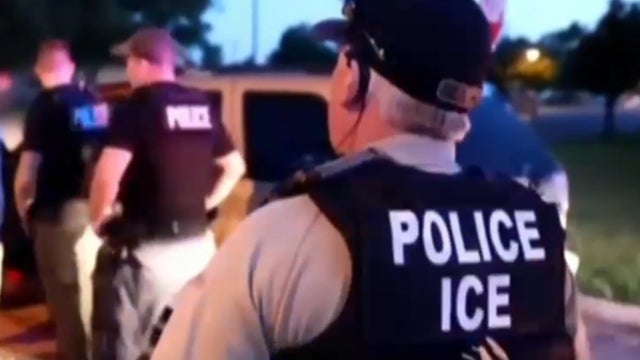
A new chapter in the White House ballroom battle. And it's all because of a shooting near the White House that occurred over the weekend. That's next right here on The Takeout. Welcome back to The Takeout. Thanks for hanging out with us. According to a memo obtained by CBS News, the Department of Homeland Security is calling on Immigration, Customs, and Enforcement to not just crack down on migrants, but the lawyers who represent them. Nicole Sganga joins us now for the latest on this exclusive reporting. What's the memo about, and what are its implications? ICE attorneys have been directed to pursue administrative fraud cases against immigration attorneys who are accused of filing false asylum claims. OK, so the statute here is relying not only or targeting not only asylum seekers, but anyone who knowingly, quote, "prepares, files, or helps file a falsified immigration benefit application." But this is part of a wider push that the Trump administration has put forward. It echoes President Trump's memo back in March. And you might also ask, Major, how common is immigration fraud? Now, there are isolated organized asylum fraud schemes in the United States. We've seen large cases filed back in 2023-- [OVERLAPPING SPEECH] --represented by a lawyer who tries to-- Yeah, and they're schemes, but those are isolated incidents. And in general, we have seen n GAO reports that USCIS terminates dozens of cases over the course of a year for fraud in the context of tens of thousands of cases. So we should also point out that denied asylum claims are not fraud, that you have a right when you come to the US-Mexico border or the US-Canadian border to seek asylum. And then there is a process by which your application goes through and is determined to be credible or not based on other things like meeting the legal standard, deadlines, evidence. Got you. There was a Secret Service encounter this weekend, a deadly one. Shots fired Saturday, very near the White House. And that led to the acting attorney general to make yet another push in writing for construction of the White House ballroom. And we should point out, this is now the third incident where Secret Service has returned fire at an alleged gunman over the course of a month, Major. There was the White House Correspondents' Dinner. There was an incident near the National Mall on May 4 earlier this month. And now we have this. So acting Attorney General Todd Blanche filed. There's ongoing litigation brought by the National Trust for Historic Preservation against this East Wing construction of this grand ballroom. And other facilities.

JAN CRAWFORD:
00:36:49

And other facilities. And basically, the acting attorney general called this the latest assassination attempt against President Trump. He said that the president, his family, staff members, dignitaries who come to the White House deserve what he called a safe haven. And we also learned a little bit more about the construction, that it's going to have a steel drone-proof roof, that it's going to have blast-proof windows, that it's going to have military-grade ventilation. But they are using this incident for sure to try to fight this ongoing litigation against the ballroom.

MAJOR GARRETT:
00:37:21

And whatever you think about the ballroom or the facilities underneath it as proposed, these episodes happen where people walk and anyone who would be coming to the White House would have to necessarily walk. So the ballroom, whether it exists or not, would not necessarily protect them. It straight up wouldn't because you're out on public streets. And that's what these last two episodes occurred. Anyone in Secret Service will tell you the most dangerous place to be is a security checkpoint. And that is what we saw play out at the White House Correspondents' Dinner. It is where that dirty zone becomes a clean zone. It is where law enforcement faces the general public. And one big concern moving forward-- America 250. We're going to see more than a million people descend on the National Mall for July 4 this year, and that is going to be an opportunity for the general public and for big crowds to be congregating around Washington, DC, in these places.

MAJOR GARRETT:
00:38:09

And in this context, it's going to be a very high-security event, and we hope it goes well. Nicole Sganga, thank you very much. Coming up, construction is underway at the White House. No, no, we're not talking about the ballroom. No, no, UFC arena built on the South Lawn. We're going to talk about that and much more with our political panel. This is The Takeout. Welcome back, political panel time. Let me introduce them to you. Democratic strategist Kendra Barkoff Lamy, Republican strategist, CBS News contributor Terry Sullivan. And, man, we were talking about candy during the break. Butterfinger all over you, Terry Sullivan. We'll get to the Mounds and the Almond Joy in due course. So UFC at the White House-- thoughts? Yeah. I mean, look, this is Dana White. This is Dana White and the Trump relations. First of all, there is always a clear double standard. Remember when 2016, when Trump had the South by South Lawn, had the Lumineers, Leonardo DiCaprio? No one made a big stink about that? I'm sorry. I'm sorry, 2016. The end of Obama, President Obama in 2016. I apologize. And everyone said how great it was and how innovative and wonderful to open it up to the people. And now Trump does a UFC fight, and he's like, this is terrible. How could he?

MAJOR GARRETT:
00:39:21

He's not exactly opening it up to the people. The ticket list is incredibly guarded, and it's a lobbyist-driven interest. corporate-driven access.

TERRY SULLIVAN:
00:39:31

But it also seems that there are a lot of troops and a lot of members of the military who are being invited as part of that.

MAJOR GARRETT:
00:39:38

It's going to be watched. People are going to be--

TERRY SULLIVAN:
00:39:40

Do you want to see the Lumineers, which I like, or do you want to see UFC? I'm just saying it's very Jacksonian. Let's open the White House.

MAJOR GARRETT:
00:39:48

Andrew. Absolutely. Yeah. Kendra. He is turning this entire town in two. He's doing what? The racing on the mall. I mean, at some point, we need to respect our city and not just turn it into a money-making machine for his own personal gain.

MAJOR GARRETT:
00:40:04

Kind of feels like overkill. It is overkill. It is overkill.

MAJOR GARRETT:
00:40:08

Texas, John Cornyn, Ken Paxton, and a lot of undercard House races that are kind of interesting for Democrats. Kendra, take it away. Greg Abbott, himself in a private fundraiser, said he's starting to get a little bit nervous.

MAJOR GARRETT:
00:40:20

Governor of Texas. Governor of Texas has said he's starting to get a little bit nervous. And they should be.

MAJOR GARRETT:
00:40:24

What do you think he's nervous about? I think Paxton cannot win in a general election. This man has cheated on his wife with multiple women. He has let abuse, fraud, waste, misconduct, to say the least. And I just think that he cannot win in a general election. It's going to pull down the rest of the ballot. And I think that other people that are running in the Democratic side are going to have a chance to finally, potentially win in Texas.

TERRY SULLIVAN:
00:40:50

I've never heard this story before. Wait, wait, so you're saying that this time, this year, Democrats. This is the year Democrats, it's purple. Texas is purple. This is the year they're going to win a Senate race.

MAJOR GARRETT:
00:41:00

The mathematics tell us Texas is red.

TERRY SULLIVAN:
00:41:02

Now, that being said, look, I agree with what she's saying about Paxton. I think he's a bad guy-- very flawed. But I think, yeah, 100%. I still think in Texas-- I've done races in Texas. He will win.

MAJOR GARRETT:
00:41:14

Why do you think he's not endorsed? Because as you were talking to me during the break about-- we'd you to reveal this-- someone very close to President Trump-- Chris LaCivita is doing a bunch of corn and stuff. There are other people that are--

MAJOR GARRETT:
00:41:26

Why do you think Trump went with Paxton? I don't know. I don't know but-- Acid test of loyalty. Yeah, I don't know what it is because Cornyn was extremely loyal in his own way to him.

MAJOR GARRETT:
00:41:36

In his own way, not Trump's. Well, Trump's way. And that's it. I don't know that there's a whole lot of strategy involved, a lot of tactics, not a lot of strategy.

KENDRA BARKOFF LAMY:
00:41:44

I think Trump likes to make news. And if he had endorsed Cornyn, it would be done. It would be over with, and it would not be talked about. And the fact that he endorsed Paxton, we're still talking about it.

MAJOR GARRETT:
00:41:55

Let's talk about someone else who might be a problematic nominee in a Senate race in a competitive state-- Maine, Graham Plattner. Kendra. Yeah, I got to tell you, I think the congressman probably from Massachusetts, who made a public comment about the tattoos, look, I'm a Jew myself. I am not--

MAJOR GARRETT:
00:42:14

Jake Auchincloss. --for Nazi symbols. I think he needed to have a conversation before he-- going public. There's nobody else from the Democratic side that is running.

MAJOR GARRETT:
00:42:22

So Janet Mills has already dropped out effectively. There's no one else to support. If you're a Democrat, you're not going to support Susan Collins. He's basically affecting people not to vote, telling people not to vote.

MAJOR GARRETT:
00:42:31

Takes it out. That's not how we should run our elections. People should go to the-- So you should blindly pick one party just because that's-- I'm just asking, though. I did not say blindly. I said-- Well, with only one eye. So you don't see the Nazi tattoo or the stream of Reddit prop-- Terry, so this to me, the Graham Platner experience, strikes me as an interesting test case right now because Janet Mills, the governor, won statewide. Chuck Schumer, the Democratic Leader, and everyone aligned with him had the oppo file, thought it would kill Graham Platner, dropped the oppo file, and it didn't. What does that tell us about the current state of politics? It tells us a lot about the current state of the Democrat Party. Now, look, both parties face this. But in the Democrat party right now, specifically, all of the energy, all of the intensity is in that is that extreme base. The AOC base, the Bernie Sanders base, we see it over and over. [OVERLAPPING SPEECH] Did I just say, though, we can see it in both parties. But you didn't ask me about the Republican side. You asked me about this race. Kendra Barkoff Lamy, Terry Sullivan, spirited as always. Get your candy. Wow, they were spirited, and they weren't even candy high. Happy Tuesday, everyone. We turn one-year-old tomorrow. This is The Takeout. Relentlessly curious, reliably civil, occasionally clever. The Daily Reportcoming up next.

Videos
View CBS News In
CBS News App Open
Chrome Safari Continue